
World
For African Migrants, Trek to Europe Brings Risk, Heartbreak


DALTON BENNETT, Associated Press
SHAWN POGATCHNIK, Associated Press
VELES, Macedonia (AP) — This is the moment when Sandrine Koffi’s dream of a new life in Europe ended — and her nightmare of an infant lost in the Macedonian night began.
As club-wielding police closed in, the 31-year-old from Ivory Coast couldn’t keep up with her fellow migrants. Not after more than a week of treacherous hikes through mud and bone-chilling rain; of leaky tents, stolen food and fitful sleep; of loads too heavy to bear.
Koffi had given her 10-month-old daughter, Kendra, to a stronger person to carry as the 40-member group of West Africans walked with trepidation into Veles, Macedonia. They hoped, because it was pitch dark and miserably cold, that no one would see them and raise the alarm. But after a 10-day trek over 150 kilometers (90 miles), their luck ran out.
Officers captured Koffi and deported her with most of the group back to Greece. Others who escaped carried Kendra all the way to the Serbian border. That was more than two weeks ago. Now, the mother cannot stop crying for her distant daughter — or wondering why they can’t travel like “normal” people.
“I feel like I’m not a human being,” Koffi told The Associated Press from the migrants’ safe house in Greece, where she and her daughter had arrived last month in hopes of being escorted through the Balkans to Hungary and, eventually, to family in Paris. “Why is it necessary to separate a mother from her child? Why is all of this necessary?”
___
HUMAN TIDE
Each month, a tide of humanity pours through the hills of Greece, Macedonia and Serbia in hopes of entering the heart of the 28-nation European Union through its vulnerable back door in the Balkans. This is the newest of a half-dozen land and sea routes that Arab, Asian and African smugglers use to funnel migrants illegally from war zones and economic woes to opportunities in the West.
Most don’t make it on their first attempt. Nor their third or fifth. Many, it seems, just keep trying — and failing — over and over.
The AP followed a group of migrants to document the challenges of the Western Balkans route, witnessing key events on the journey: the confrontations with police and locals, disagreements with the smuggler leading them and among themselves, and other difficulties along the way.
The flow of migrants has grown from a trickle in 2012 to become the second-most popular path for illegal immigration into Europe, behind only the more dangerous option of sailing from North Africa to Italy.
Frontex, the EU agency that helps governments police the bloc’s leaky frontiers, says it appears nothing will deter migrants from trying the long walk that starts in northern Greece. Their monitors have detected more than 43,000 illegal crossings on the Western Balkans route in 2014, more than double the year before. And 2015 already looks on pace for a record number, with 22,000 arrivals in Hungary in the first two months.
One pivotal point for the route is Turkey, a magnet for refugees of wars in Syria, Iraq and Afghanistan. The Turks provide easy travel visas to residents of most of Asia and Africa, too.
Another is EU neighbor Greece, where migrants can claim asylum and usually, after a short detention, are permitted to travel freely within the country. But few intend to stay in Greece, with its debt-crippled economy and locals’ antipathy to the migrants.
“Europe has not faced a situation like this since World War II, with so many conflicts happening so near to home, with fallen states from Libya to Syria and unrelenting conflict in Iraq and Afghanistan,” said Frontex spokeswoman Ewa Moncure. “And it’s a lot easier to take a boat from Turkey to Greece than to cross the open Mediterranean. Thousands drown taking the other route.”
___
FROM ABIDJAN TO ATHENS
“Never in my life was I even on a boat,” says Jean Paul Apetey, a 34-year-old Ivorian with a reputation as a sharp-witted opportunist. And so, when smugglers ask him if he wants to pilot the vessel to Greece in exchange for a free ticket, he goes straight to the stern engine of the rigid inflatable boat, overloaded with 47 migrants, and acts as if he knows what he is doing.
Smugglers rarely ride on one-way journeys, facing prison if caught. Instead, they charge 1,000 euros ($1,100) or more per passenger, rich compensation for the sacrifice of a boat.
The smugglers point Apetey to a Greek island in the distance — he doesn’t know if it’s Kos, Samos or Lesbos because he had no map — but boasts of reaching the target in 17 minutes flat. “I have many witnesses,” he says proudly.
___
THE SAFE HOUSE
The walls are sweating in the safe house in Thessaloniki, Greece, a windowless basement apartment with no furnishings, two bedrooms and a camp-style cooker on the floor. It’s the end of February, and an African smuggler has brought 45 clients to this base camp to escort them on off-road paths through Macedonia to Serbia. Among the group are 11 women, including two with 10-month-old children.
The smuggler, a former soldier, agreed to allow an AP journalist to accompany them on condition he not be identified because what he’s doing is illegal.
He goes from migrant to migrant, checking their readiness for the journey to Serbia. By car, it would take less than five hours. On foot, it’s an estimated 10 days.
When some giggle at his questions, he sets a stern tone: “Shut up. This isn’t a joke once you’re out there. If you think it’s funny, I’ll send you back to Athens.”
He’s taken three other groups on the route, and charges those on this trip a wide range of prices, depending on their ability to pay but averaging around $500. Discounts apply if they help him keep the others supplied and disciplined. Kids go free.
Most are French speakers from Ivory Coast, Mali, Cameroon and Burkina Faso. Only a few speak English. One — a Congolese whose communist parents named him Fidel Castro — speaks both.
All are hungry, so a Malian woman named Aicha “Baby” Teinturiere boils macaroni on the camp stove, adding to the humid air. The smuggler sends others to stock up on sleeping bags, socks and gloves for those who haven’t brought the necessities.
___
SHAME AND REGRET
Some are confident of reaching Germany or France. Sekou Yara is not.
The 28-year-old Malian has failed three times to breach EU immigration checks at airports, costing him at least 3,000 euros. This is his first attempt on foot, and he has mixed feelings.
“I left many people whom I love so much. I left my wife and our 4-year-old child,” said Yara, frustrated at sacrificing so much only to be stuck in Greece, where he says migrants can’t find jobs and sometimes must dig for food in the trash.
“It is shameful to live like this. I just want a normal life,” he said.
Yara’s trip doesn’t last long. The next morning, he and another Malian are arrested shortly after the 45 arrive at the Thessaloniki bus station. Unlike the others, those two have no ID papers.
The smuggler deliberately keeps his distance at the station, communicating by phone to reduce chances of being spotted as a trafficker. Tell police you’re going to Athens, not the border, he instructs them. Don’t all sit together; spread out.
In every direction are migrants from Syria, Afghanistan and Eritrea, all looking suspicious. Some hide in toilet stalls as the police canvass the crowds, checking documents. At least 20 from other groups are taken to a nearby police station.
Fear of arrest keeps the West Africans from boarding their intended morning bus north to the frontier town of Polikastro. It’s not illegal for documented asylum-seekers to board a domestic bus in Greece, so nerves eventually settle, and all 43 get on four later buses: Greeks in front, Arabs in the middle, and blacks in the back.
They’re a half-day behind schedule as the last members arrive in Polikastro. The hatred of some locals toward the Africans is clear near the town square as women prepare to boil water for the babies’ formula. A motorist drives over their bags, smashing the milk powder and cooking gear as he curses them.
The easy part of the trip has ended.
___
BRIGHT START
The first day’s hike from Polikastro takes the group along a rail line, and they must navigate a rickety wooden bridge, hoping no train comes. Within the first hour, both women carrying infants become weary.
“This is my souvenir!” jokes Apetey as he agrees to carry Sandrine Koffi’s daughter, Kendra. Another man takes Christian, the 10-month-old son of a Cameroonian woman, Mireille Djeukam. Kendra was born in Turkey, Christian in Greece. Both have relatives in Paris.
After 10 hours, the 43 reach the border with Macedonia before midnight. They don’t bother with tents, preferring sleeping bags in the open air.
The smuggler doesn’t want the full group to cross the border in daylight, but they’re already short of supplies — and the cheapest local shop is on the Macedonian side. So he leads three men on a reconnaissance trip through the trees. A border patrol vehicle sits on a hilltop but doesn’t move.
The three others crouch down in the woods as he heads alone into the supermarket. A cashier inside warns the smuggler to hide because police are shopping in another aisle.
After a tense wait, he emerges with six trash bags full of bread, canned sardines, juice and water.
___
CROSSING BORDERS
That night, the group crosses the border and a highway. Each approaching set of headlights is feared to be police. The chill means it’s time to sleep in the 10 tents they’ve brought.
At the campsite, Hilarion Charlemagne illustrates his journey with a collection of cellphone SIM cards.
“This one is from Togo, where I was a refugee for one year and eight months,” the 45-year-old Ivorian teacher says, identifying others as from Mali, Mauritania and Algeria. He tells of being turned back at the Moroccan border because he lacked 500 euros; of working as a tutor for an Algerian family for a month; of trying to reach Europe by boat five times and managing to reach Greece on the sixth attempt.
Charlemagne and others have another way to remember the countries they’ve visited: recounting the racial epithets hurled at them in a half-dozen languages.
___
SUSPICIOUS MINDS
The group is startled by a Macedonian shepherd and his snarling dog. Tents are hurriedly packed. But in the rush, one of the smuggler’s helpers has lost his cellphone. Angry accusations are levied, and everyone is searched without success.
The trek resumes at night. They scramble over an exposed ridge and sprint across a road junction, hiding in long reeds. They catch their breath under a full moon.
A Malian woman, 34-year-old Miriam Toure, falls with a cramp. Two young soccer players in the group offer her a sports massage as she howls in pain. A man with a chronic leg injury, Mohamed “Mo-Mo” Konate, applies some ointment he uses for himself.
Nothing works, so men take turns carrying Toure, joking she’s only faking to get a piggy-back ride. After a half-hour, they’re worn out and she’s told to walk or stay behind. She limps barefoot, weeping silently while trying to keep up.
Passing through cabbage fields, some stuff the greens in their backpacks. They jostle to refill bottles when passing a tap bearing an Orthodox sign and the inscription “holy well.” Around 4 a.m., in the rain, they pitch tents — difficult in the dark — under a freeway overpass marked by graffiti from Afghan migrants.
After sunrise, several members accuse each other of stealing their food, drink and bags as they slept. The smuggler threatens to return them to Greece, where Syrian smugglers will charge them triple for the journey. Apologies are demanded and given.
Nearby, Charlemagne reads from the Book of Job.
___
BREAKING POINT
That night, the rain turns to snow, and the tents start to break. Sheltered campsites on the trail are occupied by other migrant groups, and the crying of the two infants is incessant. Some question whether the children, so cold and hungry, could be at risk of death if they continue.
They keep following the Vardar River north, but near a village abandon the 41-year-old “Mo-Mo,” who cannot continue even with his cane.
Food is so scarce that sardines are rationed to one can daily for three people. On the sixth day of walking, they reach the town of Nogotino, two days behind schedule and with a freezing wind howling. At 1 a.m., Sandrine Koffi passes out and slides down a muddy embankment. She is revived, and they walk another hour.
Mireille Djeukam, the other woman traveling with a child, has tried and failed to pass through EU airports about 10 times already, but finds this trip much harder.
“It’s very hard. Too hard,” she said. “If I knew it was this difficult, I wouldn’t have done it. I’m not used to this type of walking. I’m always in the back.”
The youngest and fittest men grumble under their breath that they might be in Serbia already if not for the women and children.
Laughter amid such suffering seems impossible, but a limping Miriam Toure brings down the house with an exasperated question: “Where is Macedonia?”
___
CASUALTIES AND CHAOS
As the group reaches Veles, the first major Macedonian town on the route and 145 kilometers (87 miles) into their hike, Djeukam cannot go on because of her aching legs. The group leaves her and 10-month-old Christian at an Orthodox church.
The 40 remaining try to stick to Veles’ riverside railway, but around 10 p.m. they are confronted by youths. They run onto a road, startling motorists. Two police arrive, brandishing clubs and beating stragglers. Five are caught, including Sandrine Koffi.
In the melee, members of the group drop their gear and scatter. A woman breaks an ankle and is hospitalized in the Macedonian capital, Skopje. By 3 a.m., the smuggler has found only eight of his clients.
The next day, Aicha “Baby” Teinturiere returns to Veles to search for her bags and stumbles into the police. She claims, falsely, to be looking for her baby; she has none. The police believe her and agree to help search — and in the process discover and arrest many of her comrades.
By the end of the 10th day, all but 13 are in custody and put on trucks back to Greece with scores of others from Syria, Afghanistan and Bangladesh.
But Teinturiere is not among them. The sympathetic police set her free so she could keep searching for the make-believe child.
___
NEXT STEPS
Two days later, the West Africans reach a smuggler’s safe house in the border town of Lojane, Macedonia. Teinturiere is given responsibility for caring for Kendra until Koffi can complete the trip.
Others, mostly the strongest men in their 20s, cross into Serbia, where they meet the next smugglers, who charge them 100 euros each to drive them hidden in trucks to the Hungarian border. Three weeks into the journey, the first few make it to Hungary and send triumphant messages to friends.
The smuggler returns to Thessaloniki with his deported clients. He organizes a second trek combining new migrants with many from the original group, including Koffi and the first person arrested on the previous trip, Sekou Yara.
They depart a week later but run into a police ambush south of Veles. All are returned to Greece.
Another attempt to complete the 250-kilometer (150-mile) journey on foot has begun this week. Joining the smuggler are at least 20 veterans of the last two failures, including Koffi.
Her focus used to be on reaching her husband, mother and other relatives in Paris. Now, she prays simply to make it far enough to be reunited with her child. There’s no joy left in her heart, only a sense of being duped, over and over.
“In Turkey, I was told: ‘You just take a train, it will be easy,'” she said. “It was a lie.”
___
Bennett traveled with the migrants through Greece and Macedonia. Pogatchnik reported from Berlin.
Copyright 2015 The Associated Press. All rights reserved. This material may not be published, broadcast, rewritten or redistributed.



Activism
African Union Group to Award Rev. Dr. Amos Brown for Bringing Civil Rights Movement to Global Stage
Dr. Macaulay Kalu, secretary general of AU6RG, will present Dr. Brown with the Global Peace Builder Award. Other presenters include Rev. Dr. Freddie Haynes, senior pastor of Friendship West Baptist Church in Dallas; Oakland Mayor Barbara Lee, long-time advocate for appropriations to Africa as a congressmember; Rick Callendar, California-Hawaii president of the NAACP; Dr. Ike Neliaku, president and chairman of the Nigerian Institute of Public Relations; Pastor Ituah Ighodalo, head of the African Leadership Group and Ambassador Thompson and John William Templeton, founder of the Journal of Black Innovation National Black Business Month®.

By Carla Thomas and John William Templeton
On Aug. 31, the Third Baptist Church of San Francisco will mark its 173rd anniversary with an event steeped in history and global significance. This year’s commemoration, themed “Achieving Dr. King’s Promised Land Together,” will honor the lifelong achievements of Dr. Amos C. Brown, Sr.— a towering figure in the Civil Rights Movement — on a day that also observes the International Day for People of African Descent.
Brown will be recognized by the African Union’s organ for Africans abroad for ‘planetizing’ the civil rights movement gains at San Francisco’s Third Baptist Church, 1399 McAllister St., at 3 p.m.
The African Union, made up of 54 countries on the African continent, consists of five regions. It created a sixth region, the African Union Sixth Region Global (AU6RG), for the 400 million Africans living abroad. On Sept. 7, the second AU-Caribbean Community Summit occurs in Addis Ababa, Ethiopia.
Dr. Macaulay Kalu, secretary general of AU6RG, will present Dr. Brown with the Global Peace Builder Award. Other presenters include Rev. Dr. Freddie Haynes, senior pastor of Friendship West Baptist Church in Dallas; Oakland Mayor Barbara Lee, long-time advocate for appropriations to Africa as a congressmember; Rick Callendar, California-Hawaii president of the NAACP; Dr. Ike Neliaku, president and chairman of the Nigerian Institute of Public Relations; Pastor Ituah Ighodalo, head of the African Leadership Group and Ambassador Thompson and John William Templeton, founder of the Journal of Black Innovation National Black Business Month®.

Held during the 173rd anniversary of the church, the event called “Africa-America: Achieving Dr. King’s Promised Land Together” is a Diaspora-wide discussion led by Dr. Brown on what Martin Luther King, Jr. would say today.
Galvanized by the horrific 1955 slaying of Emmett Till, Dr. Brown’s journey in activism began in Jackson, Mississippi, where a neighbor, Medgar Evers, the NAACP’s first field secretary in that state, encouraged Brown to found the Mississippi NAACP Youth Council.
In 1956, Evers personally drove Brown to the NAACP convention in San Francisco, where Brown would first hear Dr. Martin Luther King Jr. speak. Brown became a prominent Freedom Rider, later attending Morehouse College and taking the only class Dr. King ever taught there. Thirteen years after Evers was assassinated in Jackson, Brown arrived at Third Baptist Church in 1976, serving with distinction for 49 years before his recent retirement. Under his stewardship, the church solidified its commitment to social justice and international unity.
His Excellency Rev. Ladi Peter Thompson, deputy secretary general for peace and security of AU6RG, said, “As a mentee of Medgar Evers, Freedom Rider and student of Dr. Martin Luther King Jr., Dr. Brown is the perfect authority for the young people of the Diaspora on achieving the prophetic goal that Dr. King foresaw in Memphis.”
Lady Dentaa Amoateng, founder of Grow, Unite, Build Africa (GUBA), will also announce that Dr. Brown is an honoree at the GUBA Award in Bridgetown, Barbados in November. The popular actress in Ghana and the United Kingdom will attend in person.
Dr. Lezli Baskerville, president/counsel of the National Association for Equal Opportunity in Higher Education, which includes 105 Historically Black Colleges and Universities (HBCUs) and 90 predominantly Black institutions (PBIs), invites its students, faculty, and alumni to attend or join remotely.
“HBCUs produced both Dr. King and Dr. Kwame Nkrumah and are the fountainhead for Diaspora unity,” said Baskerville.
Templeton, author of “ReUNION: State of Black Business, 22d edition,” said “Our movement will advocate the continuance of tariff-free treatment for Africa and the Caribbean; respect for African-American and African elected officials and the 13th, 14th, and 15th Amendments and the strengthening of educational and research connections across the Diaspora.”
Templeton said Black institutions have been at the forefront of defining the image of 1.5 billion Black people globally, a mission that is even more important as African youth will be the majority of the world’s young people in the coming decades.
ABOUT THIRD BAPTIST CHURCH
Founded on West Indian Emancipation Day on Aug.1, 1852, Third Baptist said in its annual report in 1858 that its sole purpose was the elimination of American chattel slavery and took an active role among the California abolitionists who convinced President Abraham Lincoln to issue the Emancipation Proclamation. The current sanctuary is constructed with wood from the Goodall Mansion, where President U.S. Grant stayed after leaving the White House, and is the last place where Dr. W.E.B. DuBois spoke before leaving for Africa in 1958.
Activism
Newsom, Pelosi Welcome Election of First American Pope; Call for Unity and Compassion
“In his first address, he reminded us that God loves each and every person,” said Newsom. “We trust that he will shepherd us through the best of the Church’s teachings: to respect human dignity, care for the poor, and wish for the common good of us all.” Newsom also expressed hope that the pontiff’s leadership would serve as a unifying force in a time of global instability.

By Bo Tefu, California Black Media
Gov. Gavin Newsom and First Partner Jennifer Siebel Newsom on May 8 issued a statement congratulating Pope Leo XIV on his historic election as the first American to lead the Catholic Church.
The announcement has drawn widespread reaction from U.S. leaders, including former House Speaker Nancy Pelosi, who called the moment spiritually significant and aligned with the values of service and social justice.
In their statement, the Newsoms expressed hope that the newly elected pope would guide the Church with a focus on compassion, dignity, and care for the most vulnerable. Newsom said he and the First Partner joined others around the world in celebrating the milestone and were encouraged by the pope’s first message.
“In his first address, he reminded us that God loves each and every person,” said Newsom. “We trust that he will shepherd us through the best of the Church’s teachings: to respect human dignity, care for the poor, and wish for the common good of us all.”
Newsom also expressed hope that the pontiff’s leadership would serve as a unifying force in a time of global instability.
“May he remind us that our better angels are not far away — they’re always within us, waiting to be heard,” he said.
Pelosi, a devout Catholic, also welcomed the pope’s election and noted his symbolic connection to earlier church leaders who championed workers’ rights and social equality.
“It is heartening that His Holiness continued the blessing that Pope Francis gave on Easter Sunday: ‘God loves everyone. Evil will not prevail,’” said Pelosi.
Activism
Retired Bay Area Journalist Finds Success in Paris with Black History Tours
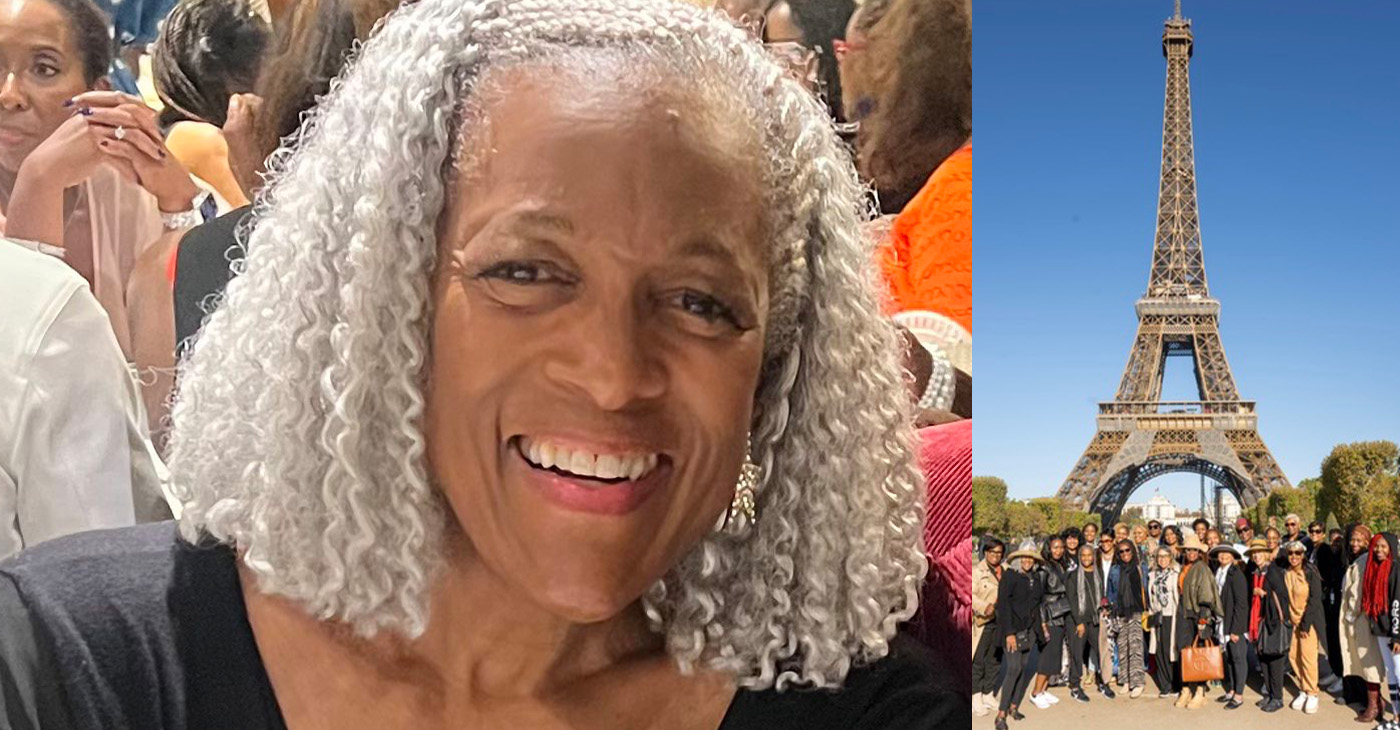
In the late 90s, Stevenson finally realized her dream of living in Paris, now with her daughter. She started exploring the history of Africans in the city and would go on to teach others the same. Her business, which she named Black Paris Tours (BPT), received a significant boost when a family friend gave her a stack of cash and encouraged her to expand on the knowledge that she had only started to share with people she knew.
By Post Staff
There were two things Oakland-born, East Palo Alto-raised Ricki Stevenson always dreamed of:
- Going to New York as a newscaster to tell the true story of Blacks in America.
- Living and working in Paris one day.
Her dreams of life in Paris began when she was three years old and her mother, a former professional dancer, took her to see Josephine Baker perform. She was 11 when her parents took her to the Stanford University campus to meet James Baldwin, who was speaking about his book, “The Fire Next Time.” Ricki says that’s when she knew she’d one day live in Paris, “the city of light!”
But before that would ever happen, she had a tumultuous career as a newscaster across the country that was inspired by her family’s history.
Stevenson recalls marching with Cesar Chavez as he fought for labor rights for farm workers in California.
“Are we Mexican too?” she asked her parents. “No, but we will fight for everyone’s human rights,” they responded to her.
Ironically, Ricki’s paternal family roots went back to Greenwood, Oklahoma, infamous for the 1921 bombing of Black Wall Street. A time when Black people had oil wells, banks, and a thriving business community.
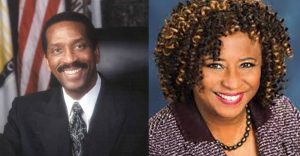
This background would propel her into a 25-year journalism career that gave her the opportunity to interview greats like President Jimmy Carter, PLO leader Yassir Arafat, James Baldwin, Rev. Jesse Jackson, UN Ambassador Andrew Young, Miriam Makeba, and the leaders of South African liberation movements.
A job offer from KCBS radio brought her back to the Bay Area in the 1980s. Then came the switch to TV when she was hired as a Silicon Valley business reporter with KSTS TV, working at the first Black-owned television station in northern CA (created and owned by John Douglas). Along the way, Stevenson worked as an entertainment reporter with BET; coproduced, with her disc jockey brother Isaac, a Bay Area show called “Magic Number Video;” lived in Saudi Arabia; worked as an international travel reporter with News Travel Network; and worked at KRON TV a news anchor and talk show host.
In 1997, Stevenson realized her dream of living in Paris with her young daughter, Dedie. She started exploring the history of Africans in the city and would go on to teach others the same. Her business, which she named Black Paris Tours (BPT), received a significant boost when a family friend, Admiral Robert Toney put a chunk of money in her hand. He said, “Ricki, my wife and I have been coming to Paris for 20 years, but in just two days with you and Dedie, we’ve learned and seen more than we ever did before.”
Years after BPT took off, Ricki met Nawo Carol Crawford and Miguel Overton Guerra, who she recruited as senior scholar guides for Black Paris Tours.
Guerra says he is proud of his work with Black Paris Tours in that it provides a wealth of information about the rich legacy of African and African American history and influence in Paris and Europe.
“I tend to have a feeling for history always being a means of a reference point backwards … you start to understand the history, that it isn’t just the United States, that it began with African people,” Guerra says.
He said that it’s been a pleasure to watch people learn something they didn’t know before and to take them through the city to key points in Black history, like hangout spots for writers like Baldwin and Richard Wright, restaurants in the busiest parts of Paris, the home of Josephine Baker and so much more.
Although the tours are open to all, Guerra hopes that those of African descent from all over the world can embrace that they don’t have to just stay where they are because movies and media have portrayed cities like Paris to be only white, it’s multicultural and accepting to all.
“We’ve been here, and we’ve been there, going way back when. And we shouldn’t be considered or consider ourselves to be strangers in any place that we go to,” he said.
Stevenson notes they’ve had 150,000 people take their tour over the years, with notables like former NFL quarterback Colin Kaepernick, Smokey Robinson, Steve Harvey, Miriam Makeba, and more.
Friends and former media colleagues of Stevenson compliment the BPT crew on their knowledge of the city and their ability to always keep it interesting.
“He [Guerra] just had a deep, deep wealth of knowledge and he was constantly supplanting information with historical facts and the like. I love that it was demonstrating and showing how Black people have thrived in Paris or contributed to the culture in Paris,” Candice Francis said.
She toured in the summer of 2022 and stated that in the two weeks that they visited Paris, BPT was the highlight of her trip. She shared that she was proud of Stevenson and the life she’d managed to manifest and build for herself.
“Even if you’re visiting Paris for the tenth time, if you haven’t taken the tour, then by all means, take it,” Francis emphasized.
Magaly Muñoz, Gay Plair and Paul Cobb also contributed to this story. You can book your own adventure with Black Paris Tours at www.blackparistour.com.



Listening as a Lifeline: A Doula’s Witness to Black Maternal Health

New Protections for Ticket Buyers: Gov. Newsom Signs Assemblymember Isaac Bryan’s Bill

‘We Don’t Talk Trash — We Pick Up Trash!’

Zakiya Jendayi Arrested, Locked Out of Home by Sheriff’s Deputies

Oakland Post: Week of September 30 – October 6, 2026

Asm. Corey Jackson Announces Launch of 24-Hour Childcare in His District

IN MEMORIAM: The Rev. Leon “Sonny” Clark, Longtime Orange County Pastor and Community Leader, Dies at 72

Poll: Becerra Widens His Lead Over Hilton; Californians Split on Wealth Tax

From Historic Memories to New Possibilities: Oakland Celebrates Coliseum 60

County Office of Education Says OUSD Finances Are Getting Healthier, Materially Stronger

LIVE FREE Sunday Dinner Brings Faith, Fellowship and Civic Conversation to Oakland

Remembering Chauncey Bailey as Student Journalists Face Threats to Truth-Telling

BLACspace Cooperative Invites Bay Area to Experience Oakland’s Black Cultural Ecosystem Through a BLAC Map Tour + Party

In Wake of Death on Doorstep, Williams Chapel Baptist Church Calls for Better Care, Funding for Unhoused

Oakland Centenarian Nuna McKee Honored!

Standoff for Justice: Our Homes Are Worth Fighting For

Oakland Post: Week of August 26 – September 1, 2026

Frontier Airlines’ Return to Oakland Airport Brings Flights, Jobs and Opportunity

Gubernatorial Candidate Steve Hilton Blasts California New Tire Rules; Newsom Hits Back

Chef Sharon Lee Blends Culinary Excellence, Education and Empowerment

Jackie Wright Champions Bay Area Stories, Filmmakers and Cultural Institutions

Misnamed ‘Parent’ PAC Seeks to Influence Oakland School Board Elections

Oakland Coliseum Project Opens Door for Small Businesses to Build Bigger

Big City Mayors Ask for “Yes” Vote on Housing Bond Measure; Conservatives Say “No”

Gov. Newsom’s Latest Appointees Include Sacramento Advocate for Formerly Incarcerated Students; State’s New Tech Chief

Longtime BWOPA Member Brendalyn Goodall Appointed to California Workforce Development Board

Gov. Newsom Signs Law Shielding Immigration Aid Workers From Doxing Threats

Secretary of State Shirley N. Weber Urges Californians to Vote Early as Voter ID Battle Intensifies

Oakland Post: Week of September 2 – 8, 2026

IN MEMORIAM: Dolly Parton Dead at 80 — How She Built a Legacy of Love and Earned Her Place in Black Culture

The Conversation With Al McFarlane 6/23/26

Media Monday 6/22/26

LIVE! ASK ALMA! — TUES. 6.23.26 7PM EST

Car Buying Secrets: 4 Hidden Checks Before You Sign!

Is This 550 HP Charger Worth YOUR Money? AutoNetwork Review

Celebrating Juneteenth – Frederick Douglass on education and resistance

LIVE! — ASK ALMA! — TUES. 6.19.26 7PM EST

Hyundai Ioniq 5 Parking, Safety, and 360 View #shorts

2025 Ioniq 5 New Wiper & Powerful Performance! #shorts

Electric SUV Range: Is 259 Miles Enough? #shorts

EV Charging: How Fast Can You Charge an Electric Vehicle? #shorts

Biometric Cooling… Messaging Seats…Come on! 2025 Infiniti QX80 Autograph 4WD

Charged Up: Witness the Magic of a Fully Electric Car! #shorts

Range Rover Sport PHEV Included…: See What’s Inside This Luxury SUV! #shorts

Invisible Hood View: Perfect Parking with X-Ray Vision! #shorts
-
 Community3 weeks ago
Misnamed ‘Parent’ PAC Seeks to Influence Oakland School Board Elections
-
 Activism4 weeks ago
Oakland Post: Week of September 2 – 8, 2026
-

 Community3 weeks ago
Richmond Tiny House Village Farm & Garden Set to Open Gates on Sept. 26
-

 Activism3 weeks ago
Oakland Post: Week of September 9 – 15, 2026
-

 Black History3 weeks ago
Latest Massacre in Haiti Reveals Cruelty U.S. Deportations
-

 Black History3 weeks ago
OPINION: Nolan Wells’ Death One of Several Signifying Racial Terror Lives on in U.S. South
-

 Community3 weeks ago
Democratic Clubs Interview Candidates for Oakland School Board
-

 Business2 weeks ago
Mayor Lee Announces $1 Million Kaiser Permanente Grant for Pilot Program to Address Homelessness, Clean Up Public Spaces throughout Oakland

Pingback: Yahabari..South Florida Afro American Aggregated News Portal ! - For African Migrants, Trek to Europe Brings Risk, Heartbreak
Pingback: Yahabari..South Florida Afro American Aggregated News Portal ! - For African Migrants, Trek to Europe Brings Risk, Heartbreak