
#NNPA BlackPress
60 Years Ago: Students Launched Sit-In Movement
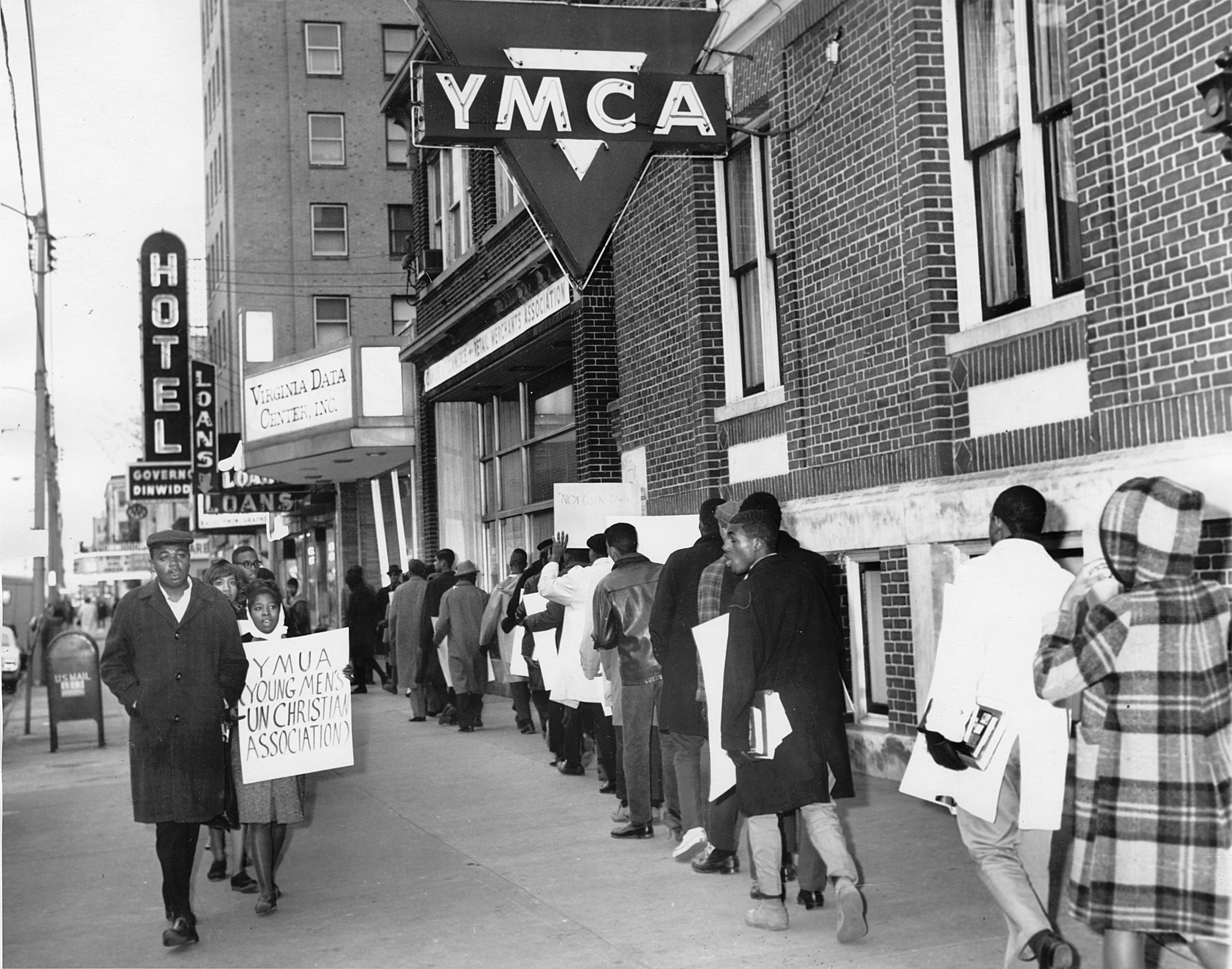
NNPA NEWSWIRE — Violent episodes were the exceptions and not the rule of the massively spreading Sit-in Movement. In nearly all sit-in cities, black protesters made immeasurable efforts to avoid violence at all cost since the movement and training centered on non-violent demonstrations in confronting inequality.

Dr. Kelton Edmonds is a Professor of History at California University of Pennsylvania. His primary research is on Black Student Activism in the United States. He is a native of Portsmouth, VA and graduated from I.C. Norcom High school in 1993.

By Dr. Kelton Edmonds, Special to The New Journal and Guide
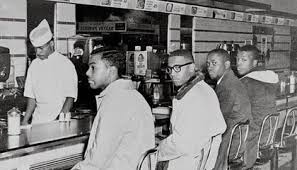
February 1, 2020 marks the 60th anniversary of the launch of the historic Sit-in Movement, when four African-American freshmen from North Carolina A&T State College (now University) in Greensboro, NC sparked the non-violent and student-led wave of protests that ultimately resulted in the desegregation of F.W. Woolworth and other racially discriminatory stores.
The brave freshmen from NCA&T, who would later be adorned with the iconic label of the “Greensboro Four”, consisted of David Richmond, Franklin McCain, Joseph McNeil, and Ezell Blair Jr. (Jibreel Khazan). On February 1, 1960, the Greensboro Four bought items at Woolworth’s, then sat at the ‘whites-only’ lunch counter and refused to leave until they were served. Although waitresses refused to serve them, in accordance with the store’s racist policies, the four would continue their protest and in the following days and weeks would be joined by more students from NCA&T, the nearby all-women’s HBCU Bennett College and students from other nearby colleges and high schools.
In a 2003 interview, Khazan (formerly Blair, Jr.) reflected on the daily threats of violence and verbal assaults from white antagonists, as one caller reached him on the dorm hall phone and bellowed, “…executioners are going to kill you niggers if you come back down here tomorrow, you and your crazy friends.”
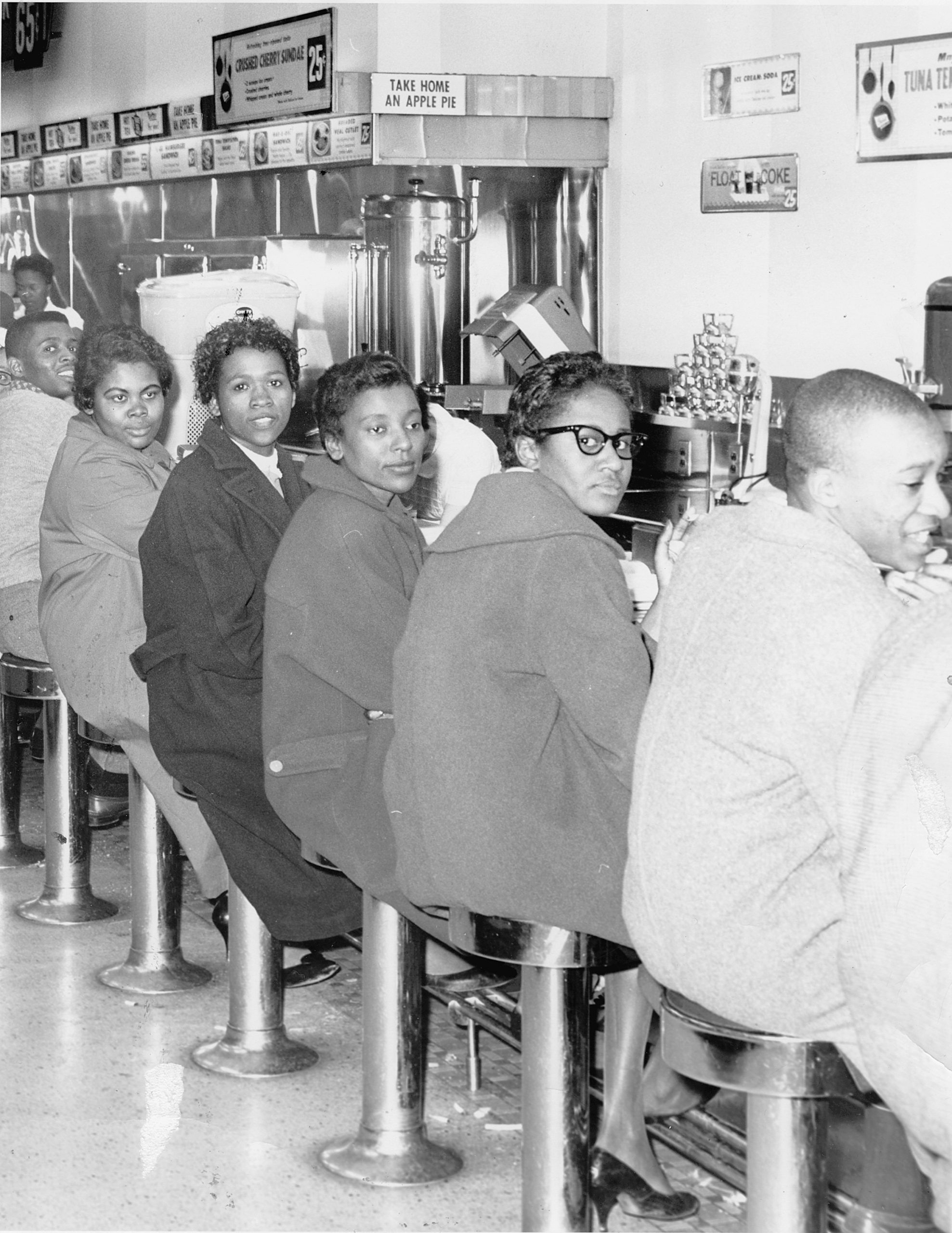
Students from Norfolk’s Booker T. Washington High School stage set in at Granby Street’s Woolworth’s lunch counter. Photo: New Journal and Guide Archives
White student allies who protested alongside black students were not immune from death threats either, as Khazan recalled a white student protester explaining that their college president was threatened by an anonymous caller saying, “…if those nigger loving bitches come downtown again and sit with those niggers, we going to kill them and burn your school down.”
The Greensboro students persisted nevertheless, and soon, the protests that flooded the lunch counters of the segregated store would spread to other cities throughout the South beginning in North Carolina cities such as Elizabeth City, Charlotte and Winston-Salem, in addition to cities in Virginia.
In Virginia
Virginia played a primary role in the Sit-in Movement, as Hampton, Virginia became the first community outside of North Carolina to experience sit-ins on February 10th.
Initially, three students from Hampton Institute sat-in at the downtown Woolworth’s lunch counter in Hampton and were refused service. As a testament to the veracity of the movement, within two weeks, over 600 students in Hampton were sitting-in.
On February 12th, sit-in protests spread to Norfolk, as 38 black protesters staged a sit-in at the Woolworth lunch counters on Granby and Freemason streets.
Similar demonstrations were held in Portsmouth, in the mid-city shopping center at lunch counters in Rose’s Department store on February 12th and at Bradshaw-Diehl department store later that week.
Led by students from I.C. Norcom High school, the Portsmouth sit-ins would be one of the few cities that experienced violence, albeit initiated by white anti-protesters armed with chains, hammers, and pipes and resulting in retaliation from the black students after being attacked.
Violent episodes were the exceptions and not the rule of the massively spreading Sit-in Movement. In nearly all sit-in cities, black protesters made immeasurable efforts to avoid violence at all cost since the movement and training centered on non-violent demonstrations in confronting inequality.
Edward Rodman, high school activist in Portsmouth, admitted they were initially unorganized and untrained in passive resistance, which played a role in their reactions to the violent anti-protesters. The Congress for Racial Equality (CORE) connected with the Portsmouth student protesters and over the next few days conducted intense and successful non-violent workshops with the young people. Soon after, the Portsmouth students reignited their movement without incidents of retaliation toward violent antagonists.
North of Hampton Roads, Richmond, Virginia experienced sit-ins as well as Baltimore, MD, and dozens of other cities by the end of February. By mid-April, sit-in protests reached all southern states involving thousands of black student activists and sympathizers.
The coordinated demonstrations of thousands of black student protesters and sympathizers put insurmountable pressure on Woolworth’s, as it became nearly impossible for regular customers to purchase items, eat at the lunch counters and even enter the store in many instances.
On May 25th, the sit-in movement received a major victory as lunch counters at Woolworth’s in Winston Salem, NC desegregated. Soon after, Woolworth’s in Nashville, TN and San Antonio, TX also integrated. Finally, on July 25, ground zero, Woolworth’s in Greensboro integrated its lunch counter. With the possibility of facing bankruptcy, F.W. Woolworth totally acquiesced and desegregated all of its lunch counters throughout the nation by the end of the summer of 1960.
The Legacies And Larger Significance Of The 1960 Sit-in Movement, Sparked In Greensboro
Similar to the successful 1955 Montgomery Bus Boycott, the students’ triumphant coordinated protests in 1960 further demonstrated how mass economic boycotts could lead to desegregationist social victories, particularly when targeting businesses that relied heavily on black patronage. The Greensboro Four only set out to challenge and change the discriminatory practices of the local Woolworth’s, yet their movement expanded exponentially to ultimately bring about the desegregation of all Woolworth’s lunch counters in the country.
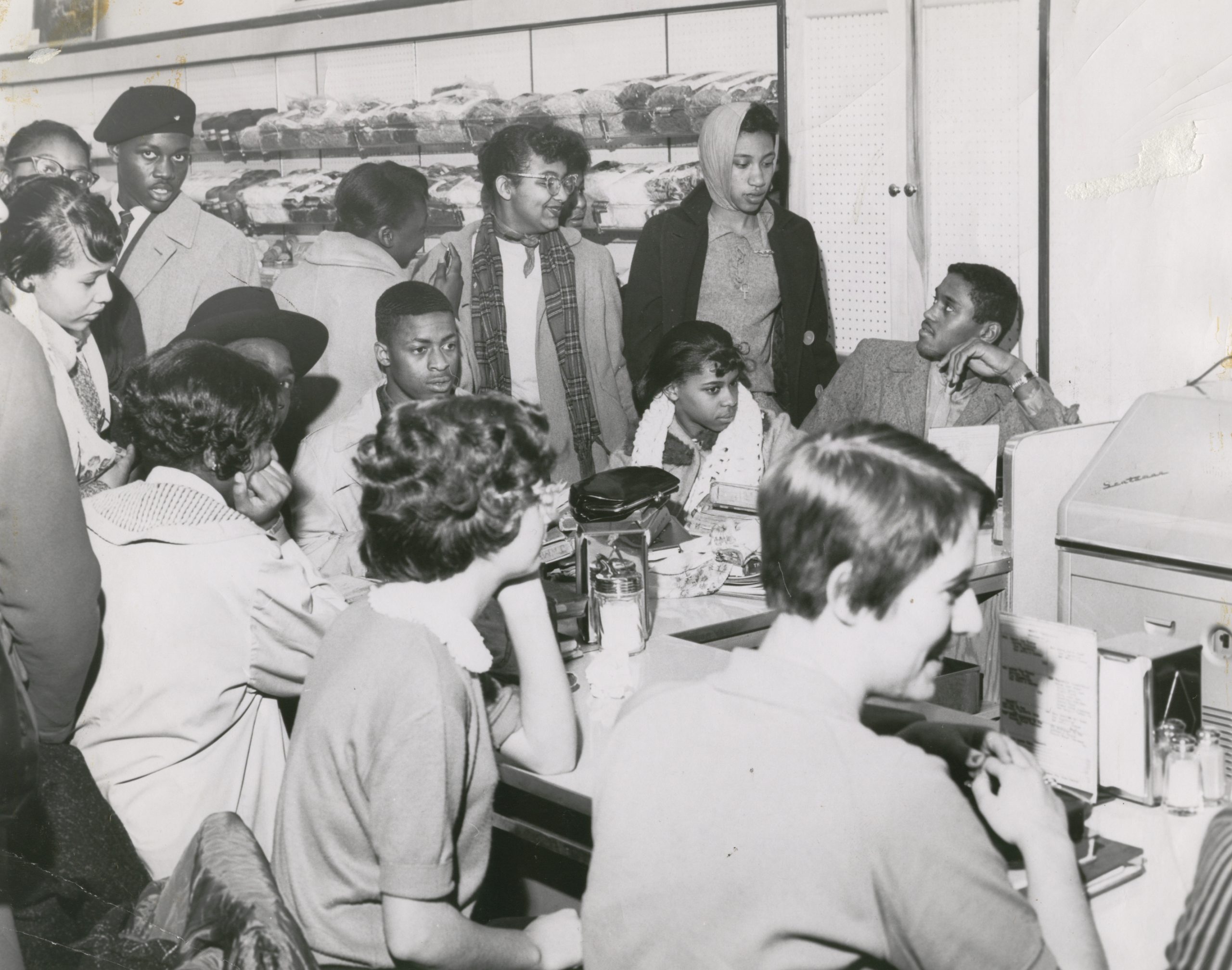
Unidentified sit-in demonstration. Photo: New Journal and Guide Archives
The students of the Civil Rights era suddenly possessed a new weapon, the mass sit-in, which would continue to be used in Greensboro and around the country in various forms. The sit-ins combined with the freedom rides led to black students establishing their unique value and niche to the larger Civil Rights Movement. Black students understood their unique, collective power and desired to harness their efforts under a national apparatus. Consequently, another major legacy of the student movement that emerged in Greensboro was it also directly led to the birth of the Student Non-Violent Coordinating Committee (SNCC) in April of 1960 in nearby Raleigh, NC on the campus of Shaw University.
SNCC would soon emerge as one of the most formidable organizations of the decade, elevating students to the forefront of the Civil Rights Movement.
After marveling at the magnitude and effectiveness of the student protesters during the sit-ins, major Civil Rights organizations such as the NAACP, SCLC and CORE pressured the students to collapse their meteoric movement into the youth wing of one of their institutions under their supervision.
The students however, decided to remain autonomous and formulate their own student-led organization, while still adhering to non-violent principles. The students’ decision to remain student-led received noteworthy support from several key adult Civil Rights leaders in Greensboro in addition to Ella Baker from SCLC.
SNCC would prove to be an indispensible organization that not only championed directly confronting Jim Crow racism on numerous levels through organized protests and massive voter registration drives, but SNCC also further popularized the concept of participatory democracy and was the first major Civil Rights organization to evolve toward seriously embracing principles of black power ideology under Stokely Carmichael’s (Kwame Ture) leadership in 1966.
Another legacy of the 1960 sit-in movement was that it offered the inspiration and blueprint for the second and more colossal wave of mass student protest in Greensboro in 1963. The 1963 student demonstrations in Greensboro would be even more locally successful than their predecessor as they desegregated all remaining businesses in downtown Greensboro and the student leader of the second wave of sit-ins, Jesse Jackson, would parlay his leadership in the student protests onto the national Civil Rights stage throughout the 20th century. Similar to Greensboro, other cities throughout the South would experience a second and even third wave of similar protests to successfully desegregate other remaining businesses throughout the decade.
Ultimately, all mass student protests of the 1960s and thereafter owe their viability to the student-led Greensboro protests of 1960, including student black power activists and anti-war activists of the late 60s and 70s. Although its origins predate 1960, even one of the largest and most noteworthy national student organizations, Students for a Democratic Society (SDS), owe its resurgence and major elements of its effectiveness to the spark ignited by the Greensboro Four on February 1, 1960.
Even recent episodes of student activism exhibited in the Ferguson, Missouri protests of 2014-15, as well as the student protests led by black students at the University of Missouri in 2015, which ultimately led to the resignation of the chancellor, have attributes that correlate to the 1960 student movement. The student movement of 1960, ignited by the Greensboro Four, provided a blueprint for future students to build upon, perfect, and utilize in a variety of ways for a plethora of circumstances.
Most importantly, what happened in 1960 showed young people the power they possessed to address their grievances and ultimately bring about change on both local and national levels if they organized themselves and remained committed.
Unique Weapons for Non-violent Students
In addition to the typical traits that come along with youthfulness such as idealism and impatience, student success during the 1960 sit-ins and thereafter was directly affixed to two distinct assets possessed by students juxtaposed to their older adult activist counterparts. The first asset is condense demographics, as student-body populations were primarily located on campuses and/or nearby the colleges.
The fact that hundreds to thousands of students in a college town lived within a square mile of each other led to the expeditious mobilization of large numbers of people and efficient dissemination of information and strategy.
Although black churches proved to be invaluable throughout the Black Freedom Struggle from Reconstruction to the Civil Rights Movement, there was still no equivalent amongst the older black generation to the college campus’ effectiveness as both a meeting place and as a domicile for housing and dispersing the shock troops of the movement.
The second major asset specific to students would be the relation between arrest and reprisal. At some of their demonstrations prior to 1960, older black activists strategically triggered their arrests for charges such as trespassing or loitering as a way to dramatize unjust treatment via media coverage and to pressure white officials to change discriminatory laws.
Once mobilized per the sit-ins however, student activists were able to invite and withstand incarceration for far longer periods of time and in extremely larger numbers. Students vastly elevated this critical strategy of the overall movement. During 1960 and beyond, the enormous numbers unleashed by black student activists put unyielding pressure on local law enforcement, political officials and jail facilities. In many cities like Greensboro, there were not enough jail cells for all of the students arrested, particularly since the students refused bail and chose to remain incarcerated.
This action severely drained local municipalities of money and resources, forcing local governmental, business and law officials to dramatically adjust policies and sometimes change discriminatory laws. Student activists were able to perfect this strategy because they could endure prolonged imprisonment without fear of major job or housing reprisal.
Comparably, many older activists, whose families depended on their incomes, could not sacrifice prolonged periods of incarceration, as it would threaten their livelihood. Furthermore, angry employers or landlords, who disapproved of their protest activities, could threaten to fire them or abruptly remove them from property they were renting.
Students were not confronted with the same ramifications of these economic, employment and housing reprisals, as the majority of them lived on campuses and perhaps had part-time, albeit replaceable, minimum wage jobs, often with no dependents.
Drawing the contrast between student activists versus the older activists is not synonymous with drawing divisions, as the older activists understood the assets that students solely possessed to further the movement along. In fact, many of the older activists encouraged the younger activists and actively supported them in numerous ways.
For example, when Bennett College students, who were the heroines on the 1963 Greensboro protests, were arrested and refused bail during the 1963 sit-ins in Greensboro, their professors came to the jail facilities and gave them their classroom and homework assignments every week. This scenario personifies the symbiotic relationship between both generations in the fight against racism, as the professors showed their appreciation for the young people’s unique and valiant position for the benefit of the entire race and future generations, yet not removing the students from their responsibilities and academic requirements.
Altogether, students endured countless hardships that included incarceration, verbal assaults and physical violence. Sometimes, attacks from white antagonists were compounded by disproportionate responses from law enforcement, as Portsmouth activist, Edward Rodman explained, “…the fire department, all of the police force and police dogs were mobilized. The police turned the dogs loose on the Negroes-but not all the whites.”
Students also understood that they could pay the ultimate price for protesting against the status quo of racial inequality, as numerous activists were murdered throughout the Civil Rights era. Nevertheless, over 50,000 black students and sympathizers participated in the sit-ins of 1960. As historian Clayborne Carson highlighted, “Nonviolent tactics, particularly when accompanied by rationale based on Christian principles, offered black students…a sense of moral superiority, an emotional release through militancy, and a possibility of achieving desegregation.”
A movement within a movement was born on February 1, 1960 and that movement evolved into its own distinct force by the middle of the decade. Soon after the sit-ins began, students realized their collective prowess, as student activism consistently helped define the decade of the 60s in forcing monumental political, legal and social changes throughout the nation.
Finally, the black student activists of the 1960 sit-ins did three important things, albeit unintentional: they helped lay the foundation for all collective student activism in the 60s and beyond, they played a legendary role in the larger African-American Freedom Movement that began as early as Africans’ arrival to colonial America, and they cemented a valuable place in one of America’s most significant traditions, the protest tradition, which has continuously defined and propelled our country since its inception.
Our society, and all post-1960 social movements, have undeniably benefited from the audacity of those four brave freshmen and their actions on February 1, 1960.
Dr. Kelton Edmonds is a Professor of History at California University of Pennsylvania. His primary research is on Black Student Activism in the United States. He is a native of Portsmouth, VA and graduated from I.C. Norcom High school in 1993. He holds B.A. and M.A. degrees in Secondary Education-History from North Carolina A&T State University. He earned his Ph.D. in 20th Century US History from the University of Missouri-Columbia.










#NNPA BlackPress
NFL: Week Two Recap | Jalen Hurts did not fold; Caleb Williams exits game with injury
Philadelphia Eagles quarterback Jalen Hurts found Darius Cooper with nine seconds left for the game winning touchdown as his team beat the Tennessee Titans 24-20 in Nashville. Hurts finished the day 26/37 for 264 yards. He threw for two touchdowns and two interceptions. Prior to the final drive, the Eagles ran 25 plays for 45 […]
The post NFL: Week Two Recap | Jalen Hurts did not fold; Caleb Williams exits game with injury appeared first on BlackPressUSA.
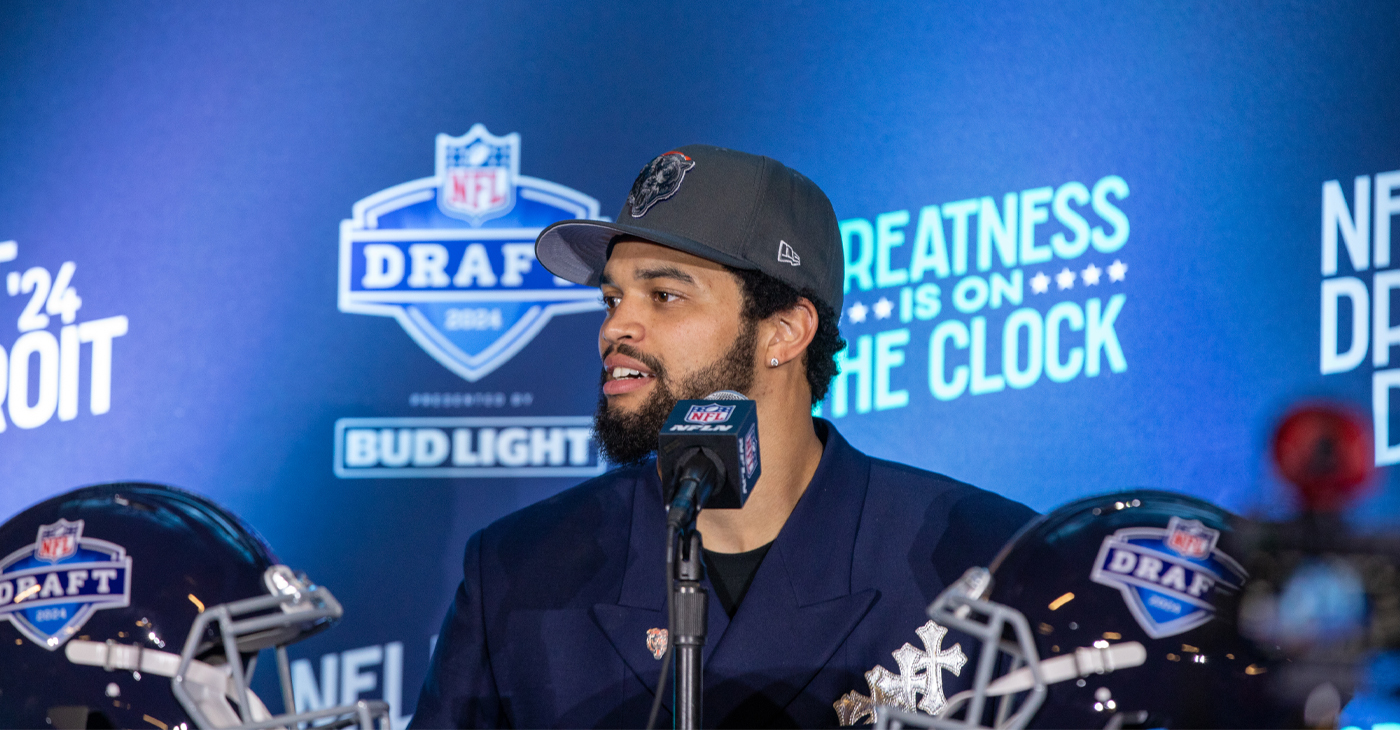
Philadelphia Eagles quarterback Jalen Hurts found Darius Cooper with nine seconds left for the game winning touchdown as his team beat the Tennessee Titans 24-20 in Nashville. Hurts finished the day 26/37 for 264 yards. He threw for two touchdowns and two interceptions.
Prior to the final drive, the Eagles ran 25 plays for 45 yards. During the final drive Hurts went 6-8 with 61 passing yards and the touchdown. Titans defensive tackle — and team captain — Jeffery Simmons said this week that the way to defend Jalen Hurts is to make him “play quarterback.”
Hurts said to Simmons after today’s game: “You started that sh**. I had to finish it.”
Running back Saquon Barkley suffered a stinger in the first half but he ultimately finished the game. He had four carries and nine yards and one catch for eleven yards. He will get an MRI for his injury, but admitted to Cameron Wolfe of the NFL Network he was fine.
Caleb Williams leaves game against Vikings with apparent lower-body injury
Chicago Bears quarterback Caleb Williams was helped off the field with a right leg injury with 7:42 remaining in the fourth quarter. Williams was down, writhing in pain after scrambling to his left. After departing the injury tent, Williams raised his right fist, acknowledging the crowd while expressing his frustration. Testing will commence on Monday to find out more details about his injury.
“We’ll know tomorrow,” Johnson admitted regarding Williams’ injury. “He’s in good spirits. He’s a team player.”
Williams finished the day with 138 passing yards and one interception.
“I’m actually happy it’s nothing with the knee — that was my first inclination,” Johnson said. “But, a hamstring could be pretty damaging as well. So, we’ll see. We’ll see how bad it is tomorrow and we’ll go from there.”
Bryce Young once again dominated the Falcons
Carolina Panthers quarterback Bryce Young is 5-1 against the Atlanta Falcons and is undefeated at Mercedes-Benz Stadium. Today, Young threw for 287 yards and three touchdowns as he led the Panthers to a 34-3 dismembering of the Atlanta Falcons. Georgia Tech alumnus Darren Waller caught two touchdowns and linebacker Devin Lloyd returned one of his two interceptions for a touchdown.
Cooper Rush started his second straight game for the Falcons and it did not go well. The partisan crowd voiced their displeasure after Rush completed 10/17 passes for 86 yards and two interceptions. Jack Strand entered the game for Rush prompting cheers from the Falcons fans. The rookie threw a pick-six on his first career pass attempt. Strand was the first QB to accomplish that feat since Sam Darnold in 2018 and is the first Falcons player to do that since Brett Favre in 1991. Strand finished the day with 59 passing yards and 16 rushing yards.
According to reports, quarterback Michael Penix, Jr. is expected to make his season debut this Thursday at the Green Bay Packers. His return should help the Falcons. They are the first team since the 2008 Rams to not run any plays in the red zone after the first two games to open a season.
The bright spots for the Falcons today were the Spelman College Jaguarettes performing with the Falcons cheerleaders and Florida A&M’s marching band, The Marching 100, also performed during halftime!
Jayden Daniels gets carted off after apparent arm injury
Washington Commanders quarterback Jayden Daniels appeared to injure his left elbow on the final play of the first half in his game against the Dallas Cowboys. During the play, Daniels got stepped on, braced himself for the fall, and his elbow bent the wrong way. Daniels draped a towel over his head as he exited the field on the cart.
He was later ruled out.
Daniels suffered a dislocated elbow to the same arm during week nine of last season against the Washington Commanders, which led to him being shut down for the remainder of the season.
The post NFL: Week Two Recap | Jalen Hurts did not fold; Caleb Williams exits game with injury appeared first on BlackPressUSA.
#NNPA BlackPress
The Complete Negotiation Framework — Every Stage, Every Tactic, Every Win
Master the complete vehicle-purchase negotiation framework with Roosevelt Gist and Roosevelt. Learn every stage, tactic, and win!
The post The Complete Negotiation Framework — Every Stage, Every Tactic, Every Win appeared first on BlackPressUSA.

Roosevelt Gist and Roosevelt deliver the complete vehicle-purchase negotiation framework in Episode 8 of The Color of Our Money Is Green. This episode covers the three foundations of every effective negotiation, the full seven-stage negotiation sequence with exact language for every stage, and five of the most common dealership tactics with the specific response each one requires.
What You Learn in This Episode:
The three foundations that make every negotiation tactic work
The complete seven-stage car-buying negotiation sequence
Exact language for every stage of the dealership conversation
Five common dealership tactics — the turnover, the four-square, the packed payment, spot delivery, and forced add-ons — and how to counter each one
Why signing preliminary paperwork isn’t the same as signing the final contract
___________________________________________________________________
“The Color of Our Money Is Green: A Buyer’s Guide to What Cars Actually Cost” — stan.store/RGist
____________________________________________________________________
AutoNetwork helps serious car shoppers inspect any new vehicle online before walking into a dealership. I’m Roosevelt — I’ve been reviewing cars and shaping digital car buying and credit union auto leasing since before YouTube car reviews existed.
You’ll find detailed walkaround reviews, POV test drives, and buyer-focused breakdowns covering comfort, space, features, and real-world value.
How to use the channel:
Watch the walkaround of the car you’re considering
Visit AutoNetwork.com for the full review
Check CouponsOffersAndDeals.com for current dealer specials
Walk in already knowing what you want — and what it should cost
 AutoNetwork.com
 CouponsOffersAndDeals.com
Affiliate disclosure: some links earn a small commission at no cost to you and help support the channel. Insta360 is one of those partners.
The post The Complete Negotiation Framework — Every Stage, Every Tactic, Every Win appeared first on BlackPressUSA.
#NNPA BlackPress
Mazda CX-90 Luxury: Heated Seats & Premium Comfort! #shorts
Stay toasty in the CX-90! Plush Nappa leather, heated/ventilated seats, and a memory-equipped heated steering wheel deliver ultimate luxury.
The post Mazda CX-90 Luxury: Heated Seats & Premium Comfort! #shorts appeared first on BlackPressUSA.

Experience ultimate comfort in the CX-90. Nappa leather, heated/ventilated seats, 8-way power adjustments, and memory settings for both front passengers. The heated steering wheel with memory tilt/telescope adds premium convenience.
 Watch the full video: https://youtu.be/EH5A4eQ4ipY
#AutoNetwork
The post Mazda CX-90 Luxury: Heated Seats & Premium Comfort! #shorts appeared first on BlackPressUSA.



Listening as a Lifeline: A Doula’s Witness to Black Maternal Health

New Protections for Ticket Buyers: Gov. Newsom Signs Assemblymember Isaac Bryan’s Bill

‘We Don’t Talk Trash — We Pick Up Trash!’

Zakiya Jendayi Arrested, Locked Out of Home by Sheriff’s Deputies

Oakland Post: Week of September 30 – October 6, 2026

Asm. Corey Jackson Announces Launch of 24-Hour Childcare in His District

IN MEMORIAM: The Rev. Leon “Sonny” Clark, Longtime Orange County Pastor and Community Leader, Dies at 72

Poll: Becerra Widens His Lead Over Hilton; Californians Split on Wealth Tax

From Historic Memories to New Possibilities: Oakland Celebrates Coliseum 60

County Office of Education Says OUSD Finances Are Getting Healthier, Materially Stronger

LIVE FREE Sunday Dinner Brings Faith, Fellowship and Civic Conversation to Oakland

Remembering Chauncey Bailey as Student Journalists Face Threats to Truth-Telling

BLACspace Cooperative Invites Bay Area to Experience Oakland’s Black Cultural Ecosystem Through a BLAC Map Tour + Party

In Wake of Death on Doorstep, Williams Chapel Baptist Church Calls for Better Care, Funding for Unhoused

Oakland Centenarian Nuna McKee Honored!

Standoff for Justice: Our Homes Are Worth Fighting For

Oakland Post: Week of August 26 – September 1, 2026

Frontier Airlines’ Return to Oakland Airport Brings Flights, Jobs and Opportunity

Gubernatorial Candidate Steve Hilton Blasts California New Tire Rules; Newsom Hits Back

Chef Sharon Lee Blends Culinary Excellence, Education and Empowerment

Jackie Wright Champions Bay Area Stories, Filmmakers and Cultural Institutions

Misnamed ‘Parent’ PAC Seeks to Influence Oakland School Board Elections

Oakland Coliseum Project Opens Door for Small Businesses to Build Bigger

Big City Mayors Ask for “Yes” Vote on Housing Bond Measure; Conservatives Say “No”

Gov. Newsom’s Latest Appointees Include Sacramento Advocate for Formerly Incarcerated Students; State’s New Tech Chief

Longtime BWOPA Member Brendalyn Goodall Appointed to California Workforce Development Board

Gov. Newsom Signs Law Shielding Immigration Aid Workers From Doxing Threats

Secretary of State Shirley N. Weber Urges Californians to Vote Early as Voter ID Battle Intensifies

Oakland Post: Week of September 2 – 8, 2026

IN MEMORIAM: Dolly Parton Dead at 80 — How She Built a Legacy of Love and Earned Her Place in Black Culture

The Conversation With Al McFarlane 6/23/26

Media Monday 6/22/26

LIVE! ASK ALMA! — TUES. 6.23.26 7PM EST

Car Buying Secrets: 4 Hidden Checks Before You Sign!

Is This 550 HP Charger Worth YOUR Money? AutoNetwork Review

Celebrating Juneteenth – Frederick Douglass on education and resistance

LIVE! — ASK ALMA! — TUES. 6.19.26 7PM EST

Hyundai Ioniq 5 Parking, Safety, and 360 View #shorts

2025 Ioniq 5 New Wiper & Powerful Performance! #shorts

Electric SUV Range: Is 259 Miles Enough? #shorts

EV Charging: How Fast Can You Charge an Electric Vehicle? #shorts

Biometric Cooling… Messaging Seats…Come on! 2025 Infiniti QX80 Autograph 4WD

Charged Up: Witness the Magic of a Fully Electric Car! #shorts

Range Rover Sport PHEV Included…: See What’s Inside This Luxury SUV! #shorts

Invisible Hood View: Perfect Parking with X-Ray Vision! #shorts
-
 Community3 weeks ago
Misnamed ‘Parent’ PAC Seeks to Influence Oakland School Board Elections
-
 Activism4 weeks ago
Oakland Post: Week of September 2 – 8, 2026
-

 Activism3 weeks ago
Oakland Post: Week of September 9 – 15, 2026
-

 Community3 weeks ago
Richmond Tiny House Village Farm & Garden Set to Open Gates on Sept. 26
-

 Black History3 weeks ago
Latest Massacre in Haiti Reveals Cruelty U.S. Deportations
-

 Black History3 weeks ago
OPINION: Nolan Wells’ Death One of Several Signifying Racial Terror Lives on in U.S. South
-

 Business2 weeks ago
Mayor Lee Announces $1 Million Kaiser Permanente Grant for Pilot Program to Address Homelessness, Clean Up Public Spaces throughout Oakland
-

 Community3 weeks ago
Democratic Clubs Interview Candidates for Oakland School Board
