
Marin County
Barbara Lee Celebrates Landmark Hearing on Child Poverty


On March 3, the House Labor-HHS-Education Appropriations Subcommittee hosted a hearing on a study from the National Academy of Science titled “A Roadmap to Reducing Child Poverty.” This landmark study was commissioned by Congresswoman Barbara Lee (CA-13) and Congresswoman Lucille Roybal-Allard (CA-40) with support in 2016 from then-Ranking Member Rosa DeLauro (CT-3) and then-Chairman Tom Cole (OK-4) in the LHHSE Appropriations bill, as the first-ever federally funded study on child poverty. Released last year, the study outlines a number of policies that would be able to cut poverty in half over the next 10 years.
“It is a moral outrage that in the richest nation on Earth, there are still millions of children living in poverty. No parent should have to choose between keeping a roof over their child’s head and putting food on the table,” said Lee. “But for many children, especially children of color, systemic barriers keep them and their families trapped at the bottom of the economic ladder.
“As Chair of the Majority Leader’s Task Force on Poverty and Opportunity and as someone who was on food stamps and welfare when I was a single mom, I know just how important this hearing is today to help inform our work here in Congress. “A Roadmap to Reducing Child Poverty” outlines evidence-based, non-partisan policy recommendations that can cut our child poverty rate in half within 10 years. We know what work must be done to tackle child poverty once and for all. We just need the political will to do so.”
“Child poverty in America puts an immense physical toll and financial strain on our young people, our families, and our nation,” said Congresswoman DeLauro. “Millions of children across this country go to bed hungry, wake up cold, grow up with less, and struggle in communities that provide few chances to succeed, to grow, to make mistakes without destroying lives.
“That is why we need to expand and strengthen the Child Tax Credit, as outlined in my bill with Congresswoman Suzan DelBene, the “American Family Act.” And our Appropriations Subcommittee can address child poverty, as it provides some of the largest sums of discretionary funds in the Congress for the well-being of children—from early childhood programs and educational programs to labor programs that help connect people to the training and skills they need to make ends meet.
As members of Congress and of the Appropriations Committee, we will continue advancing policies that can help immensely and immediately,” DelBene said.
Congresswoman Barbara Lee’s press office created this report.












Activism
At the event, 16 entities signed the EIP pledge, vowing to take steps to increase public contracting opportunities in their spheres for small and historically underutilized businesses. The pledge signees included Hub International, the Port of San Francisco, the San Francisco Public Utilities Commission, California High-Speed Rail Authority, the Port of Oakland, Robert Graham of Webcor Builders, Holder Construction, the Weitz Company, Sky Blue Builders, Hornblower, Swinerton, Luster National, Talson Solutions, Center for Community Wealth Building, and the Construction Contractors Alliance.


By Calvin Naito, Special to The Post
On June 4, a national nonprofit named the Equity in Infrastructure Project (EIP) – which aims to increase public construction contracting opportunities for small and historically underutilized businesses – held a day-long event in downtown San Francisco to rally supporters and build momentum to its cause.
It was attended by more than 100 individuals from public agencies, private firms, and other organizations committed to increasing contracting opportunities with governmental agencies, thereby creating more competition and lowering public costs.
The EIP event was held the Hyatt Regency San Francisco in conjunction with BuildIT, which aims to increase contracting opportunities for LGBT-owned businesses.
At the event, 16 entities signed the EIP pledge, vowing to take steps to increase public contracting opportunities in their spheres for small and historically underutilized businesses.
The pledge signees included Hub International, the Port of San Francisco, the San Francisco Public Utilities Commission, California High-Speed Rail Authority, the Port of Oakland, Robert Graham of Webcor Builders, Holder Construction, the Weitz Company, Sky Blue Builders, Hornblower, Swinerton, Luster National, Talson Solutions, Center for Community Wealth Building, and the Construction Contractors Alliance.
Following the workshop, BuildIT hosted a VIP evening reception honoring EIP, whose principals – Phil Washington, John Procari, and Rick Jacobs – accepted the award.

The event also set in motion the coalition’s efforts to implement recommendations from EIP’s “Procurement for Prosperity: A Playbook.”
The Playbook is a practical guide for public agency leaders and procurement and contracting practitioners to grow the capacity of small and first-time contractors, strengthen competition, and deliver better value for taxpayers.
Toks Omishakin, Secretary of the California State Transportation Agency (CalSTA), a long-time EIP supporter, also told attendees, “This is about commitment. This has been a life’s work. This is a tailwind moment.”
The event’s presenting sponsor was Hub International, one of the largest insurance brokerages in the nation, which was joined by partners Travelers Insurance and the State Compensation Insurance Fund.
After the pledge-signing ceremony, attendees participated in a workshop in which they examined the policies, practices, and programs needed to meet EIP goals, learned from practitioners, and identified next steps toward utilizing the Playbook.
Ingrid Meriwether, formerly of Merriwether & Williams Insurance Services (MWIS) and current president of Hub International’s Aligned Risk Management, MWIS, described the hard-fought lessons she and her MWIS team have learned over the last three decades administering contractor development programs (CDPs) for the City and County of San Francisco, Alameda County, City of Los Angeles, LA Metro, and other municipalities.
The CDPs help small and local construction firms win public infrastructure contracts with these government agencies. The program provides bonding assistance, contract financing, technical support, training, and other services to underrepresented businesses funded by public agencies who seek greater contracting participation with these firms.
Merriwether said programs like these “break down systemic barriers, create greater fairness, and save taxpayers money by enabling more competition. The contractor development programs have, cumulatively, over two decades, helped contractors access over $1 billion in bonding, supporting over $380 million in awarded contracts, and maintaining a loss ratio 250 times lower than the industry average – while saving participating municipalities more than $27 million in contracting costs as a result of enabling more competition.”
Rick Jacobs, EIP co-founder and co-chair urged attendees make plans to meet again in the near future “to continue building on this work, share progress on organizational commitments, and discuss how we can collectively advance the goals of the EIP pledge.”
For more information on the EIP and to access a copy of the Playbook, go online to https://equityininfrastructure.org/
Calvin Naito is communications manager for Equity in Infrastructure Project.

Alameda County
The Marin City Flea Market Is Back
The Marin City Flea Market returns on May 23, offering arts, crafts, vintage items, and collectibles. The market aims to uplift local vendors and celebrate cultural diversity.

By Godfrey Lee
After a long absence, Marin City will once again hold its flea market. The market will have its grand opening on Saturday, May 23, from 8 a.m. to 2 p.m. at the St. Andrew Presbyterian Church parking lot on 101 Donahue St. It will be held every fourth Saturday of the month
The market will be free to the public
There will be arts, crafts, vintage, collectibles, and other items on sale at the market. Interested vendors can contact info@marincityflea.org or text (415) 484-2984 for more information.
“The Marin City Flea Market’s mission is to uplift local vendors, celebrate cultural diversity, and provide an accessible community space where creativity, entrepreneurship, and connection can thrive,” says their website, marincityflea.org.
The flea market is sponsored and run by the Rotary Club of Marin City.
For more information, contact info@marincityflea.org. Or text to (415) 484-2984
Activism
Marin City Public Housing Residents Demand a Voice in County’s Renovation Plans
Representation has been a continuous struggle for the Residents Council, she said in an interview with the Post News Group. In 2014, the tenants took the county to federal court over this issue, and prevailed, resulting in an MOU that was in effect from 2014 to 2024, said McLemore. “Now, they are not responding to our rightful requests to participate. They are not giving us a legal justification for their position.”
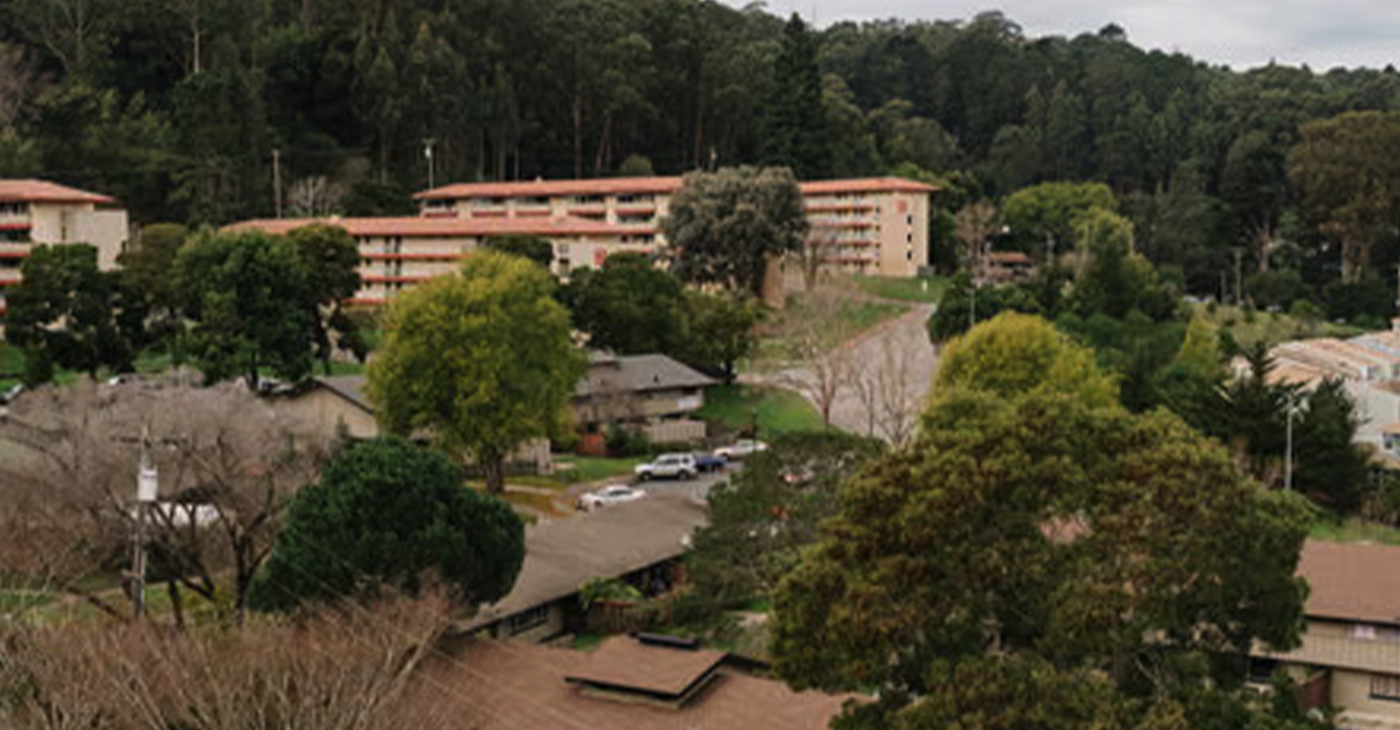
Tenants say the County of Marin is ignoring federal law requiring resident council participation
By Ken Epstein
Marin City public housing residents say the County is illegally depriving them of their rights to participate in renovation decisions that affect the future of their housing, raising deep concerns over whether the county ultimately will find a way to displace them.
According to regulations established by the U.S. Department of Housing and Urban Development (HUD), Marin City public housing residents have the right to organize, elect resident councils, and hold public housing agencies accountable for involving them in management decisions.
Without resident participation, the Board of Housing Commissioners, made up of the five Marin County Board of Supervisors and two resident comissioners, has approved a $226 million project. The plan calls for renovation of the 296 units in Golden Gate Village (GGV) and focuses on interior improvements. The project is scheduled to start in July.
Residents’ concerns have a long history, said Royce McLemore, president of the Golden Gate Village Residents Council and a 50-year resident of Marin City,
Representation has been a continuous struggle for the Residents Council, she said in an interview with the Post News Group. In 2014, the tenants took the county to federal court over this issue, and prevailed, resulting in an MOU that was in effect from 2014 to 2024, said McLemore. “Now, they are not responding to our rightful requests to participate. They are not giving us a legal justification for their position.”

With no current MOU mandating training and participation of residents, the legal basis for all the redevelopment decisions made by the county since 2024 is questionable, said Terrie Green, executive director of Marin City Climate Resilience. “We are experiencing voicelessness. If residents had a voice, we wouldn’t be where we are today,” she said.
County decisions include a plan, in line with federal regulations, to convert GGV from public housing to a public-private enterprise that allows for private investment. The Marin Housing Authority has created a limited partnership that includes Burbank Housing – which will renovate the units and manage the property – and Wells Fargo Bank, the investor.
This change in federal policy regarding public housing, which includes a shift to a Section-8 voucher system, has resulted in gentrification across the country, particularly affecting African Americans in cities such as San Francisco.
Shifts in criteria of what is considered affordable could also end up pricing residents out of their living units. At present, low income in Marin County is officially considered $156,000. But the median household income in Marin City is significantly lower at $68,846.
Damian Morgan, a community advocate with Marin City Climate Resilience, questioned why the county is renovating apartments without fixing toxic infrastructure that is impacting the lives of people in GGV.
Morgan said tenants have filed a class action lawsuit because of unsafe conditions at Golden Gate Village.
Residents are also concerned that the County still does not have an adequate family plan for temporary displacement while their apartments are being renovated. Although the County has suggested other community apartments as alternatives, nothing concrete has developed except vacant public housing units that have the same toxic conditions, such as mold and mildew.
Green said it doesn’t make sense. “…Why are we moving people around into temporary housing that’s uninhabitable, when you should be dealing first with the infrastructure, the foundational work, replacing old and rusted water pipes and new sewers.”
Morgan questions the County’s motivation for neglecting infrastructure repairs. “They’re remodeling the units but leaving the decayed infrastructure in place. I feel like they’re just setting this up for it to fail.”
“What slowed it down a little is that GGV is a historic preservation district, but I think what they’re striving for is demolition by neglect,” he said. “The neglect has always been on their part.”
Architect Ora Hatheway said her concern is about cutting corners. “You have to deal with the land issues. You have to deal with grading and drainage, and that’s being brushed under the rug.”
In an interview with KGO TV, Marin County Supervisor Stephanie Moulton-Peters responded to some of these concerns. She said residents are guaranteed the right to return to their homes.
“This is a concern that we take seriously,” she said. “Every resident will move back into their own unit, and we’ve given this to them in writing. Before they leave their unit, we will sign a document together that guarantees their right to return.”
In response to residents who feel left out of the planning process, she said community input has focused on those affected by the first phase of the project. “So other residents may not have heard quite as much or felt like they had as much contact. But if there are residents who have concerns, we’re happy to hear from them. You can contact my office or the housing authority directly,” she said.
While County leaders may be giving some updates to some tenants, they are not sitting at the table with the Residents Council nor giving residents a voice in decision-making, said McLemore.
Without a voice in decisions, tenants are worried that Black people may be forced out of public housing, resulting in gentrification, she said in an interview with ABC 7. It’s still paternalistic, she said. “It’s still that ‘We know what’s best for you.’’’
Several years ago, the Residents Council proposed a land trust plan that would give tenants homeownership rights. Though the plan had broad support throughout the county, it was rejected by the Board of Supervisors
In the final analysis, Green said, for Marin City tenants the fight is not just for decent housing but to maintain their community with dignity under conditions of mutual respect.
“We’re talking about people who came here to work in the shipyards during World War II to bring about peace and safety to this country,” she said. “Look at the discrimination we’ve faced down through the years. Look at the life-span issue of Marin City folks – almost 20 years less than the rest of the County.”
“We want educational equity so our children will have decent schools. We need a land trust, property ownership, so we can have wealth creation. Marin City needs the same quality of life as other communities in Marin County.”



Asm. Corey Jackson Announces Launch of 24-Hour Childcare in His District

IN MEMORIAM: The Rev. Leon “Sonny” Clark, Longtime Orange County Pastor and Community Leader, Dies at 72

Poll: Becerra Widens His Lead Over Hilton; Californians Split on Wealth Tax

From Historic Memories to New Possibilities: Oakland Celebrates Coliseum 60

County Office of Education Says OUSD Finances Are Getting Healthier, Materially Stronger

LIVE FREE Sunday Dinner Brings Faith, Fellowship and Civic Conversation to Oakland

Remembering Chauncey Bailey as Student Journalists Face Threats to Truth-Telling

BLACspace Cooperative Invites Bay Area to Experience Oakland’s Black Cultural Ecosystem Through a BLAC Map Tour + Party

In Wake of Death on Doorstep, Williams Chapel Baptist Church Calls for Better Care, Funding for Unhoused

Oakland Centenarian Nuna McKee Honored!

Caribbean Nations Produce Action Plan Calling for UK Reparations Over Slavery

Oakland Post: Week of September 23 – 29, 2026

Doulas Are Helping Black California Moms Navigate Pregnancy–Even as High Mortality Rates Persist

Newsom Signs Addictive Social Media Law to Protect Kids

On Your November Ballot: Prop 38 Would Allocate $8.4 Billion to Immunology and Immunotherapy Funding

Standoff for Justice: Our Homes Are Worth Fighting For

Oakland Post: Week of August 26 – September 1, 2026

Frontier Airlines’ Return to Oakland Airport Brings Flights, Jobs and Opportunity

Gubernatorial Candidate Steve Hilton Blasts California New Tire Rules; Newsom Hits Back

Chef Sharon Lee Blends Culinary Excellence, Education and Empowerment

Jackie Wright Champions Bay Area Stories, Filmmakers and Cultural Institutions

Big City Mayors Ask for “Yes” Vote on Housing Bond Measure; Conservatives Say “No”

Oakland Coliseum Project Opens Door for Small Businesses to Build Bigger

Gov. Newsom’s Latest Appointees Include Sacramento Advocate for Formerly Incarcerated Students; State’s New Tech Chief

Misnamed ‘Parent’ PAC Seeks to Influence Oakland School Board Elections

Longtime BWOPA Member Brendalyn Goodall Appointed to California Workforce Development Board

Gov. Newsom Signs Law Shielding Immigration Aid Workers From Doxing Threats

Secretary of State Shirley N. Weber Urges Californians to Vote Early as Voter ID Battle Intensifies

Oakland Post: Week of September 2 – 8, 2026

IN MEMORIAM: Dolly Parton Dead at 80 — How She Built a Legacy of Love and Earned Her Place in Black Culture

The Conversation With Al McFarlane 6/23/26

Media Monday 6/22/26

LIVE! ASK ALMA! — TUES. 6.23.26 7PM EST

Car Buying Secrets: 4 Hidden Checks Before You Sign!

Is This 550 HP Charger Worth YOUR Money? AutoNetwork Review

Celebrating Juneteenth – Frederick Douglass on education and resistance

LIVE! — ASK ALMA! — TUES. 6.19.26 7PM EST

Hyundai Ioniq 5 Parking, Safety, and 360 View #shorts

2025 Ioniq 5 New Wiper & Powerful Performance! #shorts

Electric SUV Range: Is 259 Miles Enough? #shorts

EV Charging: How Fast Can You Charge an Electric Vehicle? #shorts

Biometric Cooling… Messaging Seats…Come on! 2025 Infiniti QX80 Autograph 4WD

Charged Up: Witness the Magic of a Fully Electric Car! #shorts

Range Rover Sport PHEV Included…: See What’s Inside This Luxury SUV! #shorts

Invisible Hood View: Perfect Parking with X-Ray Vision! #shorts
-
 Community3 weeks ago
Misnamed ‘Parent’ PAC Seeks to Influence Oakland School Board Elections
-
 Activism4 weeks ago
Oakland Post: Week of September 2 – 8, 2026
-

 Community3 weeks ago
Richmond Tiny House Village Farm & Garden Set to Open Gates on Sept. 26
-

 Activism3 weeks ago
Oakland Post: Week of September 9 – 15, 2026
-

 Black History3 weeks ago
Latest Massacre in Haiti Reveals Cruelty U.S. Deportations
-

 Black History3 weeks ago
OPINION: Nolan Wells’ Death One of Several Signifying Racial Terror Lives on in U.S. South
-

 Community3 weeks ago
Democratic Clubs Interview Candidates for Oakland School Board
-

 Business2 weeks ago
Mayor Lee Announces $1 Million Kaiser Permanente Grant for Pilot Program to Address Homelessness, Clean Up Public Spaces throughout Oakland
