
Bay Area
COMTO Holiday Dinner and Scholarship Awards

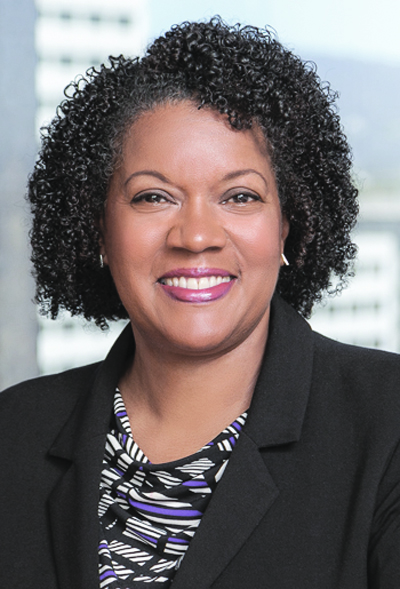
The Conference of Minority Transportation Officials (COMTO) of Northern California held its 16th Annual Holiday Dinner and Scholarship Awards at the Marriott City Center in downtown Oakland on December 6.
A VIP reception followed by dinner brought together individuals and organizations making outstanding contributions in transportation who seek to advance the careers of young people of color in the industry.
Senior executives from major transportation agencies representing BART (Bay Area Rapid Transit), SFMTA (San Francisco Municipal Transportation Agency), AC Transit (Alameda-Contra Costa Transit), VTA (Santa Clara Valley Transportation Authority, and MTC (Metropolitan Transportation Commission) among others were in attendance. Organizational board members and elected officials also networked and celebrated excellence in the community.
“We are proud to award scholarships to this year’s outstanding students that will be at the forefront of our transforming transportation industry,” said COMTO president, Beverly Greene. “Solutions to the industry’s current challenges and strategies to capitalize on potential opportunities on the horizon are being developed and implemented by this year’s COMTO Industry award winners,” Greene is also the External Affairs, Marketing & Communications representative for AC Transit.
Scholarship recipients included Giovanni Smith, Sacramento State University; Aitran Doan, Stanford University and Miguel Rodriguez, University of Pacific who received the Charter Merit Award. The Sharon Banks Scholarship was presented to Zaid Anwar, Sacramento State University and Yuritzi Zurate, UC Davis, received the Curtis Green Scholarship. The Rosa Parks Scholarship was presented to David Parsons, San Francisco State University.
According to Greene, the organization has awarded over $250,000 to deserving students of color.
“Our awardees have pursued higher education at colleges such as Stanford, Cal Berkeley, Mills College, Morehouse, Howard University, U.C. Davis and others,” said Greene. “The scholarship represents different cultural and socioeconomic experiences that will enrich the transportation industry. A number of past scholarship awardees are now employed as professionals in both public and private sector organizations.”
COMTO Industry honorees included Chief Executive Officer Chris Iglesias of The Unity Council, who was presented the Advocacy Award for his dedication to improving the quality of life for residents in the largest Latino neighborhood in the Bay Area, Oakland’s Fruitvale District through an economic and intergenerational equity agenda.
The Minority Business Enterprise Award was presented to Laura Luster, founder president of L. Luster and Associates, for her management and outreach programs designed to enhance the utilization of minority and women-owned, disadvantaged, disabled veteran, local and small business enterprises.
The Emerging Young Leader Award went to Justin Montgomery, assistant resident engineer of The Allen Group. The North Carolina A&T graduate served as the office engineer on a $143 million design-build project, the Long-Term Parking Garage for the San Francisco International Airport.
The Innovation Award was presented to Sahar Shirazi, a policy, and planning expert with extensive experience working with governments and planning organizations to bring about equitable outcomes for communities through transportation.
The President’s Leadership Award was presented to Dana Lang, owner of Dana Lang & Associates, for her more than 20 year of experience with government and transportation agencies. Lang initiated COMTO’s chapter scholarship program in 2004 and the chapter’s internship program, funded by the FTA (Federal Transit Administration) in 2005.










Activism
Oakland Post: Week of August 12 – 18, 2026
The printed Weekly Edition of the Oakland Post: Week of August 12 – 18, 2026

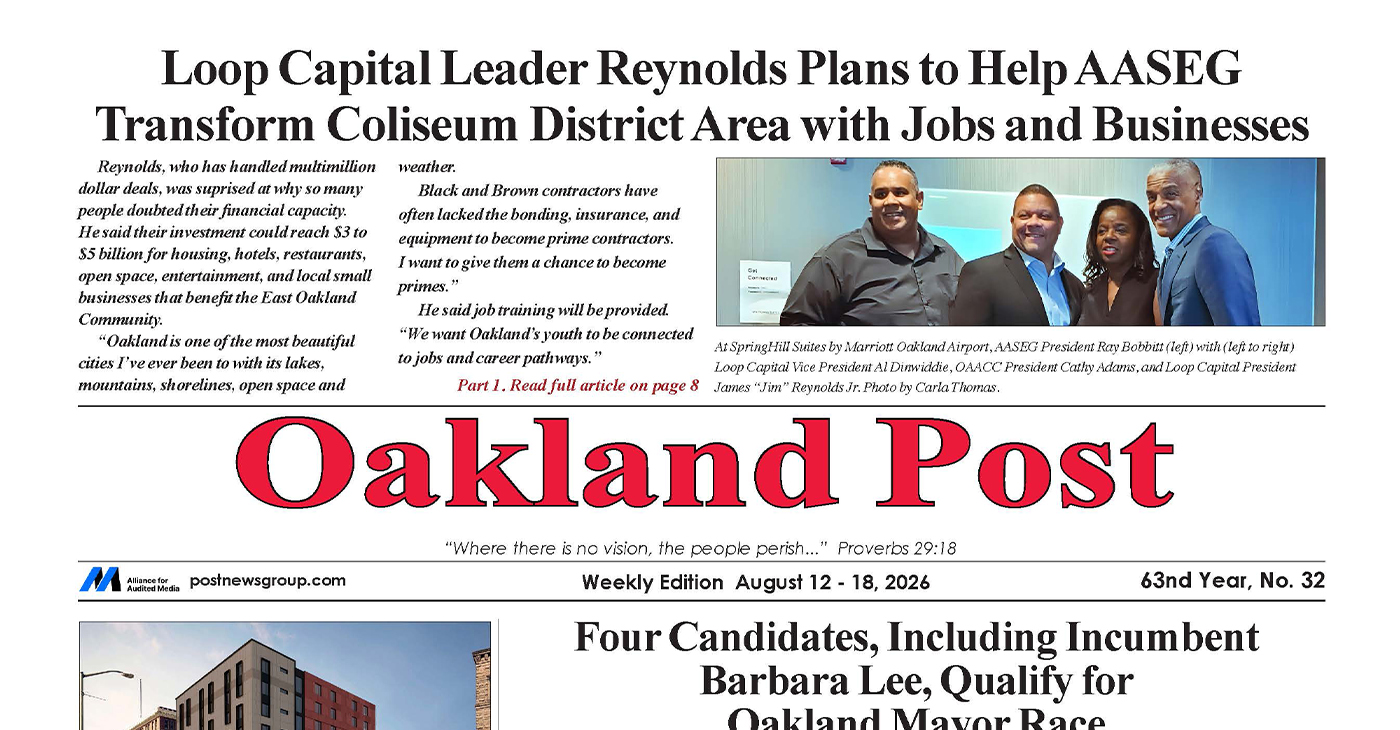
To enlarge your view of this issue, use the slider, magnifying glass icon or full page icon in the lower right corner of the browser window.

Activism
Oakland Post: Week of August 5 – 11, 2026
The printed Weekly Edition of the Oakland Post: Week of August 5 – 11, 2026
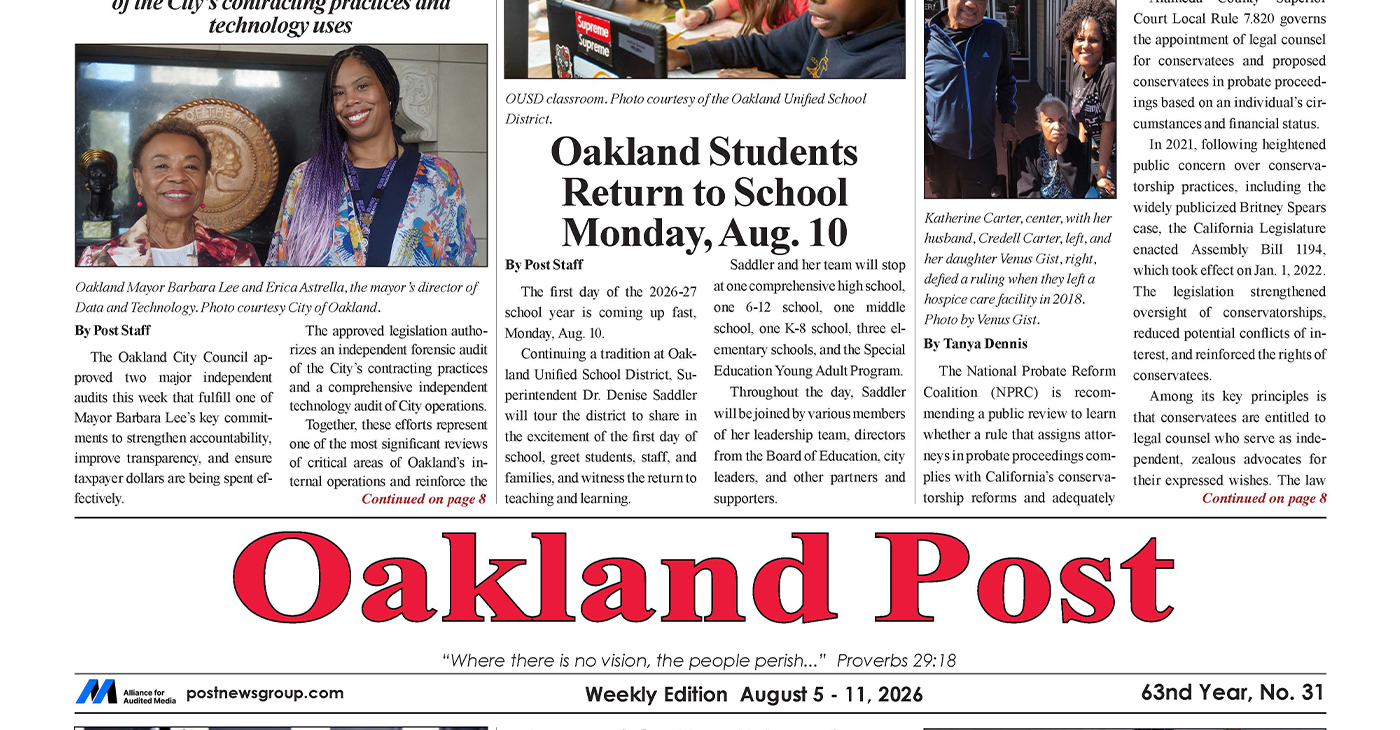
To enlarge your view of this issue, use the slider, magnifying glass icon or full page icon in the lower right corner of the browser window.
Activism
Oakland Post: Week of July 29 – August 4, 2026
The printed Weekly Edition of the Oakland Post: Week of July 29 – August 4, 2026
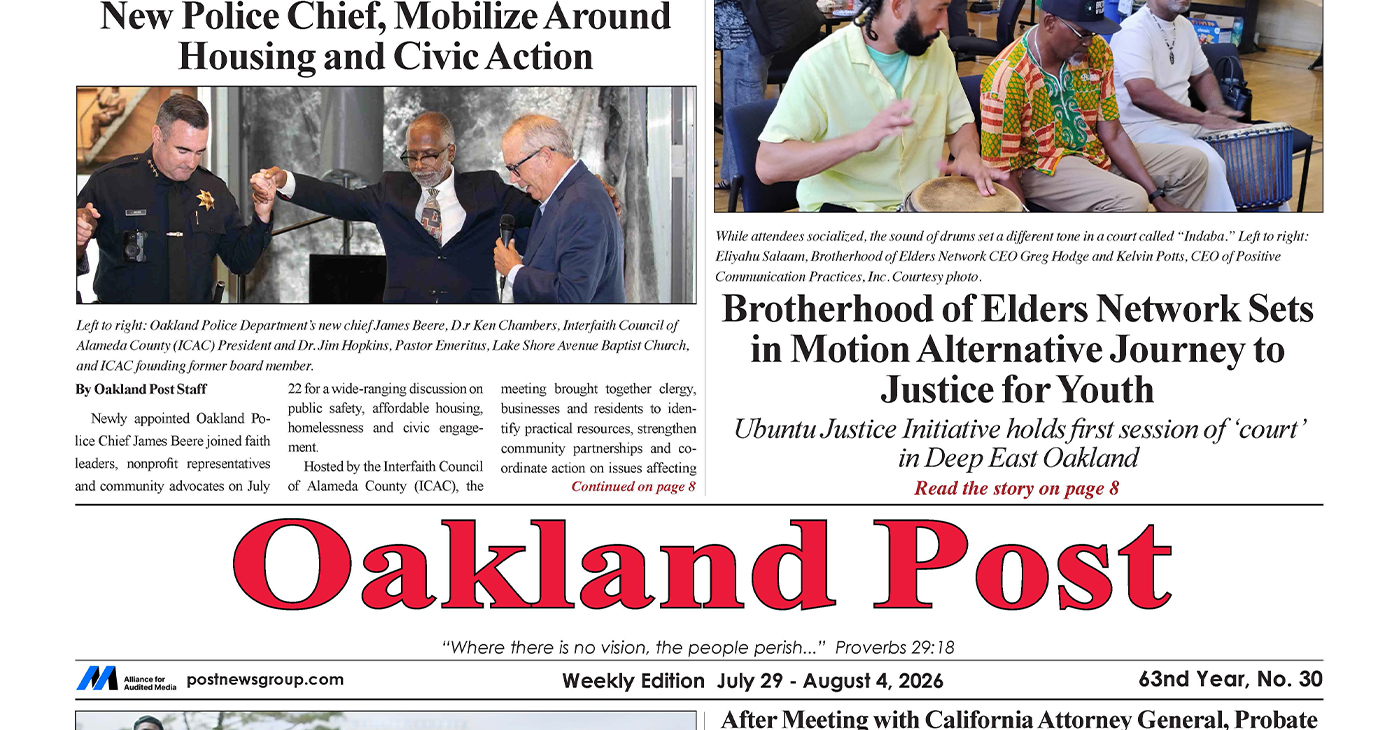
To enlarge your view of this issue, use the slider, magnifying glass icon or full page icon in the lower right corner of the browser window.

WORK FROM HOME
Home-based business with potential monthly income of $10K+ per month. A proven training system and website provided to maximize business effectiveness. Perfect job to earn side and primary income. Contact Lynne for more details: Lynne4npusa@gmail.com 800-334-0540


Oakland Protesters Rally to Defend Haitian Immigrants and TPS

First 5 Alameda County Celebrates First Year of Measure C’s Implementation

From Palestine to Oakland: Seeds for Liberation Examines Shared Struggles for Freedom

NABJ Convention Brings Black Journalists, Civic Leaders Together in Atlanta

At Sacramento Summit, Becerra Discusses Policy; Uses “Family” Metaphor to Frame Case for National Political Unity

$5 Billion Coliseum Vision Puts Oakland Jobs, Businesses at Center

Gov. Newsom Nominates 3 Black Women Judges to Serve on State Courts of Appeal

Oakland Observes Black August with Block Parties, Film Showings, Workshops

NPRC Elder Justice Symposium Invites Community to Join Effort to Protect Alameda County Elders

Four Candidates, Including Incumbent Barbara Lee, Qualify for Oakland Mayor’s Race

Oakland Observes Black August with Block Parties, Film Showings, Workshops

Oakland Post: Week of August 12 – 18, 2026

COMMENTARY: Why Local School Tax Measure G1 Will Not Be on the November Ballot

California Hispanic Chambers of Commerce Unveils: ‘Powering the Future’ Theme for 47th Annual Statewide Convention

Returning to Its Roots, the Oakland Black-Eyed Pea Festival Partners with the Freedom Farmers Market Sept. 12

Department of Homeland Security Demands California Secretary of State Shirley N. Weber Scrub Voter Rolls

New Judge Could Decide if Karmelo Anthony Gets a New Trial

Oakland Children’s Hospital Workers and Patients Rally for Pediatric Medical Care

“The Power to See Threats Sooner”: Gov. Newsom, Safety Officials Showcase California’s Investments in Hi-Tech Wildfire Prevention

Alpha Kappa Alpha Sorority, Inc. Celebrates New North Atlantic Regional Director

Surveillance Pricing Fight: State Senate Debates Bill Banning Retailers from Using AI to Set Prices Based on a Buyer’s Profile

Mount Zion MBC, Church of Jesus Christ of Latter-day Saints Partner to Bring 29,000 Meals to Alameda County

California Sen. Padilla Joins Colleagues to Introduce Bill Imposing Term Limits on Supreme Court Justices

Less Affluent School Districts, Including Sacramento City, Face Threat of State Takeover

Starting This Summer, California Car Buyers Can Get an Instant $3500 Off the Cost of Electric Vehicles

Car Wash Workers Cope with Lingering Impacts of ICE Raids

COMMENTARY: You Are Already Paying for the AI Boom

California Bill Would Let Abuse Victims Use Trauma as Legal Defense for Violent Crime

Fed Court to Decide Landmark First Amendment Case

Gov. Gavin Newsom Signs Law Streamlining Affordable Housing Rules

The Conversation With Al McFarlane 6/23/26

Media Monday 6/22/26

LIVE! ASK ALMA! — TUES. 6.23.26 7PM EST

Car Buying Secrets: 4 Hidden Checks Before You Sign!

Is This 550 HP Charger Worth YOUR Money? AutoNetwork Review

Celebrating Juneteenth – Frederick Douglass on education and resistance

LIVE! — ASK ALMA! — TUES. 6.19.26 7PM EST

Hyundai Ioniq 5 Parking, Safety, and 360 View #shorts

2025 Ioniq 5 New Wiper & Powerful Performance! #shorts

Electric SUV Range: Is 259 Miles Enough? #shorts

EV Charging: How Fast Can You Charge an Electric Vehicle? #shorts

Biometric Cooling… Messaging Seats…Come on! 2025 Infiniti QX80 Autograph 4WD

Charged Up: Witness the Magic of a Fully Electric Car! #shorts

Range Rover Sport PHEV Included…: See What’s Inside This Luxury SUV! #shorts

Invisible Hood View: Perfect Parking with X-Ray Vision! #shorts
-
 Featured2 weeks ago
Department of Homeland Security Demands California Secretary of State Shirley N. Weber Scrub Voter Rolls
-
 #NNPA BlackPress3 weeks ago
New Judge Could Decide if Karmelo Anthony Gets a New Trial
-
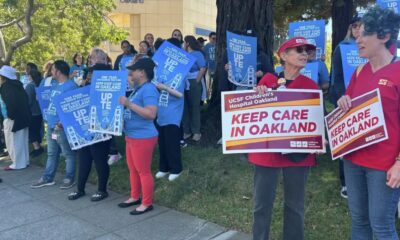 Business4 weeks ago
Oakland Children’s Hospital Workers and Patients Rally for Pediatric Medical Care
-
 Environment2 weeks ago
“The Power to See Threats Sooner”: Gov. Newsom, Safety Officials Showcase California’s Investments in Hi-Tech Wildfire Prevention
-
 Black History3 weeks ago
Alpha Kappa Alpha Sorority, Inc. Celebrates New North Atlantic Regional Director
-
 Business4 weeks ago
Surveillance Pricing Fight: State Senate Debates Bill Banning Retailers from Using AI to Set Prices Based on a Buyer’s Profile
-
 Business4 weeks ago
Mount Zion MBC, Church of Jesus Christ of Latter-day Saints Partner to Bring 29,000 Meals to Alameda County
-
 Featured2 weeks ago
California Sen. Padilla Joins Colleagues to Introduce Bill Imposing Term Limits on Supreme Court Justices
