
Arts and Culture
Don’t Give Up the Fight – Ron San Miguel’s New CD Calls All to Action


Music honors 400 African American sailors who were killed and injured in 1944 at Port Chicago (Vallejo) loading war bombs
The CD, Don’t Give Up the Fight is Ron San Miguel’s simultaneous love song to the world and cry for civil rights. From his passion for justice to the odes to his parents, San Miguel pours out his call for action to promote unity among humanity and a call to action against racism, sexism and division amongst communities. With every guitar strum and lyric San Miguel powerfully educates and inspires throughout 13 songs in an eclectic variety of country, folk, indigenous and contemporary music.
“In the song Don’t Give Up the Fight, San Miguel refers to the Standing Rock protectors of sacred lands and sings “We shall overcome Trump these next four years.’’ “It was Trump’s election in 2016 that really gave me the impetus to begin dus CD,” he said.
“Come on people now, we’re better than this! We can live in peace and bliss!” Sung in a West African language and English, in Elamba Tambo, San Miguel refers to an African Medicine Tree. The artist says the words for the song were divinely inspired, and came to him prior to falling asleep one summer night in 2014.

“I got out of bed and recorded: “Ele Ene E Elamba Tambo, Ele Ene E Elamba Tambo!” The next morning, I Googled those words and found that they made reference to an African Medicine Tree, People of the River, and People of the Mountain. So, I wrote verses about peace and harmony, to remind us that we are all one, and have roots in Africa.’ San Miguel states the song deeply resonates with his fellow West African friends and musicians.
San Miguel bravely reminds listeners of the many tragedies worldwide. In No Tears Left to Cry, he mourns the devastation in Aleppo, Syria due to civil war and the genocide in Darfur, Sudan.
Closer to home, San Miguel shares of his diverse neighborhood in The Fruitvale Barrio of Oak land, while Gangbangers in Blue speaks to police brutality and the code of silence many officers live by. In Occupy Your Heart San Miguel encourages the 99% to continue to fight for economic, political and social justice. While Alternative Facts focuses on the phrase used by U.S. Counselor to the President Kellyanne Conway during a Meet the Press interview on January 22, 2017, in which she defended White House Press Secretary Sean Spicer’s false statement about the attendance numbers of Donald Trump’s presidential inauguration
San Miguel delves deeper into history and honors the African American Heroes of Port Chicago, referring to the deadly munitions explosion that occurred on July 17, 1944, at the Port Chicago Naval Magazine in Port Chicago, California. Munitions detonated while being loaded onto a cargo vessel, killing 320 sailors and civilians and injuring nearly 400. Most of the dead and injured were enlisted African American sailors.
A month later, unsafe conditions inspired hundreds of servicemen to refuse to load munitions, an act known as the Port Chicago Mutiny. Fifty men—called the ‘Tort Chicago 50”—were dishonorably discharged, convicted of mutiny and sentenced to 15 years of prison and hard labor.
Widespread publicity surrounding the unfairness of the case resulted in the prisoners release after two years leading to the Navy desegregating beginning in 1946. The Port Chicago Naval Magazine National Memorial is dedicated to the lives lost in the disaster.
“It’s time for the world to know and the history books to show the injustice perpetrated on these sailors,” he sings in the Heroes of Port Chicago. In 2010, San Miguel performed at the National Memorial.
Since 1988, San Miguel has been a bilingual performer throughout the bay area and produced his first CD, Paint Me a Rainbow in 2013.
San Miguel dedicates his
latest CD to his parents, Celia Garcia and Leocadio San Miguel, Jr. “They live in my heart,” he said.
Don’t Give Up the Fight is a healing CD, reminding listeners to know their history’ and fight against repeating the ugliness. For more information visit: Global Roots Musica

Activism
Black-Owned Nonprofit Gameheads Expands Youth Opportunities with New Gameheads KIDS Summer Program
Throughout the five-week experience, students will explore Scratch coding, digital illustration using drawing tablets, storytelling, technical art, animation, board games, arts and crafts, physical movement, and STEAM-based learning that encourages creativity, collaboration, and problem-solving.

By Dr. Maritony Jones
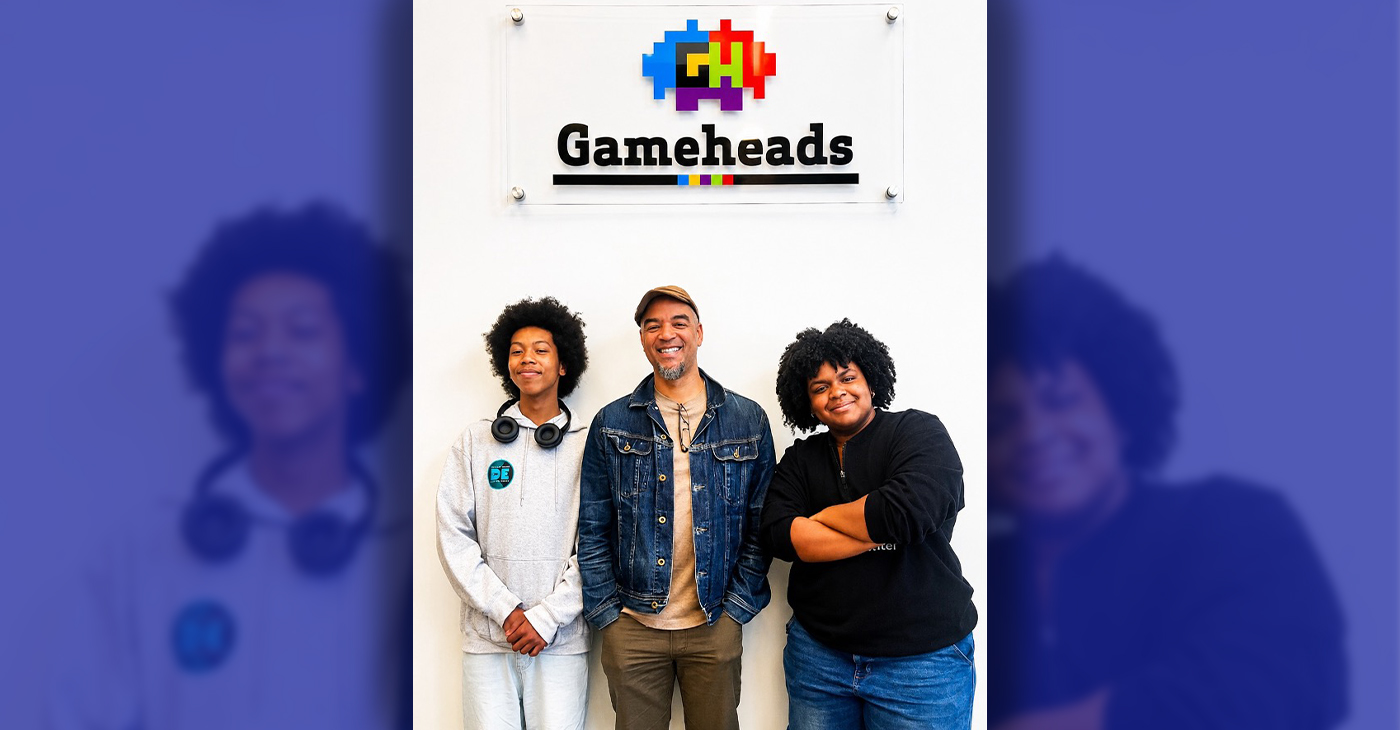
OAKLAND, Calif. — For more than a decade, Oakland-based nonprofit Gameheads has been transforming the lives of young people by turning a passion for video games into pathways toward careers in technology. This summer, the Black-led organization is expanding that mission by launching Gameheads KIDS, a new five-week program designed to inspire children ages 8 to 11.
Running July 13 through Aug. 13, the Kids summer program introduces children to coding, digital art, storytelling, animation, and game design through hands-on activities that encourage creativity, teamwork, and critical thinking.
Founded more than 12 years ago by Damon Packwood, Co-Founder and Executive Director, Gameheads was created to bridge the opportunity gap facing many Oakland youth despite living in the heart of the world’s technology capital. Mr. Packwood, whose background includes leadership roles with Juma Ventures, Hack the Hood, and Upward Bound, has dedicated his career to making technology education accessible to young people from underserved communities.
“Parents are using apps, tablets, and online games to provide children with digital literacy skills. But, some of these platforms have predatory models that are not in a child’s best interest,” said Packwood. “By combining analog and digital activities that are disconnected from the internet, we can provide that very same experience in a safe, child-friendly, and most of all fun environment.”

Packwood’s vision has grown into a nationally recognized nonprofit that connects students with nearly 200 volunteer mentors from the gaming and technology industries, including professionals who have contributed to games like Minecraft and Marvel’s Spider-Man. Through partnerships with companies such as Sony PlayStation, Microsoft Xbox, Autodesk, and other industry leaders, Gameheads has helped prepare students for successful careers in technology, with many graduates earning $75,000 to more than $100,000 in entry-level positions.
Now, Gameheads is introducing those opportunities even earlier.
Learning Through Play
The new Gameheads KIDS program is built on the belief that children learn best through play. Instead of simply playing video games, campers will discover how games are imagined, designed, and created while developing skills that extend far beyond the screen.
Throughout the five-week experience, students will explore Scratch coding, digital illustration using drawing tablets, storytelling, technical art, animation, board games, arts and crafts, physical movement, and STEAM-based learning that encourages creativity, collaboration, and problem-solving.
No previous coding or gaming experience is required—just curiosity and a willingness to learn, organizers say.
Gameheads Program Manager Randi Dean says the program is about creating opportunities that can shape a child’s future.
“I believe in the mission of Gameheads, and that is what has drawn me to them,” Mrs. Dean said. “We give young people opportunities to change the trajectory of their lives and break away from predetermined narratives.”
Families interested in enrolling are encouraged to register soon, as space is limited.
Gameheads KIDS Summer Program (Pilot Program)
- Dates: July 13 – Aug.13/ Schedule: Monday–Thursday, 9 a.m.–4 p.m.
For registration and more information, visit GameHeadsOakland.org or email damon@gameheadsoakland.org
More than a summer camp, Gameheads KIDS is an investment in Oakland’s future—giving young minds the confidence, creativity, and technical skills to imagine new possibilities and become tomorrow’s innovators.

Alameda County
Lower Bottom Playaz Presents Lee Blessing’s ‘Going to St. Ives’
Played by Dr. ayodele nzinga, May N’Kame, the mother of a deadly African dictator, travels to England to see Dr. Cora Gage (Teresa Foss) about medical treatment for her failing eyesight. But what she really wants is a poison to assassinate her son. Gage is then put in a personal dilemma to either uphold her vow to ‘do no harm,’ or help put an end to the atrocities the dictator visits on his people.

Oakland’s oldest North American African theater company presents a story of race, women, violence, and empire.
By Cat Brooks, Special to The Post
The Lower Bottom Playaz 27th season will kick off on July 9 with “Going to St. Ives,” a play by Lee Blessing.
Directed by playwright, actress, and community advocate Cat Brooks, the play by Lee Blessing is the story of two impressive women brought together by the personal and divided by the political, as both seek to accomplish the greatest good.
Played by Dr. ayodele nzinga, May N’Kame, the mother of a deadly African dictator, travels to England to see Dr. Cora Gage (Teresa Foss) about medical treatment for her failing eyesight. But what she really wants is a poison to assassinate her son. Gage is then put in a personal dilemma to either uphold her vow to ‘do no harm,’ or help put an end to the atrocities the dictator visits on his people.
“While the Empire’s location is fictional, a very real genocide is happening in the Congo right now that many of us are ignoring,” Brooks observed. “We set this play there in hopes of utilizing theater to make audiences aware of injustices moving in places and amongst people that mainstream media omits from its headlines.
“In these times, it is more important than ever that theater do more than just entertain. It must tell tales that ignite us into action.”
Also explored in Going to St. Ives are themes of motherhood and sacrifice. What does it cost mothers to raise sons only to lose them to the violence of the world? What experiences are shared amongst mothers across race, class, and country?
“Going to St. Ives examines the weight of privilege against the cost of ‘being responsible’ in a world carved by colonialism, greed, and loss in a high-stakes chess game between two women with only one thing in common,” said nzinga who is also the artistic director of Lower Bottom Playaz.
The play was first performed in 1997 in Seattle, eventually enjoying a highly praised off-Broadway run in New York in 2005.
For this production, Lower Bottom Playaz is partnering with non-government organizations that focus on raising awareness and providing support to displaced refugees across the diaspora, emphasizing community solidarity and collective action.
“Going to St. Ives” premieres on July 9 at BAM House in the Sister Thea Theater, 1540 Broadway, Oakland, CA 94612. All performances are scheduled through July 26 on Friday and Saturday at 8 p.m. and matinees on Saturday and Sunday at 2 p.m. For tickets and more information, please visit http://www.lowerbottomplayaz.com/. Reservations: 510 332-1319, leave a message.
Activism
‘The Oakland Street Academy Saved My Life’
The first time a teacher pulled up a chair to sit next to me to help me out, I panicked because no adult had ever sat so close to me in any kind of a caring or helping way. My English teacher, Kitty (Epstein), would make the biggest impact in my life. I didn’t know then what it meant to have a teacher who would care about me enough to spend her precious time with me even through all of my frustration about learning and thinking the whole time I couldn’t learn anything because I thought I was stupid.
By Ze Segundo, Special to The Post
This is an autobiographical statement by a former Street Academy student who overcame many obstacles in the1970s, attended S.F. State University, and built a successful life for herself.
I was born and raised in Oakland, living in a household with a single mother and eight children. My life was chaotic: I never felt loved, never hearing the words, “I love you.”
I was 4 years old when all of us were sent to foster homes. There, my little sister and I were tortured. I believe we were there a little over a year.
When we finally returned home to our mother, she had a new husband who was very abusive to all of us including my mother.
I and my other sisters were sexually abused by two uncles and my big brother. I remember my uncle choking me and telling me if I told anyone, he would kill me and my little brother – so I didn’t tell. I was terrified of him. I tried to stay away from him as much as possible, but that’s kind of hard to do when a sexual predator lives with you.
My mother would have parties on the weekends where there would be many people drinking and fighting. The police were often at my home. I hated Sunday mornings because my mother would make us kids clean up after the parties. The house had the stench of cigarettes and booze.
Having to clean up other people’s vomit made me sick to my stomach. This is when I started to drink myself. Taking sips of leftover alcohol in glasses and beer cans. That would be the start of my alcoholism.
I started cutting myself when I was 11 years old and didn’t know why. I think it was because it made me feel something different and somehow made whatever I was feeling go away for the moment.
I didn’t have many friends and didn’t have any social skills. I was very shy and withdrawn. In my early teen I couldn’t look people in the eyes. If I was walking down the street and someone was walking towards me, I would purposely cross the street, so I didn’t have to have contact with them.
I was terrified of the world around me. I didn’t even talk to my mother much because I didn’t know what kind of mood she would be in. I learned to stay silent and stay away from her.
My grandmother lived in Hayward; my sister, brother and I took a bus from Oakland to attend junior high school there. Because I didn’t have any social skills, the kids would tease me and bully me. I had to fight a lot, so much that my brother and I were kicked out; they didn’t want any of us in their schools.
After we were kicked out of the school district, I tried to attend a junior high in Oakland, but the noise in the classroom overwhelmed me. The sounds rumbled in my ears.
Again, I was bullied and teased. So, I stopped going to school. I would leave the house with my brothers and sisters but didn’t set foot into any classroom after that. I just wandered the streets until it was time to go home.
It was a very chaotic home life, and I was a severely abused child, overwhelmed with everything around me.
When I was 15, a social worker talked to my mother about sending me to Oakland Street Academy. My mother thought it was a continuation school, where the worst students went.
I didn’t want to go to Street Academy, fearful of being bullied again, but I was tired of hanging out in the street all day. I thought the Street Academy was strange, a school that took over an old furniture store building. It was an open floor plan with partitions that sectioned off classes.
During class, we could hear the buses go by and people talking as they were walking by. I was still painfully shy and withdrawn. I would show up to school early, so I didn’t have to walk past other students in the classroom. I didn’t speak to any students and barely spoke to the teachers. Even when class was going on, I would sit across the room in a small chair and table between two lockers.
I isolated myself from the rest of the class, not really knowing why, but that’s where I sat. I had a third-grade reading level at age 15 and couldn’t spell much at all.
The first time a teacher pulled up a chair to sit next to me to help me out, I panicked because no adult had ever sat so close to me in any kind of a caring or helping way. My English teacher, Kitty (Epstein), would make the biggest impact in my life. I didn’t know then what it meant to have a teacher who would care about me enough to spend her precious time with me even through all of my frustration about learning and thinking the whole time I couldn’t learn anything because I thought I was stupid.
Kitty told me that I could learn, and that there were no stupid students. I remember one time a small group of students walked to fast food restaurants just to read the menu because reading anything is better than reading nothing at all.
Kitty didn’t give up on me – so, I didn’t give up on myself.
School was difficult for me because so many things were going on at home. It was hard for me to focus, but the teachers were really patient with me. Street Academy empowered students by teaching Chicano studies and Black studies. We were learning about our own histories and cultures. Street Academy students participated in demonstrations like the United Farm Workers grape boycott of the mid-1970s. We learned that we could make a difference with our voices. It was a great self-esteem builder.
In many ways, Street Academy saved my life because I was going nowhere.
The minute I set foot into that school I knew it was something special. It took me four years to graduate because I was so far behind in my schooling, and I was dyslexic.
When I left Street Academy, I was reading college material and attended San Francisco State University. I was the first in my family to graduate high school and the first to go to college. As a 15-year-old with CPTSD (Complex Post-Traumatic Stress Disorder), I accomplished what I thought would never happen to me.
I am grateful to the school’s staff and what Street Academy stands for. Schools and teachers should treat students like human beings, care about them, spend a little extra time, believe in them, and they will believe in themselves because you never know what students are going through and what they have experienced in their past that affects their learning.
There are no stupid kids, bad kids, or lazy kids, only kids who need to be understood and loved. Street Academy gave all of that to me.
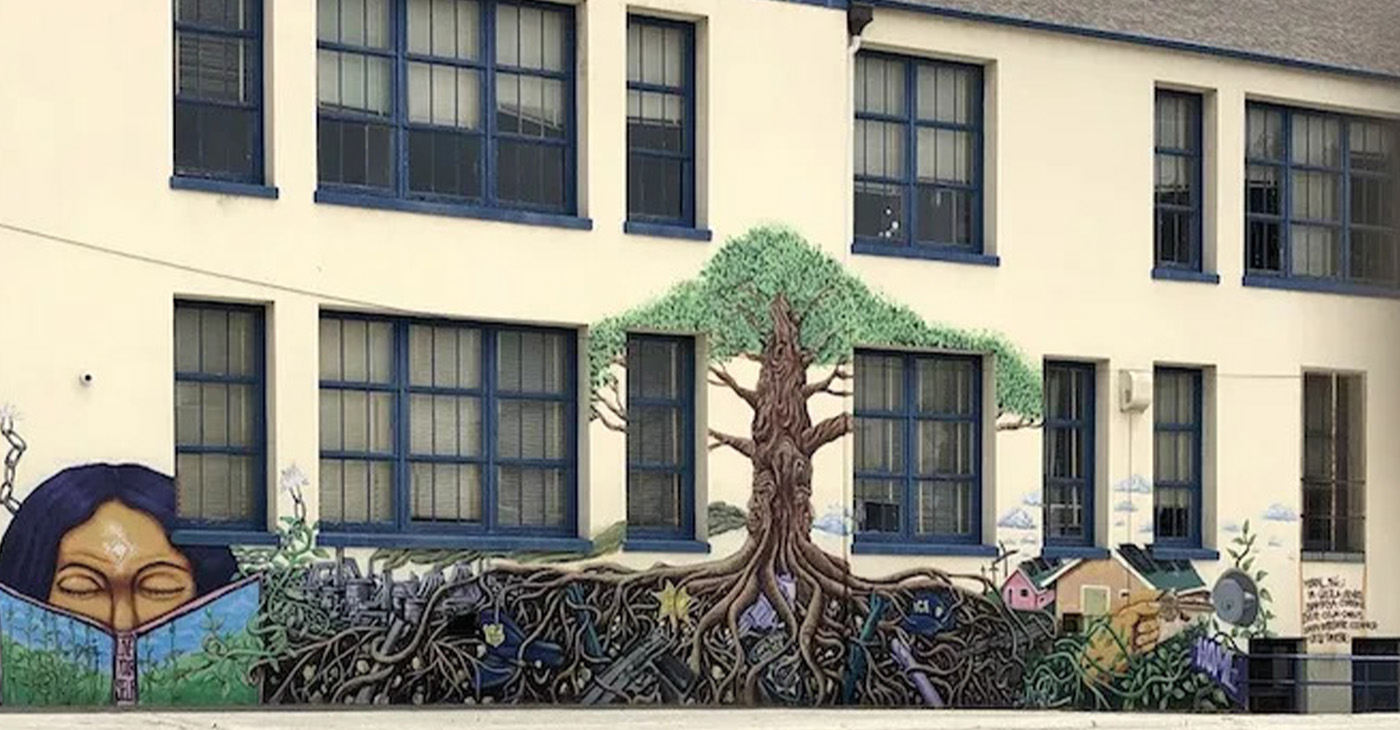
During the 1970s, Ze Segundo attended the Oakland Street Academy, an Oakland Unified School District school now known as Emiliano Zapata Street Academy located at 417 29th St. in Oakland.



Port of Oakland, Army Corps Sign Historic Harbor Design Agreement

Democratic Clubs Interview Candidates for Oakland School Board

Nuna Phillips-McKee Celebrates 100 Years: ‘A Century of Faith, Family and God’s Amazing Grace!’

D.A. Ursula Jones Dickson: Terminix to Pay $3.15 Million Over Illegal Disposal of Pesticides, Customer Records

REPORT: Community Level Policy Is Impacting Homelessness and Drug Abuse in California

OPINION: AI Needs to Know Who Is the Boss
Goldi-Locs and Two (or Three) Bears in the Forest in California Hills

Election Watch 2026: 85% of Eligible Voters in California Are Registered

Don’t Let scammers Crash Your School Year

BOOK REVIEW — Curved Air: A Biography of Sickle Cell Anemia and the Quest to Cure the First Molecular Disease

California’s Legal Cannabis Market Hits $8 Billion as State Touts Progress on Fighting Drugs, Crime

Blacks and Latinos Clash Over LA’s Barrio Run; Mayor Karen Bass Calls for Dialogue Across Racial, Neighborhood Lines

Asm. Smallwood-Cuevas’s Bill Repealing ‘Racist’ CalWORKs ‘Man-in-the-House’ Rule Clears Legislature

Asm. Smallwood-Cuevas’s Bill Repealing ‘Racist’ CalWORKs ‘Man-in-the-House’ Rule Clears Legislature

‘Ready to See These Bills Become Law’: Sen. Weber’s Package of 15 Bills Advance to Gov. Newsom’s Desk

Department of Homeland Security Demands California Secretary of State Shirley N. Weber Scrub Voter Rolls

“The Power to See Threats Sooner”: Gov. Newsom, Safety Officials Showcase California’s Investments in Hi-Tech Wildfire Prevention

Alpha Kappa Alpha Sorority, Inc. Celebrates New North Atlantic Regional Director

California Sen. Padilla Joins Colleagues to Introduce Bill Imposing Term Limits on Supreme Court Justices

Less Affluent School Districts, Including Sacramento City, Face Threat of State Takeover

Car Wash Workers Cope with Lingering Impacts of ICE Raids

ESSAY: California Can Close Its Colorectal Cancer Gap

Oakland Post: Week of August 5 – 11, 2026

As Part of Your Back-to- School Checklist, Vaccinate

Oakland ‘Port Serves as a Powerful Engine for Good Jobs and Economic Development

Gov. Newsom Signs New Affordable Housing Legislation

Gov. Newsom Announces $109.6 Million in Funding for 278 Supportive Homes in Bakersfield, Contra Costa, Sacramento and Fresno

California Hispanic Chambers of Commerce Unveils: ‘Powering the Future’ Theme for 47th Annual Statewide Convention

Closing the Gap: What the Data and Frontline Experiences Reveal About Cancer in Black California

Congresswoman Simon Demands Investigation into Trump’s Abuse of Emergency Powers for Coal Export Terminal in West Oakland

The Conversation With Al McFarlane 6/23/26

Media Monday 6/22/26

LIVE! ASK ALMA! — TUES. 6.23.26 7PM EST

Car Buying Secrets: 4 Hidden Checks Before You Sign!

Is This 550 HP Charger Worth YOUR Money? AutoNetwork Review

Celebrating Juneteenth – Frederick Douglass on education and resistance

LIVE! — ASK ALMA! — TUES. 6.19.26 7PM EST

Hyundai Ioniq 5 Parking, Safety, and 360 View #shorts

2025 Ioniq 5 New Wiper & Powerful Performance! #shorts

Electric SUV Range: Is 259 Miles Enough? #shorts

EV Charging: How Fast Can You Charge an Electric Vehicle? #shorts

Biometric Cooling… Messaging Seats…Come on! 2025 Infiniti QX80 Autograph 4WD

Charged Up: Witness the Magic of a Fully Electric Car! #shorts

Range Rover Sport PHEV Included…: See What’s Inside This Luxury SUV! #shorts

Invisible Hood View: Perfect Parking with X-Ray Vision! #shorts
-

 Commentary2 weeks ago
Standoff for Justice: Our Homes Are Worth Fighting For
-

 Business2 weeks ago
Gubernatorial Candidate Steve Hilton Blasts California New Tire Rules; Newsom Hits Back
-

 Activism2 weeks ago
Oakland Post: Week of August 26 – September 1, 2026
-

 Education2 weeks ago
Gov. Newsom’s Latest Appointees Include Sacramento Advocate for Formerly Incarcerated Students; State’s New Tech Chief
-

 Business2 weeks ago
Frontier Airlines’ Return to Oakland Airport Brings Flights, Jobs and Opportunity
-

 Business2 weeks ago
Chef Sharon Lee Blends Culinary Excellence, Education and Empowerment
-

 Business2 weeks ago
Oakland Coliseum Project Opens Door for Small Businesses to Build Bigger
-

 Community2 weeks ago
Big City Mayors Ask for “Yes” Vote on Housing Bond Measure; Conservatives Say “No”
