
Opinion
Commentary: Soulful Softball Sunday Brings Its Magic To Prison

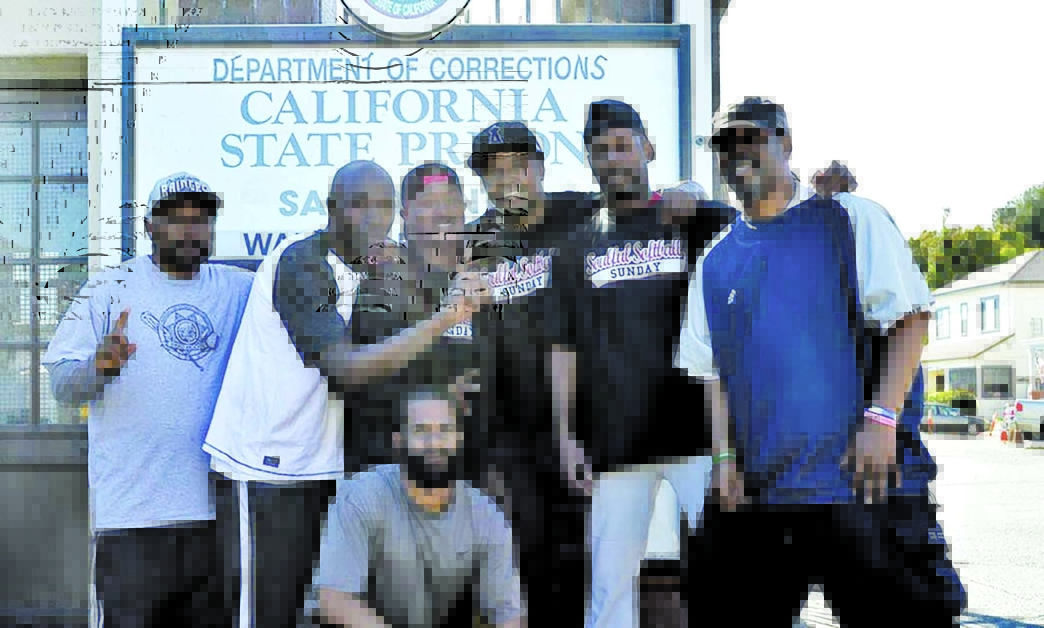
Richmond-area residents participated in a Soulful Softball Sunday Ministry softball game against the San Quentin Hard Timers at the state prison on June 4.
By Rodney Alamo Brown
The people of Richmond have proven in recent years that we can work together to build a safer community that focuses upon opportunity and education.
Together, we began to reach out to our young people and to bring people from all over the city to one place, including the warring factions, in order to successfully shed the city’s past reputation for being one of the nation’s most dangerous.
One important piece in sustaining Richmond’s vastly reduced crime rate is to ensure those who once wreaked havoc on our city can share in these opportunities, an effort that will require both atonement and reconciliation.
On June 4, nearly a dozen Richmond residents including KTVU/FOX and Former Gold Glove Winner Oakland A’s Pitcher Mike Norris joined me at San Quentin State Prison to film an exclusive piece on our Soulful Softball Sunday Ministry.
The prison event is an extension of the award-winning Soulful Softball Sunday that I launched at Nichol Park in Richmond.
The fun, family-friendly gathering of community members connects residents to important resources, encourages healthy living and provides financial assistance to college-bound Richmond students.
Soulful Softball Sunday had a large enough impact at Nichol Park to warrant entering San Quentin. On June 4, about 200 Richmond natives and others attended a fun softball event at the prison during which 11 Richmond-area residents played against the Hard Timers, a San Quentin softball team featuring inmates.
The game was just as it was at Nichol Park: incredible fun. We laughed and enjoyed conversation with the inmates. One of our players hadn’t seen his cousin, an inmate serving a life sentence, since 1988.
They recalled old times. Another player, Reggie Hunt from Richmond, played on the visitors team and led off the game with a base hit. He was all smiles.
That freeing feeling of running to first base would be fleeting. Once the game ended — we lost to the home team, 22-15 — Reggie would return behind the walls to continue his sentence. But Reggie, who led us in prayer after the game, didn’t see it as a loss.
A few players commented that for the duration of the game, San Quentin didn’t feel like a prison: it felt like Richmond with a wall around it.
It wasn’t about the game. It was about a brotherhood and understanding that they may have made a mistake in their life but their life isn’t a mistake.
It’s a calling that we in our Richmond community want to move forward as a peaceful community of opportunity, and that we want everyone in on it: even those who may have contributed to the city’s past woes.
The Soulful Softball Sunday Ministry offers a chance to allow guys I’ve grown up with to express sorrow to the families they’ve destroyed. Even more, establishing such connections allows us to get closer to the reasons members of our community choose a life of crime, and to do what we can to prevent that from happening.
This is Gateway to Healing 101. We do it with sheer love, understanding and commitment. We’ll let you know when we plan to do it again so that you may join in on this new wave.
Rodney Alamo Brown is an award-winning Richmond community advocate who launched Soulful Softball Sunday two years ago.









Activism
Oakland Post: Week of September 23 – 29, 2026
The printed Weekly Edition of the Oakland Post: Week of September 23 – 29, 2026
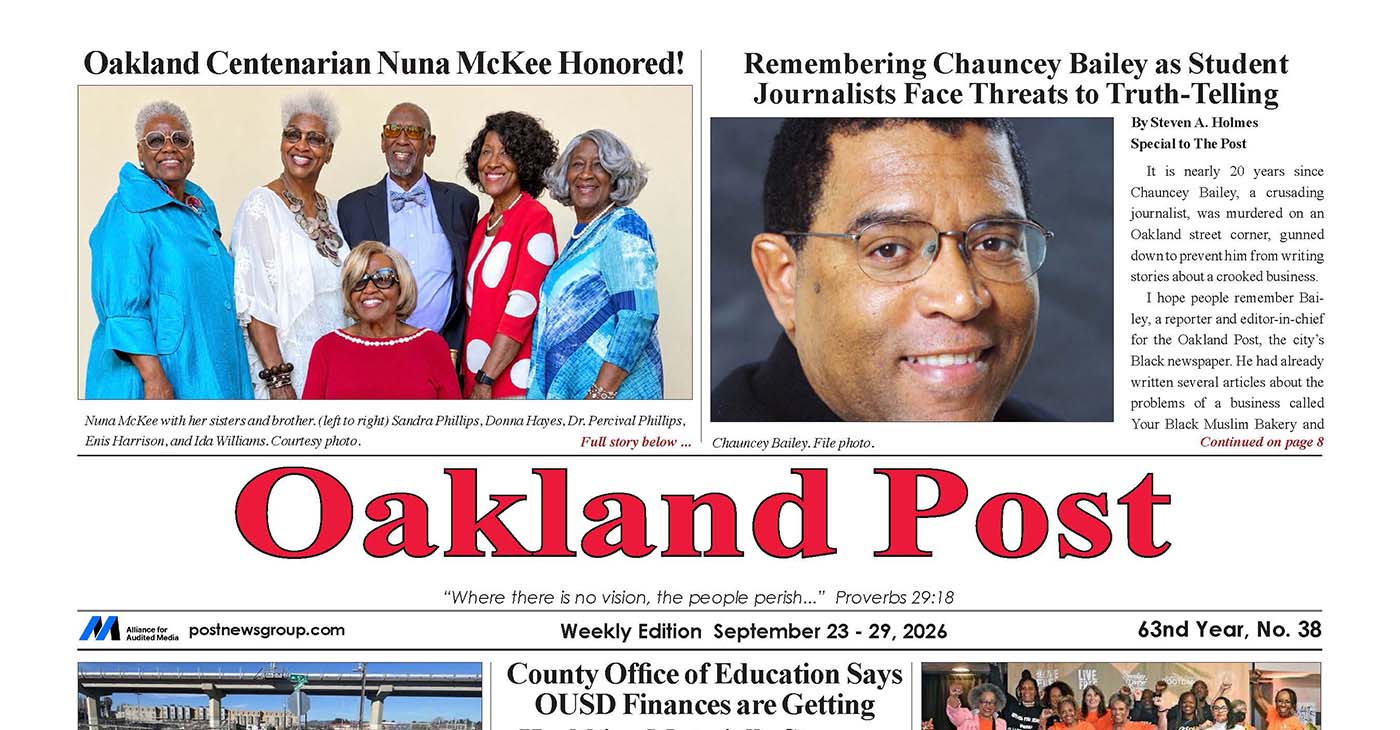
To enlarge your view of this issue, use the slider, magnifying glass icon or full page icon in the lower right corner of the browser window.
Activism
Oakland Post: Week of September 16 – 22, 2026
The printed Weekly Edition of the Oakland Post: Week of September 16 – 22, 2026
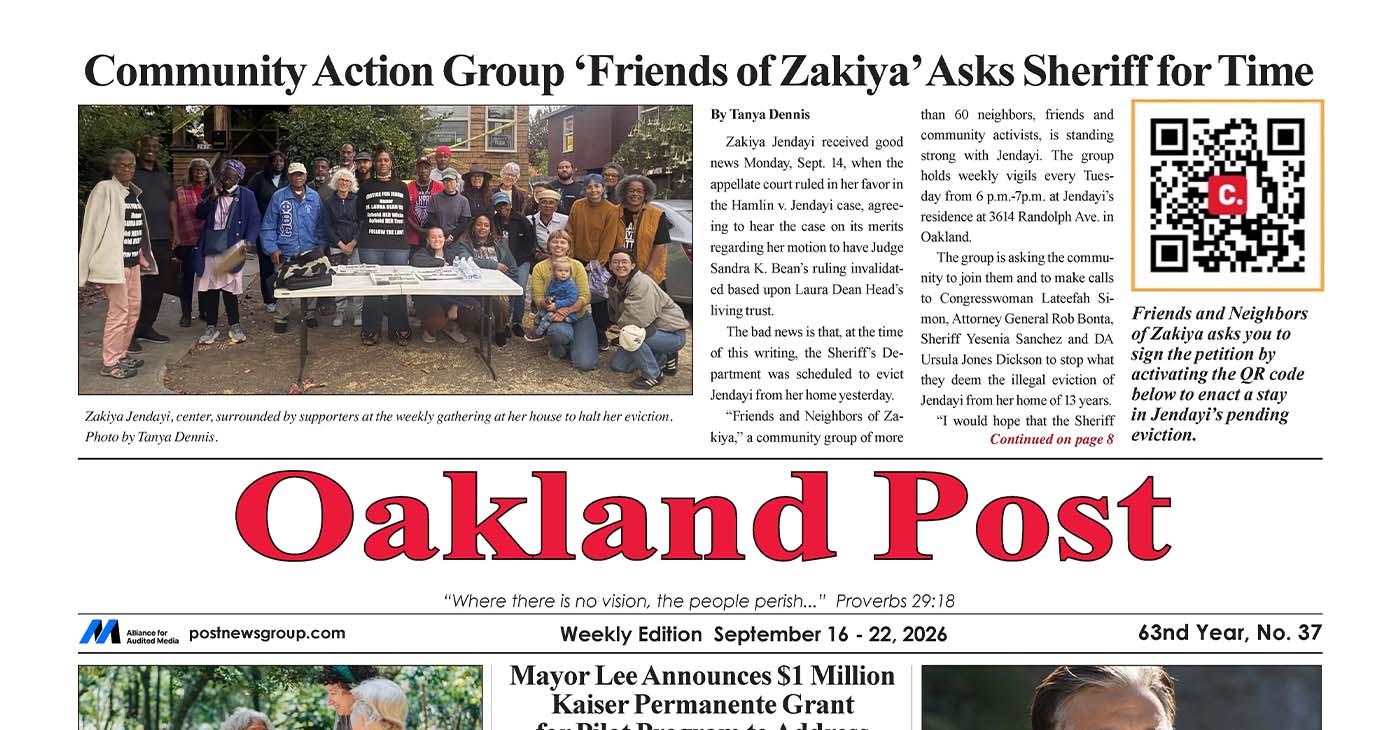
To enlarge your view of this issue, use the slider, magnifying glass icon or full page icon in the lower right corner of the browser window.
Activism
Oakland Post: Week of September 9 – 15, 2026
The printed Weekly Edition of the Oakland Post: Week of September 9 – 15, 2026

To enlarge your view of this issue, use the slider, magnifying glass icon or full page icon in the lower right corner of the browser window.


Asm. Corey Jackson Announces Launch of 24-Hour Childcare in His District

IN MEMORIAM: The Rev. Leon “Sonny” Clark, Longtime Orange County Pastor and Community Leader, Dies at 72

Poll: Becerra Widens His Lead Over Hilton; Californians Split on Wealth Tax

From Historic Memories to New Possibilities: Oakland Celebrates Coliseum 60

County Office of Education Says OUSD Finances Are Getting Healthier, Materially Stronger

LIVE FREE Sunday Dinner Brings Faith, Fellowship and Civic Conversation to Oakland

Remembering Chauncey Bailey as Student Journalists Face Threats to Truth-Telling

BLACspace Cooperative Invites Bay Area to Experience Oakland’s Black Cultural Ecosystem Through a BLAC Map Tour + Party

In Wake of Death on Doorstep, Williams Chapel Baptist Church Calls for Better Care, Funding for Unhoused

Oakland Centenarian Nuna McKee Honored!

Caribbean Nations Produce Action Plan Calling for UK Reparations Over Slavery

Oakland Post: Week of September 23 – 29, 2026

Doulas Are Helping Black California Moms Navigate Pregnancy–Even as High Mortality Rates Persist

Newsom Signs Addictive Social Media Law to Protect Kids

On Your November Ballot: Prop 38 Would Allocate $8.4 Billion to Immunology and Immunotherapy Funding

Standoff for Justice: Our Homes Are Worth Fighting For

Oakland Post: Week of August 26 – September 1, 2026

Frontier Airlines’ Return to Oakland Airport Brings Flights, Jobs and Opportunity

Gubernatorial Candidate Steve Hilton Blasts California New Tire Rules; Newsom Hits Back

Chef Sharon Lee Blends Culinary Excellence, Education and Empowerment

Jackie Wright Champions Bay Area Stories, Filmmakers and Cultural Institutions

Big City Mayors Ask for “Yes” Vote on Housing Bond Measure; Conservatives Say “No”

Oakland Coliseum Project Opens Door for Small Businesses to Build Bigger

Gov. Newsom’s Latest Appointees Include Sacramento Advocate for Formerly Incarcerated Students; State’s New Tech Chief

Misnamed ‘Parent’ PAC Seeks to Influence Oakland School Board Elections

Longtime BWOPA Member Brendalyn Goodall Appointed to California Workforce Development Board

Gov. Newsom Signs Law Shielding Immigration Aid Workers From Doxing Threats

Secretary of State Shirley N. Weber Urges Californians to Vote Early as Voter ID Battle Intensifies

From Palestine to Oakland: Seeds for Liberation Examines Shared Struggles for Freedom

IN MEMORIAM: Dolly Parton Dead at 80 — How She Built a Legacy of Love and Earned Her Place in Black Culture

The Conversation With Al McFarlane 6/23/26

Media Monday 6/22/26

LIVE! ASK ALMA! — TUES. 6.23.26 7PM EST

Car Buying Secrets: 4 Hidden Checks Before You Sign!

Is This 550 HP Charger Worth YOUR Money? AutoNetwork Review

Celebrating Juneteenth – Frederick Douglass on education and resistance

LIVE! — ASK ALMA! — TUES. 6.19.26 7PM EST

Hyundai Ioniq 5 Parking, Safety, and 360 View #shorts

2025 Ioniq 5 New Wiper & Powerful Performance! #shorts

Electric SUV Range: Is 259 Miles Enough? #shorts

EV Charging: How Fast Can You Charge an Electric Vehicle? #shorts

Biometric Cooling… Messaging Seats…Come on! 2025 Infiniti QX80 Autograph 4WD

Charged Up: Witness the Magic of a Fully Electric Car! #shorts

Range Rover Sport PHEV Included…: See What’s Inside This Luxury SUV! #shorts

Invisible Hood View: Perfect Parking with X-Ray Vision! #shorts
-
 Community3 weeks ago
Misnamed ‘Parent’ PAC Seeks to Influence Oakland School Board Elections
-

 Activism4 weeks ago
Oakland Post: Week of September 2 – 8, 2026
-

 Community3 weeks ago
Richmond Tiny House Village Farm & Garden Set to Open Gates on Sept. 26
-

 Activism3 weeks ago
Oakland Post: Week of September 9 – 15, 2026
-

 Black History3 weeks ago
Latest Massacre in Haiti Reveals Cruelty U.S. Deportations
-

 Black History3 weeks ago
OPINION: Nolan Wells’ Death One of Several Signifying Racial Terror Lives on in U.S. South
-

 Community3 weeks ago
Democratic Clubs Interview Candidates for Oakland School Board
-

 Business2 weeks ago
Mayor Lee Announces $1 Million Kaiser Permanente Grant for Pilot Program to Address Homelessness, Clean Up Public Spaces throughout Oakland
