
News
The South LA Community Farm Ribbon Cutting Ceremony
LOS ANGELES SENTINEL — On Saturday May 18, Los Angeles residents gathered at the First Year, South LA Community Farm ribbon cutting ceremony. The All Peoples Community Center (APCC) and American Friends Service Committee’s (AFSC) Roots for Peace Program dismantle structural racism within the food industry, transforming a vacant parking lot into an urban farm.

By Bertram Keller

On Saturday May 18, Los Angeles residents gathered at the First Year, South LA Community Farm ribbon cutting ceremony. The All Peoples Community Center (APCC) and American Friends Service Committee’s (AFSC) Roots for Peace Program dismantle structural racism within the food industry, transforming a vacant parking lot into an urban farm.
In 2009, a group of high school students at the APCC explored the issue regarding food and health related discrimination. Concluding research led to the student’s proposal of constructing an urban farm that improves access to healthy food among low-income communities.
American Friends Service Committee (AFSC) encouraged the student’s initiative, and assisted in seed giveaways and door-to-door surveys. Awareness encompassed the framework of related food equity, which formed a sizeable community that developed into the Food Growers Network (FGN). An urban agriculture community that advocates redressing food system inequities in low-income neighborhoods.
Advocates and political influence invested and coordinated a method for students and community residents’ proposal to materialize. AFSC Program Director and LA Food Policy Council Member, Crystal Gonzalez, consulted with City Council and the Los Angeles Board of Supervisors to ensure the proposal was submitted to impartial process under Urban Agriculture Incentives Zone Program (UAIZ). The UAIZ act, also known as Bill 551, permits landowners in metropolitan areas to collect tax incentives for situating their property for agricultural use.

The Los Angeles County Board of Supervisors passed the UAIZ act, in which operations advanced onto further development. Supervisor Mark Ridley-Thomas took the lead of coordinating resource and finances; working to modernize possibilities of the urban farm to include outdoor kitchen and children’s play area.
APCC Executive Director Saundra Bryant arranged partnership with Meta Housing to locate the urban farm directly across the street from All Peoples Community Center. Bryant and Meta Housing terms and agreements led to a 50-year lease, ensuring the urban farm will remain in the community.
The urban farm is situated on a 6,400 sq. ft. lot. It includes outdoor workshop, education space for children, elevated garden beds for community farming, an outdoor kitchen and farming stand to promote weekly sales. What was once an empty parking lot has now reconnected a community through food awareness and agricultural development. The total project budget was $80,000.
Non-profit organizations, residents, advocates, children and political influence gathered to participate in the festive occasion of the First Year South LA Community Farm ribbon cutting ceremony. The ceremony commenced with the Le Ballet Dembaya African Drum & Dance Ensemble showcasing synchronized dance routines harmonized with the beating of West African drums. Further, Youth of the Roots for Peace Program delivered inspiring spoken word performances to exhibit sentiments of positive reception.
Advocates and political speakers were introduced and gave robust theoretical analysis reinforcing the structural challenges in the food industry. APPCC Executive Director Saundra Bryant, Meta Housing Corporation Executive Vice President Chris Maffris, AFSC Program Director Crystal Gonzales, Los Angeles Food Policy Council member Rosana C. Franco, Los Angeles County Supervisor Mark Ridley-Thomas, and Los Angeles Council Member Curren D. Price Jr. addressed the food insecurity in the community. Council Member Price Jr. stated, “We know how important food access is, how important health equity is; especially, in our [9th] district. We want our district to have access to green space, healthy soil, spaces for the community to come together, and we know by working together we can make that happen!”
Structural racism and economic divestment has historically caused low-income communities to experience the inability to progress food security and community health. The urban farm certainly advocates the frameworks for supplementing food intake with locally produced, healthy fruits and vegetables. This progressive step permits a self-governing community, in which low-income communities can disregard food sovereignty and acquire access to healthy food consumption. Inevitably, profiting from a self-dependent food structure that includes safe, nutritious, affordable, and culturally accepted food.
The South LA Community Farm has compelled children and adults to reconnect within their community through health awareness, collective labor and the foresight to contribute in the development of low-income communities. Urban farmers hope others explore and develop more solutions concerning food justice to prevent diet related illness.
This article originally appeared in the Los Angeles Sentinel.











To enlarge your view of this issue, use the slider, magnifying glass icon or full page icon in the lower right corner of the browser window.
Community
Mayor Barbara Lee Holds Special State of the City Address in Deep East Oakland
In partnership with Rise East and the 40×40 Council, Oakland Mayor Barbara Lee held a special 2026 State of the City East Oakland community conversation on Oct. 14. The purpose of bringing a State of the City address directly to the community was to celebrate East Oakland, highli

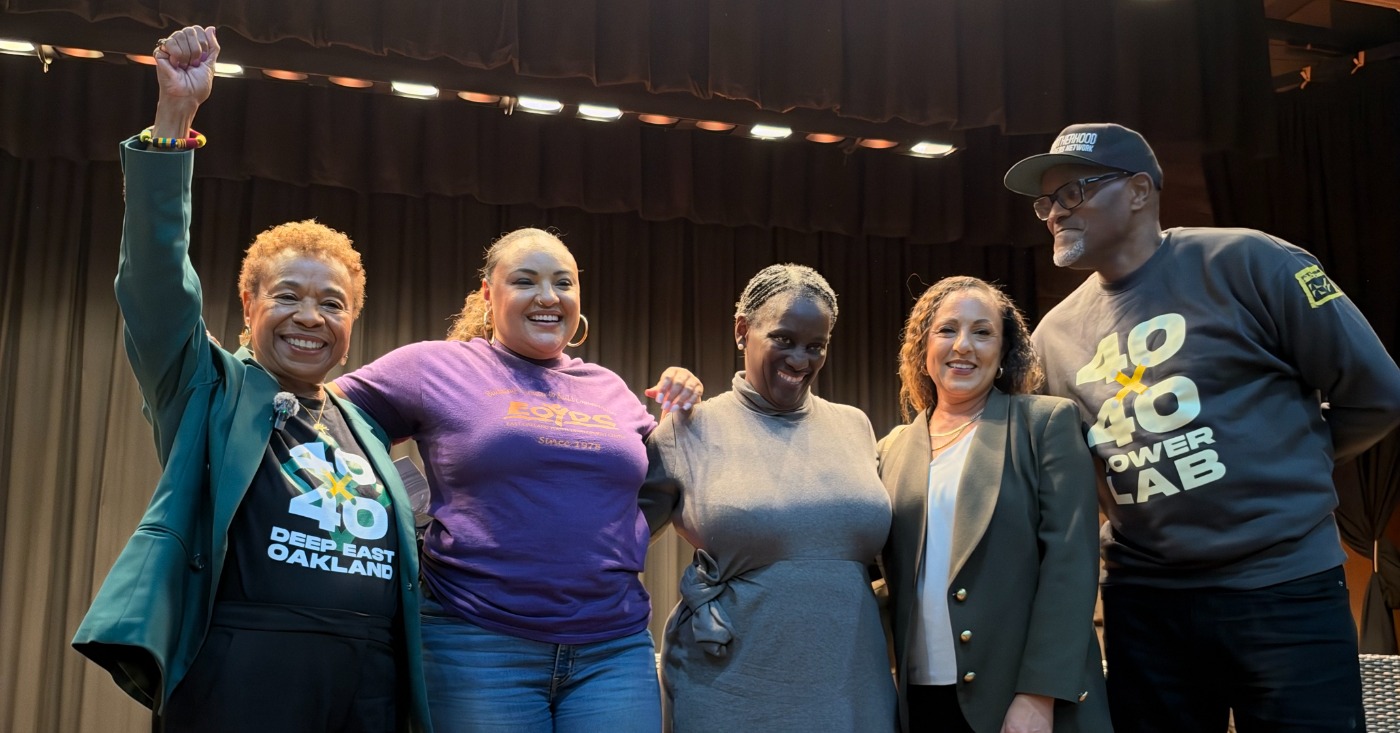
In partnership with Rise East and the 40×40 Council, Oakland Mayor Barbara Lee held a special 2026 State of the City East Oakland community conversation on Oct. 14.
The purpose of bringing a State of the City address directly to the community was to celebrate East Oakland, highlight the work underway, and look ahead to what neighbors, local businesses, youth, funders, community organizations, and partners can accomplish together.
Held at the Roots Community Health/Parker Elementary School Campus at 7929 Ney Ave., the event was emceed by special guest Mark Curry, Oakland native, comedian, and actor.
Lee shared how Rise East and the 40×40 Council have brought together the knowledge, relationships, and resources of people and organizations committed to East Oakland.
Residents bring lived experience, community organizations bring trusted relationships and philanthropy, and businesses bring resources and opportunity, she said, then turned to the government’s role: public investment, services and policy.
But, Lee intoned, City Hall has a responsibility to help connect those efforts.
“I am committed to listening to residents, working across departments and sectors, and helping open doors to opportunity. We must connect neighborhood priorities to the decisions we make about housing, economic development, safety, health and our young people.
City Hall “must be accountable for the results,” Lee said. “The measure of success is what families experience: greater stability, more opportunity and a stronger sense that they belong and have a future here.
“Tonight is an opportunity to listen to the leaders doing this work, learn what is making a difference and identify where we can do more together,” the mayor said.
Lee went on to moderate a ‘fireside chat’ on the theme: Building Oakland’s Future Together — From Neighborhood Investment to Community Empowerment with:
- Selena Wilson, CEO, East Oakland Youth Development Center
- Greg Hodge, CEO, Brotherhood of Elders
- Carolyn “CJ” Johnson, CEO, Black Cultural Zone
- Dr. Noha Aboelata, CEO, Roots Health Center
Mayor Barbara Lee’s media relations department provided this report.

To enlarge your view of this issue, use the slider, magnifying glass icon or full page icon in the lower right corner of the browser window.


Oakland Probate Dispute Raises Questions About Court-Ordered Property Transfer and Missing Notice

‘Raising a Child Shouldn’t Break the Bank’: California Is Helping Families Save on Childcare Costs

Secretary of State Shirley Weber Pushes Back Against DOJ Demands Over California Voter Rolls

Chase Launches Fraud & Scam Prevention Month

U.S. Rep. Simon Secures More Than $1 Million for Public Safety at Mills College at Northeastern University Oakland, Surrounding Neighborhood

COMMENTARY: Valarie Bachelor and Jennfier Brouhard are Excellent School Board Members and Deserve to Be Reelected

Oakland Faith Leaders Gather to Revitalize the Interdenominational Ministerial Alliance of Oakland

Statue of ‘La Catrina,’ a Beloved Symbol of Dia de Los Muertos, Visits Oakland

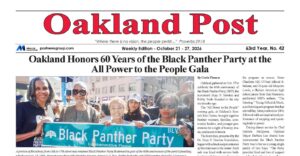
Oakland Honors 60 Years of the Black Panther Party at the All Power to the People Gala

Fate of Bay Area Public Transit Hinges on Regional Transit Measure

Why AC Transit Director Joel Young is My Choice for AC Transit Board Ward 3

Oakland Post: Week of October 21 – 27, 2026

Mayor Barbara Lee Holds Special State of the City Address in Deep East Oakland

Practitioners of African Traditional Spirituality Offer Ancestral Reverence Ritual Oct. 31

It’s Time to Lose Weight Before the Holidays

Misnamed ‘Parent’ PAC Seeks to Influence Oakland School Board Elections

Listening as a Lifeline: A Doula’s Witness to Black Maternal Health

Poll: Becerra Widens His Lead Over Hilton; Californians Split on Wealth Tax

County Office of Education Says OUSD Finances Are Getting Healthier, Materially Stronger

Oakland Post: Week of September 9 – 15, 2026

Doulas Are Helping Black California Moms Navigate Pregnancy–Even as High Mortality Rates Persist

Mayor Lee Announces $1 Million Kaiser Permanente Grant for Pilot Program to Address Homelessness, Clean Up Public Spaces throughout Oakland

Zakiya Jendayi Arrested, Locked Out of Home by Sheriff’s Deputies

Richmond Tiny House Village Farm & Garden Set to Open Gates on Sept. 26

OPINION: Nolan Wells’ Death One of Several Signifying Racial Terror Lives on in U.S. South

Latest Massacre in Haiti Reveals Cruelty U.S. Deportations

BLACspace Cooperative Invites Bay Area to Experience Oakland’s Black Cultural Ecosystem Through a BLAC Map Tour + Party

Oakland People’s Arms Embargo Coalition Demands End to Military Shipments Thru Oakland

Oakland Post: Week of September 16 – 22, 2026

Democratic Clubs Interview Candidates for Oakland School Board

The Conversation With Al McFarlane 6/23/26

Media Monday 6/22/26

LIVE! ASK ALMA! — TUES. 6.23.26 7PM EST

Car Buying Secrets: 4 Hidden Checks Before You Sign!

Is This 550 HP Charger Worth YOUR Money? AutoNetwork Review

Celebrating Juneteenth – Frederick Douglass on education and resistance

LIVE! — ASK ALMA! — TUES. 6.19.26 7PM EST

Hyundai Ioniq 5 Parking, Safety, and 360 View #shorts

2025 Ioniq 5 New Wiper & Powerful Performance! #shorts

Electric SUV Range: Is 259 Miles Enough? #shorts

EV Charging: How Fast Can You Charge an Electric Vehicle? #shorts

Biometric Cooling… Messaging Seats…Come on! 2025 Infiniti QX80 Autograph 4WD

Charged Up: Witness the Magic of a Fully Electric Car! #shorts

Range Rover Sport PHEV Included…: See What’s Inside This Luxury SUV! #shorts

Invisible Hood View: Perfect Parking with X-Ray Vision! #shorts
-
 Black History3 weeks ago
Listening as a Lifeline: A Doula’s Witness to Black Maternal Health
-
 Economy4 weeks ago
Poll: Becerra Widens His Lead Over Hilton; Californians Split on Wealth Tax
-
 Business4 weeks ago
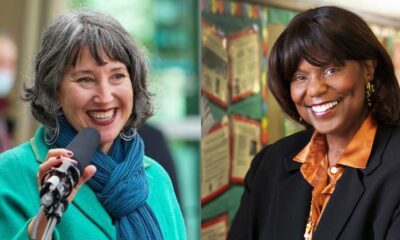
County Office of Education Says OUSD Finances Are Getting Healthier, Materially Stronger
-
 Lead Story3 weeks ago
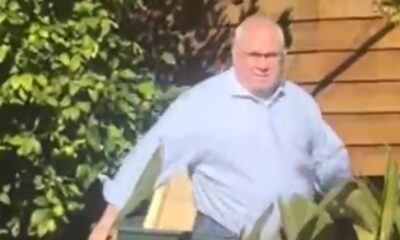
Zakiya Jendayi Arrested, Locked Out of Home by Sheriff’s Deputies
-
 Art4 weeks ago
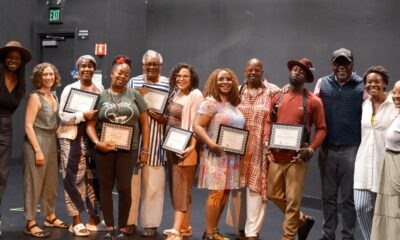
BLACspace Cooperative Invites Bay Area to Experience Oakland’s Black Cultural Ecosystem Through a BLAC Map Tour + Party
-
 Business4 weeks ago
From Historic Memories to New Possibilities: Oakland Celebrates Coliseum 60
-
 Community4 weeks ago
Asm. Corey Jackson Announces Launch of 24-Hour Childcare in His District
-

 Black History4 weeks ago
IN MEMORIAM: The Rev. Leon “Sonny” Clark, Longtime Orange County Pastor and Community Leader, Dies at 72
