
#NNPA BlackPress
Latest US Attempt at Regime Change Hits a Snag
NNPA NEWSWIRE — The human toll is also staggering. Noted economist Jeffrey Sachs has said that since 2017, 40,000 Venezuelans have died because of the sanctions. Critics blame the sanctions and corruption and mismanagement of the Maduro government for shortages of food, medicine and other basic commodities and the collapse of oil prices and the strangulation of the economy by the US has made the lives of Venezuelans still in the country a living misery.

By Barrington M. Salmon, Contributing Writer, NNPA Newswire
@bsalmondc
The crisis that has engulfed Venezuela represents an international power struggle that has, for the last five months, defied resolution.
At one side of the turmoil is the Trump administration and at the other is President Nicolás Maduro, who officials in Washington have vowed to remove from office. The person chosen by administration officials to replace Maduro and the socialist government is Juan Guaidó, president of the National Assembly. Angered by the presence of a socialist country in the Western Hemisphere, the US has been flexing its muscle and exerting its considerable power economically and in other ways in an attempt to force Maduro out of office.
The latest chapter of the saga occurred on April 30, That’s when Guaidó, the man who has declared himself interim president in January, appeared on social media in the pre-dawn hours of April 30 proclaiming the imminent end of the government of President Nicolas Maduro. But by day’s end, the expected uprising had fizzled out as defections from the military didn’t happen and the people failed to rally around Guaidó.
“Today, brave soldiers, brave patriots, brave men loyal to the constitution have heard our call. We have finally met on the streets of Venezuela,” Guaidó said near the La Carlota airbase in eastern Caracas. “The time is now. We are going to achieve freedom and democracy in Venezuela.”

Standing beside Guaidó in the video was Leopoldo López, a fellow opposition member who had been under house arrest since 2014. His movements had been curtailed after López – former mayor of a municipality in Caracas – lead violent anti-government protests. Those with knowledge of Venezuela said Lopez’ presence very likely rattled those who may have considered joining because he is considered a radical. The Supreme Court has issued a warrant for López’ arrest which may have prompted his decision to seek asylum, first in the Chilean and then Spanish embassy.
Cultural educator and activist James Early, a frequent visitor to Venezuela and a vocal opponent of US intervention, blasted the US attempts to depose Maduro.
“This is a dangerous escalation of a violent sector of the opposition in cooperation with the most violent sector of the Trump administration,” he said during an April 30 discussion about Venezuela on WPFW 89.3 FM. “For Eliot Abrams and Mike Pompeo, this was a gamble. They tricked a number of soldiers and are willing to put people’s lives in danger. The fascist Trump administration is trying to overthrow a government that the majority of Venezuelans voted for.”
“They need to call off the dogs of war. Citizens must press the elites in both parties,” continued Early, a member of the Institute of Policy Studies’ Board of Trustees. “This is a threat exercised by a rightwing government and will likely open a civil war an extend wars in Latin America. This is a bloody onslaught of Trump carried out by (Sen.) Marco Rubio. We must stand up to protect the international sovereignty and independence of Venezuela and act as global citizens to aid Venezuela.”
Latin and Central America expert Alex Main agreed, expressing increasing concern for ordinary Venezuelans and fearing that US aggression could lead to civil war.
“I was expecting this,” said Main, director of International Policy at the Center for Economic and Policy Research of Guaidó’s abortive coup. “This administration is hell-bent on producing a military coup. They are putting pressure on the military and civilians which economic sanctions. This shows that from Day 1, the military coup strategy is based on a lot of wishful thinking.”
“Threats and pressure for the US government show that they don’t have a plan. This strategy is doomed. They don’t have a Plan B. They should initiate dialogue towards a negotiated settlement but they (The US) has been openly hostile to any dialogue. Maduro is open to dialogue and Mexico, Norway, Switzerland and the Vatican have offered to mediate. That’s where things stand.”
Journalist Anya Parampil warned during an anti-US intervention rally in March that a sustained war against Venezuela is already underway.
“With that gang that has taken over in the White House, anything is possible,” Parampil, a writer with The Grayzone told the rally crowd at Lafayette Park. “They have filled the administration with John Bolton and Eliot Abrams. They are creating terror in Venezuela. People are terrified, afraid of a US intervention. I woman I talked to down there said we watched the US destroy Iraq and Syria. And now they want to do the same to us. It’s psychological warfare. The US is creating a pretext for a military invasion, but it didn’t happen. Venezuelans aren’t afraid to fight.”
“We need to recognize that war of Venezuela is already being waged. I don’t believe that we’ll see an Iraq-style war. We have entered a new phase of using the media and the weaponizing international capital and finances. It’s financial terrorism. All of this is a direct result of US policy.”
To illustrate Parampil’s point, earlier this year the US government seized $7 billion of Venezuelan oils assets from Venezuelan state-owned oil company, Petróleos de Venezuela, S.A. (PDVSA), leaving it “at the disposal of the legitimate interim president,” Guaidó. Meanwhile, after pressure from Secretary of State Mike Pompeo and National Security Advisor John Bolton, The Bank of England has refused to release 14 tons of gold valued at $1.2 billion to the Venezuelan government, and according to Jorge Martin of Marxist.com, Guaidó has lobbied the British government to put these assets at his disposal as well.
The human toll is also staggering. Noted economist Jeffrey Sachs has said that since 2017, 40,000 Venezuelans have died because of the sanctions. Critics blame the sanctions and corruption and mismanagement of the Maduro government for shortages of food, medicine and other basic commodities and the collapse of oil prices and the strangulation of the economy by the US has made the lives of Venezuelans still in the country a living misery.
Guaidó said in the pre-dawn video that he was not a advocating a coup but a “peaceful rebellion,” adding that Maduro no longer had the backing of the armed forces. But both he and Trump officials miscalculated because both groups have so far remained loyal to the president.
Clearly embarrassed, Bolton tried to shame Venezuelan military leaders, including Defense Minister Vladimir Padrino López, and other officials by naming them publicly. He contends that they agreed to switch sides in a secret agreement but reneged on their promise.
In the aftermath of the failed coup, the sabre-rattling is continuing with Bolton and Pompeo signaling the administration’s willingness to send in the military. Yet, several media accounts note that Trump is trying to avoid stepping into yet another military conflict. Then there is consideration for the valid concerns of some regional leaders who are against military intervention because that would destabilize the region and cause more undue suffering for the Venezuelan people.
One aspect often ignored by mainstream media is that what is playing in Venezuela is suffused with class AND race. Many or most of those opposed to Maduro are from the upper and middle class and are, or identify as, white. When the late President Hugo Chávez won the presidency in 1998, he implemented the Bolivarian Revolution which filmmaker and educator Catherine Murphy said, completely transformed the lives and livelihoods of Afro-Venezuelans. Chávez brought the previously dispossessed into the political process, helping educate them and enshrining their citizenhood into the amended Constitution.
Several analysts point out that racism is one of the main engines and expressions of the counter revolution. This is best illustrated by the fact that the National Assembly is overwhelmingly white, while the Constituent Assembly appointed by Maduro much more accurately reflects the makeup of the country.
“Venezuela is deeply divided politically and there is a financial/wealth divide but so many people are devoted to the revolution,” said Catherine Murphy, a DC resident who lived in Venezuela from 2006-2010. “He acted, started to run PDVSA, and the money went to pay for housing, paving streets, providing clean running water and nation-building. It benefitted everyone. He started the Mission Robinson Literacy Program and invited thousands of Cuban doctors who lived in communities practicing medicine for free.”
“Chávez also restored indigenous Ancestral land rights and gave rights that have never been afforded to Afro-Venezuelans. The people who oppose the Venezuelan government and those out here at the embassy in DC are fascists and the elite who can’t handle losing their privilege. The middle class had maids who started going to literacy classes, voting, organizing, mobilizing and having a dignified place in society and these people can’t get used to that.”
The power struggle occurring in the international arena is being played out locally at the Venezuelan embassy in Georgetown. Murphy said she responded to the call put out by activists who have occupied and protected the embassy for almost three weeks. She got there at 1.30 p.m. on May 2, and stayed out there until well past midnight of the next day, she said.
“It was an ugly scene going down,” said Murphy, activist, teacher and director of Maestra, a film that chronicles the year that Fidel Castro orchestrated to dramatically increase Cuba’s literacy rate in 1961. “It was so crazy out there. The Venezuelan opposition are almost all white and reek of privilege based on how they act. It was so aggressive and nasty. I wish I had taken some video.”
“The Venezuelan opposition were right on the edge of being violent. They were insulting people saying nasty, disgusting things, making racist, sexist and homophobic comments. They were yelling at a member of embassy staff saying they knew where he lived and would come to get him. That’s some nasty sh**. They had bullhorns and emergency sirens and were blasting it forever. It made me think about torture.”
Since Carlos Vecchio went to the embassy and spoke to pro-Guaidó supporters last week, more than 100 of them have laid siege on the embassy building. Guaidó appointed Vecchio as “ambassador.”
Murphy said representatives of almost a dozen organizations have added their support to the Embassy Protection Collective. This includes Code Pink, BYP 100, members of the DMV Black Lives Matter Movement, a Peace and Justice organization from Richmond, the ANSWER Coalition and others.
She said the pro-Guaidó contingent broke through police lines several times and assaulted people bringing food to the Embassy Protection Collective, as well as verbally berating journalists and those who came out to support those occupying the embassy. To her consternation, Murphy said DC police and the Secret Service stood by and did nothing. Journalists and supporters of the collective have been sharing video on social media showing the aggressiveness of the other side.
“I didn’t expect to stay that long but I couldn’t leave. I was so concerned,” Murphy said. The opposition was so horrible. The sirens and yelling went on for 12 f**** hours. The good news is people are still inside. They’re holding it down. The embassy supporters outside held it down too.”












#NNPA BlackPress
NFL: Week Two Recap | Jalen Hurts did not fold; Caleb Williams exits game with injury
Philadelphia Eagles quarterback Jalen Hurts found Darius Cooper with nine seconds left for the game winning touchdown as his team beat the Tennessee Titans 24-20 in Nashville. Hurts finished the day 26/37 for 264 yards. He threw for two touchdowns and two interceptions. Prior to the final drive, the Eagles ran 25 plays for 45 […]
The post NFL: Week Two Recap | Jalen Hurts did not fold; Caleb Williams exits game with injury appeared first on BlackPressUSA.

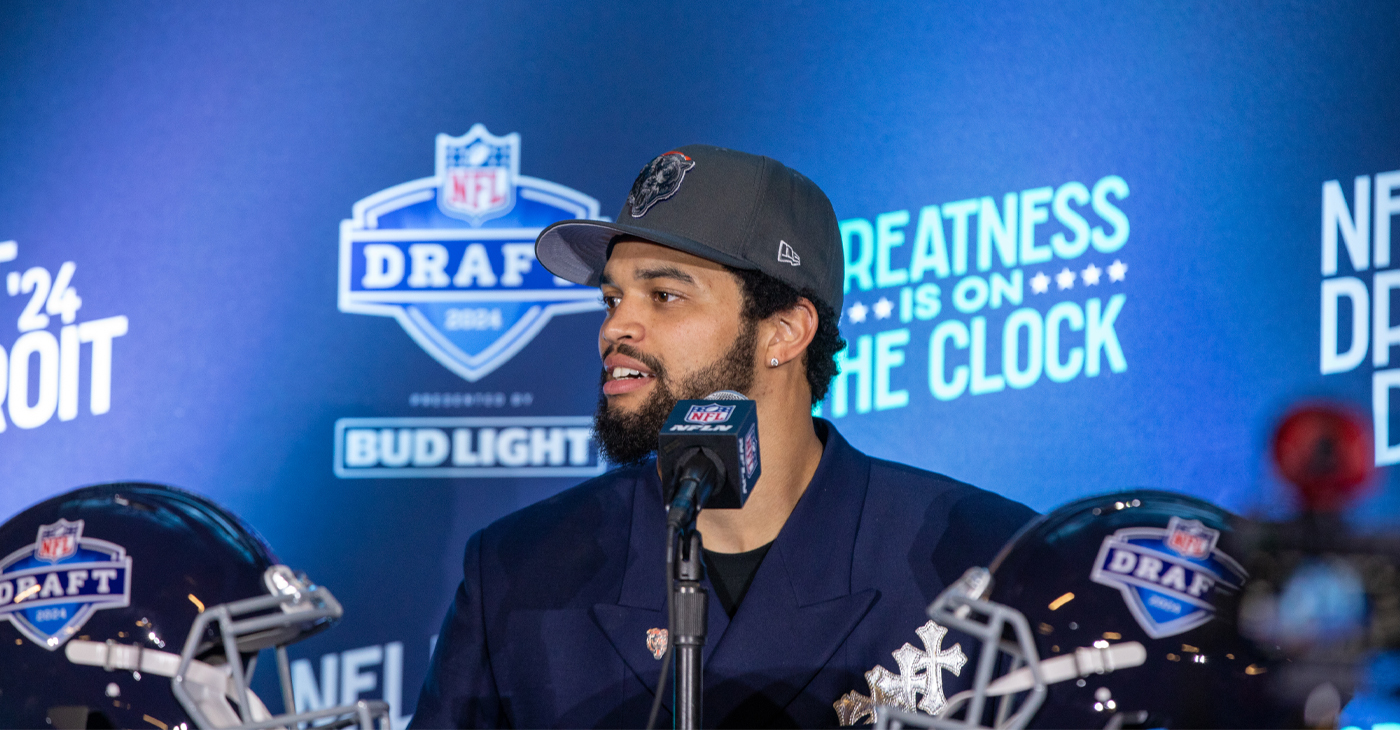
Philadelphia Eagles quarterback Jalen Hurts found Darius Cooper with nine seconds left for the game winning touchdown as his team beat the Tennessee Titans 24-20 in Nashville. Hurts finished the day 26/37 for 264 yards. He threw for two touchdowns and two interceptions.
Prior to the final drive, the Eagles ran 25 plays for 45 yards. During the final drive Hurts went 6-8 with 61 passing yards and the touchdown. Titans defensive tackle — and team captain — Jeffery Simmons said this week that the way to defend Jalen Hurts is to make him “play quarterback.”
Hurts said to Simmons after today’s game: “You started that sh**. I had to finish it.”
Running back Saquon Barkley suffered a stinger in the first half but he ultimately finished the game. He had four carries and nine yards and one catch for eleven yards. He will get an MRI for his injury, but admitted to Cameron Wolfe of the NFL Network he was fine.
Caleb Williams leaves game against Vikings with apparent lower-body injury
Chicago Bears quarterback Caleb Williams was helped off the field with a right leg injury with 7:42 remaining in the fourth quarter. Williams was down, writhing in pain after scrambling to his left. After departing the injury tent, Williams raised his right fist, acknowledging the crowd while expressing his frustration. Testing will commence on Monday to find out more details about his injury.
“We’ll know tomorrow,” Johnson admitted regarding Williams’ injury. “He’s in good spirits. He’s a team player.”
Williams finished the day with 138 passing yards and one interception.
“I’m actually happy it’s nothing with the knee — that was my first inclination,” Johnson said. “But, a hamstring could be pretty damaging as well. So, we’ll see. We’ll see how bad it is tomorrow and we’ll go from there.”
Bryce Young once again dominated the Falcons
Carolina Panthers quarterback Bryce Young is 5-1 against the Atlanta Falcons and is undefeated at Mercedes-Benz Stadium. Today, Young threw for 287 yards and three touchdowns as he led the Panthers to a 34-3 dismembering of the Atlanta Falcons. Georgia Tech alumnus Darren Waller caught two touchdowns and linebacker Devin Lloyd returned one of his two interceptions for a touchdown.
Cooper Rush started his second straight game for the Falcons and it did not go well. The partisan crowd voiced their displeasure after Rush completed 10/17 passes for 86 yards and two interceptions. Jack Strand entered the game for Rush prompting cheers from the Falcons fans. The rookie threw a pick-six on his first career pass attempt. Strand was the first QB to accomplish that feat since Sam Darnold in 2018 and is the first Falcons player to do that since Brett Favre in 1991. Strand finished the day with 59 passing yards and 16 rushing yards.
According to reports, quarterback Michael Penix, Jr. is expected to make his season debut this Thursday at the Green Bay Packers. His return should help the Falcons. They are the first team since the 2008 Rams to not run any plays in the red zone after the first two games to open a season.
The bright spots for the Falcons today were the Spelman College Jaguarettes performing with the Falcons cheerleaders and Florida A&M’s marching band, The Marching 100, also performed during halftime!
Jayden Daniels gets carted off after apparent arm injury
Washington Commanders quarterback Jayden Daniels appeared to injure his left elbow on the final play of the first half in his game against the Dallas Cowboys. During the play, Daniels got stepped on, braced himself for the fall, and his elbow bent the wrong way. Daniels draped a towel over his head as he exited the field on the cart.
He was later ruled out.
Daniels suffered a dislocated elbow to the same arm during week nine of last season against the Washington Commanders, which led to him being shut down for the remainder of the season.
The post NFL: Week Two Recap | Jalen Hurts did not fold; Caleb Williams exits game with injury appeared first on BlackPressUSA.

#NNPA BlackPress
The Complete Negotiation Framework — Every Stage, Every Tactic, Every Win
Master the complete vehicle-purchase negotiation framework with Roosevelt Gist and Roosevelt. Learn every stage, tactic, and win!
The post The Complete Negotiation Framework — Every Stage, Every Tactic, Every Win appeared first on BlackPressUSA.

Roosevelt Gist and Roosevelt deliver the complete vehicle-purchase negotiation framework in Episode 8 of The Color of Our Money Is Green. This episode covers the three foundations of every effective negotiation, the full seven-stage negotiation sequence with exact language for every stage, and five of the most common dealership tactics with the specific response each one requires.
What You Learn in This Episode:
The three foundations that make every negotiation tactic work
The complete seven-stage car-buying negotiation sequence
Exact language for every stage of the dealership conversation
Five common dealership tactics — the turnover, the four-square, the packed payment, spot delivery, and forced add-ons — and how to counter each one
Why signing preliminary paperwork isn’t the same as signing the final contract
___________________________________________________________________
“The Color of Our Money Is Green: A Buyer’s Guide to What Cars Actually Cost” — stan.store/RGist
____________________________________________________________________
AutoNetwork helps serious car shoppers inspect any new vehicle online before walking into a dealership. I’m Roosevelt — I’ve been reviewing cars and shaping digital car buying and credit union auto leasing since before YouTube car reviews existed.
You’ll find detailed walkaround reviews, POV test drives, and buyer-focused breakdowns covering comfort, space, features, and real-world value.

How to use the channel:
Watch the walkaround of the car you’re considering
Visit AutoNetwork.com for the full review
Check CouponsOffersAndDeals.com for current dealer specials
Walk in already knowing what you want — and what it should cost
 AutoNetwork.com
 CouponsOffersAndDeals.com
Affiliate disclosure: some links earn a small commission at no cost to you and help support the channel. Insta360 is one of those partners.
The post The Complete Negotiation Framework — Every Stage, Every Tactic, Every Win appeared first on BlackPressUSA.
#NNPA BlackPress
Mazda CX-90 Luxury: Heated Seats & Premium Comfort! #shorts
Stay toasty in the CX-90! Plush Nappa leather, heated/ventilated seats, and a memory-equipped heated steering wheel deliver ultimate luxury.
The post Mazda CX-90 Luxury: Heated Seats & Premium Comfort! #shorts appeared first on BlackPressUSA.

Experience ultimate comfort in the CX-90. Nappa leather, heated/ventilated seats, 8-way power adjustments, and memory settings for both front passengers. The heated steering wheel with memory tilt/telescope adds premium convenience.
 Watch the full video: https://youtu.be/EH5A4eQ4ipY
#AutoNetwork
The post Mazda CX-90 Luxury: Heated Seats & Premium Comfort! #shorts appeared first on BlackPressUSA.



IN MEMORIAM: The Rev. Leon “Sonny” Clark, Longtime Orange County Pastor and Community Leader, Dies at 72

Poll: Becerra Widens His Lead Over Hilton; Californians Split on Wealth Tax

From Historic Memories to New Possibilities: Oakland Celebrates Coliseum 60

County Office of Education Says OUSD Finances Are Getting Healthier, Materially Stronger

LIVE FREE Sunday Dinner Brings Faith, Fellowship and Civic Conversation to Oakland

Remembering Chauncey Bailey as Student Journalists Face Threats to Truth-Telling

BLACspace Cooperative Invites Bay Area to Experience Oakland’s Black Cultural Ecosystem Through a BLAC Map Tour + Party

In Wake of Death on Doorstep, Williams Chapel Baptist Church Calls for Better Care, Funding for Unhoused

Oakland Centenarian Nuna McKee Honored!

Caribbean Nations Produce Action Plan Calling for UK Reparations Over Slavery

Oakland Post: Week of September 23 – 29, 2026

Doulas Are Helping Black California Moms Navigate Pregnancy–Even as High Mortality Rates Persist

Newsom Signs Addictive Social Media Law to Protect Kids

On Your November Ballot: Prop 38 Would Allocate $8.4 Billion to Immunology and Immunotherapy Funding

Ask California: Golden State Releases New AI Chatbot

Less Affluent School Districts, Including Sacramento City, Face Threat of State Takeover

ESSAY: California Can Close Its Colorectal Cancer Gap

California Hispanic Chambers of Commerce Unveils: ‘Powering the Future’ Theme for 47th Annual Statewide Convention

Four Candidates, Including Incumbent Barbara Lee, Qualify for Oakland Mayor’s Race

Oakland Post: Week of August 12 – 18, 2026

From Blueprint to Breakthrough: Tackling Affordable Housing in Oakland

Oakland Observes Black August with Block Parties, Film Showings, Workshops

COMMENTARY: Why Local School Tax Measure G1 Will Not Be on the November Ballot

Standoff for Justice: Our Homes Are Worth Fighting For

Returning to Its Roots, the Oakland Black-Eyed Pea Festival Partners with the Freedom Farmers Market Sept. 12

Oakland Post: Week of August 26 – September 1, 2026

NPRC Scores First Advocacy Victory: David Shaw Finally Gets His Wish to ‘Go Home’

Frontier Airlines’ Return to Oakland Airport Brings Flights, Jobs and Opportunity

Gubernatorial Candidate Steve Hilton Blasts California New Tire Rules; Newsom Hits Back

Chef Sharon Lee Blends Culinary Excellence, Education and Empowerment

The Conversation With Al McFarlane 6/23/26

Media Monday 6/22/26

LIVE! ASK ALMA! — TUES. 6.23.26 7PM EST

Car Buying Secrets: 4 Hidden Checks Before You Sign!

Is This 550 HP Charger Worth YOUR Money? AutoNetwork Review

Celebrating Juneteenth – Frederick Douglass on education and resistance

LIVE! — ASK ALMA! — TUES. 6.19.26 7PM EST

Hyundai Ioniq 5 Parking, Safety, and 360 View #shorts

2025 Ioniq 5 New Wiper & Powerful Performance! #shorts

Electric SUV Range: Is 259 Miles Enough? #shorts

EV Charging: How Fast Can You Charge an Electric Vehicle? #shorts

Biometric Cooling… Messaging Seats…Come on! 2025 Infiniti QX80 Autograph 4WD

Charged Up: Witness the Magic of a Fully Electric Car! #shorts

Range Rover Sport PHEV Included…: See What’s Inside This Luxury SUV! #shorts

Invisible Hood View: Perfect Parking with X-Ray Vision! #shorts
-
 Commentary4 weeks ago
Standoff for Justice: Our Homes Are Worth Fighting For
-
 Activism4 weeks ago
Oakland Post: Week of August 26 – September 1, 2026
-
 Business4 weeks ago
Frontier Airlines’ Return to Oakland Airport Brings Flights, Jobs and Opportunity
-
 Business4 weeks ago
Gubernatorial Candidate Steve Hilton Blasts California New Tire Rules; Newsom Hits Back
-
 Business4 weeks ago
Chef Sharon Lee Blends Culinary Excellence, Education and Empowerment
-

 Community4 weeks ago
Big City Mayors Ask for “Yes” Vote on Housing Bond Measure; Conservatives Say “No”
-

 Black History4 weeks ago
Jackie Wright Champions Bay Area Stories, Filmmakers and Cultural Institutions
-

 Education4 weeks ago
Gov. Newsom’s Latest Appointees Include Sacramento Advocate for Formerly Incarcerated Students; State’s New Tech Chief
