
Education
Report: Poorer Children Face Greater Obstacles to Healthy Eating and Active Living

By Beth Tagawa, SF State News
Chips, soda, chocolate, candy — while these high-calorie treats are not part of a healthy diet, for years they were sold at California public elementary schools with no government restrictions. Students gobbled them up, and, at the same time, obesity levels rose.
That changed 11 years ago, when the state enacted policies limiting the so-called “competitive” food and beverages (CF&B) that could be sold at schools outside of school meal programs.
According to new research, these policies may have helped lower childhood obesity rates in elementary schools, but their effectiveness is not universally consistent: Obesity rates among students attending schools in disadvantaged neighborhoods showed less improvement than their peers at schools in wealthier neighborhoods.
“The good news is that for all kids, regardless of where their schools are located, the trends in obesity improved — though the rates are still pretty high,” said Emma V. Sanchez-Vaznaugh, an associate professor in the Department of Health Education at San Francisco State University and lead author of the study. “However, the bottom line is that everyone benefitted, but not equally.”
In 2004, California put into effect some of the nation’s most comprehensive policies limiting CF&B sales aimed at K-8 students, targeting sugar-sweetened beverages, fat, portion size and calories from fat.

Sanchez-Vaznaugh’s study, published online in JAMA Pediatrics today, compared overweight/obesity prevalence trends before and after these policies were implemented to determine whether these trends differed depending on socioeconomic factors in school neighborhoods.
The study was based on data for more than 2.7 million fifth-grade students in 5,362 California public schools from 2001 to 2010.
Sanchez-Vaznaugh and her coauthors found that, from 2005 to 2010, childhood obesity rates leveled off among students attending schools in socioeconomically disadvantaged neighborhoods.
But in more wealthy neighborhoods, there were significant improvements, with obesity rates dropping as much as 1.2 percent for females and one percent for males.
While these findings suggest that the CF&B restrictions are crucial tools to prevent and reduce childhood obesity, the extent of their effectiveness could depend on socioeconomic and other factors in school neighborhoods, Sanchez-Vaznaugh said.
Research has shown that children in disadvantaged neighborhoods are exposed to environmental factors that could make them more susceptible to obesity, she explained.
Children in disadvantaged neighborhoods may be negatively affected, for example, by exposure to unhealthful food sources, such as fast food outlets and convenience stores. They also may not have as many opportunities for physical activity if their neighborhoods have fewer parks and heavier traffic.
“Children attending schools in disadvantaged neighborhoods have many more obstacles to healthy eating and active living,” Sanchez-Vaznaugh said. “It’s very important to consider what else can be done.”
“Association between competitive food and beverage policies in elementary schools and childhood overweight/obesity trends — differences by neighborhood socioeconomic resources” was authored by Emma V. Sanchez-Vaznaugh; Brisa N. Sanchez of the University of Michigan, Ann Arbor; Patricia B. Crawford of the University of California, Berkeley; and Susan Egerter of the University of California, San Francisco.
The study was published online in JAMA Pediatrics (a journal of the American Medical Association) on May 4.
By Beth Tagawa, SF State News
Chips, soda, chocolate, candy — while these high-calorie treats are not part of a healthy diet, for years they were sold at California public elementary schools with no government restrictions. Students gobbled them up, and, at the same time, obesity levels rose.
That changed 11 years ago, when the state enacted policies limiting the so-called “competitive” food and beverages (CF&B) that could be sold at schools outside of school meal programs.
According to new research, these policies may have helped lower childhood obesity rates in elementary schools, but their effectiveness is not universally consistent: Obesity rates among students attending schools in disadvantaged neighborhoods showed less improvement than their peers at schools in wealthier neighborhoods.
“The good news is that for all kids, regardless of where their schools are located, the trends in obesity improved — though the rates are still pretty high,” said Emma V. Sanchez-Vaznaugh, an associate professor in the Department of Health Education at San Francisco State University and lead author of the study. “However, the bottom line is that everyone benefitted, but not equally.”
In 2004, California put into effect some of the nation’s most comprehensive policies limiting CF&B sales aimed at K-8 students, targeting sugar-sweetened beverages, fat, portion size and calories from fat.
Sanchez-Vaznaugh’s study, published online in JAMA Pediatrics today, compared overweight/obesity prevalence trends before and after these policies were implemented to determine whether these trends differed depending on socioeconomic factors in school neighborhoods.
The study was based on data for more than 2.7 million fifth-grade students in 5,362 California public schools from 2001 to 2010.
Sanchez-Vaznaugh and her coauthors found that, from 2005 to 2010, childhood obesity rates leveled off among students attending schools in socioeconomically disadvantaged neighborhoods.
But in more wealthy neighborhoods, there were significant improvements, with obesity rates dropping as much as 1.2 percent for females and one percent for males.
While these findings suggest that the CF&B restrictions are crucial tools to prevent and reduce childhood obesity, the extent of their effectiveness could depend on socioeconomic and other factors in school neighborhoods, Sanchez-Vaznaugh said.
Research has shown that children in disadvantaged neighborhoods are exposed to environmental factors that could make them more susceptible to obesity, she explained.
Children in disadvantaged neighborhoods may be negatively affected, for example, by exposure to unhealthful food sources, such as fast food outlets and convenience stores. They also may not have as many opportunities for physical activity if their neighborhoods have fewer parks and heavier traffic.
“Children attending schools in disadvantaged neighborhoods have many more obstacles to healthy eating and active living,” Sanchez-Vaznaugh said. “It’s very important to consider what else can be done.”
“Association between competitive food and beverage policies in elementary schools and childhood overweight/obesity trends — differences by neighborhood socioeconomic resources” was authored by Emma V. Sanchez-Vaznaugh; Brisa N. Sanchez of the University of Michigan, Ann Arbor; Patricia B. Crawford of the University of California, Berkeley; and Susan Egerter of the University of California, San Francisco.
The study was published online in JAMA Pediatrics (a journal of the American Medical Association) on May 4.











Education
Hutchinson Concedes: Ballots Still Being Counted in Oakland Board Elections
Oakland District 4 incumbent Mike Hutchinson has conceded his seat on the school board as ballot counting continues for Alameda County. Following ranked-choice tabulations, challenger Kathryn Camp holds a significant lead over the longtime representative whose term ends in January. While Hutchinson expressed pride in his legislative record and opposition to the board majority, other races remain highly competitive. Updates in Districts 2 and 6 show narrow margins and shifting leads as officials finalize the local election results, providing a new outlook for the district.

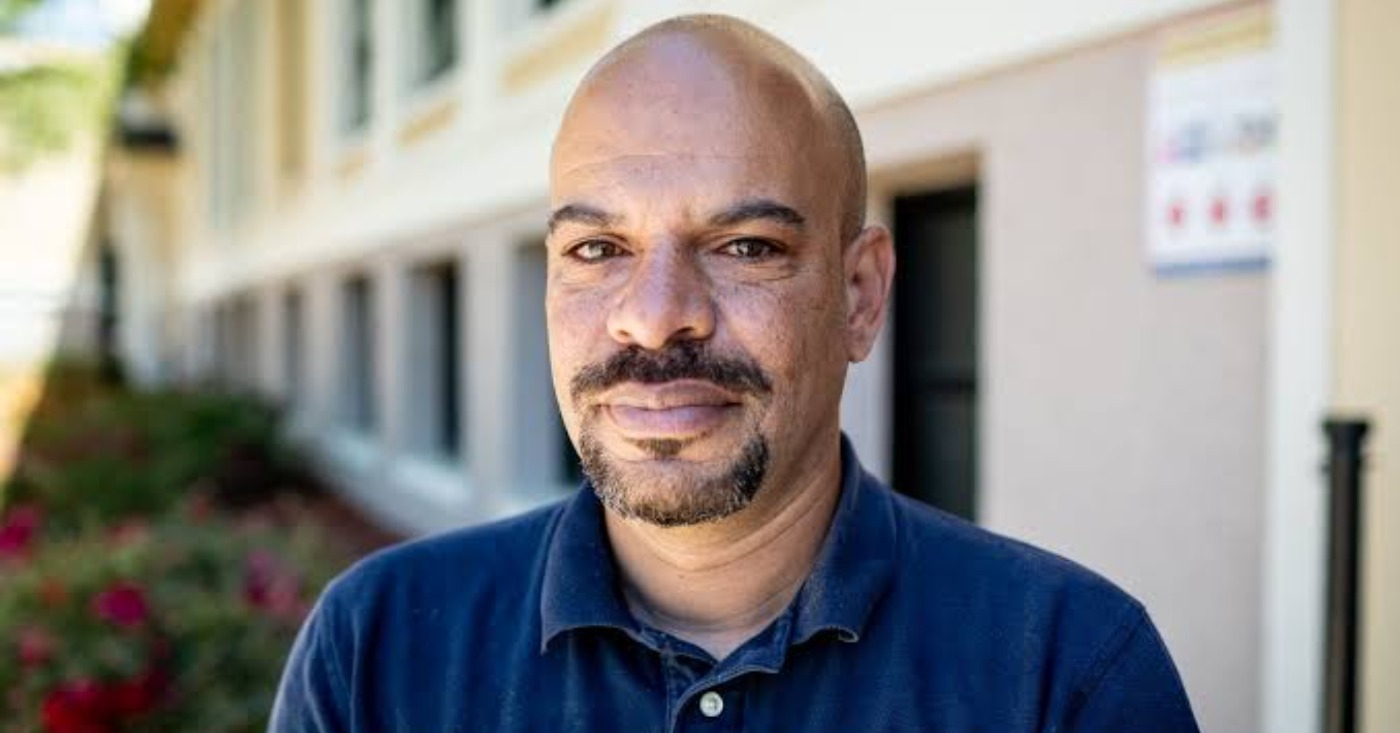
While the results of Oakland and Alameda County elections are still being counted, Oakland District 4 incumbent, Mike Hutchinson, has already conceded online. His term ends in January.
As of Monday, Nov. 9, after ranked-choice votes were tabulated, Hutchinson won 44.36%, while Kathryn Camp won 55.64%. Sylvia Pfeiffer Williams came in third.
Camp’s website describes her as “an Oakland mom, an OUSD parent, and an experienced leader who believes deeply in the power of opportunity and in our responsibility to make sure every child has a real chance to thrive.”
Writing on Facebook, Hutchinson wrote, “It appears that we did not win reelection to the school board. Although it is disappointing, it is not entirely unexpected given what we have faced over the last four years. I have often said that if doing the right thing costs me reelection then so be it.”

In summing up his achievements, he credited himself with the work of the district, the board, and the superintendent and celebrated his opposition to the school board progressive majority and the superintendent.

“During my six years in office, against all odds, and without a board majority, we changed the game. I’m proud to say that we accomplished more than I ever imagined was possible,” he wrote.
“I led through the pandemic and the safe and equitable reopening of the district. I ended the failed school closures policies,” he continued. “I authored and passed the 3 R’s, a comprehensive plan to engage in community conversations to decide how to re-envision, restructure, and redesign OUSD going forward.”
“I steadfastly took a stand against the school board majority over the last two years as they reversed our progress,” he said.
Many school observers and public-school advocates did not share Hutchinson’s enthusiasm for the role he has played.
At present, he often aligns with the Fiscal Crisis Management and Assistance Team (FCMAT), a state-funded agency that advocates for closing schools and cutting education programs, particularly in poorer districts that serve Black and Brown families.
Other school board races are showing mixed results. In District 2, School Board President Jennifer Brouhard is ahead of her challenger Arielle Fleisher, 50.99% to 49.01% as of Monday.
In the District 6 race, Board Vice President Valarie Bachelor is slightly ahead of two challengers in first-place votes at 37.82% but trails after ranked-choice votes are tabulated. With ranked-choice tabulations, Alexandra Williams is the current leader with 54.74% of the vote, ahead of Bachelor, who has 45.26%, as of Monday. Leana Powell came in third.
Williams has worked at public, private, and charter schools. She joined AIMS Academy, part of the American Indian Model Schools network in Oakland, as a math teacher in September 2024.

Education
Mayor Lee and Schools’ Supt. Saddler Issue Joint Statement on Recent ICE Activity in Oakland
POST NEWS GROUP — “We will not allow intimidation targeting our families, disrupting our schools, or dividing our neighborhoods. Our schools are sanctuaries where our children belong, and our workplaces and public spaces belong to all Oakland residents,” according to the statement.
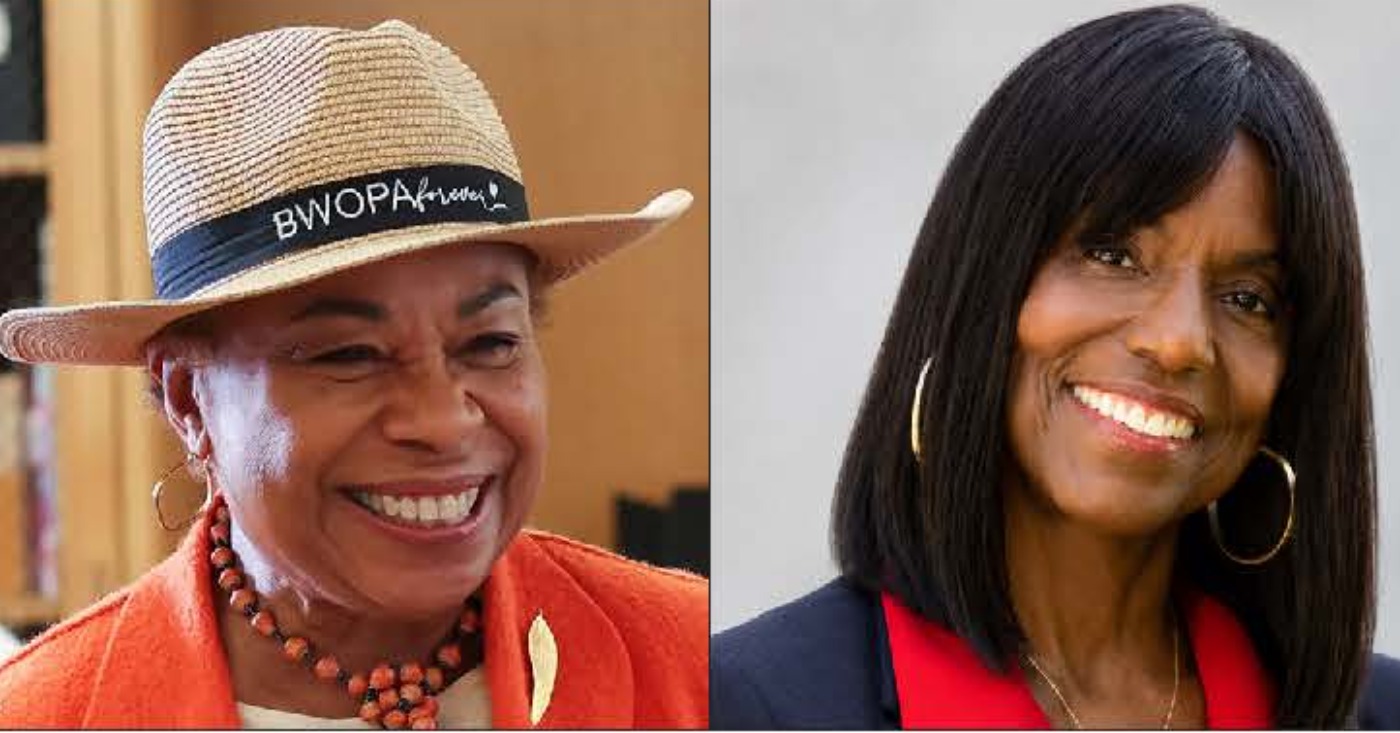
Oakland Mayor Barbara Lee and Oakland Unified School District Superintendent Denise Saddler issued a joint statement to city residents this week concerning increased ICE activity in Oakland and the Bay Area, which has the school community “on edge.”
“We want to remind everyone that OUSD is a ‘Sanctuary District’ inside Oakland, a Sanctuary City. That means your city and school district support you no matter where you came from or how you got here,” the statement said.
“It also means Oakland Stands United: ICE does not belong in Oakland. We will not tolerate actions designed to spread fear in our city,” the two leaders said.
“We will not allow intimidation targeting our families, disrupting our schools, or dividing our neighborhoods. Our schools are sanctuaries where our children belong, and our workplaces and public spaces belong to all Oakland residents,” according to the statement.
The city leaders reemphasized that the city and school district stand with every member of the community.
“We know our rights, and we will protect them every single day. In Oakland, everyone should know that the safety and well-being of all residents is paramount. The schools have strong protocols in place in case of ICE activity anywhere near our campuses.”
City residents are urged to make a report if they see or suspect ICE activity. “Please report it immediately to the Alameda County Immigration Legal Education Partnership (ACILEP) rapid response hotline at 510-241-4011 for immediate support,” according to the statement.
Education
As Progressive Democrats Celebrate ‘Blue Tsunami,’ Oakland Counts Victories
As national Democrats celebrate a significant shift in the midterm elections, local leaders in Oakland are tracking early results from the Alameda County Registrar of Voters. While Mayor Barbara Lee and several City Council incumbents have secured decisive victories, attention remains fixed on high-stakes school board contests. Progressive candidates currently face strong challenges from opponents backed by corporate funding and local political organizations. With many ballots still uncounted, the final composition of the board and several regional transit measures remain in the balance. Read more.

Concerns remain over school board races as ‘moderates’ lead progressives
The Alameda County Registrar of Voters has released the first round of election results, though many ballots remain uncounted and results are still incomplete.
Nationally, Democrats, liberals and progressives celebrated Tuesday evening as President Donald Trump was dealt a devastating blow in the midterm election. The Republican Party lost control of the Senate and the House as “Maga” candidates were swept away not just by a ‘blue wave,’ but a ‘blue tsunami.’
In Oakland, incumbent Mayor Barbara Lee, who served two years and ran for a full four-year term, won decisively.
A proposal backed by Lee, Measure EE, also won. The Charter amendment will create a strong mayor system of government while providing the City Council with new checks and balances on mayoral power.
District 2 Councilmember Charlene Wang is leading with 65.62% of the vote. Opponent Nate Adams trails with 34.38%.
District 4 Councilmember Janani Ramachandran, ran unopposed for reelection, receiving 14,029 votes.
District 6 Councilmember Kevin Jenkins bested opponent Nancy Sidebotham and District 2’s Charlene Wang also won reelection.
City Auditor Michael Houston is running unopposed for reelection and won 60,773 votes.
Progressive school board members, Jennifer Brouhard (D2) and Valarie Bachelor (D6), supported by teachers and school activists, face serious challenges from candidates backed by pro-corporate funders and the political organization, Empower Oakland.
Arielle Fleisher leads Brouhard 53.49% to 46.51%.
In District 6 with three contending candidates, Alexandra Williams leads with 38.06% of the vote. Incumbent Bachelor has 36.89%, and Leana Powell is trailing with 25.04%.
In District 4, incumbent Mike Hutchinson is narrowly leading a field of three candidates. He received 40.87% of the vote, while Kathryn Camp has 39.92%, and Sylvia Pfeiffer Williams has 19.21%.
In the races for AC Transit Board, Director Joel Young (Ward 3) leads with 53.11% of the vote, Sarah Syed (Ward 4) is ahead with 78.37% of the vote, and Murphy McCalley (Ward 5) leads with 63.07%.
Regional Transit Measure RTM, which would increase sales taxes in five Bay Area counties to shore up BART and other regional transit, was leading in five counties by a combined 62% of the vote.



Native American Health Center Connects 140 Community Members to Career Opportunities During Native American Heritage Month

Oakland Chamber of Commerce Faces $42,000 Ethics Fine for Campaign Violation

Attorney General Bonta Serves Investigative Subpoena on Nvidia

A Record 216 Firearms Collected at East Oakland Gun Buy-Back Event

City Council Hearing Shines a Light on Failures of City’s Prompt Payment Policy

IN MEMORIAM: Claude T. Everhart, San Francisco’s First Black Deputy Mayor, Dies at 73

UC Doctors, Nurses and Community Rally to Demand ICE Out of UC Hospitals

Hypertension and Heart Disease: Doctors, Advocates and Patients Are Tackling the Leading Cause of Death for Black Californians

Marin City Is Especially Vulnerable to El Niño High Tides, Strong Winds, Flooding and Power Outages

‘We’re Committed to Delivering the Change that the American People Deserve’

Staying Ready: What Every Californian Should Know About Preparing for El Niño

Oakland Post: Week of November 18 – 24, 2026

Oakland Post: Week of November 11 -17, 2026

Alameda County Supervisor Miley to Propose Illegal Dumping Ordinance

Oakland City Council Extends AI Data Center Moratorium for 10 Months.

COMMENTARY: Valarie Bachelor and Jennifer Brouhard are Excellent School Board Members and Deserve to Be Reelected

OUSD Receives State Review of District Finances; Outlines Progress Since January

HISTORY MADE: Keisha Lance Bottoms Becomes First Black Woman Elected Governor in American History

SEIU Local 1000 and State of California Will Continue to Negotiate New Labor Contract

Golden State Valkyries Become Bay Area Legends Winning WNBA Championship on Halloween Night

Fate of Bay Area Public Transit Hinges on Regional Transit Measure

COMMENTARY: Your California Living Trust Could Be Next: When Evidence Isn’t Enough

Chase Launches Fraud & Scam Prevention Month

Democrats, Community Groups Back Measure EE to Change How Oakland Is Governed

Mayor Barbara Lee Holds Special State of the City Address in Deep East Oakland

Post News Group Nov. 3 Election Endorsements

It’s Time to Lose Weight Before the Holidays

Richmond Neighbors Put Pantry Power on the Map

From Backyard Grilling to Jack London Square: Jamale Carlyle’s Chicken Wing Success Story

Oakland Post: Week of October 7 – 13, 2026

The Conversation With Al McFarlane 6/23/26

Media Monday 6/22/26

LIVE! ASK ALMA! — TUES. 6.23.26 7PM EST

Car Buying Secrets: 4 Hidden Checks Before You Sign!

Is This 550 HP Charger Worth YOUR Money? AutoNetwork Review

Celebrating Juneteenth – Frederick Douglass on education and resistance

LIVE! — ASK ALMA! — TUES. 6.19.26 7PM EST

Hyundai Ioniq 5 Parking, Safety, and 360 View #shorts

2025 Ioniq 5 New Wiper & Powerful Performance! #shorts

Electric SUV Range: Is 259 Miles Enough? #shorts

EV Charging: How Fast Can You Charge an Electric Vehicle? #shorts

Biometric Cooling… Messaging Seats…Come on! 2025 Infiniti QX80 Autograph 4WD

Charged Up: Witness the Magic of a Fully Electric Car! #shorts

Range Rover Sport PHEV Included…: See What’s Inside This Luxury SUV! #shorts

Invisible Hood View: Perfect Parking with X-Ray Vision! #shorts
-
 Commentary3 weeks ago
COMMENTARY: Valarie Bachelor and Jennifer Brouhard are Excellent School Board Members and Deserve to Be Reelected
-
 Education3 weeks ago
OUSD Receives State Review of District Finances; Outlines Progress Since January
-
 Black History3 weeks ago
HISTORY MADE: Keisha Lance Bottoms Becomes First Black Woman Elected Governor in American History
-
 Business3 weeks ago
SEIU Local 1000 and State of California Will Continue to Negotiate New Labor Contract
-
 Community2 weeks ago
Golden State Valkyries Become Bay Area Legends Winning WNBA Championship on Halloween Night
-
 Business4 weeks ago
Fate of Bay Area Public Transit Hinges on Regional Transit Measure
-
 Business3 weeks ago
COMMENTARY: Your California Living Trust Could Be Next: When Evidence Isn’t Enough
-
 Business4 weeks ago
Chase Launches Fraud & Scam Prevention Month
