
Business
Norfolk And NSU Partner On Downtown Presence For University
NEW JOURNAL AND GUIDE — Norfolk State University (NSU) has emerged as an important cog in the city of Norfolk’s and the region’s educational and job creation machinery. Members of NSU’s business school faculty and administration joined Norfolk city leaders recently to put that reputation on dismay as they cut the ribbon on the new Norfolk State University Innovation Center (NSUIC) – On the Main.

By Leonard E. Colvin
Norfolk State University (NSU) has emerged as an important cog in the city of Norfolk’s and the region’s educational and job creation machinery.
Members of NSU’s business school faculty and administration joined Norfolk city leaders recently to put that reputation on dismay as they cut the ribbon on the new Norfolk State University Innovation Center (NSUIC) – On the Main.
The new center is an example of a partnership and collaboration between Norfolk to enable the HBCU to create a presence in the city’s main business corridor.
Also, it brings NSU’s resources to the city’s revitalized downtown, with anticipation of developing and promoting, educational and employment opportunities for NSU students and Norfolk and Hampton Roads residents, in general.
According to NSU leaders and city officials, the center’s prime location will allow NSU to engage with local and national firms located downtown such as Automatic Data Processing, Inc. (ADP), a human resources management company. ADP alone has created 2,000 of the thousands of new jobs in Norfolk over the past three years.
“Since becoming mayor, I have been trying to get NSU to have a better presence downtown,” said Norfolk Mayor Kenneth C. Alexander.
“This center will provide opportunities for NSU graduates and grad students. We want the school to engage the business, banking, legal, retail, and community downtown to illustrate its track record of producing talent and what NSU has to offer.”
NSU’s main campus is located in the central Brambleton section of Norfolk, just two miles from its NSUIC. The new center is easily accessible by car, the city’s light rail, and the traditional public bus system.
“We are hoping to foster partnerships for innovation, planning, for the business sector and the students,” the Mayor said. “We are also talking about internships, apprenticeships, and future employment. NSU has a good track record at creating energetic and competent entrepreneurs.”
Calling it “inclusive growth and development,” the Mayor also said the city hopes the NSUIC will help in expanding the number of Small, Female, and Minority and Black-owned and operated firms downtown and other parts of the city and region.
According to the city and NSU, the center’s immediate service will be as a business incubator to develop business competitiveness, jobs creation, investment opportunities, infrastructural improvements, global inclusion and participation within the Hampton Roads community.
NSU is leasing the space for the NSUIC Commercial Place Building at 520 E. Main Street in a city-owned building which houses a garage and street-level retail space.
It is across the street from a row of taller buildings that house banking giants PNC, BBBT, and it is two blocks from the new ICON apartment complex (formerly Bank of America), the MacArthur Center Mall, and the Slover Library.
Bright and open space with the NSU green and gold colors, the center features several private offices, a kitchenette, a few sitting areas with televisions capable of video-conferencing, and a conference table that can be separated from the rest of the space with panels.
Students can use the co-working space for free. Non-students may acquire a one-time day pass or pay $60 a month to use it.
Glenn Carrington has been Dean of the NSU School of Business since 2017. He said the role of the NSUIC is part of the school’s effort to create a bridge to the greater business community.
He graduated from NSU in 1977, after enrolling on a basketball scholarship.
The UVA Law School graduate said the center will be used as space for business incubation, where traditional university business classes, seminars, forums and a speaking series can be held in the space.
The various events will enable the city to create an inclusive and accessible location addressing the needs of business start-ups and small businesses.
Carrington said one of the first significant tasks for the center will be conducting a survey to determine the problems entrepreneurs have and find solutions to them.
From 1980 until he retired in 2016, Carrington crafted a varied and stellar career after law school including counsel and other executive positions with the IRS, Caplin and
Drysdale, Arthur Andersen, Deloitte and Touche Partners and at Ernst and Young LLP.
He said one of the problems facing entrepreneurs and small businesses is the inability to secure stabilizing capital.
He said that while white women typically receive about 2 percent of so-called “angel” investment capital, African-American women receive .02 percent.
He said the center will invite successful business people “to tell their stories to people “who use the center during forums to educate entrepreneurs on how to cultivate and secure investment dollars.
Carrington said he wants to establish partnerships with existing agencies such as the Small Business Administration and Old Dominion University to access their expertise and resources so “we will not have to reinvent the wheel.”
This article originally appeared in the New Journal and Guide.














Business
From Historic Memories to New Possibilities: Oakland Celebrates Coliseum 60
More than 75 people gathered at Youth UpRising in East Oakland on Friday, September 18, for Coliseum 60, an event marking six decades of sports, entertainment, employment, and community memories at the Oakland-Alameda County Coliseum Complex. Held 60 years to the day after the Coliseum first opened, the celebration featured cultural performances and a mini-documentary highlighting its history. Speakers reflected on the venue’s significant role in the community and its future possibilities. Read more to learn about the individuals and stories honored during this special event.

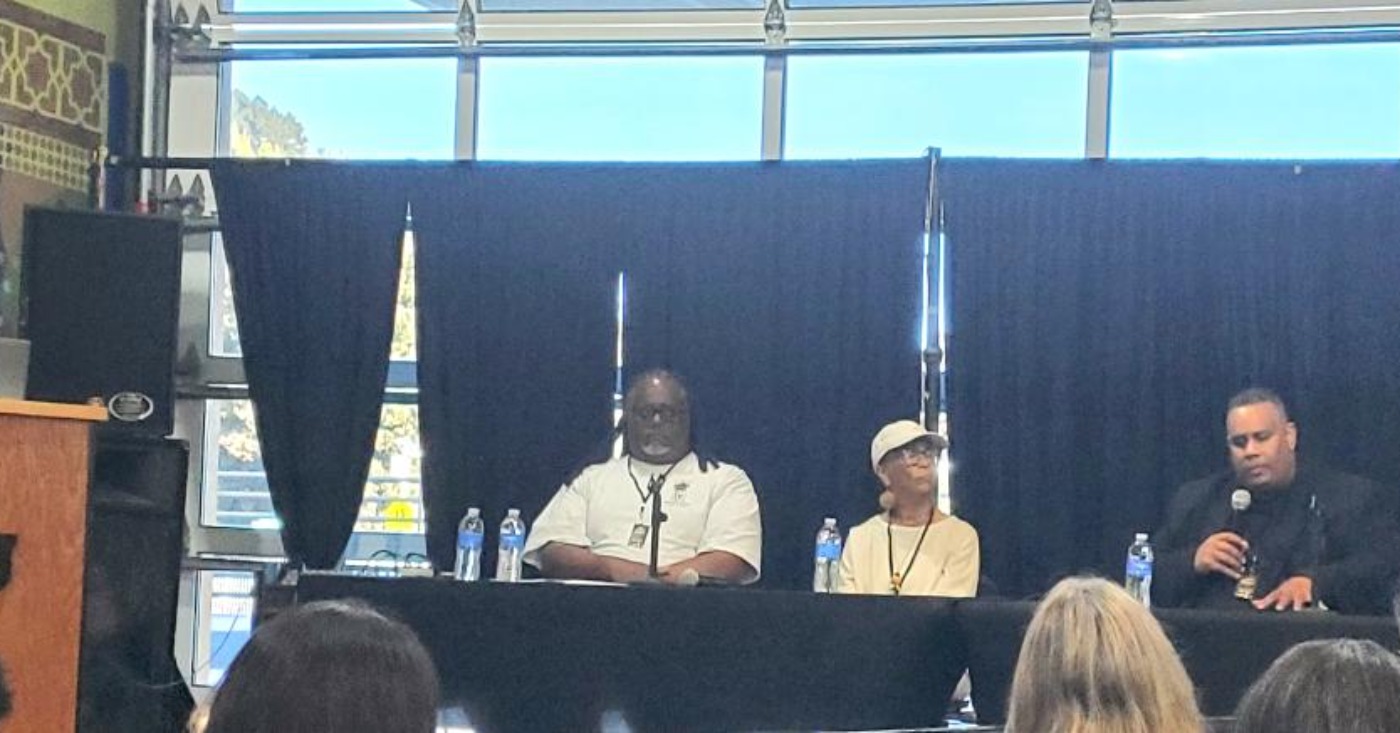
More than 75 people gathered at Youth UpRising in East Oakland on Friday, Sept. 18, for Coliseum 60, a celebration honoring six decades of sports, entertainment, employment and community memories connected to the Oakland-Alameda County Coliseum Complex.
Held 60 years to the day after the Coliseum opened, the event carried the theme, “One Community. One Legacy. One Future. Forward Together.”
The celebration opened with the national anthem performed by sisters Anese Jade, Amina Benjamin and Zaza Benjamin. Diamano Coura West African Dance Company contributed African dance and drumming, bringing movement, rhythm and cultural expression to the program.
A mini documentary highlighted the Coliseum’s sports history and its broader role as an entertainment destination. Archival material recalled performances by Prince and Tina Turner, along with memorable games featuring the Warriors, Oakland A’s and Raiders.
“The Coliseum 60 is about much more than celebrating a building or looking back at 60 years of history,” said event organizer Quixote Atkins of VillageGIVE.
“It’s about the people who made that history possible: the families, workers, athletes, artists, community leaders, fans and generations who gathered there and created memories together.”
A panel exploring that history featured author, historian and former Black Panther Party member Tareka Lewis; stagehand and union representative Keith Brown; and Ray Bobbitt, president of the African American Sports and Entertainment Group AASEG. Lewis described her family as fourth-generation Bay Area pioneers.
“My family and Black families who arrived even earlier helped build the Bay Area, grew businesses and established culture here,” Lewis said. “This should be taught in the public schools.”
Lewis recalled Oakland’s influence on sports, music and literature, from the Raiders’ beginnings at Laney College to stars such as The Pointer Sisters and Rickey Henderson who attended Oakland public schools. She also advocated for school museums, historical timelines, entrepreneurship training and investments benefiting corridors such as Bancroft Avenue and High Street.
Keith Brown, a member of Local 107 of the International Alliance of Theater and Stage Employees (IATSE) who began working at the Coliseum in 2011, remembered the Ringling Bros. and Barnum & Bailey Circus, the Ice Capades, baseball bat giveaways and Nelson Mandela’s 1990 appearance.
“The special events are amazing, but it’s the workers that make the memories real for everyone,” Brown said. “They make the magic happen at the Coliseum.”
The program recognized longtime workers, including beer-stand manager Robert Preston, who served for 40 years, and Kenyatta Gentry, who worked as a vendor for 24 years and used her earnings to purchase her first apartment. Union workers Jose Gonzales and Carmen Sandoval were also honored. Speakers emphasized that Coliseum employment provided generations of residents with union wages and benefits.
Dr. Denise Saddler, the superintendent of the Oakland Unified School District (OUSD) was also honored. Saddler shared her family’s history of working at the Coliseum.
District 7 Oakland City Councilmember Ken Houston discussed the complex ownership arrangements involving the city, county and private interests.
“This was the most complex deal of its kind in the country,” Houston said.
Prior to moving from the East Coast, Alameda County Supervisor and Coliseum Joint Powers Authority Chair Nate Miley recalled learning about Oakland through its three professional sports teams. As an elected official and public servant, Miley fought hard to keep the Golden State Warriors, Oakland As, and the Raiders, but he is hopeful for the future.
“The story is not over for the Coliseum,” Miley said. “We’re entering a new chapter.”
Bobbitt said the departure of three teams had once seemed unimaginable, but he maintained that Oakland’s future remains bright.
“Oakland is a cultural superpower worldwide,” Bobbitt said. “We’re going to write the future where we participate and drive the redevelopment.”
Bobbitt highlighted AASEG’s four-year partnership with Castlemont High School’s architecture program, which engages students in reimagining and creating redevelopment concepts for the Coliseum property. “The youth will always move us forward. They are the future.”
In closing, Atkins said, “September 18 is the celebration, but what we build together afterward is the legacy.”

Business
County Office of Education Says OUSD Finances Are Getting Healthier, Materially Stronger
The Oakland Unified School District’s recent budget submission has been deemed “materially stronger” by the Alameda County Office of Education, reflecting deliberate work by the new board and superintendent. Despite needing further cuts in the coming years, the district is progressing toward financial health, according to ACOE Superintendent Alysse Castro. This assessment counters critics who suggest a dire financial outlook for Oakland schools, acknowledging the district has made significant reductions and adopted a plan to address structural challenges. The ACOE commended the district’s efforts to get its financial house in order. Read more to learn about the details of these financial improvements.
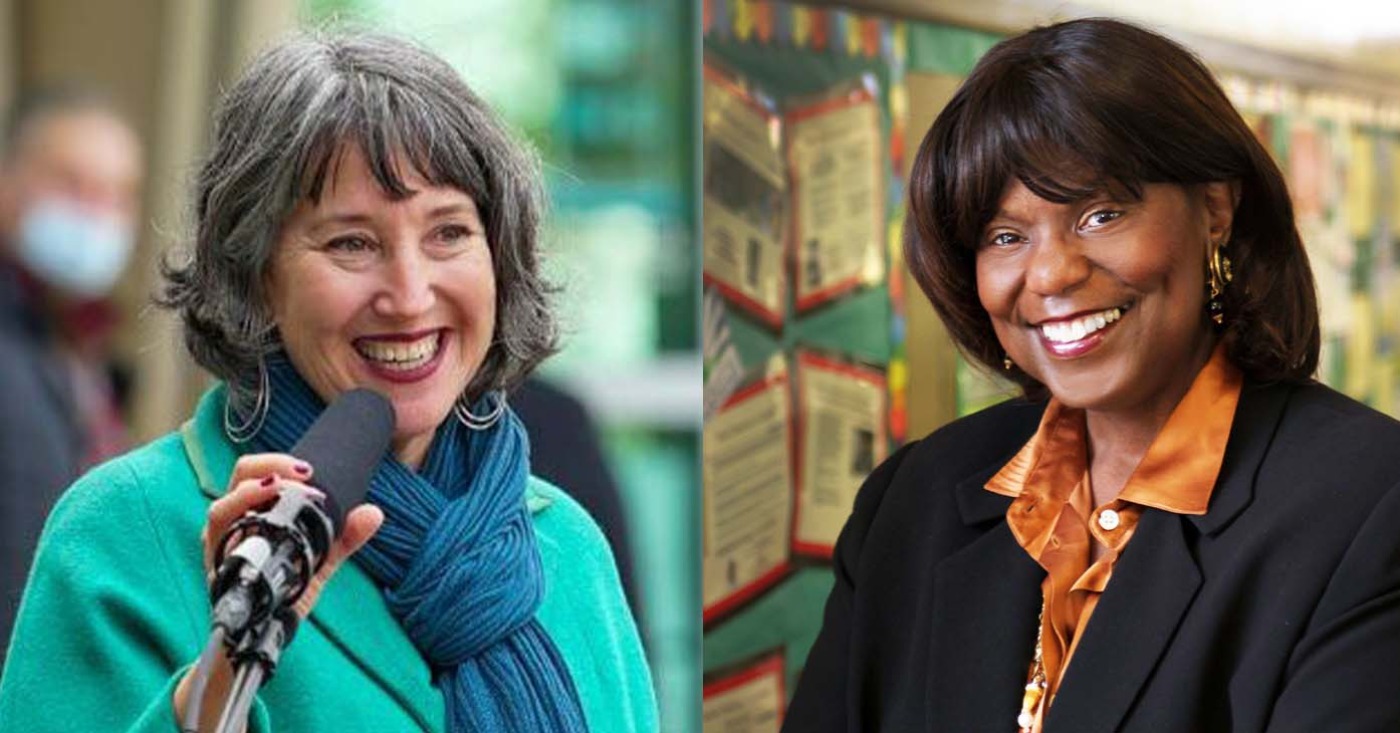
County’s letter counters critics who offer Doomsday scenarios for Oakland schools
The Oakland Unified School District, under the leadership of a new board majority and new superintendent, recently submitted a budget to the county “that is a materially stronger submission than the district has filed in recent years, (which) reflects difficult and deliberate work,” according to a letter to the district from Supt. Alysse Castro of the Alameda County Office of Education.
While OUSD still must make more budget cuts in the next two years, the district is on the road to financial health, according to a Sept. 15 letter from Castro to the district.
Under the California Education Code, Alameda County and other county offices of education (COEs) have the legal responsibility to review, approve, conditionally approve, or disapprove local school district annual budgets and interim financial reports.
“The Alameda County Office of Education wants to acknowledge that the district has submitted a budget that shows a positive fund balance, meets the state minimum reserve for economic uncertainty in each year of the multiyear project and is accompanied by a board-adopted commitment to close the remaining structural challenges,” the letter said.
“After two decades of state receivership and significant changes in OUSD’s budgeting practices,” it is understandable that there may be “considerable confusion” in the public about the district’s current financial condition, according to the letter.
However, the district’s current fiscal position and practices are “materially” better than prior years, though they “do not yet eliminate underlying structural challenges,” the letter continued.
Castro also commended the board and staff for working to get their financial house in order.
“There are three essential parts to addressing a structural deficit: staff must identify and bring
forward hard choices; the governing board must make those choices; and staff must follow
through and implement them,” she wrote.
“All three appear to be happening in OUSD, and that represents meaningful progress,” she wrote. “The district has made significant reductions to ongoing expenditures, increased its use of available restricted resources, and adopted a plan to address the remaining gap.”
According to the County, the district already has approved budget cuts of about $30 million in the current year. Additional reductions of about $30 million will be necessary next year, and another $11 million the following year.
These cuts are necessary, the county says, because “the district is still operating at a structural
deficit, meaning spending more every year than it brings in.”
In a statement released earlier this month, the district announced it had “finished the year with $170.1 million in its General Fund and an unrestricted reserve of $32.3 million, finishing $16.4 million ahead of what the district projected in March.”
The budget reflects progress toward putting the district in a stronger financial position to better serve students and families, said district leaders, while also acknowledging the need for significant reductions across the board.
“This turnaround happened because our board was willing to make difficult decisions rather than pass them along, and because our staff did the work,” said Supt. Dr. Denise Saddler. “None of this came easily, and there is more ahead of us. What these closed books show is that the direction is right.”
In October 2025, the board directed staff to prepare budget scenarios totaling $100 million in adjustments. In December, presented with a choice between borrowing to bridge the gap and making the reductions directly, the board chose the latter, the district statement said. As part of the reduction plan, the board approved cuts to more than 400 certificated and classified positions, along with a retirement incentive that converted some layoffs into voluntary departures.
“Closing our books is not the same as finishing the work, and we are not stopping here,” said Tara Gard,deputy superintendent of Business and Operations. “We will continue with the actions in our Financial Stabilization Plan because of where they lead.”
In a statement released on social media, Oakland Education Association (OEA) President
Kampala Taiz-Rancifer strongly criticized those who allege the district is collapsing and supported members of the school board majority who are working hard to stabilize the district’s finances while minimizing disruption for schools and employees.
Jennifer Brouhard (D2) and Valarie Bachelor (D6), who are running for reelection, “are moving the district toward a ‘materially stronger’ financial position than we’ve seen in recent years—all while investing in school sites and the employees who serve Oakland students,” she wrote.
“For years, we’ve heard billionaire-backed board members say they had to make ‘tough choices’ to balance the budget,” she continued. “Those choices almost always caused disruption and instability for our schools and communities. This is a different approach: financial stability alongside investments in students, schools, and workers. All in the effort to improve student outcomes.”
“The real hard work is tuning out the rage bait, the chaos agents, the attacks on unions and workers, and ignoring the loud corporate profiteers—and staying focused on what matters: improving outcomes for students while creating stable teaching and learning conditions,” said Taiz-Rancifer.
“Let’s not go backward into the days of manufactured panic.”
Activism
Oakland Post: Week of September 23 – 29, 2026
The printed Weekly Edition of the Oakland Post: Week of September 23 – 29, 2026

To enlarge your view of this issue, use the slider, magnifying glass icon or full page icon in the lower right corner of the browser window.



Asm. Corey Jackson Announces Launch of 24-Hour Childcare in His District

IN MEMORIAM: The Rev. Leon “Sonny” Clark, Longtime Orange County Pastor and Community Leader, Dies at 72

Poll: Becerra Widens His Lead Over Hilton; Californians Split on Wealth Tax

From Historic Memories to New Possibilities: Oakland Celebrates Coliseum 60

County Office of Education Says OUSD Finances Are Getting Healthier, Materially Stronger

LIVE FREE Sunday Dinner Brings Faith, Fellowship and Civic Conversation to Oakland

Remembering Chauncey Bailey as Student Journalists Face Threats to Truth-Telling

BLACspace Cooperative Invites Bay Area to Experience Oakland’s Black Cultural Ecosystem Through a BLAC Map Tour + Party

In Wake of Death on Doorstep, Williams Chapel Baptist Church Calls for Better Care, Funding for Unhoused

Oakland Centenarian Nuna McKee Honored!

Caribbean Nations Produce Action Plan Calling for UK Reparations Over Slavery

Oakland Post: Week of September 23 – 29, 2026

Doulas Are Helping Black California Moms Navigate Pregnancy–Even as High Mortality Rates Persist

Newsom Signs Addictive Social Media Law to Protect Kids

On Your November Ballot: Prop 38 Would Allocate $8.4 Billion to Immunology and Immunotherapy Funding

Standoff for Justice: Our Homes Are Worth Fighting For

Oakland Post: Week of August 26 – September 1, 2026

Frontier Airlines’ Return to Oakland Airport Brings Flights, Jobs and Opportunity

Gubernatorial Candidate Steve Hilton Blasts California New Tire Rules; Newsom Hits Back

Chef Sharon Lee Blends Culinary Excellence, Education and Empowerment

Jackie Wright Champions Bay Area Stories, Filmmakers and Cultural Institutions

Big City Mayors Ask for “Yes” Vote on Housing Bond Measure; Conservatives Say “No”

Gov. Newsom’s Latest Appointees Include Sacramento Advocate for Formerly Incarcerated Students; State’s New Tech Chief

Oakland Coliseum Project Opens Door for Small Businesses to Build Bigger

Misnamed ‘Parent’ PAC Seeks to Influence Oakland School Board Elections

Longtime BWOPA Member Brendalyn Goodall Appointed to California Workforce Development Board

Gov. Newsom Signs Law Shielding Immigration Aid Workers From Doxing Threats

Secretary of State Shirley N. Weber Urges Californians to Vote Early as Voter ID Battle Intensifies

From Palestine to Oakland: Seeds for Liberation Examines Shared Struggles for Freedom

IN MEMORIAM: Dolly Parton Dead at 80 — How She Built a Legacy of Love and Earned Her Place in Black Culture

The Conversation With Al McFarlane 6/23/26

Media Monday 6/22/26

LIVE! ASK ALMA! — TUES. 6.23.26 7PM EST

Car Buying Secrets: 4 Hidden Checks Before You Sign!

Is This 550 HP Charger Worth YOUR Money? AutoNetwork Review

Celebrating Juneteenth – Frederick Douglass on education and resistance

LIVE! — ASK ALMA! — TUES. 6.19.26 7PM EST

Hyundai Ioniq 5 Parking, Safety, and 360 View #shorts

2025 Ioniq 5 New Wiper & Powerful Performance! #shorts

Electric SUV Range: Is 259 Miles Enough? #shorts

EV Charging: How Fast Can You Charge an Electric Vehicle? #shorts

Biometric Cooling… Messaging Seats…Come on! 2025 Infiniti QX80 Autograph 4WD

Charged Up: Witness the Magic of a Fully Electric Car! #shorts

Range Rover Sport PHEV Included…: See What’s Inside This Luxury SUV! #shorts

Invisible Hood View: Perfect Parking with X-Ray Vision! #shorts
-
 Business4 weeks ago
Chef Sharon Lee Blends Culinary Excellence, Education and Empowerment
-
 Black History4 weeks ago
Jackie Wright Champions Bay Area Stories, Filmmakers and Cultural Institutions
-
 Community4 weeks ago
Big City Mayors Ask for “Yes” Vote on Housing Bond Measure; Conservatives Say “No”
-
 Community2 weeks ago
Misnamed ‘Parent’ PAC Seeks to Influence Oakland School Board Elections
-
 Business4 weeks ago
Longtime BWOPA Member Brendalyn Goodall Appointed to California Workforce Development Board
-
 Community4 weeks ago
Gov. Newsom Signs Law Shielding Immigration Aid Workers From Doxing Threats
-

 Activism3 weeks ago
Oakland Post: Week of September 2 – 8, 2026
-

 Featured4 weeks ago
‘Passing a Law Isn’t The Finish Line’: California Assembly Evaluates Implementation, Results
