
Community
GVRD Tennis Courts and Dan Foley Parking Lot Renovations

The Amador Street and Castlewood Street tennis courts were recently spruced up with a surface upgrade and are now in use.
The tennis courts were resurfaced with money from Measure K and a grant by the U.S. Tennis Association (USTA). About $200,000 of the Measure K tax money was allocated to the courts’ renovation, including resurfacing, repairing drainage, repainting, as well as adding two junior courts and batting walls at the Amador Street facility.

Dan Foley Parking Lot
The Greater Vallejo Recreation District (GVRD) also restriped the Glen Cove Park courts, which are now used by the (GVTA).
The tennis courts have not been resurfaced in nearly 20 years, and the USTA had declared the Amador Street court to be “unsafe” in 2012, leaving the GVTA with only the Castlewood Street site. In addition to the Measure K funds, the USTA had also awarded a facility grant of $28,800 to the GVTA to assist in the renovation.
Additionally,GVRD repaved the Dan Foley Parking lot, with some reconstruction for Americans with Disabilities Act (ADA) regulations. There was also sealing that was completed in the part of the parking lot that was not resurfaced.
The cost of the renovations at the parking lot was approximately $740,000. To further upgrade the location, a request for bids was sent out to redo the landscaping medians inside the parking lots. These upgrades will include new irrigations, new plants and about 80 new trees to replace those that had been taken out for the paving project. The new landscaping should be completed around February 2015.







Community
Prostate Cancer is Twice as Likely to Kill Black Men. Talking to Your Doctor Could Help Save Your Life
BLACKPRESSUSA NEWSWIRE — The American Cancer Society recommends that African American men speak with their doctor at age 45 about whether prostate cancer screening is right for them. Men at even higher risk should have that discussion at age 40, especially those with one or more close relatives who were diagnosed at an early age.

American Cancer Society board member Dr. Robert Winn discusses risk factors for the disease and why too many Black men still aren’t getting screened
September is Prostate Cancer Awareness Month, and as both a Black man and a cancer center director, I know many men in our community think it’s bad luck to talk about cancer. But I’m here to tell you it’s bad luck not to talk about it.
We, Black men in the U.S., are nearly 70% more likely than White men to be diagnosed with prostate cancer. We’re also twice as likely to die from the disease.
But I’m telling you, if you’re diagnosed early, you can still enjoy a long, happy life doing the things you love, whether that’s playing with grandkids or staying active in your community. That’s because although it can become a serious illness, most men diagnosed with prostate cancer won’t die from it.
In fact, more than 3.5 million U.S. men who’ve been diagnosed with prostate cancer are still alive today. And when it’s diagnosed early, you boost your odds of survival. It’s that simple.
Generally, prostate cancer is most likely to develop after age 50, but when it develops in Black men, they tend to be younger. That means we need to be on the ball about understanding our personal risk. The risk factors include a family history of prostate cancer and certain genetic health risks that come from a parent.
When it comes to family medical history, we need to get a lot better at talking. For me, it turned out I had uncles who’d died from prostate and other cancers, but I didn’t always know that, so I couldn’t use that information to help me make smarter screening choices.
The American Cancer Society recommends that African American men speak with their doctor at age 45 about whether prostate cancer screening is right for them. Men at even higher risk should have that discussion at age 40, especially those with one or more close relatives who were diagnosed at an early age.
Look, I get that no one looks forward to a screening, but it typically starts with just a simple blood test, called a prostate-specific antigen, or PSA.
Even if you end up needing a digital rectal exam, it takes less than a minute and could save your life. So, what I say to people is, what’s the price of your life? Isn’t it worth a minute of being uncomfortable?
Brothers, this is essential for you to know: just because you’re feeling good doesn’t mean you don’t have early-stage prostate cancer. By the time you start to actually experience symptoms, the disease could be at an advanced stage and might be harder to treat.”
Prostate cancer is significantly impacting our fathers, our brothers, and our sons. That’s why the American Cancer Society is working with health systems and professionals in your community to help remove barriers in the fight against the disease.
We can help you find low-cost or free screening locations. And for men who need cancer treatment, the American Cancer Society can reduce the financial burden of traveling to medical appointments by providing free rides and, if you live far away from where you receive treatment, a free place to stay.
When it comes to prostate cancer screening, one size doesn’t fit all. So, it’s important for all men – and especially Black men – to talk to their doctor about what’s best for them based on their age, risk, and health history. Please make that appointment, because we don’t want you to risk missing out on the best years of your life.
For more information, call the American Cancer Society’s 24/7 helpline at 1-800-227-2345 or visit cancer.org.
Dr. Robert Winn is a nationally recognized physician-scientist and researcher. He currently serves as cancer center director at Temple Health’s Fox Chase Cancer Center. Since 2021, he has served on the board of directors for the American Cancer Society, a leading cancer-fighting organization with a vision to end cancer as we know it, for everyone.

Activism
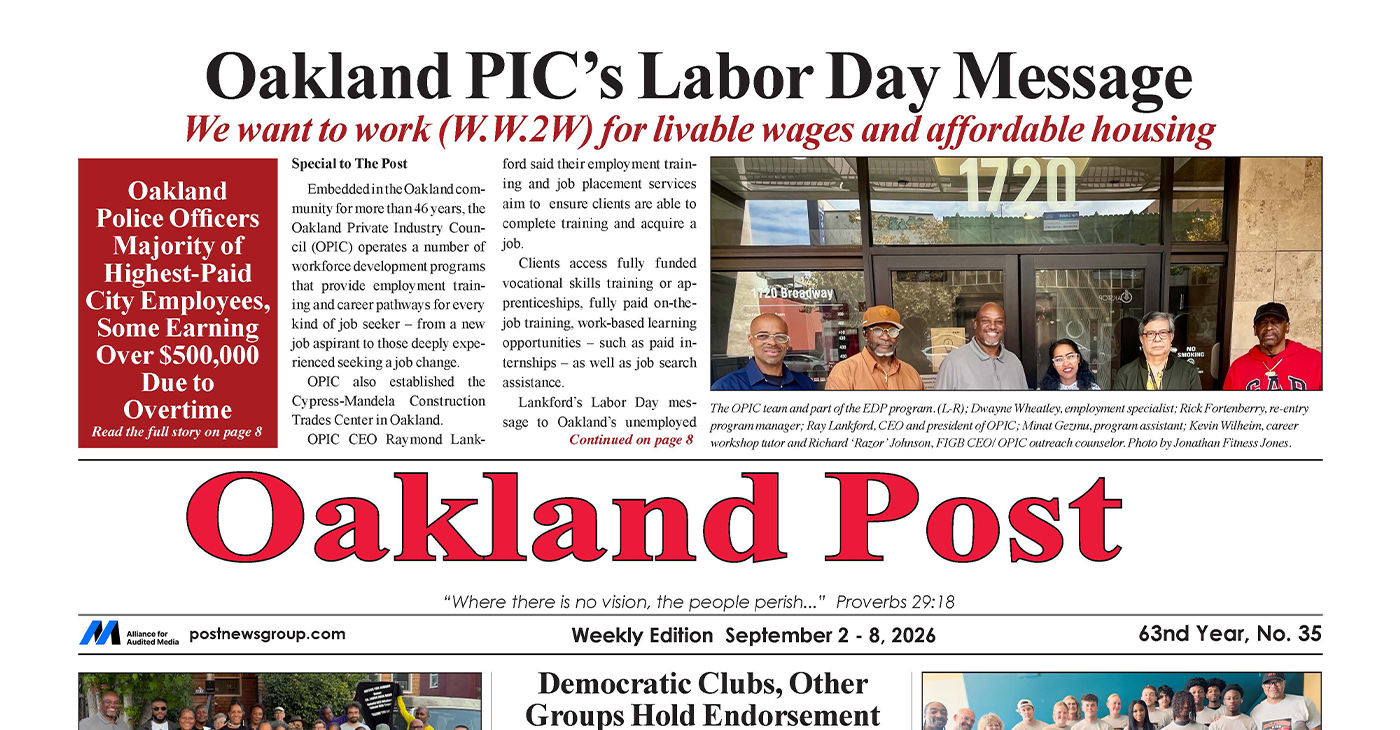
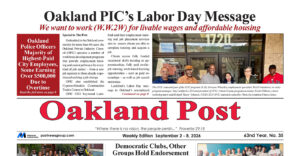
Oakland Post: Week of September 2 – 8, 2026
The printed Weekly Edition of the Oakland Post: Week of September 2 – 8, 2026
To enlarge your view of this issue, use the slider, magnifying glass icon or full page icon in the lower right corner of the browser window.
Business
Longtime BWOPA Member Brendalyn Goodall Appointed to California Workforce Development Board
Gov. Gavin Newsom has appointed longtime Black Women Organized for Political Action (BWOPA) member Brendalynn Goodall to the California Workforce Development Board. Goodall, an Oakland resident with decades of experience in public service, has held leadership positions focused on
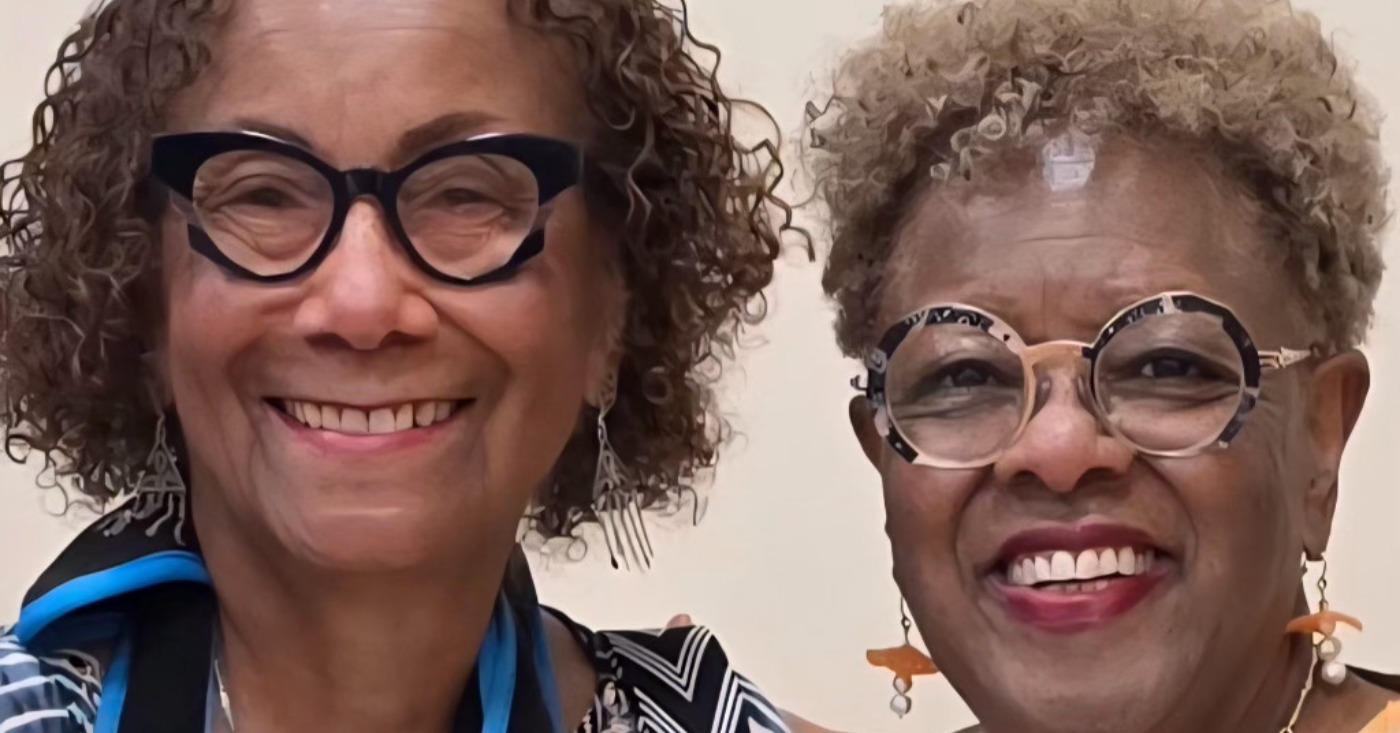
Gov. Gavin Newsom has appointed longtime Black Women Organized for Political Action (BWOPA) member Brendalynn Goodall to the California Workforce Development Board.
Goodall, an Oakland resident with decades of experience in public service, has held leadership positions focused on employment, aging services and assistance for underserved communities.
“Brendalynn will be a great addition to this Board,” said Gay Plair Cobb, who served as former state Assemblyman Sandre Swanson’s alternate to the California Workforce Development Board (CWDB).
“She understands that California’s non-profit organizations serve persons who have the most significant barriers to their labor market success and that the Board should help these groups navigate the complicated requirements of state funding.
“In other words, she will be a strong advocate for our most marginalized populations. Her voice is needed now, more than ever.”
CWDB works with the governor to shape workforce policies, programs and investments designed to strengthen the state’s economy. It collaborates with employers, workers, labor organizations, educational institutions, community groups and California’s 45 local workforce development boards to expand access to quality jobs and respond to regional employment needs.
According to the board, its work includes coordinating state programs and guiding investments in workforce training and development.
BWOPA California celebrated the appointment, describing Goodall as a dedicated advocate for workers, families and older adults.
“Her appointment reflects a lifetime of leadership, service, and unwavering commitment to strengthening California’s workforce and expanding opportunity for all,” the organization stated in a press release.
Goodall served as summer jobs program coordinator in the Oakland Mayor’s Office from 2012 to 2014. In that position, she helped connect young people with employment opportunities and job experience.
Before joining the Mayor’s Office, Goodall was division manager for Aging and Adult Services in the City of Oakland Human Services Department from 2002 to 2011. She previously served as senior services supervisor and program director for the city’s Department of Aging, Health and Human Services from 1990 to 2002.
Goodall is also a member of the California Commission on Aging, which advises the governor and state officials on policies and programs affecting older Californians.


Prostate Cancer is Twice as Likely to Kill Black Men. Talking to Your Doctor Could Help Save Your Life

Oakland Post: Week of September 2 – 8, 2026

Longtime BWOPA Member Brendalyn Goodall Appointed to California Workforce Development Board

Jackie Wright Champions Bay Area Stories, Filmmakers and Cultural Institutions

Chef Sharon Lee Blends Culinary Excellence, Education and Empowerment

‘Passing a Law Isn’t The Finish Line’: California Assembly Evaluates Implementation, Results

OPINION: Angie Nixon Will Turn You Into a Democratic Socialist If Donald Trump Hasn’t Already

Gov. Newsom Signs Law Shielding Immigration Aid Workers From Doxing Threats

BOOK REVIEW: Every Inch of a Lady

Big City Mayors Ask for “Yes” Vote on Housing Bond Measure; Conservatives Say “No”

Madeline M. Turner: The Inventor Who Made Juicing Easier

Gubernatorial Candidate Steve Hilton Blasts California New Tire Rules; Newsom Hits Back

Frontier Airlines’ Return to Oakland Airport Brings Flights, Jobs and Opportunity

Secretary of State Shirley N. Weber Urges Californians to Vote Early as Voter ID Battle Intensifies

Gov. Newsom’s Latest Appointees Include Sacramento Advocate for Formerly Incarcerated Students; State’s New Tech Chief

Department of Homeland Security Demands California Secretary of State Shirley N. Weber Scrub Voter Rolls

New Judge Could Decide if Karmelo Anthony Gets a New Trial

“The Power to See Threats Sooner”: Gov. Newsom, Safety Officials Showcase California’s Investments in Hi-Tech Wildfire Prevention

Alpha Kappa Alpha Sorority, Inc. Celebrates New North Atlantic Regional Director

California Sen. Padilla Joins Colleagues to Introduce Bill Imposing Term Limits on Supreme Court Justices

Less Affluent School Districts, Including Sacramento City, Face Threat of State Takeover

Car Wash Workers Cope with Lingering Impacts of ICE Raids

COMMENTARY: You Are Already Paying for the AI Boom

California Bill Would Let Abuse Victims Use Trauma as Legal Defense for Violent Crime

Oakland Post: Week of July 29 – August 4, 2026

OP-ED: ‘The Trusted Messenger’ and the Black Vote

How Oakland’s Courtsmith is Scaling its Business and Local Impact

ESSAY: California Can Close Its Colorectal Cancer Gap

As Part of Your Back-to- School Checklist, Vaccinate

Oakland Post: Week of August 5 – 11, 2026

The Conversation With Al McFarlane 6/23/26

Media Monday 6/22/26

LIVE! ASK ALMA! — TUES. 6.23.26 7PM EST

Car Buying Secrets: 4 Hidden Checks Before You Sign!

Is This 550 HP Charger Worth YOUR Money? AutoNetwork Review

Celebrating Juneteenth – Frederick Douglass on education and resistance

LIVE! — ASK ALMA! — TUES. 6.19.26 7PM EST

Hyundai Ioniq 5 Parking, Safety, and 360 View #shorts

2025 Ioniq 5 New Wiper & Powerful Performance! #shorts

Electric SUV Range: Is 259 Miles Enough? #shorts

EV Charging: How Fast Can You Charge an Electric Vehicle? #shorts

Biometric Cooling… Messaging Seats…Come on! 2025 Infiniti QX80 Autograph 4WD

Charged Up: Witness the Magic of a Fully Electric Car! #shorts

Range Rover Sport PHEV Included…: See What’s Inside This Luxury SUV! #shorts

Invisible Hood View: Perfect Parking with X-Ray Vision! #shorts
-
 Community4 weeks ago
Less Affluent School Districts, Including Sacramento City, Face Threat of State Takeover
-
 Commentary4 weeks ago
ESSAY: California Can Close Its Colorectal Cancer Gap
-
 Business4 weeks ago
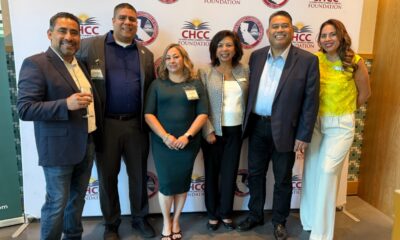
California Hispanic Chambers of Commerce Unveils: ‘Powering the Future’ Theme for 47th Annual Statewide Convention
-

 Community4 weeks ago
Four Candidates, Including Incumbent Barbara Lee, Qualify for Oakland Mayor’s Race
-

 Business4 weeks ago
From Blueprint to Breakthrough: Tackling Affordable Housing in Oakland
-

 Black History4 weeks ago
Oakland Observes Black August with Block Parties, Film Showings, Workshops
-

 Activism4 weeks ago
Oakland Post: Week of August 12 – 18, 2026
-

 Commentary4 weeks ago
COMMENTARY: Why Local School Tax Measure G1 Will Not Be on the November Ballot
