
Entertainment
Film Review: Black or White


Octavia Spencer and Anthony Mackie co-star in the melodrama Black or White. (Courtesy Photo)
By Dwight Brown
NNPA Film Critic
Race relations can be a touchy subject. Only a very perceptive filmmaker could tackle the topic and be remotely successful. It would require a writer/director to be smart, balanced, sensitive and able to see both sides of the issue. The characters would almost need to be extensions of our opinions and thoughts, so everyone has something in the game. On most of those levels, this very shallow, poorly conceived and developed film, which is based on a true story, is a well-meaning misfire.
A White middle-aged Los Angeles attorney, Elliott Anderson (Kevin Costner), can’t get over the loss of his recently deceased wife. He’s turned to the bottle. His life is empty, except for the daily embrace of his biracial granddaughter Eloise (Jillian Estell). Elliott is content to raise Eloise, but he is inept when it comes to school schedules and child rearing responsibilities. His wife did all that stuff. Eloise lives with her granddaddy because her mom, his daughter, died in childbirth and her dad Reggie (Andre Holland), a drug addict, is MIA. Cue the stereotypes.

Mike Binder is an actor/writer/director (Reign Over Me): a jack-of-all-trades filmmaker. His movies are made for around $10 Million and gross around $19 million. He worked previously with Costner on The Upside of Anger, which fits the same budget/box office formula, and this ill-conceived film continues that pattern. The characters are poorly drawn. The dialogue is never memorable, unless Elliott is calling Reggie the N-word. And note that Black characters do not use derogatory terms when referring to White characters. Really? The premise is decent but the execution is preposterous and plays out like an afternoon soap opera. This kind of lopsided story doesn’t play out in real life. File it in The Help category.
Meanwhile, on the other side of town, Compton, Reggie’s family wants a little more sharing time with Eloise. In fact, the matriarch of the family, Rowena (Octavia Spencer), has decided to take Elliott to court. She is an entrepreneur who works out of her garage. Her nephew Jeremiah (Anthony Mackie), a successful lawyer, will handle the custody battle. Between bottles of Jack Daniels, or whatever alcohol is handy, Elliott and his law firm partners prepare for a fight. He also, to his credit, has hired a Black math tutor for Eloise; Duvan (Mpho Koaho, TNT’s Falling Skies) is a brainy, wizard type who Elliott also turns into his “Man Friday.”
Supposedly the story is based on Binder’s own experience co-raising a biracial child. Judging by what’s on view, he seems to know a lot more about rich White people than he does about Black middle class people. Maybe he should have hired someone like Duvan to tutor him on Black culture before he went down this path. The animosity between Elliott and Rowena is a joke. They hate each other, but he allows her family to come over and use his pool. Does that happen during most custody battles? Prepare to suspend your disbelief. It’s an action you’ll have to do over and over again if you stick with this movie until it ends 120 minutes later.
Kevin Costner has had his golden moments in film: Dancing With Wolves, Field of Dreams, Open Range. This is not one of them. He must be a teetotaler in life, because he is not a convincing drunk. Nor does he find any way to make any sense out of the pompous Elliott character. Think back to Costner’s appearance at Whitney Houston’s funeral. It’s that same grandiose persona. Granted Octavia Spencer can bug her eyes out with the best of them, but her shaping of the grandmother character, who wants her grandbaby home, makes no sense. It’s a tough character to play, because it is so poorly written. She was far better in Fruitvale Station, where she worked the character and its mannerisms like an Oscar-caliber actress.
Jillian Estell is a gorgeous little girl; she should be shooting commercials. But her acting is stiff. She is no Quvenzhané Wallis—not at all. Andre Holland brings no inner complexity whatsoever to the pathetic Reggie role. No depth. No extra dimension. Nothing. The supporting actors who play Elliott’s partners and staff are solid, SAG-card holding thespians and they turn in a strong days work. The one actor who seems to rise above the fray is Anthony Mackie as the smart lawyer who is embarrassed by his deadbeat cousin.
The film’s musical score is surprisingly rich and beautiful, thanks to jazz musician Terrence Blanchard, whose composing credits also include Red Tails, Inside Man and Love & Basketball. If the rest of the movie was up to his high standards, it would have been brilliant. The other tech elements (editing, set design) are fine but nothing stands out—except Rowena’s clothes, which look like they were pulled of a costume rack and not bought in a department store.
Black or White may have good intentions, but what they are, are not obvious from what’s on view. The burden of failure rests on the writer/director who hasn’t a clue how to portray Black families; can’t get a seasoned actor to play a believable drunk, and mixes drama, melodrama and comedy (courts scenes with a sassy judge and Rowena cause a chuckle) together into an unaffecting mélange.
Black or White doesn’t work on a sociological level. Does it set race relations back? Not really. Does it gives us any new insights? None. Is it entertaining? Somewhat, more like a stodgy extended episode of Days of our Lives than a hip exploration like The Young and the Restless.
Visit NNPA Film Critic Dwight Brown at DwightBrownInk.com.








Activism
Oakland Post: Week of September 30 – October 6, 2026
The printed Weekly Edition of the Oakland Post: Week of September 30 – October 6, 2026

To enlarge your view of this issue, use the slider, magnifying glass icon or full page icon in the lower right corner of the browser window.
Business
From Historic Memories to New Possibilities: Oakland Celebrates Coliseum 60
More than 75 people gathered at Youth UpRising in East Oakland on Friday, September 18, for Coliseum 60, an event marking six decades of sports, entertainment, employment, and community memories at the Oakland-Alameda County Coliseum Complex. Held 60 years to the day after the Coliseum first opened, the celebration featured cultural performances and a mini-documentary highlighting its history. Speakers reflected on the venue’s significant role in the community and its future possibilities. Read more to learn about the individuals and stories honored during this special event.

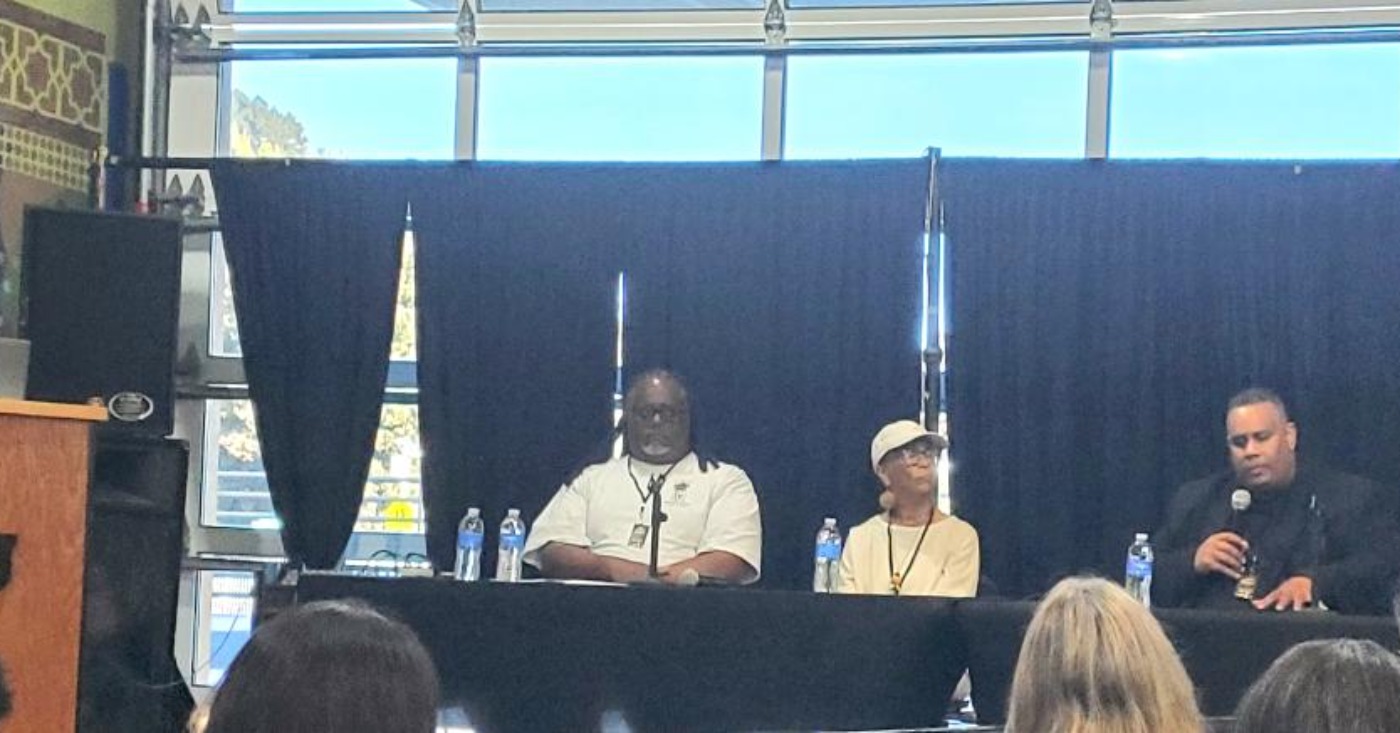

More than 75 people gathered at Youth UpRising in East Oakland on Friday, Sept. 18, for Coliseum 60, a celebration honoring six decades of sports, entertainment, employment and community memories connected to the Oakland-Alameda County Coliseum Complex.
Held 60 years to the day after the Coliseum opened, the event carried the theme, “One Community. One Legacy. One Future. Forward Together.”
The celebration opened with the national anthem performed by sisters Anese Jade, Amina Benjamin and Zaza Benjamin. Diamano Coura West African Dance Company contributed African dance and drumming, bringing movement, rhythm and cultural expression to the program.
A mini documentary highlighted the Coliseum’s sports history and its broader role as an entertainment destination. Archival material recalled performances by Prince and Tina Turner, along with memorable games featuring the Warriors, Oakland A’s and Raiders.
“The Coliseum 60 is about much more than celebrating a building or looking back at 60 years of history,” said event organizer Quixote Atkins of VillageGIVE.
“It’s about the people who made that history possible: the families, workers, athletes, artists, community leaders, fans and generations who gathered there and created memories together.”

A panel exploring that history featured author, historian and former Black Panther Party member Tareka Lewis; stagehand and union representative Keith Brown; and Ray Bobbitt, president of the African American Sports and Entertainment Group AASEG. Lewis described her family as fourth-generation Bay Area pioneers.
“My family and Black families who arrived even earlier helped build the Bay Area, grew businesses and established culture here,” Lewis said. “This should be taught in the public schools.”
Lewis recalled Oakland’s influence on sports, music and literature, from the Raiders’ beginnings at Laney College to stars such as The Pointer Sisters and Rickey Henderson who attended Oakland public schools. She also advocated for school museums, historical timelines, entrepreneurship training and investments benefiting corridors such as Bancroft Avenue and High Street.
Keith Brown, a member of Local 107 of the International Alliance of Theater and Stage Employees (IATSE) who began working at the Coliseum in 2011, remembered the Ringling Bros. and Barnum & Bailey Circus, the Ice Capades, baseball bat giveaways and Nelson Mandela’s 1990 appearance.
“The special events are amazing, but it’s the workers that make the memories real for everyone,” Brown said. “They make the magic happen at the Coliseum.”
The program recognized longtime workers, including beer-stand manager Robert Preston, who served for 40 years, and Kenyatta Gentry, who worked as a vendor for 24 years and used her earnings to purchase her first apartment. Union workers Jose Gonzales and Carmen Sandoval were also honored. Speakers emphasized that Coliseum employment provided generations of residents with union wages and benefits.
Dr. Denise Saddler, the superintendent of the Oakland Unified School District (OUSD) was also honored. Saddler shared her family’s history of working at the Coliseum.
District 7 Oakland City Councilmember Ken Houston discussed the complex ownership arrangements involving the city, county and private interests.
“This was the most complex deal of its kind in the country,” Houston said.
Prior to moving from the East Coast, Alameda County Supervisor and Coliseum Joint Powers Authority Chair Nate Miley recalled learning about Oakland through its three professional sports teams. As an elected official and public servant, Miley fought hard to keep the Golden State Warriors, Oakland As, and the Raiders, but he is hopeful for the future.
“The story is not over for the Coliseum,” Miley said. “We’re entering a new chapter.”
Bobbitt said the departure of three teams had once seemed unimaginable, but he maintained that Oakland’s future remains bright.
“Oakland is a cultural superpower worldwide,” Bobbitt said. “We’re going to write the future where we participate and drive the redevelopment.”
Bobbitt highlighted AASEG’s four-year partnership with Castlemont High School’s architecture program, which engages students in reimagining and creating redevelopment concepts for the Coliseum property. “The youth will always move us forward. They are the future.”
In closing, Atkins said, “September 18 is the celebration, but what we build together afterward is the legacy.”

Activism
Oakland Post: Week of September 23 – 29, 2026
The printed Weekly Edition of the Oakland Post: Week of September 23 – 29, 2026

To enlarge your view of this issue, use the slider, magnifying glass icon or full page icon in the lower right corner of the browser window.



OP-ED: Proposition 44 Would Put a Price on Trust

OP-ED: Proposition 40: It’s Time to Play Chess, Not Checkers

Listening as a Lifeline: A Doula’s Witness to Black Maternal Health

New Protections for Ticket Buyers: Gov. Newsom Signs Assemblymember Isaac Bryan’s Bill

‘We Don’t Talk Trash — We Pick Up Trash!’

Zakiya Jendayi Arrested, Locked Out of Home by Sheriff’s Deputies

Oakland Post: Week of September 30 – October 6, 2026

Asm. Corey Jackson Announces Launch of 24-Hour Childcare in His District

IN MEMORIAM: The Rev. Leon “Sonny” Clark, Longtime Orange County Pastor and Community Leader, Dies at 72

Poll: Becerra Widens His Lead Over Hilton; Californians Split on Wealth Tax

From Historic Memories to New Possibilities: Oakland Celebrates Coliseum 60

County Office of Education Says OUSD Finances Are Getting Healthier, Materially Stronger

LIVE FREE Sunday Dinner Brings Faith, Fellowship and Civic Conversation to Oakland

Remembering Chauncey Bailey as Student Journalists Face Threats to Truth-Telling

BLACspace Cooperative Invites Bay Area to Experience Oakland’s Black Cultural Ecosystem Through a BLAC Map Tour + Party

Standoff for Justice: Our Homes Are Worth Fighting For

Oakland Post: Week of August 26 – September 1, 2026

Frontier Airlines’ Return to Oakland Airport Brings Flights, Jobs and Opportunity

Gubernatorial Candidate Steve Hilton Blasts California New Tire Rules; Newsom Hits Back

Chef Sharon Lee Blends Culinary Excellence, Education and Empowerment

Jackie Wright Champions Bay Area Stories, Filmmakers and Cultural Institutions

Misnamed ‘Parent’ PAC Seeks to Influence Oakland School Board Elections

Oakland Coliseum Project Opens Door for Small Businesses to Build Bigger

Gov. Newsom’s Latest Appointees Include Sacramento Advocate for Formerly Incarcerated Students; State’s New Tech Chief

Big City Mayors Ask for “Yes” Vote on Housing Bond Measure; Conservatives Say “No”

Longtime BWOPA Member Brendalyn Goodall Appointed to California Workforce Development Board

Oakland Post: Week of September 2 – 8, 2026

Gov. Newsom Signs Law Shielding Immigration Aid Workers From Doxing Threats

Secretary of State Shirley N. Weber Urges Californians to Vote Early as Voter ID Battle Intensifies

IN MEMORIAM: Dolly Parton Dead at 80 — How She Built a Legacy of Love and Earned Her Place in Black Culture

The Conversation With Al McFarlane 6/23/26

Media Monday 6/22/26

LIVE! ASK ALMA! — TUES. 6.23.26 7PM EST

Car Buying Secrets: 4 Hidden Checks Before You Sign!

Is This 550 HP Charger Worth YOUR Money? AutoNetwork Review

Celebrating Juneteenth – Frederick Douglass on education and resistance

LIVE! — ASK ALMA! — TUES. 6.19.26 7PM EST

Hyundai Ioniq 5 Parking, Safety, and 360 View #shorts

2025 Ioniq 5 New Wiper & Powerful Performance! #shorts

Electric SUV Range: Is 259 Miles Enough? #shorts

EV Charging: How Fast Can You Charge an Electric Vehicle? #shorts

Biometric Cooling… Messaging Seats…Come on! 2025 Infiniti QX80 Autograph 4WD

Charged Up: Witness the Magic of a Fully Electric Car! #shorts

Range Rover Sport PHEV Included…: See What’s Inside This Luxury SUV! #shorts

Invisible Hood View: Perfect Parking with X-Ray Vision! #shorts
-
 Community4 weeks ago
Misnamed ‘Parent’ PAC Seeks to Influence Oakland School Board Elections
-

 Activism4 weeks ago
Oakland Post: Week of September 9 – 15, 2026
-

 Community4 weeks ago
Richmond Tiny House Village Farm & Garden Set to Open Gates on Sept. 26
-

 Black History4 weeks ago
Latest Massacre in Haiti Reveals Cruelty U.S. Deportations
-

 Black History4 weeks ago
OPINION: Nolan Wells’ Death One of Several Signifying Racial Terror Lives on in U.S. South
-

 Business3 weeks ago
Mayor Lee Announces $1 Million Kaiser Permanente Grant for Pilot Program to Address Homelessness, Clean Up Public Spaces throughout Oakland
-

 Community4 weeks ago
Democratic Clubs Interview Candidates for Oakland School Board
-

 Uncategorized3 weeks ago
Oakland People’s Arms Embargo Coalition Demands End to Military Shipments Thru Oakland
