
Music
How Katelyn Ohashi used Michael Jackson and Black music to dominate gymnastics
ROLLINGOUT.COM — With one floor routine, Katelyn Ohashi’s life changed forever.

By A.R. Shaw
With one floor routine, Katelyn Ohashi’s life changed forever. The 21-year-old UCLA gymnast took the floor on Jan. 13 at the 2019 Collegiate Challenge in Anaheim, California.

[/media-credit] A.R. Shaw
Ohashi smiled as she performed her routine that was highlighted by songs from Black music legends such as Tina Turner, Michael Jackson, Earth, Wind, and Fire, and Jackson 5.
Moments after receiving a perfect 10 from the judges at the competition, the video of Ohashi soon went viral. The video has garnered over 21 million views on YouTube thus far.
Ohashi’s story stands as a true tale of inspiration. An Olympic hopeful as a teen, Ohashi was unable to compete in the 2016 Olympics due to a string of injuries and mental burnout.
By attending college, Ohashi was able to enjoy a normal life while still competing in the sport she loved.
View Ohashi’s infectious routine below:
This article ogianlly appeared in Rollingout.com.












Black History
Tradition Comes to the Streets in 11th Annual Black-Eyed Pea Festival at the Freedom Farmers Market
Mayor Barbara Lee stops by to support vendors, Winky Dinky Dogs owner Tyranny Allen A streamlined Oakland Black-Eyed Pea Festival took place on Sat. Sept. 12 in the lower Temescal neighborhood on the blocked off street that connect Shattuck and Telegraph avenues. An early start b

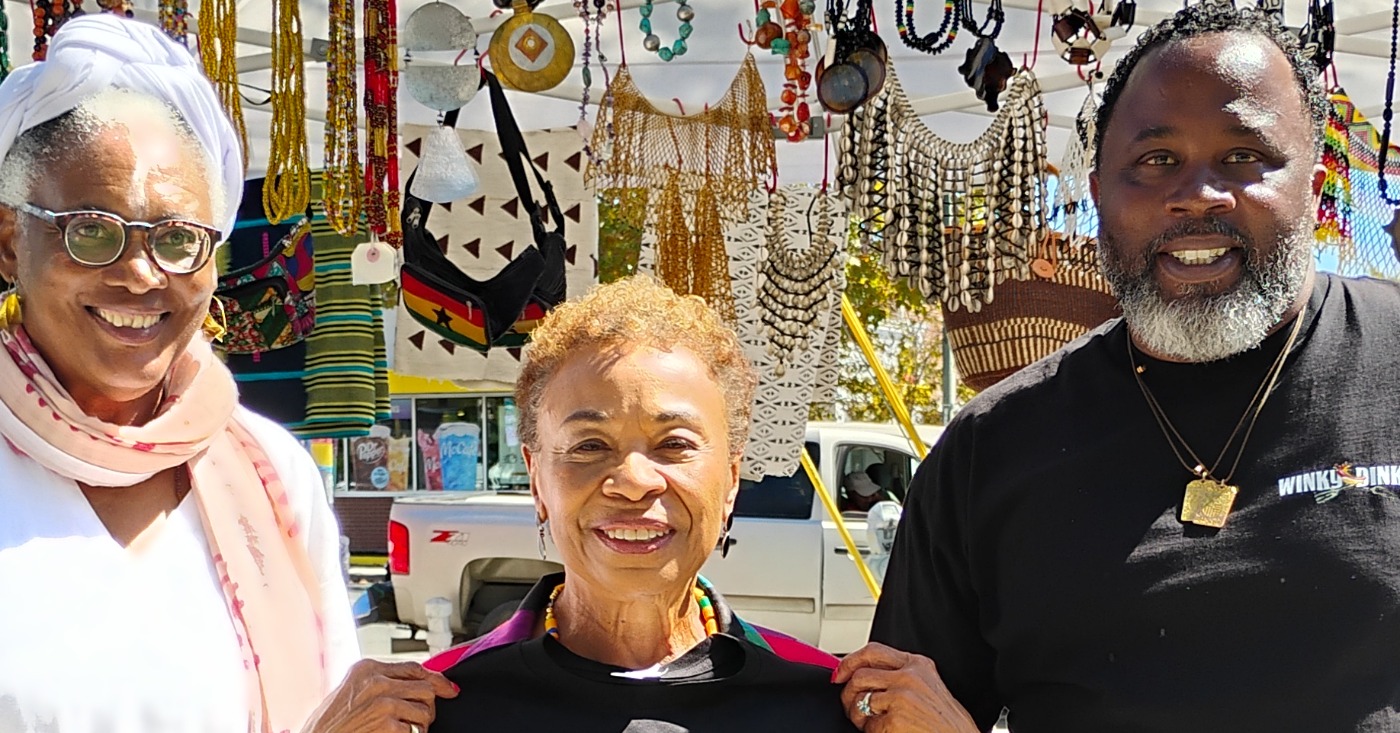
Mayor Barbara Lee stops by to support vendors, Winky Dinky Dogs owner Tyranny Allen
A streamlined Oakland Black-Eyed Pea Festival took place on Sat. Sept. 12 in the lower Temescal neighborhood on the blocked off street that connect Shattuck and Telegraph avenues.
An early start brought together vendor regulars from festival partner, the Freedom Farmers’ Market, and vendors who have supported the festival at its previous location at Marston Campbell Park.
Wanda Ravernell, the festival producer/director was on the verge of cancelling the festival because of funding limitations in May before reaching out to Elaine Smith, president of Farms to grow, Inc., which supervisors the market.
From its start in 2014, the festival has focused on the traditions of African American culture through music, food and art. That emphasis included fresh food vendors, particularly growers of African American legacy crops like black-eyed peas, yams, watermelon, collard greens and okra, which all originate in Africa.
To Fresno farmer Will Scott of Scott Family Farms, the Freedom Farmers’ Market allows him to bring those crops to the inner city – and support the nutrition of African Americans.

Shortly after the festival opened Saturday morning with prayers and salutes to the ancestors by Wakan Wiya Two-Spirit Drum and Awon Ohun Omnira, led M. Zamora and Otobaji Stewart respectively, 86-year-old Scott, the son of a sharecropper, announced that he will put other endeavors aside to dedicate the rest of his life to raise those foods.
Smith shared that Farms to Grow assists Black farmers in helping them overcome one of their main impediments to success – distribution – while creating alliances to help Black people maintain farmland and make it prosperous for younger generations to keep farming and farmland in the family.
As the morning progressed to afternoon, a steady stream of visitors drifted from booth to booth, chatting with vendors and each other.
Scott noted that a market day like this was what he was accustomed to in his youth, where the market was not just about buying things but also a place for valuable social exchange.
The social aspect became even pronounced shortly after midday when Oakland Mayor Barbara Lee stopped by to shop and visit with some of the vendors, including Ellen Bimpeh of Sankofa, and Ravernell who was selling T-shirts designed by Stewart.
Lee is also a fan of Winky Dinky Dogs, an eatery owned by Tyranny Allen whose second brick-and-mortar venture further anchors a hub of businesses at that corner.
As he has in previous years, Andre Thierry of Accordion Soul, closed the festival with a 90-minute set that brought young and the young-at-heart on their feet to dance in a line or as impromptu couples.
And, surprisingly, the man Allen refers to as the mayor of 45th Street, came out on cane and chair to sit by the curb in the sun and listen to music reminiscent of his Louisiana roots. His appearance seemed to echo Scott’s observance about the market: to bring people together.
The Freedom Farmers’ Market is located at 4521 Telegraph Avenue in Oakland and is open on the second and fourth Saturdays of each month until Nov. 14. For more information and to apply to be a vendor, go to https://www.farmstogrow.org/freedomfarmersmarket

Black History
IN MEMORIAM: Dolly Parton Dead at 80 — How She Built a Legacy of Love and Earned Her Place in Black Culture
BAYOU BEAT NEWS — For Black audiences, the bridge to Dolly will always run through Whitney Houston. Parton wrote “I Will Always Love You” as she prepared to leave Porter Wagoner’s television show and released it in 1974. The original was tender and restrained, a country goodbye delivered with grace. Then Whitney got hold of it.
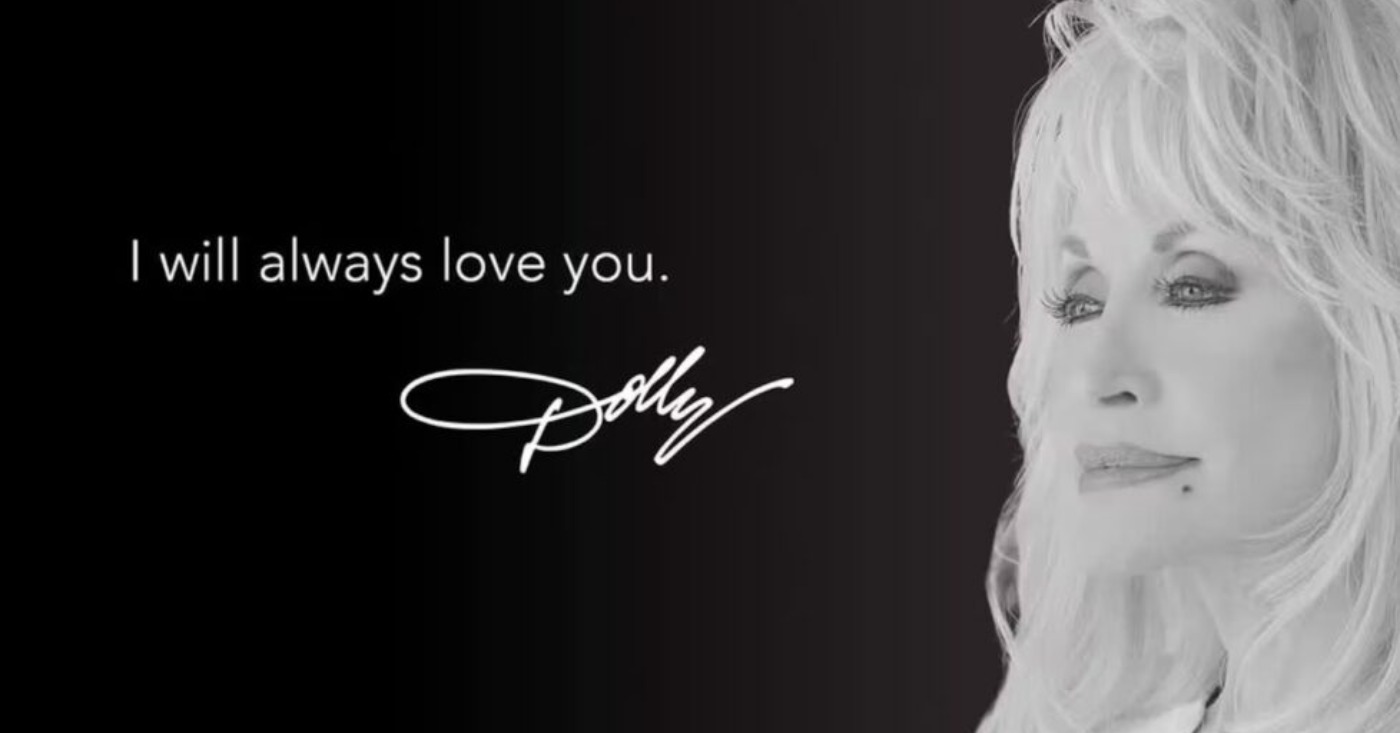
Before some of us knew Dolly Parton as the Queen of Country Music, we knew her as the woman behind Whitney Houston’s song. We knew the blonde hair, the rhinestones, and that unmistakable Tennessee voice. But somewhere along the way, Black America came to understand something deeper about Dolly; when she said she loved people, she had the receipts to prove it.
The community is now left to mourn the icon who passed away at the age of 80, on Aug. 25, after dealing with an unknown medical condition. Known for her chart-topping country music hits, Dolly never felt as though she belonged only to one genre, or one kind of person. She showed up with humor, humility and a generosity that did not ask who you voted for before offering a helping hand. She made room for people, and in return, people from every corner of the culture made room for her.
The Song That Brought Dolly and Whitney Together
For Black audiences, the bridge to Dolly will always run through Whitney Houston. Parton wrote “I Will Always Love You” as she prepared to leave Porter Wagoner’s television show and released it in 1974. The original was tender and restrained, a country goodbye delivered with grace. Then Whitney got hold of it.
Houston’s 1992 rendition for “The Bodyguard” did not merely update the record. She took it to church, then carried it around the world. That opening a cappella moment, the controlled stillness and the key change that made everybody reach for a note they had no business trying to hit turned Parton’s country ballad into a global anthem. The single spent 14 consecutive weeks at No. 1 on the Billboard Hot 100, became the best-selling physical single by a woman and earned two Grammy Awards.
And instead of trying to deny contribution or rush to remind everyone who wrote the song, she celebrated the way Houston’s voice transformed it. In an industry with a long history of taking from Black artists while denying them proper credit, Dolly understood that acknowledging Whitney’s greatness did not diminish her own. One woman wrote an extraordinary song. Another woman revealed everything else that song could become.
“This is the house that Whitney built.”
— Dolly Parton
Parton later shared that she used some of the royalties from Houston’s recording to purchase commercial property in a predominantly Black Nashville neighborhood. She called it “the house that Whitney built.” There was something beautiful about that acknowledgment. Whitney’s voice had generated wealth, and Dolly wanted part of that wealth rooted among people she described as Whitney’s people, and her people, too.
Dolly’s relationship with Black America was not built on pretending she did not see color. She saw us. In a 2020 Billboard interview, she made her position plain: “Of course Black lives matter. Do we think our little white asses are the only ones that matter? No!”
It was blunt, funny, and completely on brand. But Dolly also understood that allyship could not stop with a quote. After learning why the word “Dixie” was offensive and painful to many people, she removed it from the name of her Civil War-themed dinner attraction. She called her previous understanding “innocent ignorance.” More important, she fixed it.
That willingness to listen mattered. Dolly did not perform perfection or become defensive when someone pointed out harm. She showed that loving people means caring enough to learn, change and do better. In a time when public figures often double down just to avoid admitting they were wrong, Dolly simply chose not to be cruel.
Dolly’s love also arrived in the mail. Inspired by her father, who could not read or write, she launched the Imagination Library in 1995. The program began in Sevier County, Tennessee, sending one free, age-appropriate book each month to enrolled children from birth to age 5. What started in the rural community that raised her grew into an international literacy movement. By the end of 2025, the program had distributed more than 300 million books and was mailing about 3.4 million books each month.
Those books found their way into homes in big cities as well as small towns. In New York City, the Imagination Library has been promoted through public schools and community organizations in the Bronx. For urban families navigating tight budgets, limited bookstore access or neighborhoods where children’s books are not always easy to find, a brand-new book addressed directly to a child can mean more than one package. It tells that child, “This belongs to you. Your imagination matters.”
That was Dolly’s kind of giving: personal, useful and rooted in dignity. She also funded scholarships, supported hospitals, invested in medical research and helped families recover from disasters. Her $1 million donation to Vanderbilt University Medical Center supported research connected to the Moderna COVID-19 vaccine. She turned the money she made entertaining people into opportunities to help them live, learn and rebuild.
A preschooler opening one of Dolly’s books in the Bronx did not need to know “Jolene.” A parent reading that book at bedtime did not need to be a country music fan. Her generosity crossed racial and economic lines because it met families in real life, at the mailbox, in a hospital room or after the unthinkable happened.
A Legacy That Felt Like Love
Dolly Parton leaves behind thousands of songs, beloved films, major businesses and enough rhinestones to keep heaven sparkling for a while. But her greatest legacy may be the way she made strength feel soft without ever making it weak. She knew exactly who she was, yet she never needed anyone else to become smaller so she could shine.
For Black listeners, her bond will always be part of that story. “I Will Always Love You” was never about choosing between the white woman who wrote it and the Black woman who took it somewhere new. Dolly gave the world the words. Whitney gave those words wings. Together, they created a piece of American music that refuses to stay inside one genre or belong to only one community.
That is why this loss feels personal, even to people who never met her. Dolly reminded us that tenderness can be powerful. She showed us that changing your mind can be a sign of character, that celebrating another woman’s brilliance does not steal your light and that love means very little if it never becomes action.
Country music will forever call Dolly Parton one of its queens. But Black culture recognized something in her, too: a woman who respected our greatness, spoke up for our humanity and invested in our children. She did not simply leave this world loved. In the ways that mattered most, Dolly loved us back.
Commentary
PRESS ROOM: Martha’s Vineyard Gospel Festival Returns with Wintley Phipps and National Gospel Artists for an Evening Where Music Meets Community Impact
BLACKPRESSUSA NEWSWIRE — The Festival’s inaugural presentation in 2025 demonstrated that world-class gospel music could also become one of Martha’s Vineyard’s newest cultural traditions. Audience members embraced its distinctive combination of inspirational music, fellowship and philanthropy, awarding the event a five-out-of-five attendee rating while helping forge new partnerships among local organizations, volunteers, artists and supporters committed to strengthening the Island community.
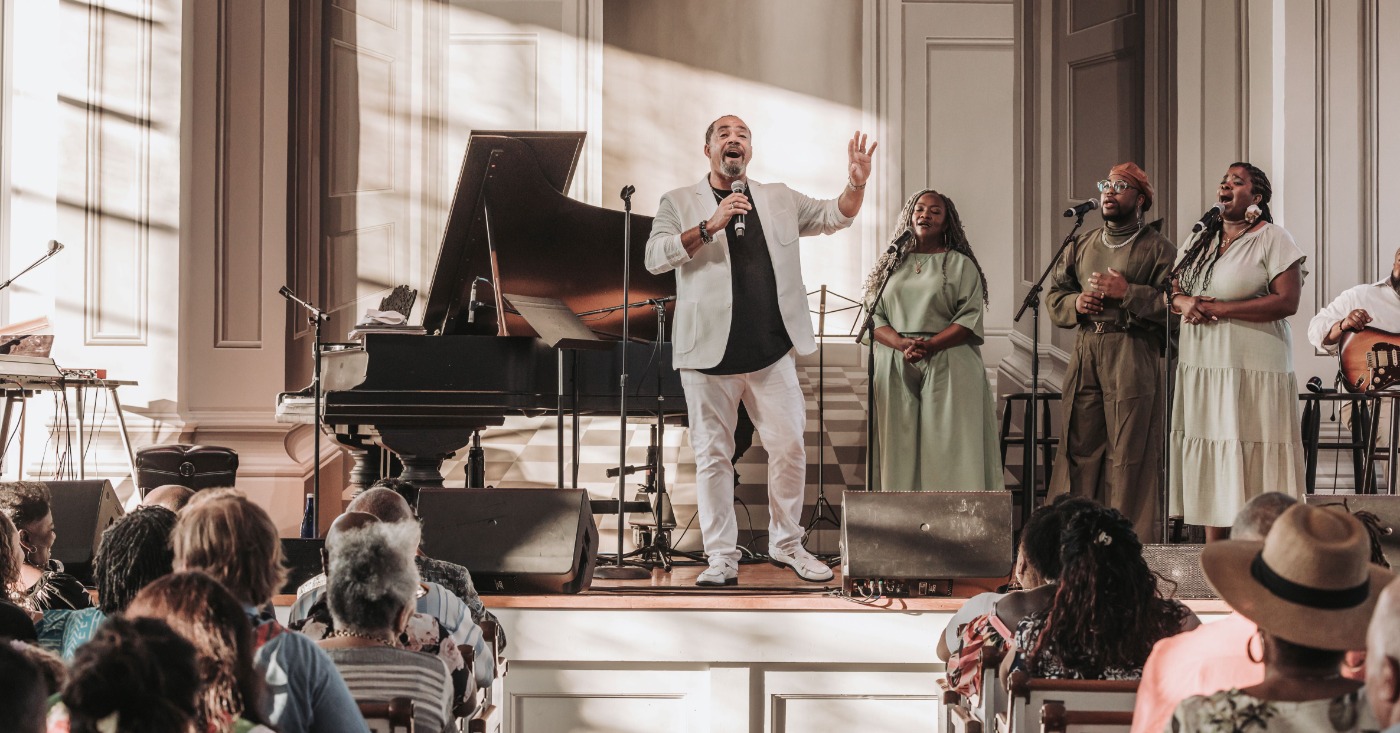
Second annual Festival brings award-winning performers to historic Edgartown while supporting Vineyard organizations addressing food insecurity and housing challenges
EDGARTOWN, Mass. — The Martha’s Vineyard Gospel Festival returns Monday, August 17, 2026, bringing together nationally acclaimed gospel artists for an evening of inspirational music that celebrates faith, strengthens community and supports year-round Islanders facing some of the Vineyard’s most pressing challenges.
Presented by Vineyard Grace Foundation, the second annual Festival will be held at the historic Old Whaling Church in Edgartown beginning at 5:00 p.m., with doors opening at 4:30 p.m.
This year’s Festival features an exceptional lineup of acclaimed gospel artists, including internationally renowned baritone, humanitarian, and Grammy-nominated recording artist Wintley Phipps, alongside award-winning worship leader Lena Byrd Miles, acclaimed recording artist Aaron Crouch, contemporary gospel vocalist Rodney Boyden, inspirational performer Mekhi McClain, and emerging artist TAJ.
Headlining the evening is Wintley Phipps, whose remarkable career has taken him to more than 100 countries and before six Presidents of the United States. Revered for his commanding voice and decades of humanitarian service, Phipps has become one of gospel music’s most respected ambassadors, making his Martha’s Vineyard appearance one of this year’s signature cultural events on the Island.
Yet, while millions recognize Martha’s Vineyard for its natural beauty, historic charm and distinguished summer visitors, far fewer are aware of the economic realities confronting many of its year-round residents.
Behind the Island’s celebrated image, many families continue to struggle with housing affordability, food insecurity and the rapidly rising cost of living. According to the Martha’s Vineyard Hospital Community Health Needs Assessment, the Island requires thousands of additional affordable housing units, while the Island Food Pantry now serves approximately 5,700 registered clients—more than one-quarter of the Vineyard’s year-round population. Its prepared meal program has grown dramatically, from 2,304 meals in 2018 to a projected 25,000 meals in 2025, reflecting the increasing demand for community assistance.
Those realities inspired the creation of the Martha’s Vineyard Gospel Festival.
Conceived as more than a concert, the Festival was established to unite the transforming power of gospel music with meaningful community engagement, raising awareness and support for organizations working every day to address hunger, housing instability and related challenges across Martha’s Vineyard. Every ticket purchased, sponsorship secured, and donation received helps strengthen Vineyard Grace Foundation’s ongoing commitment to serving Islanders through partnerships that create lasting impact.
The Festival’s inaugural presentation in 2025 demonstrated that world-class gospel music could also become one of Martha’s Vineyard’s newest cultural traditions. Audience members embraced its distinctive combination of inspirational music, fellowship and philanthropy, awarding the event a five-out-of-five attendee rating while helping forge new partnerships among local organizations, volunteers, artists and supporters committed to strengthening the Island community.
Building upon that successful foundation, organizers have expanded this year’s artistic programming while continuing to deepen the Festival’s community partnerships and philanthropic impact.
“Our mission is to unite the transforming power of gospel music with compassionate action,” says Naida Davidson, founder and executive producer. “Every performance, every partnership, and every act of generosity becomes another opportunity to strengthen the Island we all cherish.”
Festival organizers expect attendees from across New England and beyond to join Island residents for an evening that celebrates the enduring power of gospel music while investing in the well-being of the Vineyard community. By bringing nationally recognized artists together with local nonprofit partners, the Martha’s Vineyard Gospel Festival continues to demonstrate how cultural events can inspire generosity, strengthen neighborhoods and create opportunities for lasting change.
Tickets are available now. Sponsorship opportunities remain available for businesses and organizations seeking to support one of Martha’s Vineyard’s premier cultural and philanthropic events while aligning with a mission dedicated to community service and hope.
For tickets, sponsorship opportunities and additional information, visit: www.marthasvineyardgospelfestival.org. To learn more about Vineyard Grace Foundation and its community initiatives, visit: www.vineyardgracefoundation.org


How the Sandwich Generation Can Help Protect Aging Parents’ Finances

As Progressive Democrats Celebrate ‘Blue Tsunami,’ Oakland Counts Victories

Golden State Valkyries Become Bay Area Legends Winning WNBA Championship on Halloween Night

IN MEMORIAM: Marcia Ann Gillespie, Editor of Essence and Ms. Magazines, Dies at 82

U.S. Rep. John Garamendi Honors local ‘Women of the Year’ at Annual Awards Ceremony

Richmond Neighbors Put Pantry Power on the Map

Oakland Latino Chamber of Commerce Hosts Statewide Convention, Generating $3 Million in Economic Impact

HISTORY MADE: Keisha Lance Bottoms Becomes First Black Woman Elected Governor in American History

HISTORY MADE: Keisha Lance Bottoms Becomes First Black Woman Elected Governor in American History

Five Hospitals Said No! Who Will Help Annette Henry Recover?

Oakland NAACP, BWOPA Speak Out Against Alleged Harassment of Black Women Political Leaders

COMMENTARY: Oakland’s Black Students Have Gained Ground: We Shouldn’t Stop Now

From Backyard Grilling to Jack London Square: Jamale Carlyle’s Chicken Wing Success Story

SEIU Local 1000 and State of California Will Continue to Negotiate New Labor Contract

OPINION: We Can Restore Checks and Balances on Trump

COMMENTARY: Valarie Bachelor and Jennifer Brouhard are Excellent School Board Members and Deserve to Be Reelected

Listening as a Lifeline: A Doula’s Witness to Black Maternal Health

Poll: Becerra Widens His Lead Over Hilton; Californians Split on Wealth Tax

Zakiya Jendayi Arrested, Locked Out of Home by Sheriff’s Deputies
HISTORY MADE: Keisha Lance Bottoms Becomes First Black Woman Elected Governor in American History

County Office of Education Says OUSD Finances Are Getting Healthier, Materially Stronger

From Historic Memories to New Possibilities: Oakland Celebrates Coliseum 60

OUSD Receives State Review of District Finances; Outlines Progress Since January

BLACspace Cooperative Invites Bay Area to Experience Oakland’s Black Cultural Ecosystem Through a BLAC Map Tour + Party

Oakland Post: Week of September 23 – 29, 2026

It’s Time to Lose Weight Before the Holidays
SEIU Local 1000 and State of California Will Continue to Negotiate New Labor Contract

Democrats, Community Groups Back Measure EE to Change How Oakland Is Governed

Oakland Post: Week of September 30 – October 6, 2026

Mayor Barbara Lee Holds Special State of the City Address in Deep East Oakland

The Conversation With Al McFarlane 6/23/26

Media Monday 6/22/26

LIVE! ASK ALMA! — TUES. 6.23.26 7PM EST

Car Buying Secrets: 4 Hidden Checks Before You Sign!

Is This 550 HP Charger Worth YOUR Money? AutoNetwork Review

Celebrating Juneteenth – Frederick Douglass on education and resistance

LIVE! — ASK ALMA! — TUES. 6.19.26 7PM EST

Hyundai Ioniq 5 Parking, Safety, and 360 View #shorts

2025 Ioniq 5 New Wiper & Powerful Performance! #shorts

Electric SUV Range: Is 259 Miles Enough? #shorts

EV Charging: How Fast Can You Charge an Electric Vehicle? #shorts

Biometric Cooling… Messaging Seats…Come on! 2025 Infiniti QX80 Autograph 4WD

Charged Up: Witness the Magic of a Fully Electric Car! #shorts

Range Rover Sport PHEV Included…: See What’s Inside This Luxury SUV! #shorts

Invisible Hood View: Perfect Parking with X-Ray Vision! #shorts
-
 Commentary1 week ago
COMMENTARY: Valarie Bachelor and Jennifer Brouhard are Excellent School Board Members and Deserve to Be Reelected
-
 Black History5 days ago
HISTORY MADE: Keisha Lance Bottoms Becomes First Black Woman Elected Governor in American History
-
 Education1 week ago
OUSD Receives State Review of District Finances; Outlines Progress Since January
-
 Community3 weeks ago
It’s Time to Lose Weight Before the Holidays
-
 Business1 week ago
SEIU Local 1000 and State of California Will Continue to Negotiate New Labor Contract
-
 Community4 weeks ago
Democrats, Community Groups Back Measure EE to Change How Oakland Is Governed
-
 Community3 weeks ago
Mayor Barbara Lee Holds Special State of the City Address in Deep East Oakland
-

 Business1 week ago
COMMENTARY: Your California Living Trust Could Be Next: When Evidence Isn’t Enough
