
Berkeley
Patten University Offers Personalized Degree Programs for Working Adults

Working students are the fastest growing part of the student population in the country because most people realize they need advanced credentials to create the life they want but cannot afford a traditional undergraduate or schooling experience.
Designing a program that meets the needs of these students is a major goal of Patten University in Oakland, which has become one of the fastest growing online universities, serving students in 38 states across the country, the majority from California, according to Dr. Thomas Stewart, president of the university.
About 37 million Americans start college and do not graduate. Too many of them stumble over the difficulties of going to school while supporting themselves and their families, says Stewart, who explains that Patten was founded to “create a university that addresses the needs of working adults.”
“If I’m a working adult, and I have a family, I can’t go to CAL,” he said, noting that 15 percent of Patten’s online students are over the age of 50. “Patten is designed to give you what you need.”

Dr. Thomas Stewart, President of Patten University
A native of Washington, D.C and raised in an urban community, Stewart understands that urban universities must fit urban realities.
He points to his own experiences. As an undergraduate, Dr. Stewart flunked out of the University of the District of Columbia (UDC), but after serving in the military, he returned to the university to finish his bachelor’s degree and went on to gain his masters and doctorate from Harvard.
While the degrees from Harvard confer status, he said, the name of the institution does not matter at the end of the day. What is important is a person’s work ethic and the skills they are able to offer an employee.
“Assumptions are made from names,” he said. “There are over 4,000 universities. If you eliminate [schools] named after a state or after someone famous, most people can’t tell the name of 3,000 of them,” he said. “…People have to find what’s a good fit for them.”
Expanding rapidly, Patten has grown to a student population over 1,000 in its first 18 months. Stewart says that number will be 10 times as large by the end of the year.
He credits Patten’s success with its application of the “UNOW Model,” which allows students to pay as they go, offers personal coaching, works on a self-paced format and has voluntarily chose not to receive Title IV funding.
The school also uses an interactive teaching approach that monitors a student’s progress and readiness indicators that show a student’s understanding of the subject, identifying the areas they should look over again before taking a final exam.
As one of the most affordable private universities in the nation, Patten’s tuition is $5,000 for an academic year and includes all fees for books and other learning resources. While the university does not offer financial aid, it does offer financial options, strongly discouraging students from saddling themselves with student loans.
“Forfeit a cable bill for a year or two, and it could pay for you to go to college,” Stewart said.
In addition to its online courses, Patten offers campus-based degree programs for students who want a classroom experience,
Patten University is located at 2433 Coolidge Ave. in Oakland. For more information, www.patten.edu or call (510) 485-7820.













Activism
Black Repertory Group Needs Volunteers to Help Shape the Next Generation of Artists and Leaders
Legendary performers such as Whoopi Goldberg and Danny Glover worked with and were inspired by BRG’s founders. More recently, Grammy award-winning artist Kehlani attended the Black Repertory Group Summer Day Camp for several years.

By Sean Vaughn Scott, Special to The Post
For more than 60 years, the Black Repertory Group (BRG) has changed lives through the arts.
Founded in 1964 by educators and visionaries Birel L. Vaughn and Nora Vaughn, BRG has become one of America’s oldest continuously operating Black theater institutions. For generations, it has preserved culture, developed talent, and provided opportunities for young people to discover their voices and their potential.
The results speak for themselves.
Legendary performers such as Whoopi Goldberg and Danny Glover worked with and were inspired by BRG’s founders. More recently, Grammy award-winning artist Kehlani attended the Black Repertory Group Summer Day Camp for several years.
Long before international recognition, Kehlani performed on the BRG stage. During a summer day camp production of “Princess and da Frog,” she portrayed Ray, the lovable firefly whose light guided others through the darkness. Her journey is proof that today’s camper may become tomorrow’s artist, entrepreneur, educator, or leader.
Located at 3201 Adeline St. in Berkeley, BRG continues that mission through its Youth Summer Day Camp of the Arts.
BRG is currently accepting applications and maintains an open enrollment program. Students may enroll throughout the summer as space permits and immediately become part of the BRG family.
We are also proud to be a multicultural opportunity program, welcoming children and families from all backgrounds, cultures, and communities. Through theater, music, dance, public speaking, visual arts, technical theater, and leadership development, students gain confidence, discipline, creativity, and lifelong skills.

As our programs grow, so does our need for volunteers.
We are seeking community members to assist with youth mentoring, registration, costumes, set construction, painting, props, ushering, photography, social media, marketing, technical theater, and fundraising activities. Whether you volunteer for a few hours or throughout the season, your support directly impacts the lives of young people.
BRG also partners with churches, civic organizations, alumni associations, fraternities, sororities, and community groups through theater party fundraisers, group sales, and buy-out performances. These partnerships have helped organizations raise funds while supporting arts and cultural programming.
The theater also serves as the home of the Berkeley NAACP Chapter, which meets every second Saturday of the month from 1 to 3 p.m.
For more than six decades, the Black Repertory Group has remained committed to one belief: every child deserves an opportunity to shine.
The next great artist may already be among us.
The next Kehlani may already be walking through our doors.
We invite you to volunteer, enroll, participate, and become part of the legacy.
For more information please go to www.blackrepertorygroup.com, call (510) 652-2120, or email info@blackrepertorygroup.com
Sean Vaughn Scott is the director of the Black Repertory Group.
Bay Area
UC Berkeley Named Top Public University in the U.S. and No. 7 in the World by ‘U.S. News’
Berkeley has been consistently awarded the distinction of the U.S.’s top public university since the Best Global Universities list was first published in 2014. “A strong position in the Best Global Universities rankings recognizes a school’s profound commitment to world-class research and cross-border academic excellence,” said LaMont Jones, managing editor for education at U.S. News.

The 2026 Best Global Universities rankings evaluated 2,250 research institutions from more than 100 countries
By Lila Thulin
U.S. News & World Report has ranked UC Berkeley No. 7 in its 2026 list of the best global universities, which assesses more than 2,250 research institutions worldwide.
Berkeley also claimed the honor of top public university in the U.S.
Released on Monday, the list evaluates universities from more than 100 countries on 13 metrics such as global and research reputation (as reported by academics and peers) and number of highly cited scholarly papers.
Berkeley has been consistently awarded the distinction of the U.S.’s top public university since the Best Global Universities list was first published in 2014.
“A strong position in the Best Global Universities rankings recognizes a school’s profound commitment to world-class research and cross-border academic excellence,” said LaMont Jones, managing editor for education at U.S. News.
The rankings also assess a university’s strength in various subject areas; these assessments are separate from U.S. News’ 2026 Best Graduate Programs rankings released in April.
This year, Berkeley was named in the top three nationally in seven subject areas – environment/ecology, ecology, water resources, physics, computer science, chemistry, and engineering – and in the top five for a total of 17 subjects. Subject rankings are based heavily on scholarly publications and citations as well as reputation.

In September, U.S. News also released its 2026 Best Colleges list, in which Berkeley was also named the No. 1 public institution among American universities.
That honor joins other accolades judging campus to be the best public university in the country, such as those from Forbes, The Wall Street Journal and Times Higher Education.
Arts and Culture
Farwest Region Deltas Celebrate Centennial With “September Breakfast” Honoring Vivian Osborne Marsh
The region was established in 1925 under the leadership of Vivian Osborne Marsh, who became its first Regional Director. Marsh was a pioneering scholar and civic leader, earning recognition as the first Black woman to receive both a bachelor’s and a master’s degree in anthropology from UC Berkeley.

By Antoinette Porter
Hundreds of members of Delta Sigma Theta Sorority, Inc., and their guests gathered at the Martin Luther King Jr. Student Union at the University of California, Berkeley, to mark the 100th anniversary of the sorority’s Farwest Region.
The region was established in 1925 under the leadership of Vivian Osborne Marsh, who became its first Regional Director. Marsh was a pioneering scholar and civic leader, earning recognition as the first Black woman to receive both a bachelor’s and a master’s degree in anthropology from UC Berkeley.
Marsh went on to serve as Delta Sigma Theta’s 7th National President, where she launched the sorority’s National Library Project to expand access to books in underserved Black communities in the South. During her presidency, the organization also became a prominent voice in the civil rights movement, lobbying Congress to pass anti-lynching legislation.
Bak in the Bay Area, Marsh devoted her career to advancing educational opportunities, mentoring young people, and strengthening community life. That commitment continues to shape the region, which supports initiatives in education, social justice, and economic development. Current projects include raising scholarship funds for students at Historically Black Colleges and Universities, voter education campaigns, and health and wellness programs.

A century after its founding, the Farwest Region of Delta Sigma Theta remains active across California and other western states, carrying forward Marsh’s vision of service and advocacy.



Asm. Corey Jackson Announces Launch of 24-Hour Childcare in His District

IN MEMORIAM: The Rev. Leon “Sonny” Clark, Longtime Orange County Pastor and Community Leader, Dies at 72

Poll: Becerra Widens His Lead Over Hilton; Californians Split on Wealth Tax

From Historic Memories to New Possibilities: Oakland Celebrates Coliseum 60

County Office of Education Says OUSD Finances Are Getting Healthier, Materially Stronger

LIVE FREE Sunday Dinner Brings Faith, Fellowship and Civic Conversation to Oakland

Remembering Chauncey Bailey as Student Journalists Face Threats to Truth-Telling

BLACspace Cooperative Invites Bay Area to Experience Oakland’s Black Cultural Ecosystem Through a BLAC Map Tour + Party

In Wake of Death on Doorstep, Williams Chapel Baptist Church Calls for Better Care, Funding for Unhoused

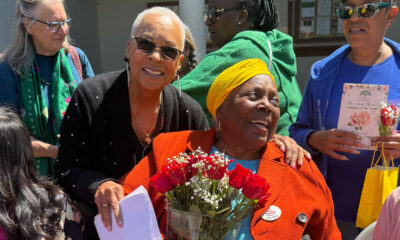
Oakland Centenarian Nuna McKee Honored!

Caribbean Nations Produce Action Plan Calling for UK Reparations Over Slavery

Oakland Post: Week of September 23 – 29, 2026

Doulas Are Helping Black California Moms Navigate Pregnancy–Even as High Mortality Rates Persist

Newsom Signs Addictive Social Media Law to Protect Kids

On Your November Ballot: Prop 38 Would Allocate $8.4 Billion to Immunology and Immunotherapy Funding

Standoff for Justice: Our Homes Are Worth Fighting For

Oakland Post: Week of August 26 – September 1, 2026

Frontier Airlines’ Return to Oakland Airport Brings Flights, Jobs and Opportunity

Gubernatorial Candidate Steve Hilton Blasts California New Tire Rules; Newsom Hits Back

Chef Sharon Lee Blends Culinary Excellence, Education and Empowerment

Jackie Wright Champions Bay Area Stories, Filmmakers and Cultural Institutions

Big City Mayors Ask for “Yes” Vote on Housing Bond Measure; Conservatives Say “No”

Oakland Coliseum Project Opens Door for Small Businesses to Build Bigger

Gov. Newsom’s Latest Appointees Include Sacramento Advocate for Formerly Incarcerated Students; State’s New Tech Chief

Misnamed ‘Parent’ PAC Seeks to Influence Oakland School Board Elections

Longtime BWOPA Member Brendalyn Goodall Appointed to California Workforce Development Board

Gov. Newsom Signs Law Shielding Immigration Aid Workers From Doxing Threats

Secretary of State Shirley N. Weber Urges Californians to Vote Early as Voter ID Battle Intensifies

From Palestine to Oakland: Seeds for Liberation Examines Shared Struggles for Freedom

IN MEMORIAM: Dolly Parton Dead at 80 — How She Built a Legacy of Love and Earned Her Place in Black Culture

The Conversation With Al McFarlane 6/23/26

Media Monday 6/22/26

LIVE! ASK ALMA! — TUES. 6.23.26 7PM EST

Car Buying Secrets: 4 Hidden Checks Before You Sign!

Is This 550 HP Charger Worth YOUR Money? AutoNetwork Review

Celebrating Juneteenth – Frederick Douglass on education and resistance

LIVE! — ASK ALMA! — TUES. 6.19.26 7PM EST

Hyundai Ioniq 5 Parking, Safety, and 360 View #shorts

2025 Ioniq 5 New Wiper & Powerful Performance! #shorts

Electric SUV Range: Is 259 Miles Enough? #shorts

EV Charging: How Fast Can You Charge an Electric Vehicle? #shorts

Biometric Cooling… Messaging Seats…Come on! 2025 Infiniti QX80 Autograph 4WD

Charged Up: Witness the Magic of a Fully Electric Car! #shorts

Range Rover Sport PHEV Included…: See What’s Inside This Luxury SUV! #shorts

Invisible Hood View: Perfect Parking with X-Ray Vision! #shorts
-
 Community2 weeks ago
Misnamed ‘Parent’ PAC Seeks to Influence Oakland School Board Elections
-

 Activism3 weeks ago
Oakland Post: Week of September 2 – 8, 2026
-

 Community2 weeks ago
Richmond Tiny House Village Farm & Garden Set to Open Gates on Sept. 26
-

 Black History2 weeks ago
Latest Massacre in Haiti Reveals Cruelty U.S. Deportations
-

 Black History2 weeks ago
OPINION: Nolan Wells’ Death One of Several Signifying Racial Terror Lives on in U.S. South
-

 Activism2 weeks ago
Oakland Post: Week of September 9 – 15, 2026
-

 Community2 weeks ago
Democratic Clubs Interview Candidates for Oakland School Board
-

 Featured2 weeks ago
‘Ready to See These Bills Become Law’: Sen. Weber’s Package of 15 Bills Advance to Gov. Newsom’s Desk
