Connect with us

Politics

Obama, Mexico’s President Meet Under Shadow of Abductions

Published

on

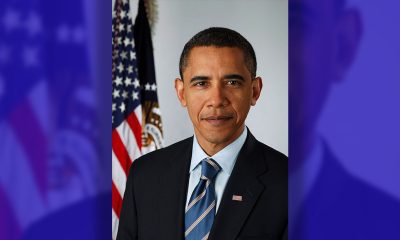
President Barack Obama hosts a bilateral meeting with Mexican President Enrique Pena Nieto, Tuesday, Jan. 6, 2015, in the Oval Office of the White House in Washington. The president is looking to his southern neighbor for help implementing the changing policies on immigration and Cuba. (AP Photo/Carolyn Kaster)

President Barack Obama hosts a bilateral meeting with Mexican President Enrique Pena Nieto, Tuesday, Jan. 6, 2015, in the Oval Office of the White House in Washington. (AP Photo/Carolyn Kaster)

NEDRA PICKLER, Associated Press

WASHINGTON (AP) — President Barack Obama pledged to stand with Mexico against “the scourge of violence and the drug cartels” as he met Tuesday with President Enrique Pena Nieto amid concern over the unsolved abduction of 43 Mexican college students last September.

Protesters in front of the White House questioned what happened to the students who are presumed dead, allegedly at the hands of local officials and police in league with a drug cartel. The dozens gathered in the city’s first winter snowfall were a smaller version of the massive street protests that have occurred in Mexico calling for Pena Nieto’s resignation.

The case has come to signify an engrained abuse of authority and corruption in Mexico, and sparked indignation that federal authorities took 10 days to intervene. Pena Nieto has drawn criticism for saying it was time to “move beyond” the case just weeks after their abduction and taking a month to meet with their families.

Obama was under pressure from groups including Human Rights Watch and the AFL-CIO to press Pena Nieto to take the case more seriously. Mexican officials initially said they did not expect Obama to raise it, but he did by pledging U.S. support.

Obama told reporters in the Oval Office that Americans have been following the “tragic events surrounding the students whose lives were lost.” He said Pena Nieto described reforms he’s initiated around the issues that were raised.

“Our commitment is to be a friend and supporter of Mexico in its efforts to eliminate the scourge of violence and the drug cartels that are responsible for so much tragedy inside of Mexico,” Obama said. But, he added, “Ultimately it will be up to Mexico and its law enforcement to carry out the decisions that need to be made.”

Pena Nieto responded by thanking Obama for working with Mexico to improve security, “especially this clear challenge Mexico has to continue fighting organized crime.”

Pressed later on whether the Obama administration believes that the investigation in Mexico has been credible, White House press secretary Josh Earnest pointed out that arrests have been made and the probe continues. He said Obama stands with Pena Nieto as he tries to put reforms in place.

The protesters across the street in Lafayette Park were so boisterous they could be heard by people in the Oval Office during the presidents’ meeting. The Oval Office is on the other side of the White House from the protesters in Lafayette Park.

“We are very upset,” said Ivan Almonte, a 36-year-old Mexican who has been living in the United States for 16 years. “We want Pena Nieto to quit and to tell us where are the 43 students. Why so much silence?”

The students from a rural teachers college were taken by Iguala police Sept. 26 and allegedly turned over to members of the Guerreros Unidos drug gang that rules parts of the southern Mexican state of Guerrero. Iguala is a city that is southwest of Mexico City.

The Mexican government says the students were likely killed and their bodies incinerated beyond identification. Only one body has been found and identified.

Before the meeting a Pena Nieto aide, undersecretary for North America affairs Sergio Alcocer, raised the shooting of unarmed Michael Brown in Ferguson, Missouri, when asked about whether the students’ abduction would be part of the talks. He said Mexican officials didn’t expect it.

“We have cases of violence in different parts of the world,” Alcocer said. “Within the United States, we know there has been this kind of violence in the area of Missouri, to mention just one case.”

Pena Nieto praised Obama’s executive action to shield from deportation some 4 million immigrants — most of them from his country — and his “very audacious decision” to re-establish diplomatic ties with Cuba after a half century of estrangement.

Obama said he hopes to approach Cuba with “a more constructive policy but one that continues to emphasize human rights and democracy and political freedom.” He said he’ll participate in the Summit of the Americas, a regional meeting, in April in Panama along with Cuba, but will insist that those topics are on the agenda.

Years of estrangement between the U.S. and the communist island nation off the Florida coast had long been a point of friction with Mexico and other Latin American countries that do business with Cuba.

“Mexico will be a tireless supporter of the good relationship between two neighbors,” Pena Nieto said.

___

Associated Press writer Luis Alonso Lugo contributed to this report.

___

Follow Nedra Pickler on Twitter at https://twitter.com/nedrapickler

Copyright 2015 The Associated Press. All rights reserved. This material may not be published, broadcast, rewritten or redistributed.

Continue Reading
Click to comment

Leave a Reply

Your email address will not be published. Required fields are marked *

Black History

COMMENATARY: Blackfolk, Is It Past Time for an Exit Strategy?

JACKSONVILLE FREE PRESS — With federal and state governments aligning with what the article describes as an “anti-Black program,” the article questions the efficacy of traditional civil rights strategies.

Published

on

COMMENATARY: Blackfolk, Is It Past Time for an Exit Strategy?

We have arrived at a terrifyingly familiar crossroads. Over the last year and a half, the current administration has executed its Project 2025 playbook to a tee, systematically dismantling the civil rights progress and hard-won gains of the past 60-plus years.

With every branch of the federal government aligned with this anti-Black program—and a majority of state governors and state supreme courts nodding in lockstep—the illusion of permanent legal protection has shattered.

The worst thing Blackfolk can do right now is assume that everything will “automagically” improve. History is screaming a different story. If we look closely at the repeating loops of the American experiment, we must ask an uncomfortable, urgent question: Is it past time for an exit strategy?

Historically, every single time Black people have fought, bled, and successfully forced this country to pivot away from its white supremacist foundations, a radical, violent political pushback has followed.

  • The Reconstruction Precedent: After the abolition of slavery and the brief radiance of Reconstruction, the white backlash plunged Black America into Jim Crow—a violent rollback of rights that lasted roughly a century.
  • The Modern Regression: The monumental gains of the Civil Rights and Black Power movements are being erased right in front of our eyes. In truth, the efforts to dismantle these wins didn’t start recently; they began while the ink on the Voting Rights Act was still wet.

Historians and social commentators today predict that it will take anywhere from 60 to 100 years for Black people living today to fully recover the legal protections, economic ground, and civil rights being stolen from us right now. That means the bitter, unvarnished truth is that most of us living today will not see better days in our lifetime.

If that’s true, why are we still organizing, marching, and voting with the exact same playbook and goals as before? We already know how that story ends: Anti-Black forces will always meet our appeals for justice with violent, economic, and political rollbacks. We need a new approach.

A 21st-century Underground Railroad

For months, national thought leader Lurie Daniel Favors has implored Black people and organizations to stop reacting defensively and start creating the framework for a “21st-century Underground Railroad.” This wouldn’t be a literal trail through the woods, but a sophisticated, underground network designed to allow Black people to escape systemic oppression, pool resources, and find genuine freedom.

But what does a modern exit strategy even look like? The options generally split into two distinct paths: The physical exit and the systemic exit.

“If hereditary bondmen would be free, they must themselves strike the blow… use every means—moral, intellectual, and physical—that promises success,” said the illustrious and under-appreciated Black liberation theologian Henry Highland Garnet, in his Address to the Slaves of the United States, given during the National Negro Convention of 1843. Garnet called for open rebellion against slavery. His idea for an “exit strategy” failed by one vote of being endorsed by the convention.

Option 1: The expatriate route (physical exit)

For some, the answer lies in leaving the United States entirely. This is not a new impulse. In the late 19th and early 20th centuries, Black intellectuals and colonization societies led by figures like Alexander Crummell, Garnet, and Martin Delany argued that Black humanity, creativity, and intellect could never fully flourish on a soil so deeply poisoned by anti-Blackness.

Crummell actively championed emigration, believing that building up self-determining communities elsewhere was a far nobler use of Black genius than begging for citizenship from a nation that despised them.

In 2026, the expatriate route means looking toward West African countries (such as Ghana, with its continued “Year of Return” initiatives), parts of the Caribbean, or European hubs that offer a lower baseline of anti-Blackness. The goal is to relocate to societies that welcome our humanity rather than criminalize it.

But how many of us have the economic capacity to make such a move? On the flip side, how many of us can afford to stay in the U.S. with anti-Blackness rising exponentially daily?

Option 2: Economic secession (systemic exit)

For others, the best exit strategy isn’t physical relocation, but a deliberate exit from America’s economic and social systems. This means creating our own self-reliant, self-determining networks right here. It looks like building independent food supply chains, autonomous security apparatuses, private educational institutions, and closed-loop economic systems. It’s the practice of being in America without being dependent on it. Multiple Black Power Movement members back in the 1960s and 70s called that creating a “nation within a nation.”

The danger of assuming “It can’t happen here”

This is not a message of gloom and doom; it is an urgent wake-up call. Global history is littered with stories of “othered” groups whose rights were slowly, methodically eroded by the dominant society. In almost every instance—from pre-WWII Europe to various global genocides—the erosion of rights started slowly, and then accelerated so fast that it appeared to come out of nowhere.

In every single one of those historical tragedies, there was always a small, prophetic minority calling for an exit strategy. And in every instance, the vast majority of the oppressed group pushed back, insisting that conditions could never get that bad.

Until they did.

Activating the exit

We don’t need a singular, definitive answer today, but we absolutely must begin organizing around the possibilities. Blackfolk need to take concrete steps immediately:

  1. Assess and Resource: Black organizations and individuals must audit their assets, identifying who has the means, dual citizenships, or remote capabilities to pivot.
  2. Build the Infrastructure: We must fund the infrastructure for both paths—supporting those who choose to build autonomous zones of survival in the States, and establishing legal and financial pipelines for those who choose to leave.
  3. Normalize the Conversation: We must strip away the stigma of “giving up” on America. Leaving a burning house isn’t cowardice; it’s intelligence.

We can no longer afford the luxury of hope without a contingency plan. Whether we choose to exit geographically or economically, we must build the backdoor now. History has shown us the script—it’s time we finally change our ending.

Based on reporting by Jacksonville Free Press.


Continue Reading

Black History

Governor Stein Signs Jaleeyah’s Law

THE CAROLINIAN — Governor Josh Stein signed House Bill 1173, known as Jaleeyah’s Law, on Monday, July 6th. The law, named after 13-year-old Jaleeyah Tune, who was fatally shot in December 2025, aims to increase penalties for gang-related crimes and provide more tools for prosecutors.

Published

on

Governor Stein Signs Jaleeyah’s Law

By Jheri Hardaway

Staff Writer

On Monday, July 6th Govenor Josh Stein signed House Bill 1173, widely known as Jaleeyah’s Law, in the presence of Jaleeyah’s mother, family, and community leaders. Jaleeyah’s Law is designed to increase penalties for gang-related crimes and provide stronger tools for prosecutors. The law is named in memory of 13-year-old Jaleeyah Tune who on December 21, 2025, was shot and killed while walking home with her sister. Three teens have been arrested in connection with her death, according to the Goldsboro Police Department; however, the circumstances and details surrounding the murder are not known to the public.

“It’s about giving prosecutors and communities stronger tools. It is about prevention, accountability and protection for families before tragedy happens,” said Whitney Brown-Tune, Jaleeyah’s mother, in a recent press conference. At the bill signing, Brown-Tune also emphasized, “Us as parents, we need to be more accountable for what our kids are doing on social media. It starts on social media before it hits the streets. Keep that in mind.”

Brown-Tune is completely correct. Social media’s profound impact has required changes in policing tactics and should prompt a shift in how we teach and parent our children, who are our future. Laws against organized crime are essential. Organized crime is just as American as student loans. The issue is how we define a gang. There are gangs, executing organized crimes that are not widely recognized as gangs by law enforcement. There are characteristics the state uses to define a gang member that are inaccurate. Jaleeyah’s Law – House Bill 1173 is necessary, but so is reform around law enforcement best practices.

As parents and community leaders do a better job of monitoring and protecting their children’s online presence. Law enforcement should work to better understand the social media landscape and the cultural factors that shape how some present themselves online. Wearing red or being photographed with a firearm are not enough to say someone is in a gang. Alongside this legislation should be more concrete and transparent criteria that law enforcement uses to define a gang member. Subjective social media observations are dangerous and can lead to wrongful convictions by biased law enforcement officials.

How do I know that law enforcement officials need advising on evaluating gang activity? I recently participated in the Harnett County Sheriff’s Office Citizen’s Academy. During the 13-week program, there is a night called “gang night.” The deputies presented a ton of insight into the gangs in and around Harnett County, along with information gathered from the North Carolina Gang Investigators Association.

During the presentation, I was alarmed that Harnett County is only 20% black but 80% of the gang presentation was about Black people. The deputies talked about people using the word “Cuz” as demonstrating gang affiliation, but I use “cuz,” and I’m not in a gang. They talked about the colors red, black, and green being associated with a gang. I’ve always known these colors as black liberation colors and wear them regularly; again, I am not in a gang. The presentation went as far as to show pictures of the Black Israelites, and the officer indicated, “They’re not necessarily a gang, but they’re a group that you should be aware of or afraid of.” I was upset; why vilify groups when they’ve committed no acts of violence? Why don’t they get the right to freedom of religion like other religious groups in America? The definition of a gang or a gang member needs to be evaluated and shared widely. At the conclusion of the Citizen’s Academy, we were encouraged to give feedback. The leadership of the Harnett County Sheriff’s Office expressed gratitude for the feedback and noted that they don’t know unless someone tells them.

I hope this knowledge empowers law enforcement leaders to be more culturally aware and transparent about what alarms them, so we can grow as a community. Dr. Randal Pinkett said, “If you are not prepared to make your organization more receptive to all people of all backgrounds, then you will not be competitive in the 20th century.”

As a Black American growing up in conservative Cary, North Carolina, I was raised to be considerate and aware of all cultures. Jaleeyah’s Law is important for maintaining safety; I hope we also make room for cultural understanding. The way the law is written, a teen or young adult could post something that is interpreted as gang-related and end up with “Enhance penalties for persons convicted of certain felonies if the offense was committed as part of criminal gang activity.”

Based on reporting by The Carolinian.


Continue Reading

Community

BLACK TEXAS AT CROSSROADS

AFRICAN-AMERICAN NEWS AND ISSUES – DALLAS — The March primary elections in Texas revealed a significant sentiment among Black voters, who largely supported Congresswoman Jasmine Crockett. Crockett swept the ten counties with the largest Black populations by a 24-point margin, including a nearly 60-point lead in Jefferson County. Despite this strong showing of support for Crockett, James Talarico became the nominee.

Published

on

By Robert Slater

There are elections, and then there are hinges. Moments where a state does not simply choose a senator, it chooses whether an entire people gets to keep a seat at the table for the next decade or gets locked out of the room entirely. November is one of those hinges for Black Texas. And I will not pretend otherwise to make anyone comfortable. Start with what the numbers already told us. In the March primary, Congresswoman Jasmine Crockett swept the ten counties with the largest Black populations in this state by roughly 24 points.

In Jefferson County, nearly 60 points. That was not noise. That was a verdict. Black voters looked at the choices in front of them and rendered judgment with the only tool no one can take from us at the ballot box, our own hand on our own vote. James Talarico became the nominee anyway. What he does with the community that did not choose him first is now the whole test of his candidacy. To his credit, he has tried. Black churches, HBCUs, a commencement address at Paul Quinn College, a maternal mortality plan aimed at a crisis that has quietly devastated Black families for generations, endorsements from Commissioner Rodney Ellis and Divine Nine organizations, Barack Obama at his side.

None of that is nothing. But state Representative Barbara Gervin Hawkins, who chairs the Texas Legislative Black Caucus, said the quiet part out loud: Black Texans are angry, they feel disenfranchised, and they feel used. Two thirds of Black voters currently support him. Compare that to the nearly 90 percent Beto O’Rourke and Colin Allred each pulled from us in their own Senate runs, and the gap stops looking like a rounding error. It looks like a warning shot. State Senator Royce West put it in terms I have heard from organizers across this state for years.

He sees good faith. He has also seen good faith before that evaporated the moment the votes were counted. That is not bitterness. That is a community that has been asked to trust first and be rewarded later, again and again, and has learned what usually comes after the asking. Talarico did not invent that pattern. But he is the one standing in front of it now, and earning our vote, not assuming it, is the only path through. Here is where I have to stop being diplomatic, because diplomacy will not save us from what is actually on the other side of this ballot. If Ken Paxton wins this seat, it will not be a normal loss. It will be the closing of a door that may not open again for a generation. Texas Republicans have already redrawn the congressional map to strip power from Black and Latino communities for the next decade.

A federal Voting Rights Act gutted by the courts no longer stands between us and

The post BLACK TEXAS AT CROSSROADS appeared first on African American News and Issues.

Based on reporting by African-American News and Issues – Dallas.

Continue Reading

Subscribe to receive news and updates from the Oakland Post

* indicates required

CHECK OUT THE LATEST ISSUE OF THE OAKLAND POST

ADVERTISEMENT

WORK FROM HOME

Home-based business with potential monthly income of $10K+ per month. A proven training system and website provided to maximize business effectiveness. Perfect job to earn side and primary income. Contact Lynne for more details: Lynne4npusa@gmail.com 800-334-0540

Facebook

Trending

Copyright ©2021 Post News Group, Inc. All Rights Reserved.