Activism
New Report Shows Disparities in Police Stops of Youth in California
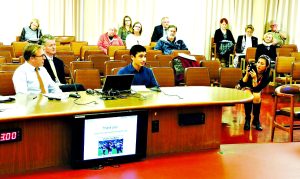
“Like those before it, the 2025 RIPA report provides actionable information to address bias in policing. This year’s report is particularly important with its focus on young Californians. The racial disparities of policing stops, searches and use of force of youth is alarming,” said Andrea Guerrero, co-chair of the RIPA Board and executive director of Alliance San Diego.

African Americans were stopped ‘126% more frequently than expected’
By Post Staff
The California Racial and Identity Profiling Advisory Board this week released its annual report on police stops across California, analyzing 4.7 million vehicle and pedestrian stops conducted in 2023 by 539 law enforcement agencies in California.
The analysis, conducted as part of the Racial and Identity Profiling Act (RIPA), shows disparities consistent with those observed in prior years’ data based on perceived race, age, and disability status.
The report finds that the disparity between the proportion of stops and the proportion of residential population was greatest for individuals perceived to be Black, who were stopped 126% more frequently than expected, followed by individuals perceived to be Latino, who were stopped 44% more frequently than expected.
In addition to providing an in-depth look into policing in 2023, the report contains a wide array of best-practice recommendations related to policing.
“Like those before it, the 2025 RIPA report provides actionable information to address bias in policing. This year’s report is particularly important with its focus on young Californians. The racial disparities of policing stops, searches and use of force of youth is alarming,” said Andrea Guerrero, co-chair of the RIPA Board and executive director of Alliance San Diego.
“Young Californians who are driving, biking, and walking and perceived to be Black or Brown are regularly stopped, asked to consent to a search, handcuffed, sat on the curb, put in a police car, and questioned for information that is recorded on a field interview card before being released,” said Guerrero.

“This is California’s version of stop-and-frisk that causes immeasurable harm to the community and erodes trust in law enforcement from a young age. In this report, the Board makes a number of recommendations that we encourage policy makers, law enforcement agencies, and community advocates to consider eliminating bias in policing and enhance public safety,” she said.
“The annual collection of RIPA stop data is one part of our broader effort to increase public safety for all Californians. Through the analysis of stop data and recommendations for thoughtful reforms, we’re continuing to strengthen trust between local law enforcement and the communities they serve,” said California Attorney General Rob Bonta.
Key findings of the report related to youth include:
- Actions Taken: Overall, Native American, Black, Latino, and multiracial individuals had more actions taken per average stop than other racial and ethnic groups. For youth ages 1-17, officers reported the highest average of actions taken during a stop for Black youth. And for those perceived to be 18-24, officers reported the highest average number of actions were taken for Black and Latino youth. Youth perceived to be 12-14 were more likely to be searched, handcuffed, and detained during a stop than any other age group.
- Search Rates: Native American and Black individuals were searched at higher rates than those who are white, and officers were less likely to discover contraband or evidence during searches of those individuals than they were during searches of individuals perceived to be white.
- Use of Force: For youth ages 12–24, officers were more likely to use force in stops of youth perceived to be Black and Native American compared to other racial and ethnic groups. Black and Native American youth also had the highest rates of handcuffing, and the highest rates of a firearm pointed at them during a stop. Youth with a perceived disability were more likely to be handcuffed as part of a stop than youth without a perceived disability.
- Results of Stop: Officers were also more likely to report ‘no action taken’ for stops of individuals perceived as Native American and Black. Individuals perceived as transgender were arrested at approximately double the rate of those perceived as cisgender or gender nonconforming.
The Board’s Report also contains a wide array of policy recommendations related to policing, with a particular focus on the impact of police interactions with youth, civilian complaint processes, accountability, officer decertification, and training, on racial and identity profiling.

