
Politics
5 Things to Know Before Obama Rolls Out His Budget Monday


In this March 4, 2014 file photo, copies of President Barack Obama’s proposed fiscal 2015 budget are set out for distribution on Capitol Hill in Washington. (AP Photo/J. Scott Applewhite, File)
Connie Cass, ASSOCIATED PRESS
WASHINGTON (AP) — A quick quiz:
Monday is —
a) Groundhog Day
b) Budget Day
c) A day for repeating the same old arguments over spending and taxes, only louder.
d) All of the above.
If you picked “d,” you’re in the proper spirit for federal Budget Day, which appropriately falls on Groundhog Day this year. It’s safe to predict we’re in for way more than six more weeks of Republicans and Democrats fighting over how to spend our money.

Here are five things to know before President Barack Obama’s 2016 budget fully emerges Monday:
___
IT’S JUST AN OPENING BID
Despite all the hoopla surrounding it, a president’s budget is merely a suggestion. That’s especially true this year, with Obama delivering his multi-trillion-dollar wish list to a Senate and House run by the opposition.
The Constitution gives Congress power to decide how to spend taxpayers’ money. After lawmakers get the president’s budget, they’ll set about coming up with their own, very different, spending plan. There’s a hitch, though — their legislation needs Obama’s signature to become law.
If the president and Congress can’t compromise on spending, that’s how we end up with a partial government shutdown. Republican leaders and Obama say they don’t want that to happen this year.
Still, the usual big disputes loom: Obama wants more spending and higher taxes on the wealthy. Most Republicans want to spend less — except on the military — and resist tax increases.
Plus, this year Republicans are promising to use spending bills to attack Obama’s signature health care law and to roll back his order giving some immigrants relief from deportation.
___
OBAMA WILL BID HIGH
The president will call for increasing spending on agency operating budgets by 7 percent next year, blowing through limits set in an earlier bipartisan deal.
Previewing the detailed document to be released Monday, the White House said it would call for spending about $74 billion more next year than the painful automatic cuts Obama signed into law in that 2011 deal commonly known as the “sequester.” Those harsh automatic cuts were originally set in motion as a threat that would force bipartisan agreement to replace them with something more sensible, but it didn’t work.
Obama would roughly divide the extra money he seeks between the military and domestic programs, such as college aid, medical research and child care.
The White House, without giving details yet, says Obama would offset his spending increases by cutting inefficient programs and closing tax loopholes. In that way, he could continue the recent trend of shrinking the nation’s annual budget deficits.
Republicans say that’s no good. They prefer to tackle the deficit by holding domestic spending in check, or trimming even more.
___
A BIG QUESTION: HOW MUCH DOES THE MILITARY GET?
The military brass has been pleading for relief from their automatic spending limits. Many lawmakers in both parties, eyeing terror attacks and trouble spots around the globe, are anxious to help.
Obama’s proposal to raise the defense budget by $38 billon would allow for more ships and fighter jets. By bundling the military increase with more domestic spending, Obama will pressure Republicans eager to boost the military budget to give in to some of his priorities.
Will Republicans insist on holding the line on spending, even if it means the Pentagon has to go without, too? And how far are Democratic lawmakers and Obama willing to go in using national defense as a bargaining chip?
___
DETAILS MATTER
If Congress is sure to reject and redo Obama’s budget proposal, you might wonder: Why does he bother?
For one thing, the law says he has to submit a budget to Congress by the first Monday in February, although Obama has sometimes missed that deadline.
Plus, the federal budget is a big deal. It’s expected to be in the vicinity of $4 trillion — that’s trillion with a “t” — for the fiscal year beginning in October.
It goes much deeper than political rhetoric about ending big government or boosting the middle class.
The budget carries thousands and thousands of decisions about concrete things the government does — like paying park rangers, Border Patrol agents and workers who answer IRS help lines. Spending money for air traffic control, medical research and food inspection. Weeding out ineffective programs and launching new ones that, hopefully, work better.
The exercise has gone awry over the last few years, leading to showdowns and a 2013 shutdown and failure to complete the normal budget process in a gridlocked Congress.
But the budget minutia that federal agencies sweat over and congressional committees are charged with overseeing is what keeps the U.S. government running.
___
MOST OF THE BUDGET IS ON AUTOPILOT
Running federal agencies isn’t even the half of it.
The biggest share of the budget goes to what’s called “mandatory spending” — ongoing payments that don’t need annual approval by Congress. Social Security, Medicare and Medicaid are the biggies. Others include unemployment checks, food stamps and pensions for veterans and government retirees.
To take on the nation’s long-term debt problem, lawmakers and the president would have to deal with these growing costs.
So far, attempts to reach this sort of “grand bargain” have failed, repeatedly.
____
Associated Press writers Josh Lederman and Andrew Taylor contributed to this report.
Follow Connie Cass on Twitter: http://www.twitter.com/ConnieCass.
Copyright 2015 The Associated Press. All rights reserved. This material may not be published, broadcast, rewritten or redistributed.
###









Activism
Oakland Post: Week of April 8 – 14, 2026
The printed Weekly Edition of the Oakland Post: Week of April 8 – 14, 2026
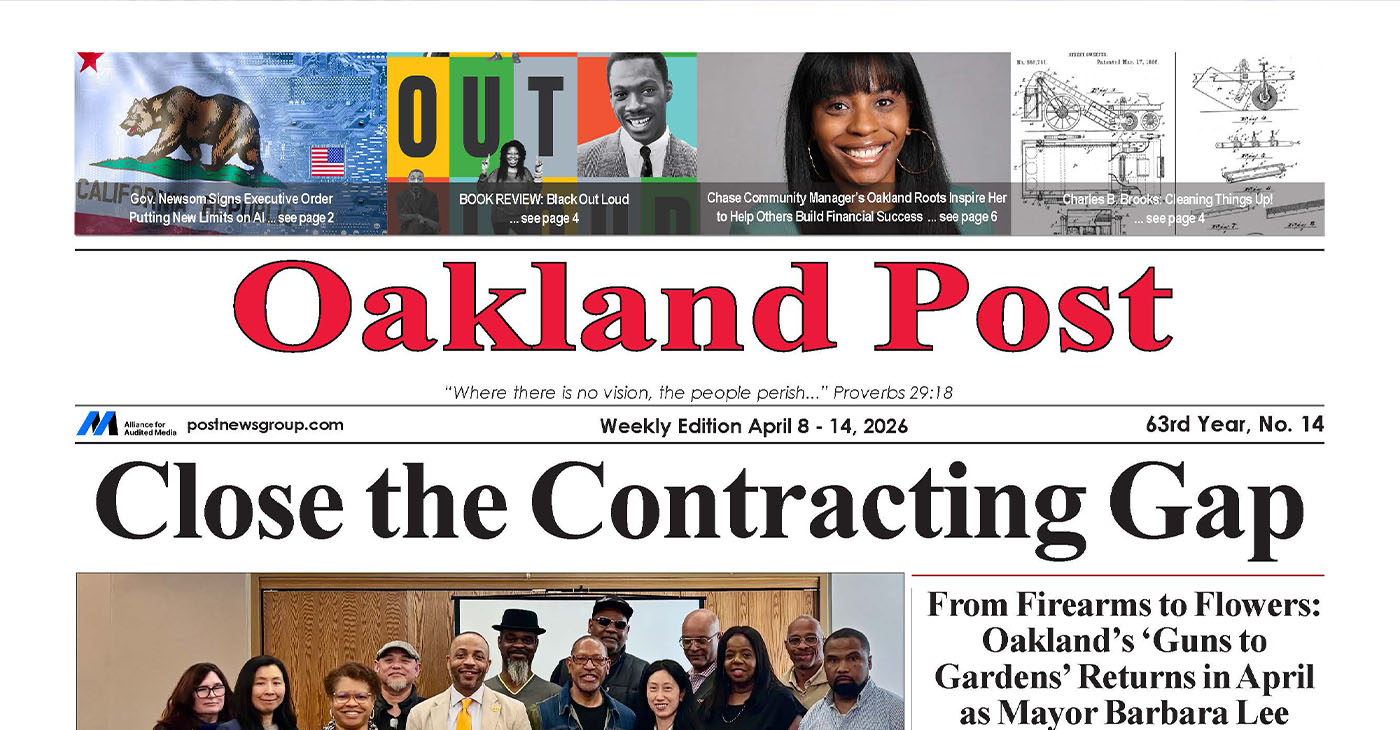
To enlarge your view of this issue, use the slider, magnifying glass icon or full page icon in the lower right corner of the browser window.
Activism
Oakland Post: Week of April 1 – 7, 2026
The printed Weekly Edition of the Oakland Post: Week of April 1 – 7, 2026
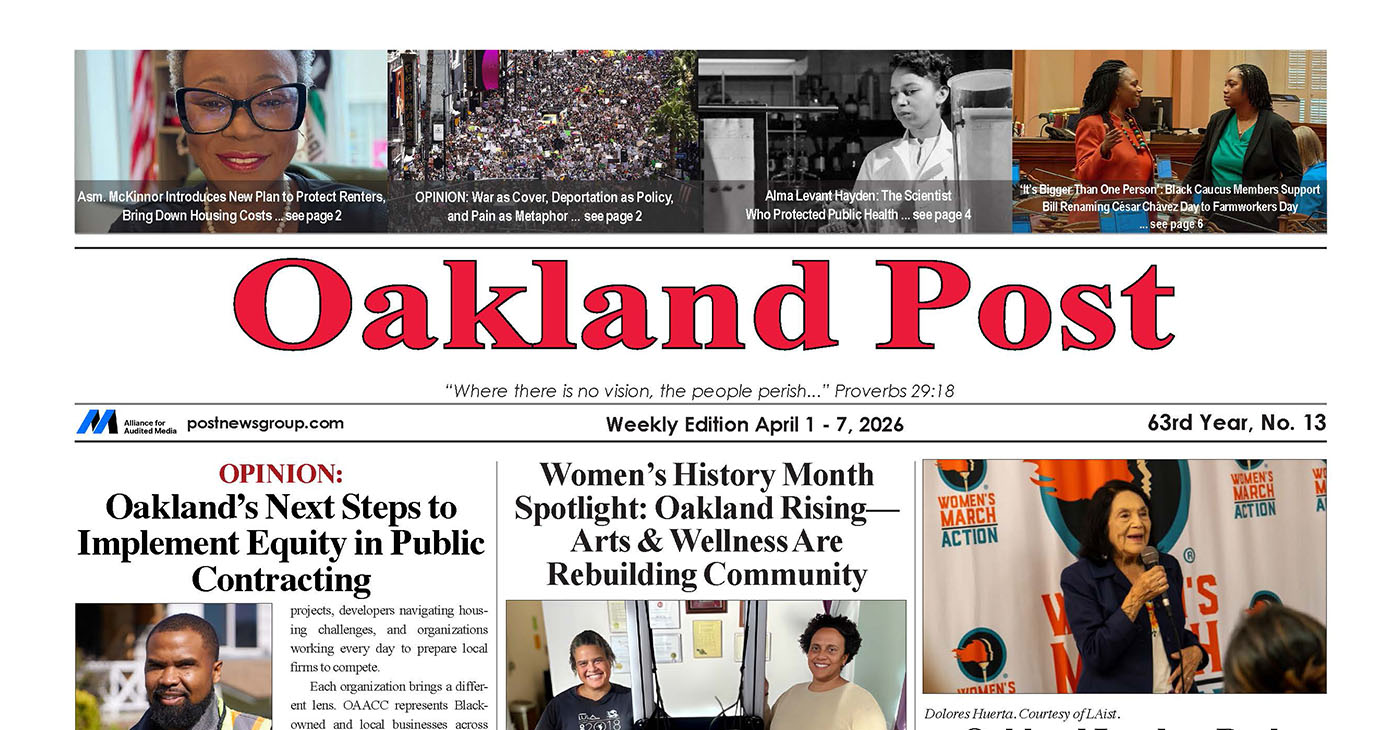
To enlarge your view of this issue, use the slider, magnifying glass icon or full page icon in the lower right corner of the browser window.
Activism
Oakland Post: Week of March 18 – 24, 2026
The printed Weekly Edition of the Oakland Post: Week of March 18 – 24, 2026
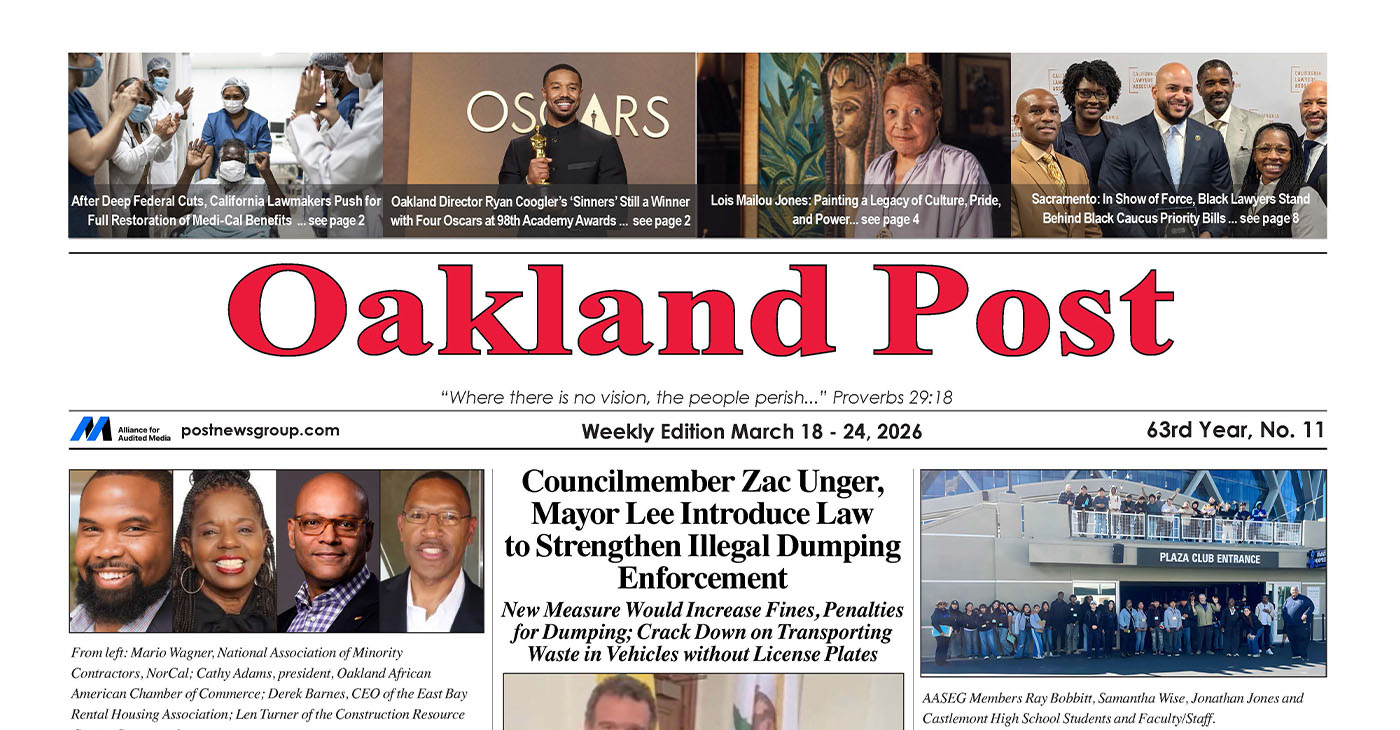
To enlarge your view of this issue, use the slider, magnifying glass icon or full page icon in the lower right corner of the browser window.

WORK FROM HOME
Home-based business with potential monthly income of $10K+ per month. A proven training system and website provided to maximize business effectiveness. Perfect job to earn side and primary income. Contact Lynne for more details: Lynne4npusa@gmail.com 800-334-0540


Oakland Post: Week of April 8 – 14, 2026

Oakland Post: Week of April 1 – 7, 2026

Black Artists in America, Installation Three Wraps at the Dixon Gallery and Gardens

Grief, Advocacy, and Education: A Counselor Reflects on Black Maternal Health

Future of Florida’s Black History Museum in Limbo

New Research Shows the Many Benefits of Early Learning

South Hampton K-8 Students Among Top 10 Finalists for Samsung’s ‘Solve for Tomorrow’ Competition

Cuba: No Negotiation with US on the President or Political System

Brooklyn Academy of Music Names Jamaican-Born Tamara McCaw as President

Trinidad & Tobego – U.S. Launches WhatsApp Channel for American Citizens in the Country

Oakland Post: Week of March 18 – 24, 2026

AI Innovation vs. Ethics and Environmental Impact

AI, Web3, and Digital Reparations

What If You Owned Your AI Agent?

Season 7, Episode 3 – January Reporter’s Roundtable 📱

Reflecting on Black History Milestones in Birmingham AL

Oakland Post: Week of February 25 – March 3, 2026

Oakland Post: Week of March 4 – 10, 2026

PRESS ROOM: NBA Hall of Fame Nominee Terry Cummings Joins 100 Black Men of DeKalb County to Launch Victory & Values Initiative
Oakland Post: Week of March 18 – 24, 2026

Trump’s MAGA Allies are Creating Executive Order Plan to Steal the 2026 Midterms

Oakland Post: Week of March 11 -17, 2026

Poll Shows Support for Policies That Help Families Afford Child Care

Financial Wellness and Mental Health: Managing Money Stress in College
New Research Shows the Many Benefits of Early Learning
Brooklyn Academy of Music Names Jamaican-Born Tamara McCaw as President

Woman’s Search for Family’s Roots Leads to Ancestor John T. Ward – A Successful Entrepreneur and Conductor on the Underground Railroad
Grief, Advocacy, and Education: A Counselor Reflects on Black Maternal Health
Future of Florida’s Black History Museum in Limbo
Black Artists in America, Installation Three Wraps at the Dixon Gallery and Gardens

Hyundai Ioniq 5 Parking, Safety, and 360 View #shorts

2025 Ioniq 5 New Wiper & Powerful Performance! #shorts

Electric SUV Range: Is 259 Miles Enough? #shorts

EV Charging: How Fast Can You Charge an Electric Vehicle? #shorts

Biometric Cooling… Messaging Seats…Come on! 2025 Infiniti QX80 Autograph 4WD

Charged Up: Witness the Magic of a Fully Electric Car! #shorts

Range Rover Sport PHEV Included…: See What’s Inside This Luxury SUV! #shorts

Invisible Hood View: Perfect Parking with X-Ray Vision! #shorts

AI Is Reshaping Black Healthcare: Promise, Peril, and the Push for Improved Results in California

ESSAY: Technology and Medicine, a Primary Care Point of View

Sanctuary Cities

The RESISTANCE – FREEDOM NOW

STATE OF THE PEOPLE: Freddie

ECONOMIC BOYCOTT DAY!!!!!

I told You So
-
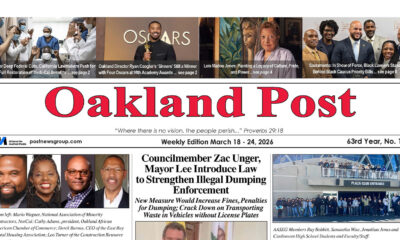 Activism3 weeks ago
Oakland Post: Week of March 18 – 24, 2026
-
 Activism4 weeks ago
Oakland Post: Week of March 11 -17, 2026
-
 Advice4 weeks ago
Financial Wellness and Mental Health: Managing Money Stress in College
-
 #NNPA BlackPress3 weeks ago
New Research Shows the Many Benefits of Early Learning
-
 #NNPA BlackPress3 weeks ago
Brooklyn Academy of Music Names Jamaican-Born Tamara McCaw as President
-
 #NNPA BlackPress3 weeks ago
Grief, Advocacy, and Education: A Counselor Reflects on Black Maternal Health
-
 #NNPA BlackPress3 weeks ago
Future of Florida’s Black History Museum in Limbo
-
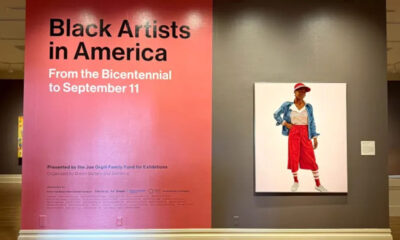 #NNPA BlackPress3 weeks ago
Black Artists in America, Installation Three Wraps at the Dixon Gallery and Gardens
