#NNPA BlackPress
WATCH: Unanswered Questions Around The National Guard Shooting
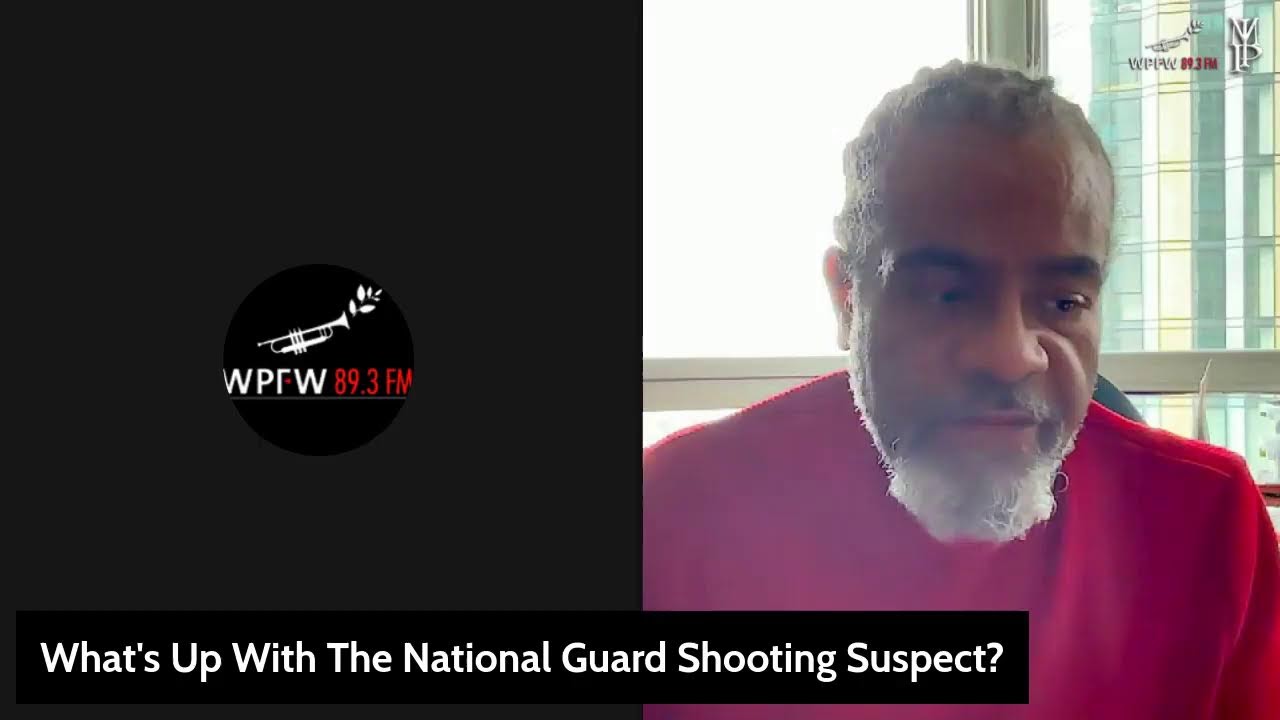
Career US Navy terrorism intelligence collector, code breaker, and interrogator with wide-ranging field and combat experience in the Middle East, South West Asia, and Africa and New York Times best-selling author Malcolm Nance join Make It Plain with Rev. Mark Thompson to discuss the case of Rahmanullah Lakanwal, the individual suspected of shooting Sarah Beckstrom […]

Career US Navy terrorism intelligence collector, code breaker, and interrogator with wide-ranging field and combat experience in the Middle East, South West Asia, and Africa and New York Times best-selling author Malcolm Nance join Make It Plain with Rev. Mark Thompson to discuss the case of Rahmanullah Lakanwal, the individual suspected of shooting Sarah Beckstrom and Andrew Wolfe, both uniformed members of the West Virginia National Guard on November 26.
“My first thought was…I knew it was gonna start a conspiracy theory. It’s just the way, the nature of the game. People don’t understand how intelligence and intelligence processes work,” said Nance.
“The first question anyone should ask, and a counter-terrorism perspective is how did this individual transport himself from a place of origin, which is his home, let’s assume in Washington state to Washington, DC If it was a vehicle, where’s the vehicle?”
Nance further considered the implications if the suspect traveled by air, questioning the protocol followed with a weapon:
“Or if he flew, how did he fly with a handgun? Did he check it in? Did he obey all the laws?”
Nance underscored the necessity of these questions to piece together the suspect’s actions and motives, emphasizing that these logistics could provide critical insights into the event.
He said, “His method of transporting himself to Washington DC is a critical question.” These questions remain crucial as they may reveal more about the suspect’s intentions and the broader circumstances of the shooting.
Nance brought attention to the challenge of piecing together the intent behind the actions of the accused, highlighting the mental state and situational pressures that might have led to the tragedy.
Nance also provided insights into the workings of “zero units,” of which Lakanwal was a member, explaining their vital role under the control of the CIA for direct action operations.
“These were units…who would come under the control of the CIA and do more direct actions without having to use all the resources of a special forces team,” he said.
Delving deep into the psychological impact on individuals involved in such intense environments, Nance emphasized the potential for PTSD, particularly upon transitioning from military zones to civilian life. He discussed where refugees, particularly those from conflict zones like Afghanistan and Vietnam, are placed within the U.S. Nance questioned the logic behind settling people in environments far removed from what they are accustomed to, suggesting instead that support systems and familiarity could aid better assimilation and mental well-being.
He emphasized how America’s systemic racism can affect immigrants.
“America is a racist country. I mean, we are literally living in a cesspool, a tsunami of, of white anger, resentment, racism that is affecting every American,” Nance said.
Nance explained the perplexing choices often made in resettling refugees, pointing out that immigrants are sometimes placed in areas starkly different from their home environments. He shared that when Somali refugees were brought to the U.S., they were resettled in Minneapolis, a location drastically different from their native climate and culture.
“It’s like we want to put them in places where they will be forced to adjust to the American dream in an extreme that they’re not used to,” he said.
Watch the full interview:
[This post contains video, click to play]