
Activism
U.S. House Minority Leader Hakeem Jeffries and Rep. Lateefah Simon to Speak at Elihu Harris Lecture Series
The popular lecture series is co-produced by the Oakland-based Martin Luther King Jr. Freedom Center and Peralta Community College District. Jeffries’ appearance marks the 32nd lecture of the Barbara Lee and Elihu Harris Lecture Series, which has provided thousands of individuals with accessible, free, high-quality information.

By Scott Horton
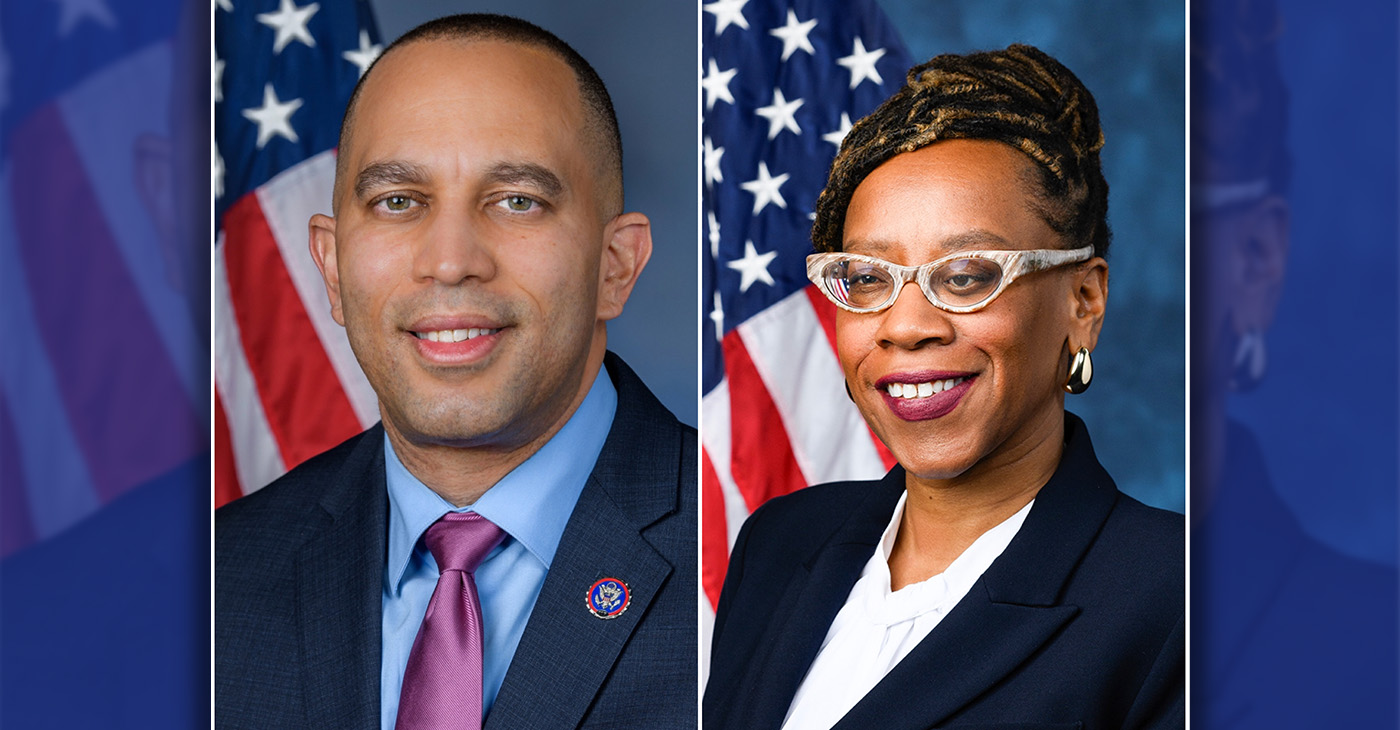
United States House of Representatives Minority Leader Hakeem Jeffries (D-NY-8) will be a speaker at the Barbara Lee and Elihu Harris Lecture Series on Friday, Feb. 21.
The event will be held at the Henry J. Kaiser Center for the Arts, 10 Tenth Street in Oakland, at 7 p.m.
The popular lecture series is co-produced by the Oakland-based Martin Luther King Jr. Freedom Center and Peralta Community College District. Jeffries’ appearance marks the 32nd lecture of the Barbara Lee and Elihu Harris Lecture Series, which has provided thousands of individuals with accessible, free, high-quality information.
The overarching goal of the lecture series is to provide speakers from diverse backgrounds a platform to offer their answers to Dr. King’s urgent question, which is also the title of Jeffries’ latest book: “Where do we go from here: Chaos or Community?”
In addition to Jeffries, Congresswoman Lateefah Simon (D-CA-12) will also speak.
“Certainly, now is a time for humanity, in general, and Americans in particular to honestly and genuinely answer Dr. King’s question,” said Dr. Roy D. Wilson, Executive Director of the Martin Luther King Jr. Freedom Center and Executive Producer of the lecture series.
“Dr. King teaches that time is neutral but not static. Like the water in a river, it arrives and then quickly moves on,” continued Wilson. “We must urgently create conditions for listening to many different answers to this vital question, and generate the development of unity of action among all those who struggle for a stronger democracy.”
In his book, Jeffries shares his experience of being unanimously elected by his colleagues as the first African American in history to ever hold the position of House Minority Leader.
In January 2023 in Washington, Jeffries made his first official speech as House Minority Leader. He affirmed Democratic values one letter of the alphabet at a time. His words and how he framed them as the alphabet caught the attention of Americans, and the speech was later turned into a book, The ABCs of Democracy, bringing Congressman Jeffries rousing speech to vivid, colorful life, including illustrations by Shaniya Carrington. The speech and book are inspiring and urgent as a timeless reminder of what it means to be a country with equal opportunities for all. Jeffries paints a road map for a brighter American future and warns of the perils of taking a different path.
Before his colleagues unanimously elected him Minority Leader in 2022, Jeffries previously served as Chair of the House Democratic Caucus and as an Impeachment Manager during the first Senate trial of the 45th President of the United States.
Jeffries was born in Brooklyn Hospital, raised in Crown Heights, grew up in the Cornerstone Baptist Church and he is a product of New York City’s public school system, graduating from Midwood High School. Jefferies went on to Binghamton University (BA), Georgetown University (master’s in public policy) and New York University (JD).
He served in the New York State Assembly from 2007 to 2012.
Admission is free for the Feb. 21 Barbara Lee and Elihu Harris Lecture Series featuring Congressman Jeffries. Please reserve seats by calling the Martin Luther King Jr. Freedom Center at (510) 434-3988.
Signed copies of his book will be available for purchase at the event.










Activism
Dorothy Lee Bolden: Uniting Domestic Workers
Domestic work followed Bolden beyond high school. According to sources from the New York Times, Bolden said she would wake “at 4 a.m. to leave home by 6 a.m., and be on the job by 8 a.m., perform all those duties necessary to the proper management of a household for eight hours, leave there by 4 p.m. to be home by 6 p.m. where I would do the same things I’ve done all over again for my own family.”
By Tamara Shiloh
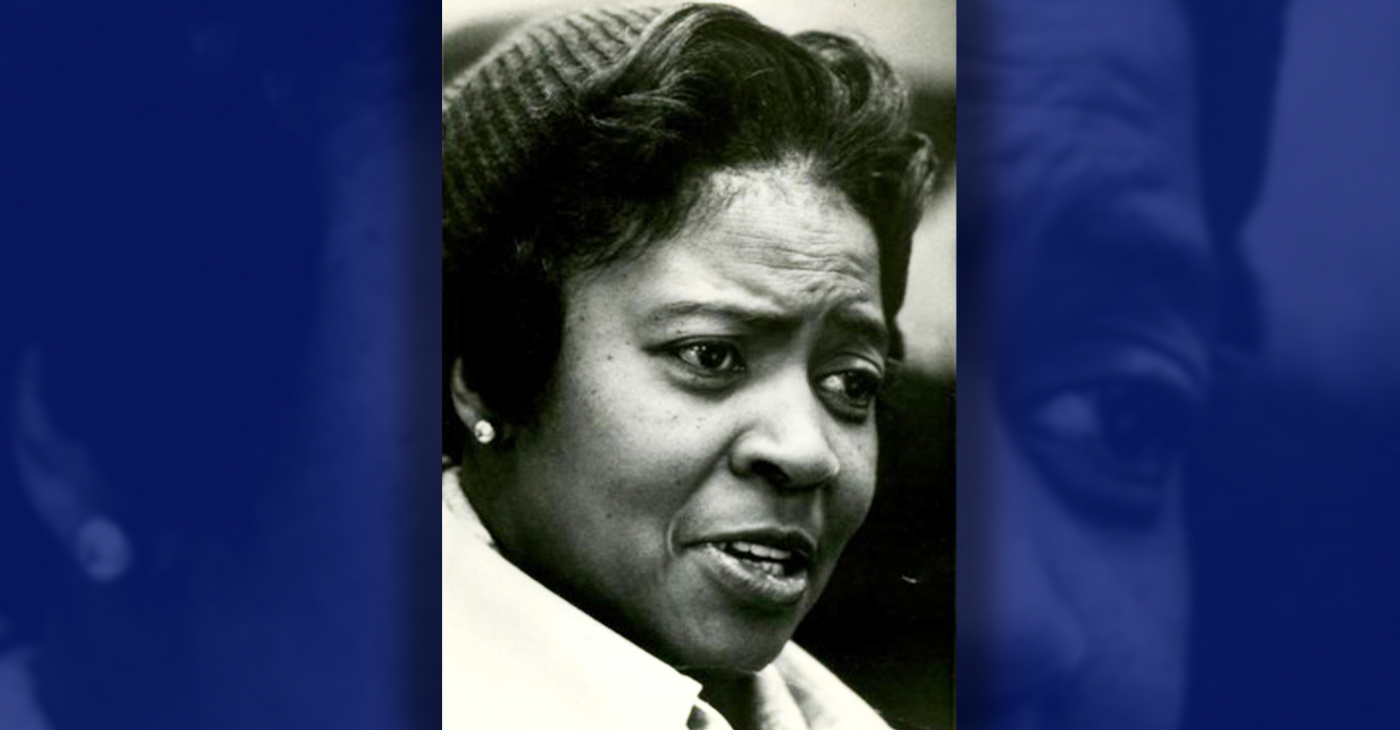
Her first experience with domestic work was at the age of nine. For $1.25 per week, Alabama-born Dorothy Lee Bolden (1923–2005), alongside her mother, washed soiled diapers for a White employer. Little did anyone know that this profession would spur Bolden to spearhead the movement for basic dignity and respect for generations of domestic workers.
Domestic work followed Bolden beyond high school. According to sources from the New York Times, Bolden said she would wake “at 4 a.m. to leave home by 6 a.m., and be on the job by 8 a.m., perform all those duties necessary to the proper management of a household for eight hours, leave there by 4 p.m. to be home by 6 p.m. where I would do the same things I’ve done all over again for my own family.”
It was Bolden’s experiences working as a domestic in 1940’s Atlanta that inspired her civil rights activism. A White female employer demanded that Bolden remain beyond her shift and wash dishes. Bolden refused. She was arrested and held in a county jail because “she was crazy.” There was no other reason for disobeying an order from a White person.
Bolden was never sentenced or institutionalized, but this event was the seed that grew into organization that would protect domestic workers across the United States: the National Domestic Workers Union of America.
Rosa Parks had made public transportation a major breeding ground for civil rights activism, so Bolden began organizing during the long bus rides her peers made to the wealthy neighborhoods. Many were fed up, working long hours for little pay, with little to no worker protections.
This organization of women would go on to fight for worker’s rights, create training programs, and teach workers to advocate for themselves. It was also important to Bolden to teach communication skills.
In the book Household Workers Unite, Bolden is quoted as saying: “You have to teach each maid how to negotiate… And this is the most important thing — communication. I would tell them it was up to them to communicate.”
But respect for Bolden’s activism was not shared by everyone. Although she consulted presidents Ford, Reagan, and Carter, she received several death threats from the Ku Klux Klan.
The New York Times reported that during the makings of an oral history project, Bolden said that “men claiming to be members of the KKK called her house and spoke about “whipping my behind,” but in coarser terms. “I told them any time they wanted to, come on over and grab it,” Bolden said during the interview. “It didn’t scare me, didn’t bother me. It made me angry. It made me determined to do what I had to do.”
Representative John Lewis of Georgia said that Bolden “spoke up, and she spoke out, and when she saw something that wasn’t fair, or just, or right, she would say something.”
The NDWU of America ran until the mid-1990s, but Bolden’s legacy lives on.
Activism
Cracking Down on Human Trafficking, California DOJ Announces 120 Arrests
According to the California DOJ, 87 arrests were made for loitering, 25 for solicitation, and eight for pimping and pandering. Officials said the operation focused on reducing demand for commercial sexual exploitation while prioritizing a survivor-centered approach.

By Bo Tefu, California Black Media
The California Department of Justice (DOJ) announced on Jan. 26 that 120 people were arrested during a coordinated, multi-county law enforcement operation aimed at disrupting human trafficking and connecting survivors with support services.
The arrests stem from Operation Stand On Demand, a six-day effort conducted from Jan. 19 through Jan. 24 across San Diego, Sacramento, Tulare, and Fresno counties. It involved more than a dozen state and local law enforcement agencies working together to target individuals involved in sex trafficking, including traffickers and buyers.
“This operation reflects an ongoing commitment by California law enforcement to target those who fuel trafficking and exploitation,” said Attorney General Rob Bonta.
According to the California DOJ, 87 arrests were made for loitering, 25 for solicitation, and eight for pimping and pandering. Officials said the operation focused on reducing demand for commercial sexual exploitation while prioritizing a survivor-centered approach.
“It’s a coordinated, multi-county law enforcement effort focused on disrupting sex trafficking, holding perpetrators accountable, and connecting survivors with support,” said Bonta.
San Diego County accounted for the majority of enforcement activity during the operation. District Attorney Summer Stephan said law enforcement agencies worked around the clock to identify and arrest individuals attempting to purchase sex.
“Our officers, in less than one week during this operation, took action, not words, by working around the clock and arresting and citing 105 people who thought that they were going to go out and buy a human being like they’re a hamburger or a slice of pizza,” Stephan said.
San Diego County Sheriff Kelly Martinez chimed in.
“Communities like Santee and San Marcos, which were part of this operation, face unique vulnerabilities tied to transportation routes, student populations, and employment opportunities,” she said.
Bonta said the arrests are part of broader statewide efforts to combat human trafficking. Since 2021, the Attorney General’s Office said its human trafficking task forces have led to more than 900 arrests and connected more than 1,000 survivors to services and resources.
“Human trafficking is a complex, devastating crime, but when we work together, we can make a real difference, and this operation is proof positive of that fact,” Bonta said.
California DOJ officials said similar operations will continue as part of the state’s ongoing strategy to combat human trafficking and protect vulnerable communities.
Activism
COMMENTARY: The Biases We Don’t See — Preventing AI-Driven Inequality in Health Care
For decades, medicine promoted false assumptions about Black bodies. Black patients were told they had lower lung capacity, and medical devices adjusted their results accordingly. That practice was not broadly reversed until 2021. Up until 2022, a common medical formula used to measure how well a person’s kidneys were working automatically gave Black patients a higher score simply because they were Black. On paper, this made their kidneys appear healthier than they truly were. As a result, kidney disease was sometimes detected later in Black patients, delaying critical treatment and referrals.
By Sen. Akilah Weber Pierson, M.D., Special to California Black Media Partners
Technology is sold to us as neutral, objective, and free of human flaws. We are told that computers remove emotion, bias, and error from decision-making. But for many Black families, lived experience tells a different story. When technology is trained on biased systems, it reflects those same biases and silently carries them forward.
We have seen this happen across multiple industries. Facial recognition software has misidentified Black faces at far higher rates than White faces, leading to wrongful police encounters and arrests. Automated hiring systems have filtered out applicants with traditionally Black names because past hiring data reflected discriminatory patterns. Financial algorithms have denied loans or offered worse terms to Black borrowers based on zip codes and historical inequities, rather than individual creditworthiness. These systems did not become biased on their own. They were trained on biased data.
Healthcare is not immune.
For decades, medicine promoted false assumptions about Black bodies. Black patients were told they had lower lung capacity, and medical devices adjusted their results accordingly. That practice was not broadly reversed until 2021. Up until 2022, a common medical formula used to measure how well a person’s kidneys were working automatically gave Black patients a higher score simply because they were Black. On paper, this made their kidneys appear healthier than they truly were. As a result, kidney disease was sometimes detected later in Black patients, delaying critical treatment and referrals.
These biases were not limited to software or medical devices. Dangerous myths persisted that Black people feel less pain, contributing to undertreatment and delayed care. These beliefs were embedded in modern training and practice, not distant history. Those assumptions shaped the data that now feeds medical technology. When biased clinical practices form the basis of algorithms, the risk is not hypothetical. The bias can be learned, automated, and scaled.
For us in the Black community, this creates understandable fear and mistrust. Many families already carry generational memories of medical discrimination, from higher maternal mortality to lower life expectancy to being dismissed or unheard in clinical settings. Adding AI biases could make our community even more apprehensive about the healthcare system.
As a physician, I know how much trust patients place in the healthcare system during their most vulnerable moments. As a Black woman, I understand how bias can shape experiences in ways that are often invisible to those who do not live them. As a mother of two Black children, I think constantly about the systems that will shape their health and well-being. As a legislator, I believe it is our responsibility to confront emerging risks before they become widespread harm.
That is why I am the author of Senate Bill (SB) 503. This bill aims to regulate the use of artificial intelligence in healthcare by requiring developers and users of AI systems to identify, mitigate, and monitor biased impacts in their outputs to reduce racial and other disparities in clinical decision-making and patient care.
Currently under consideration in the State Assembly, SB 503 was not written to slow innovation. In fact, I encourage it. But it is our duty must ensure that every tool we in the healthcare field helps patients rather than harms them.
The health of our families depends on it.
About the Author
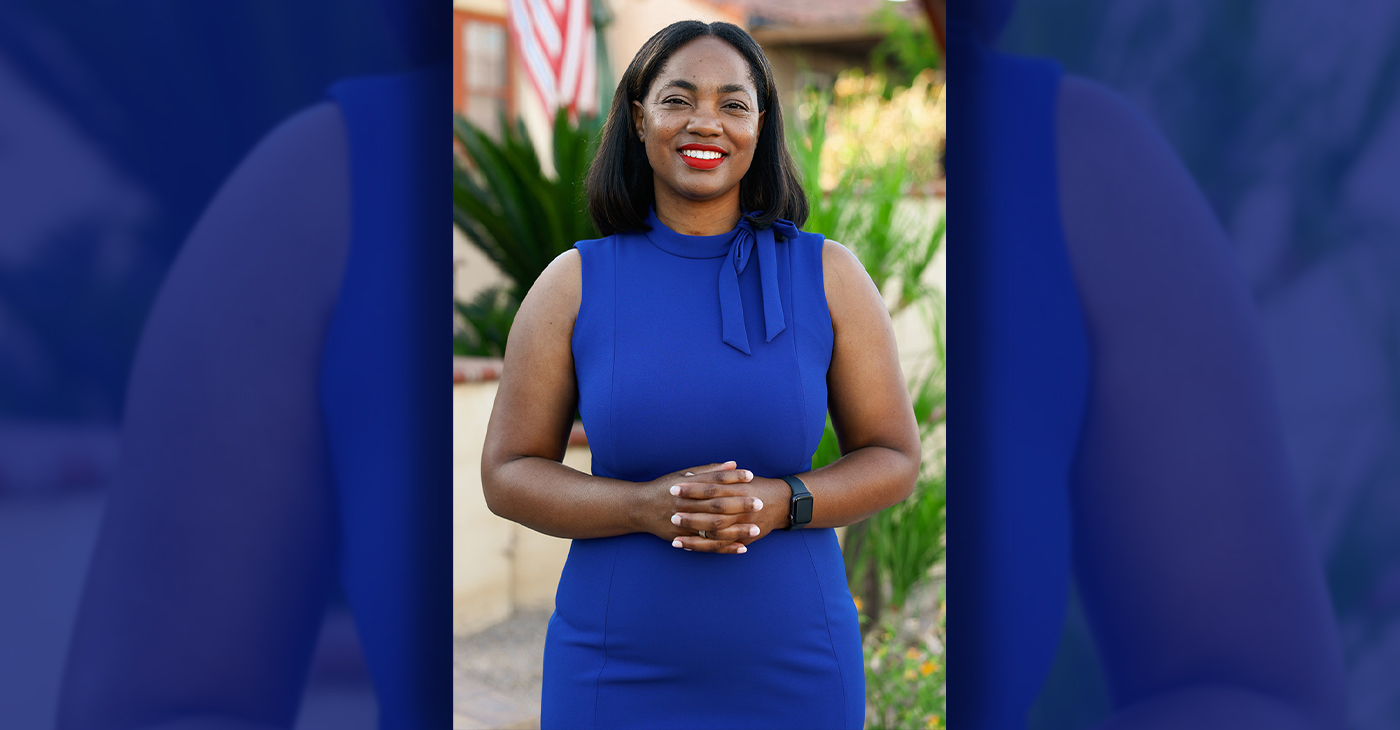
Sen. Akilah Weber Pierson (D–San Diego) is a physician and public health advocate representing California’s 39th Senate District.


WORK FROM HOME
Home-based business with potential monthly income of $10K+ per month. A proven training system and website provided to maximize business effectiveness. Perfect job to earn side and primary income. Contact Lynne for more details: Lynne4npusa@gmail.com 800-334-0540


Dorothy Lee Bolden: Uniting Domestic Workers

Cracking Down on Human Trafficking, California DOJ Announces 120 Arrests

COMMENTARY: The Biases We Don’t See — Preventing AI-Driven Inequality in Health Care

California Launches Study on Mileage Tax to Potentially Replace Gas Tax as Republicans Push Back

Book Review: Books on Black History and Black Life for Kids

Black Caucus Members Join Legislative Democrats to Condemn Fatal Shootings by Federal Agents

As California Hits Aging Milestone, State Releases Its Fifth Master Plan for Aging

After Don Lemon’s Arrest, Black Officials Raise Concerns About Independent Black Media

“Victory” for Voting Rights: Weber and Bonta Hail Judge’s Decision on Huntington Beach I.D. Law

Can You Afford a Mortgage but Not the Down Payment? Dream For All Offers Up to $150K

At Sac Summit, California African American Chamber of Commerce Shows Growing Clout; Lays Out Top Goals

Art of the African Diaspora Celebrates Legacy and Community at Richmond Art Center

Candidates Vying for Governor’s Seat Debate at Ruth Williams–Bayview Opera House in San Francisco

Black History Events in the East Bay

Oakland Post: Week of February 4 – 10, 2026

OP-ED: AB 1349 Puts Corporate Power Over Community

Alfred Cralle: Inventor of the Ice Cream Scoop

First 5 Alameda County Distributes Over $8 Million in First Wave of Critical Relief Funds for Historically Underpaid Caregivers

Oakland Post: Week of December 31, 2025 – January 6, 2026

Protecting California’s Black Moms and Babies: Policies and Programs Struggle to Fix Deep-Rooted Maternal Health Inequities

2025 in Review: Seven Questions for Assemblymember Lori Wilson — Advocate for Equity, the Environment, and More

Why Peace on Earth Begins with Birth, a Q&A with Midwife Nikki Helms

Big God Ministry Gives Away Toys in Marin City

2025 in Review: Seven Questions for Assemblymember Tina McKinnor, Champion of Reparations, Housing and Workers’ Rights

BOOK REVIEW: Let Me Be Real With You

2025 in Review: Seven Questions for Sen. Laura Richardson, Who Made Legislative History This Year

2025 in Review: Seven Questions for Sen. Lola Smallwood-Cuevas – an Advocate for Jobs and Justice

Jefferson County (AL) Democrats Open Qualifying for 2026 Primary Elections

COMMENTARY: With Gratitude and Praise for 2026

Skater Emmanuel Savary Sharpens Routines for the 2026 U.S. Championships

Hyundai Ioniq 5 Parking, Safety, and 360 View #shorts

2025 Ioniq 5 New Wiper & Powerful Performance! #shorts

Electric SUV Range: Is 259 Miles Enough? #shorts

EV Charging: How Fast Can You Charge an Electric Vehicle? #shorts

Biometric Cooling… Messaging Seats…Come on! 2025 Infiniti QX80 Autograph 4WD

Charged Up: Witness the Magic of a Fully Electric Car! #shorts

Range Rover Sport PHEV Included…: See What’s Inside This Luxury SUV! #shorts

Invisible Hood View: Perfect Parking with X-Ray Vision! #shorts

AI Is Reshaping Black Healthcare: Promise, Peril, and the Push for Improved Results in California

ESSAY: Technology and Medicine, a Primary Care Point of View

Sanctuary Cities

The RESISTANCE – FREEDOM NOW

STATE OF THE PEOPLE: Freddie

ECONOMIC BOYCOTT DAY!!!!!

I told You So
-
 #NNPA BlackPress4 weeks ago
Jefferson County (AL) Democrats Open Qualifying for 2026 Primary Elections
-
 #NNPA BlackPress4 weeks ago
COMMENTARY: With Gratitude and Praise for 2026
-
 #NNPA BlackPress4 weeks ago
Skater Emmanuel Savary Sharpens Routines for the 2026 U.S. Championships
-

 #NNPA BlackPress4 weeks ago
From Civil Rights to ICE Raids, Trump’s Unchecked Power Puts Every Community at Risk
-
#NNPA BlackPress4 weeks ago
From Civil Rights to ICE Raids, Trump’s Unchecked Power Puts Every Community at Risk
-

 #NNPA BlackPress3 weeks ago
OP-ED: The Dream Cannot be Realized Without Financial Freedom
-

 #NNPA BlackPress4 weeks ago
Travis Scott Teaches Us How to Give Forward
-

 #NNPA BlackPress3 weeks ago
Four Stolen Futures: Will H-E-B Do The Right Thing?
