
#NNPA BlackPress
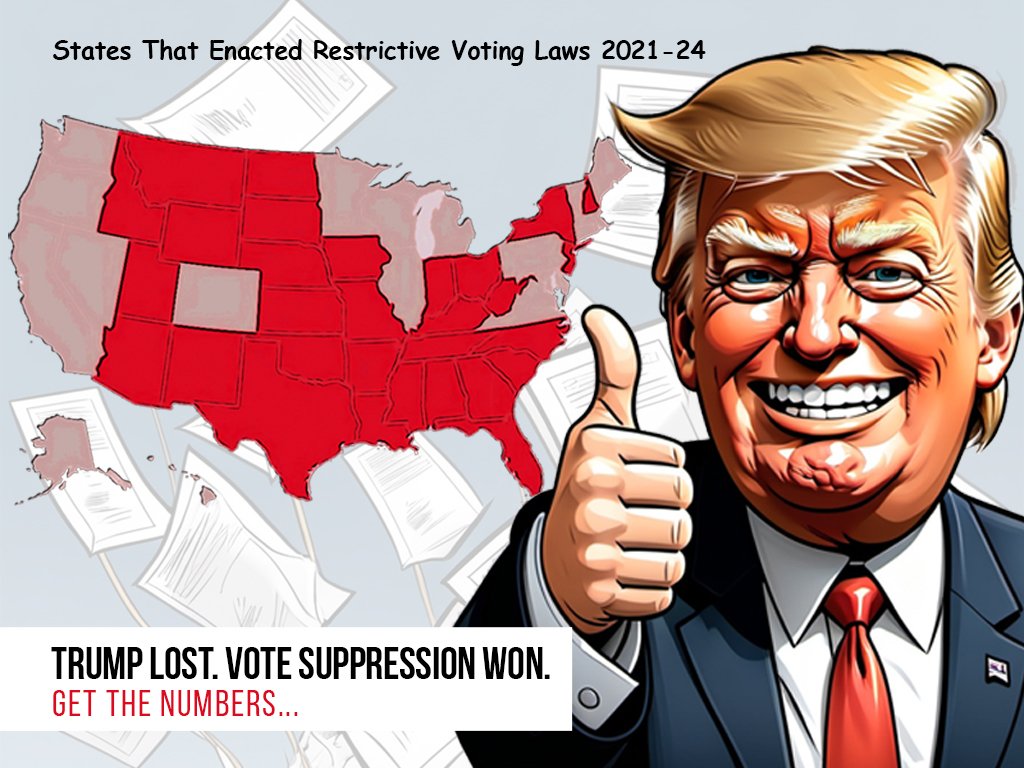
Trump Lost. Vote Suppression Won. Here are the numbers…
[This post contains video, click to play] by Greg Palast Trump lost. That is, if all legal voters were allowed to vote, if all legal ballots were counted, Trump would have lost the states of Wisconsin, Michigan, Pennsylvania and Georgia. Vice-President Kamala Harris would have won the Presidency with 286 electoral votes. And, if not for […]

[This post contains video, click to play]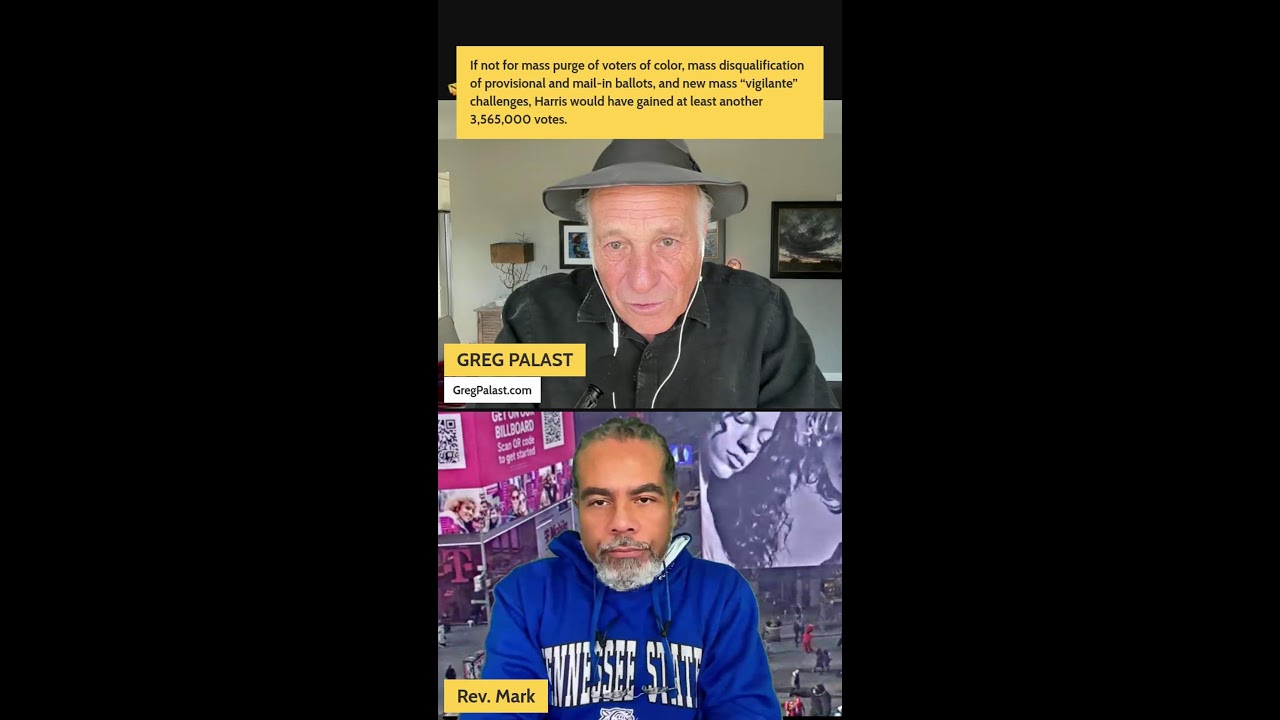
by Greg Palast
Trump lost. That is, if all legal voters were allowed to vote, if all legal ballots were counted, Trump would have lost the states of Wisconsin, Michigan, Pennsylvania and Georgia. Vice-President Kamala Harris would have won the Presidency with 286 electoral votes.
And, if not for the mass purge of voters of color, if not for the mass disqualification of provisional and mail-in ballots, if not for the new mass “vigilante” challenges in swing states, Harris would have gained at least another 3,565,000 votes, topping Trump’s official popular vote tally by 1.2 million.
Stay with me and I’ll give you the means, methods and, most important, the key calculations.
But if you’re expecting a sexy story about Elon Musk messing with vote-counting software from outer space, sorry, you won’t get that here.
As in Bush v. Gore in 2000, and in too many other miscarriages of Democracy, this election was determined by good old “vote suppression,” the polite term we use for shafting people of color out of their ballot. We used to call it Jim Crow.
Here are key numbers:
- 4,776,706 voters were wrongly purged from voter rolls according to US Elections Assistance Commission data.
- By August of 2024, for the first time since 1946, self-proclaimed “vigilante” voter-fraud hunters challenged the rights of 317,886 voters. The NAACP of Georgia estimates that by Election Day, the challenges exceeded 200,000 in Georgia alone.
- No less than 2,121,000 mail-in ballots were disqualified for minor clerical errors (e.g. postage due).
- At least 585,000 ballots cast in-precinct were also disqualified.
- 1,216,000 “provisional” ballots were rejected, not counted.
- 3.24 million new registrations were rejected or not entered on the rolls in time to vote.
If the purges, challenges and ballot rejections were random, it wouldn’t matter. It’s anything but random. For example, an audit by the State of Washington found that a Black voter was 400% more likely than a white voter to have their mail-in ballot rejected. Rejection of Black in-person votes, according to a US Civil Rights Commission study in Florida, ran 14.3% or one in seven ballots cast.
There are also the uncountable effects of the explosive growth of voter intimidation tactics including the bomb threats that closed 31 polling stations in Atlanta on Election Day.
America’s Nasty Little Secret
The nasty little secret of American democracy is that we don’t count all the votes. Nor let every citizen vote.
In 2024, especially, after an avalanche of new not-going-to-let-you-vote laws passed in almost every red state, the number of citizens Jim Crow’d out of their vote soared into the millions. According to the Brennan Center for Justice, since the 2020 election, “At least 30 states enacted 78 restrictive laws” to blockade voting. The race-targeted laws ran the gamut from shuttering drop boxes in Black-majority cities to, for the first time, allowing non-government self-appointed “vote fraud vigilantes” to challenge voters by the hundreds of thousands.
Throughout election seasons, The New York Times and NPR and establishment media write stories and editorials decrying vote suppression tactics, from new ID requirements to new restrictions on mail-in voting. But, notably, the mainstream press never, ever, not once, will say that these ugly racist attacks on voters changed the outcome of an election.
Question: If these vote suppression laws — notorious example: Georgia’s SB 202 — had no effect on election outcomes, then why did GOP legislators fight so hard to pass these laws? The answer is clear on the Brennan Center’s map of states that passed restrictive laws. It’s pretty much Trump’s victory map.
America Goes Postal
Let’s look at just one vote suppression operation in action.
In 2020, during the pandemic, America went postal. More than 43% of us voted by mail.
But it wasn’t easy. Harris County, Texas, home of Houston, tried to mail out ballots during the COVID epidemic on the grounds that voters shouldn’t die waiting in lines at polling stations. But then, the state’s Republican Attorney General Ken Paxton stopped this life-saving measure.
Why wouldn’t this GOP official let Houstonians vote safely? Maybe it’s because Houston has the largest number of Black voters of any city in America. Indeed, on Steve Bannon’s podcast, Paxton proudly stated, “Had we not done that [stopped Houston from sending out ballots], Donald Trump would’ve lost the election” in Texas. Texas!
Before the 2024 election, prompted by Trump’s evidence-free attack on mail-in ballots as inherently fraudulent, 22 states, according to the Brennan Center, imposed “38 new restrictions on the ability to vote absentee that were not in place in 2020…likely to most affect or already have disproportionately affected voters of color.” You’re shocked, right?
Texas’ requirement to add ID numbers to an absentee ballot caused the rejection rate to jump from 1% to 12%.
So, here’s the question we need to ask. If restrictions on mail-in balloting swung Texas to Trump, how did all these new restrictions affect the outcome of the vote in other states?
In 2020, an NPR study found the mail-in ballot rejection rate hit 13.8% during the Democratic primaries—a loss of one in seven ballots.
Take Georgia, where the Palast Investigative Fund spent months in on-the-ground investigations.
Here are photos of a Georgia voter, career military officer and Pentagon advisor Major Gamaliel Turner (Ret), demonstrating for young voters how to fill out an absentee ballot, emphasizing that it must be mailed in promptly. He did, seven days before the deadline. But we only recently learned that Georgia officials disqualified his ballot as received too late.
In 2008, even before the majority of Democrats began voting by mail, when absentee balloting was much rarer, the federal government reported 488,136 mail-in ballots were rejected, almost all on picayune grounds (i.e. middle initial on signature missing etc.). An MIT study put the number of rejected mail-in ballots at 2.9%.
That’s the low-end of MIT’s estimate of mail-in ballots tossed out. Charles Stewart, Distinguished Professor of Political Science, author of the report, notes mail-in ballots requested and never received nor returned could raise the total mail-in ballot loss rate to 21%.
For 2024, that would total 14.1 million ballots that, effectively, vanished from the count.
The “failure to return” ballot was exacerbated in this election by the steep cut in ballot drop boxes, a method favored by urban (read, “Democratic”) voters. Black voters in Atlanta used ballot drop boxes extensively because they feared, with good reason, relying on the Post Office [see Major Turner’s story above].
In response, the Republican Governor of Georgia, Brian Kemp, signed SB 202 which slashed the number of drop boxes by 75% only in Black-majority counties and locked them away at night. These moves slashed mail-in and drop box balloting, used by the majority of Democrats in 2020, by nearly 90% in the 2024 race.
Even if deemed “on time,” ballots still face rejection. Marietta, Georgia, first-time voter Andrian Consonery Jr. told me his mail-in ballot was rejected because his signature supposedly didn’t match that on his registration. (I needn’t add, Consonery is Black.) In effect, Consonery was accused of forgery — a federal crime — not by the FBI but by self-appointed amateur sleuths. This challenge to mail-in ballots, part of a right-wing campaign, has gone viral.
In 2020, the federal government reported that 157,477 ballots were rejected for supposedly “mis-matched” signatures. That’s quite a crime wave — but without criminals.
And that’s before we get to the dozens of other attacks on voting that were freshly minted for the 2024 election, attacks aimed at voters of color.
The crucial statistic is that not everyone’s ballot gets disqualified. One study done for the United States Civil Rights Commission found that a Black person, such as Maj. Turner, will be 900% more likely to have their mail-in or in-person ballot disqualified than a white voter.
Now, let’s do some arithmetic. If we take the lowest end of the MIT ballot rejection rate, and only a tenth of the “lost” ballot rate, and then apply it to the number of mail-in and drop-box ballots, we can conservatively estimate that 2,121,000 mail-in votes went into the electoral dumpster.
Whose ballots? Democrats are 51% more likely than Republicans to vote by mail; and, given the racial disparity in ballot rejections, Trump’s swing-state margins begin to look shaky.
The KKK Plan and the New Vigilantes
In 2020, the Palast Investigative Fund uncovered a whole new way to bring Jim Crow back to life: challenges to a citizen’s right to vote by a posse of self-proclaimed vote-fraud hunters.
Four years ago, the GOP took this new suppression method out for a test ride in Georgia when 88 Republican operatives — remember, these are not government officials — challenged the rights of over 180,000 Georgians to have their ballots counted. These vigilantes based their scheme on the program originally used by the Ku Klux Klan in 1946.
One challenged voter: Major Turner, the same voter whose mail-in ballot was disqualified in a later election.
In 2020, the Major’s ballot was challenged by the county Chairman of the Republican Party in Southern Georgia, Alton Russell. (Russell likes to dress up as infamous vigilante Doc Holliday, with a loaded six-gun in a holster.) In a (polite) confrontation we filmed between the Major and Russell, the GOP honcho admitted he had no evidence that Maj. Turner, nor any of the 4,000 others he challenged, should be denied the right to have their ballots counted.
Note: The Palast Fund contacted a sample of 800 of these challenged voters and found that, overwhelmingly, they were Americans of color.
In 2020, this KKK plan, adopted by the Trump organization, proved its value. In that election, Trump almost won Georgia, falling short by just 11,779 votes — only because local elections officials rejected most of the challenges. But for 2024, the Georgia’s Republican-controlled legislature changed the law to make it very difficult for officials to deny the challenges.
That emboldened the Trump-supported organization True the Vote to roll out the challenge to every swing state. In 2024, True the Vote signed up over 40,000 volunteer vigilantes. The organization crowed proudly that, by August of 2024, they’d already challenged a mind-blowing 317,886 voters in dozens of states. By Election Day this November, True the Vote projected it would have challenged over two million voters. In addition, Trump’s lawyer, Cleta Mitchell, founded Eagle AI to challenge hundreds of thousands more including in swing state Pennsylvania.
How many voters ultimately lost their ballots? Almost all voting officials we’ve contacted have refused to answer.
Placebo Ballots
Those voters who’d been challenged but mailed in their ballot would be unlikely to know their vote had been lost. Others who showed up in person at a poll would be told they could not vote on a regular ballot. These voters were sent away or forced to vote on a “provisional” ballot.
If you’ve been challenged or find you’ve been purged off the registration rolls, you’ll be offered one of these provisional ballots, paper ballots you place in a special envelope. Typically, you’ll be promised your registration will be checked and then your ballot will be counted. Bullshit. If you’re challenged, unless you personally contact or go into your county clerk’s office with ID and proof of address, your ballot goes into the electoral dumpster.
A better name for a “provisional” ballot would be “placebo” ballot. You think you’ve voted, but chances are, you did not, that is, your ballot wasn’t counted.
Here’s an ugly number: According to the US Elections Assistance Commission (EAC), in 2016, when 2.5 million provisional ballots were cast, a breathtaking 42.3% were never counted. Think about that. Over a million Americans lost their vote — though, notably, not one was charged attempting to vote illegally. And that was in 2016, before the vigilante challenges and before millions more had been purged from the rolls leading up to the 2024 election.
And here’s the statistic that matters most. Black, Hispanic or Asian-American voters are 300% more likely than white voters to be shunted to a “placebo” provisional ballot.
The Great Purge and the Poison Postcard
The polite term in government agencies is, “List Maintenance.” It’s best known as The Purge — when voters’ registrations are wiped off the rolls. The EAC keeps track of The Purge. It’s a big business. For example, before the 2022 election, when the data was last available, swing state North Carolina wiped 392,851 voters off the rolls.
The majority of removals were based on questionable, indeed, shockingly faulty information that a voter had moved their residence. I’m not talking about the 4.9 million voters purged because they’re dead, or eight million others whose residential move could be verified, nor those serving time in prison nor those ruled too crazy to vote.
I’m talking about a trick that has been perfected by politicians of both parties to eliminate voters of the wrong persuasion: the Poison Postcard. Here’s how it works: Targeted voters are mailed postcards by state elections officials. (Let’s remember, state voting chiefs, “Secretaries of State,” are almost to a one partisan hacks.) Voters who don’t sign and return the cards, which look like junk mail, will be purged.
The Poison Postcard response rate is close to nothing. In Arizona, according to the EAC, just one in ten postcards are returned. And in Georgia, the vote-saving response is barely above 1%. And that’s the way our partisan voting officials like it.
Were the millions of Americans purged before the 2024 election all fraudsters who should lose their right to vote? Direct marketing expert Mark Swedlund told us, “This only means that most people, especially young people, the poor and voters of color, simply ignore junk mail.”
With the help of Swedlund and the same experts used by Amazon — and believe me, Amazon knows exactly where you live — we took a deep dive into two states’ purge operations for the ACLU.
The state of Georgia had purged hundreds of thousands from the voter rolls on grounds they’d moved from their voting addresses. Our experts, going name by name through Georgia’s purge list, working from special data provided us by the US Postal Service, identified 198,351 Georgians who had been purged for moving had, in fact, not moved an inch from their legal voting address. The state’s only evidence these 198,351 voters had moved? They failed to return the Poison Postcard.
In 2020, I testified in federal court for the NAACP and RainbowPUSH, presenting our expert findings to get those voters, overweighted with minorities and young Georgians, back on the rolls. Unfortunately, the Trump’d-up court system now gives huge deference to a state’s voting operations, a trend which first took off in 2013 when the US Supreme Court defenestrated the Voting Rights Act.
The results have been devastating. According to the EAC data, before the 2024 election, 4,776,706 registrants were removed nationwide simply because they failed to return the postcard.
Also in 2020, the Palast Investigative Fund produced a technical report for Black Voters Matter Fund on a proposed purge of 153,779 voters in Wisconsin, a plan pushed by Wisconsin Institute for Law and Liberty, a group financed by right-wing billionaires. For Black Voters Matter, we brought back our team of location experts who proved, name by name, that the proposed purge was wildly riddled with errors.
Notably, we found that the purged was aimed almost exclusively at African-Americans in Milwaukee and at students in Madison. The non-partisan Elections Board agreed with us, allowing those voters to cast ballots, with the result that Biden squeaked by Trump in Wisconsin by 20,682 votes. (Note: It was not our intention to elect Biden, but to allow the voters, not some Purge’n General, to pick our President.)
Unfortunately, before the 2024 election, the Poison Postcard Purge accelerated. This time, a new Elections Board in Wisconsin (10 electoral votes) decided to use the same discredited purge list to knock off 166,433 voters which, this time, we could not stop. Kamala Harris lost that state by just 29,397 votes. In Pennsylvania (19 electoral votes), the Poison Postcards wiped out 360,132 voters, three times Trump’s victory margin.
And before the vote this year, Georgia ramped up the purge, targeting an astonishing 875,000 voters, earning it the #1 ranking for “election integrity” by the ultra-right-wing Heritage Foundation.
I saw the purge in action in Savannah, Georgia, this October, where 900 Savannah voters, most of them Black, were challenged by one single “vigilante,” according to voting expert Carry Smith. Smith, who wrote her doctoral thesis on wrongful purges in Georgia, was herself on the hit list.
And more
We haven’t even touched on other ways that voters of color, college students and urban voters have come under attack. These include the rejection of new registrations and rejection of in-person votes as “spoiled” (i.e. rejected as unreadable), costing, according to the EAC, more than a million votes — rejections which our 25 years of investigations have found are way overweighted against the Democratic demographic.
After the 2012 election, I was able to calculate, with cold certainty, that 2,383,587 new voters had their registrations rejected; 488,136 legitimate absentee ballots were disqualified, and so on. In that election, a total of 5,901,814 citizens were blocked from voting or had their ballots disqualified. These stats were based on the hard data from the EAC which gathers detailed reports from the states.
Today, with new, sophisticated, and well-financed vote suppression operations, the number of voters purged and ballots disqualified are clearly far higher than the suppression count of 2012. Unfortunately, the EAC won’t release data, if it does at all, for at least a year. We’ve put in Open Records requests to the states, but today’s officials are stonewalling and slow-walking our requests for the data. In no other democracy are the vote totals — or, to be clear, the uncounted ballot totals — a state secret.
America deserves an answer to this question: Excluding a boost from Jim Crow vote suppression games, did Donald Trump win?
From the shockingly huge numbers we’ve discussed here of provisional and mail-in ballots disqualified, the postcard purge operation, the vigilante challenges and so on, we can say, with reasonable certainty, Trump lost — that is, would have lost both the Electoral College and popular vote totals absent suppression.
By how much?
For those who can’t sleep without my best estimate, let me apply the most conservative methodology possible, as I would do in a government investigation.
I’ve updated the 2012 suppression numbers with the newest available data. Not surprisingly, the suppression number has soared, in part because the number of voters has increased by 41.3 million since 2012. But principally, the votes “lost” also zoomed upward because of the massive increase in mail-in balloting by Democrats since 2012, and crucially, the effect of new Jim Crow voting restrictions. Given a minimum two-to-one racial and partisan disparity in voters purged and ballots disqualified, the 2024 “suppression factor” is no less than 4.596% of the total vote.
Those familiar with data mining will note that there is some double-counting in the 9 million voters and their ballots disqualified that I cited at the top of the article. In addition, we must recognize that many voters caught up in the purges and challenges would have cast their ballot for Trump. Therefore, I’ve conservatively cut in half the low end of the range of the calculation of votes suppressed to 2.3% to isolate the effect on Trump’s official victory margin.
In other words, vote suppression cost Kamala Harris no less than 3,565,000 votes. Harris would have topped Trump’s official total by 1.2 million. Most important, this 2.3% suppression factor undoubtedly cost Harris the states of Wisconsin, Michigan, Pennsylvania and Georgia. If not for the wholesale attack on votes and voters, Harris would have won the election with 286 Electoral votes.
Tech note from a numbers guy — and Martin Luther King
Until the Elections Assistance Commission gets updated figures from the states next year (and, under Trump, I doubt we will ever get those numbers), 3,565,000 votes lost to Harris is the estimate I would present in my role as a forensic expert in a courtroom as the lowest conceivable suppression factor.
I rarely make a big deal about my own credentials but, since the election, the Web has been flooded by amateur, arithmetic-defying speculation about computer hacking and other unsupported twaddle. Best to stick to hard, verifiable data. And that’s what I do.
For two decades, I was a forensic economist for government agencies including the US Justice Department; taught statistics at Indiana University; provided expert calculations of vote suppression for the ACLU, NAACP, and RainbowPUSH and won the Global Editors Award for my data journalism on vote suppression measurements for reports done for Al Jazeera, BBC, Rolling Stone and The Guardian. The numbers you get here are exactly what I’d present to a Federal court. In other words, kids, don’t do this at home…calculating the “un-count” requires expertise.
I make this point for another reason: The theory that “Elon Musk messed with the voting machines” is, unconsciously, unintentionally racist. With few exceptions, these silly speculations come from those who simply ignore not just the millions of votes officially reported as suppressed, their theories also ignore the horrifically painful experience of Black people turned away from the polls.
Here is a photo of Jessica Lawrence in tears, moments after her 92-year-old grandmother was tossed out of an Atlanta polling station, into a storm, because she’d been wrongfully purged. Any speculation about the nefarious cause of Trump’s must not leave out Jessica’s grandma nor the millions of other citizens of color who were wrongly barred from their ballot.
Now here’s the good news
We saw that in 2020 when, despite extreme, even felonious actions by Trump supporters to block, challenge and disqualify voters and ballots, the theft by suppression was defeated.
That was the work of voting rights groups challenging these attacks. The work was done in the courts and, more important, in the precincts, re-registering the purged, challenging the challenges, “curing” disqualified ballots.
The road is long but victory is certain. After the 2016 election, the Palast team uncovered a cruel, racist purge program called, “Interstate Crosscheck” that cost nearly a million voters, overwhelmingly minorities, their rights. This motivated the Rev. Jesse Jackson to launch a campaign that successfully shut down Crosscheck. Unquestionably, Joe Biden could not have won in 2020 without the Reverend saving literally hundreds of thousands of votes. The point is, they can’t suppress all the votes all the time.
In other words, Democracy can win, despite the 2.3% suppression headwind.
And that’s our job as Americans: to end the purges, the vigilante challenges, the ballot rejections and the attitude that this is all somehow OK.
Martin Luther King gave us our marching orders in 1965, in words just as important today.
“Let us march on ballot boxes, march on ballot boxes until race-baiters disappear from the political arena. I want to say to the people of America and the nations of the world, that we are not about to turn around. We are on the move now.”
Greg Palast is a forensic economist and data journalist Palast covered vote suppression for The Guardian, BBC Television and Rolling Stone. He is the author of New York Times bestsellers on the topic including The Best Democracy Money Can Buy.











#NNPA BlackPress
COMMENTARY: Jim Crow 2.0 at the Pentagon
BLACKPRESSUSA NEWSWIRE — The American people are expected to believe that one extraordinary officer after another suddenly fails to meet some undefined standard of excellence. We are expected to ignore impeccable service records while accepting that political appointees alone possess the wisdom to determine who is worthy of advancement.


Pete Hegseth insists that he is restoring “merit” to the United States military. But after months of dismissals, blocked promotions, and ideological purges, the evidence tells a different story. His campaign against so-called “diversity, equity, and inclusion” has become something far more dangerous: an assault on equal opportunity that falls with particular force on African Americans, while also targeting women, Latinos, gay Americans, and transgender service members.
The latest example is both troubling and infuriating.
Once again, Defense Secretary Pete Hegseth has reportedly blocked the promotion of an exceptionally qualified woman—Rear Admiral Amy Bauernschmidt. Bauernschmidt is no ordinary officer. She became the Navy’s first woman to command a nuclear-powered aircraft carrier, one of the most demanding leadership assignments in the world. Her career reflects decades of exemplary performance, operational excellence, and leadership under extraordinary pressure.
Yet once again, a distinguished military career appears to have been subordinated to an ideological agenda masquerading as “merit.”
I call BS!
The American people are expected to believe that one extraordinary officer after another suddenly fails to meet some undefined standard of excellence. We are expected to ignore impeccable service records while accepting that political appointees alone possess the wisdom to determine who is worthy of advancement.

The pattern has become impossible to ignore.
General Charles Q. Brown Jr., only the second African American to serve as Chairman of the Joint Chiefs of Staff, was dismissed despite a career that placed him among the most accomplished military leaders of his generation.
Admiral Lisa Franchetti, the first woman ever to serve as Chief of Naval Operations, was removed despite decades of distinguished command experience.
Reports have documented interventions that blocked or delayed the promotions of Black officers and women selected through the military’s rigorous promotion system.
Now Rear Admiral Amy Bauernschmidt joins the growing list of highly accomplished officers whose careers have been derailed for reasons that have never been persuasively explained.
Where is Congress?
Its silence has become deafening.
Congress has an independent constitutional responsibility to oversee the armed forces. Instead, too many lawmakers have watched silently while one of the nation’s most respected institutions is subjected to ideological litmus tests and political interference.
This is not military reform. It is testosterone-fueled performative masculinity disguised as a philosophy of military excellence.
The irony is impossible to miss. Hegseth repeatedly invokes “merit,” yet his rhetoric begins with the assumption that Black officers, women, and other historically excluded Americans must somehow justify their achievements in ways that white male officers are rarely required to do.
That is not meritocracy. It is prejudice wrapped in patriotic language.
No one is asking that anyone be promoted because of race or gender. Americans simply expect that promotions be based on demonstrated competence, leadership, integrity, and service. The officers being targeted have already proven themselves repeatedly under one of the world’s most demanding evaluation systems.
Their records speak for themselves.
The attack on African American military leadership has been especially pernicious.
For generations, Black Americans fought in segregated units, earned decorations while denied equal treatment, and repeatedly demonstrated loyalty to a nation that often failed to extend them full citizenship. They broke barriers not because standards were lowered but because excellence finally overcame institutional discrimination.
Today’s campaign against “diversity” threatens to revive old assumptions under new slogans.
The implication that Black generals and admirals somehow owe their success to affirmative action rather than extraordinary performance echoes some of the ugliest stereotypes of the Jim Crow era. Yesterday’s segregationists claimed Black Americans were inherently less qualified. Today’s culture warriors simply employ more politically acceptable language while inviting the same suspicion about Black achievement.
That is why Hegseth’s campaign increasingly resembles Jim Crow 2.0.
The targets may now wear stars on their shoulders instead of military patches on segregated uniforms, but the underlying message is hauntingly familiar: Black excellence is presumed suspect, while white excellence is presumed earned.
America’s military became the finest fighting force in history because it opened its doors to talent wherever it could be found. It grew stronger after President Truman desegregated the armed forces. It became stronger when women assumed greater command responsibilities. It became stronger when every qualified American was given the opportunity to serve to the fullest extent of their abilities.
Diversity is not a concession. It is a strategic advantage.
The nation’s adversaries do not fear an American military because it is racially homogeneous. They fear it because it draws upon the talents of more than 340 million Americans whose diverse experiences, perspectives, and abilities make our armed forces unmatched anywhere in the world.
Every politically motivated dismissal of a distinguished officer sends a chilling message throughout the ranks: excellence alone may no longer be enough if you belong to the wrong demographic group.
That weakens morale. It weakens recruitment. It weakens retention.
And ultimately, it weakens national security.
Pete Hegseth has every right to pursue military readiness. He has no right to redefine merit in ways that repeatedly cast suspicion upon the accomplishments of Black officers, women, and others who have devoted their lives to defending this nation.
America deserves better. The men and women who wear the uniform deserve better. The Constitution deserves better.
And unless Congress finds the courage to exercise meaningful oversight, history may well remember this period not as a restoration of military excellence, but as the moment political ideology attempted to resurrect, in modern form, the old poison of exclusion.
Jim Crow did not strengthen America. Jim Crow 2.0 will not strengthen America’s military. It will only diminish it
Wade Henderson
Strategic Advisor
Civil and Human Rights
wade@wadejhenderson.com

#NNPA BlackPress
New Judge Could Decide if Karmelo Anthony Gets a New Trial
By Emilie St. John (Contributor) Karmelo Anthony will return to court next month in his first step to overturn his murder conviction. Anthony was found guilty last month in the stabbing death of Austin Metcalf and sentenced to 35 years in prison. His new legal team has filed motions seeking the recusal of State District […]
The post New Judge Could Decide if Karmelo Anthony Gets a New Trial appeared first on BlackPressUSA.
By Emilie St. John
(Contributor)
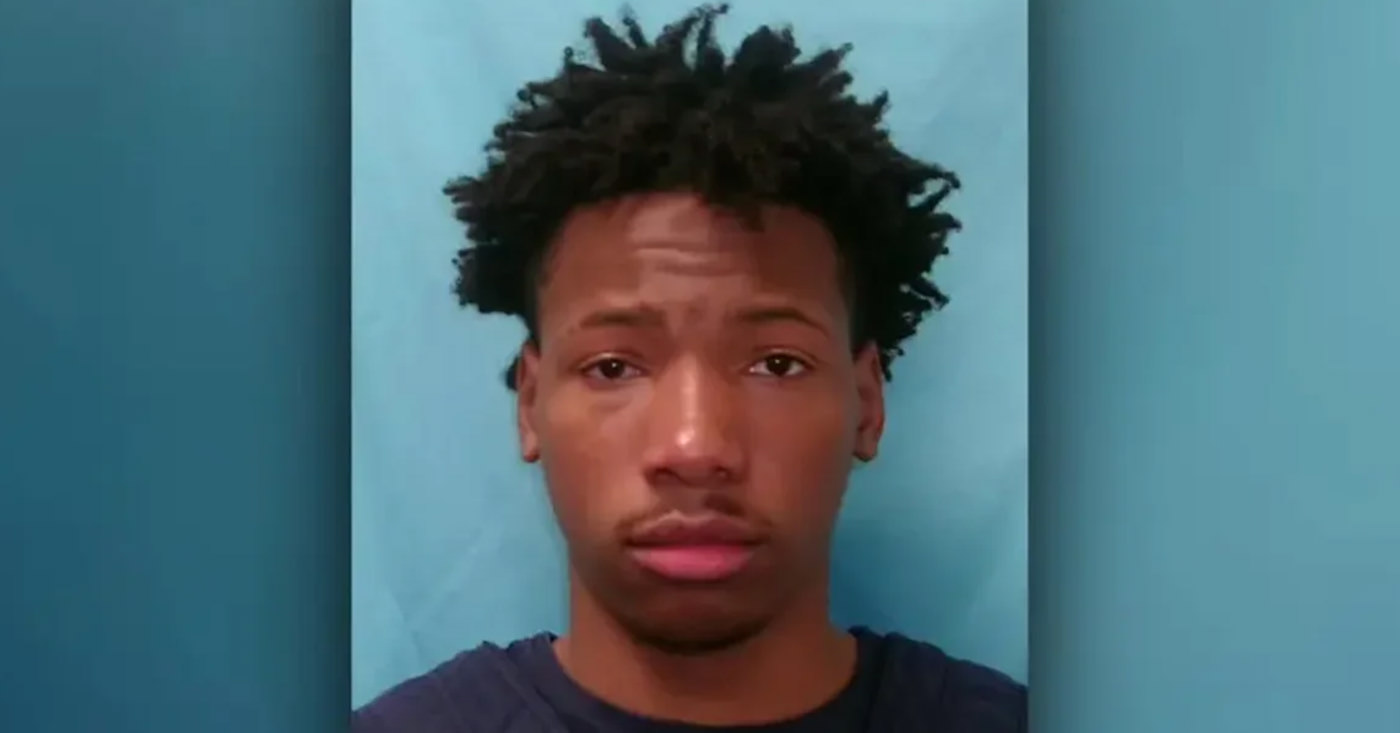
Karmelo Anthony will return to court next month in his first step to overturn his murder conviction.
Anthony was found guilty last month in the stabbing death of Austin Metcalf and sentenced to 35 years in prison. His new legal team has filed motions seeking the recusal of State District Judge John Roach Jr. from overseeing the appeals process.
Two hearings have been scheduled on the motion for Aug. 9 and 10 in the Collin County Courthouse in McKinney, Texas, according to Fox4 News.
On July 14, Senior Judge Sid L. Harle of the 226th District Court was assigned to preside over the defense’s motion to recuse Collin County Judge John Roach. The assignment took effect immediately and authorized Harle to handle all matters related to the recusal request, the filing read.
The Collin County District Attorney’s Office continues to defend its handling of the case by issuing a statement to NBC 5 DFW.
“The defendant’s new lawyers have filed a motion containing several inaccurate characterizations of the trial proceedings. The entire prosecution team and I conducted this trial ethically and in full compliance with the Court’s rulings and any agreements with defense counsel. We look forward to addressing these claims thoroughly in a Court of law in the coming weeks. The jury heard extensive evidence over the course of the trial and returned a unanimous verdict. We remain confident in that verdict and the fairness of the proceedings.”
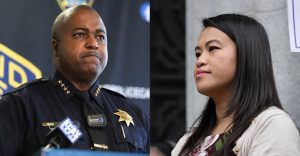
Anthony’s new legal team, made up of appellate, civil rights, and criminal defense attorneys, was retained following Anthony’s conviction.
“Our responsibility is to determine whether a legal error occurred and to ensure that every issue supported by the record is fully and vigorously presented on appeal,” the team said in a statement.
“We recognize the profound loss suffered by one young man’s family and the uncertainty facing another, and we extend our respect to everyone whose lives have been forever changed by these events,” the release reads.
Anthony was charged with the stabbing death of Austin Metcalf during a track meet in Frisco, Texas, April 2, 2025. Anthony has long maintained it was an act of self-defense.
The attorneys are representing Anthony pro bono. The nearly 200-page notice of appeal seeks a new trial because his Sixth Amendment right to a public trial was violated.
“The cumulative and practical effect of these provisions was to exclude members of the public from proceedings at every stage,” the filing reads.
The filing also focused on an alleged “handshake deal” that kept Anthony from taking the stand in his defense.
The defense filing said the agreement was that the jury would not hear that Metcalf and his twin brother had been accused of racism and bullying in the past. In exchange, they also would not see Anthony’s cellphone records or his school disciplinary record, according to court documents reported by the Dallas Morning News.
Anthony’s former defense attorney, Mike Howard, said the defense relied heavily on that deal. The team chose not to ask certain questions of witnesses or call on a separate expert witness based on that agreement. It also abandoned plans to introduce testimony and evidence about the allegations against Metcalf and his brother.
Appellate attorney Russell Wilson is now handling post-trial proceedings and Anthony’s appeal. He recently sat down for an interview, stating, “The court committed multiple errors during the June murder trial, preventing him from receiving a fair trial.”
“You know, we file motions that we expect to prevail on, but we understand that there’s two sides to every story. And at the end of the day, it’ll be a judge that has to make these decisions, but we feel confident in the positions that we’re taking,” Wilson said during an interview with WFAA. “There were substantial issues that we thought a reviewing court needed to look at. We thought these were constitutional irregularities, and we could have them addressed now. And so, we put them into a motion for a new trial.”
Bree West, a former Dallas County Assistant District Attorney, found it startling that so little time was given to Anthony’s team for such a serious “life or death” situation.
“I do think that it’s really challenging that potentially a court decided that you have 10 minutes to make that level of decision when it has the potential of being life-altering,” said West during an interview with Fox 4 News.
Judge Harle is no stranger to high-profile cases, having presided over the prosecution of a police officer charged in connection with the 2022 mass shooting at Robb Elementary School in Uvalde.
Anthony was convicted on June 9 of the murder of Austin Metcalf and sentenced to 35 years in prison.
The post New Judge Could Decide if Karmelo Anthony Gets a New Trial appeared first on BlackPressUSA.
#NNPA BlackPress
COMMENTARY: LSMFT! Lord Save Me from Trump!
WESTSIDE GAZETTE — The author criticizes Donald Trump’s rhetoric, noting his use of terms like “Dumbocrats” and “Communist” to describe Democrats and democracy. The column asserts that Trump’s current strategy involves creating doubt about midterm elections due to a lack of Republican agenda.
The post COMMENTARY: LSMFT! Lord Save Me from Trump! appeared first on BlackPressUSA.
Frankly Speaking
Wow! Wow! Wow! The swamp drainers have truly stepped down to new levels of stupidity. You remember Weapons of Mass Destruction? We now have Weapons of Mass Distraction. Trump has introduced Dumbocrats and Communists into the conversation about Democrats and Democracy.
Trump lies so much, and his current strategy is to set up doubt about midterm elections because he and Republicans have no agenda!
He has no “Trump “ card, but Iran has a strait! He called it a skirmish; it’s now a War. He said five days; now it’s five months. He said few casualties; now it’s 18 deaths. He knew nothing about Project 2025 but hired its architects! Trump lies about the lies and often forgets these little inventions called cameras and phones
We see and hear and then see and hear the inconsistencies.
I didn’t like 45 and dislike 47 even more!
The post LSMFT! Lord Save Me From Trump! appeared first on The Westside Gazette.
Based on reporting by Westside Gazette.
The post COMMENTARY: LSMFT! Lord Save Me from Trump! appeared first on BlackPressUSA.

WORK FROM HOME
Home-based business with potential monthly income of $10K+ per month. A proven training system and website provided to maximize business effectiveness. Perfect job to earn side and primary income. Contact Lynne for more details: Lynne4npusa@gmail.com 800-334-0540


OPINION: 57,000 Empty Apartments and Not a Word of Apology – City Limits

Oakland Protesters Rally to Defend Haitian Immigrants and TPS

First 5 Alameda County Celebrates First Year of Measure C’s Implementation

From Palestine to Oakland: Seeds for Liberation Examines Shared Struggles for Freedom

NABJ Convention Brings Black Journalists, Civic Leaders Together in Atlanta

At Sacramento Summit, Becerra Discusses Policy; Uses “Family” Metaphor to Frame Case for National Political Unity

$5 Billion Coliseum Vision Puts Oakland Jobs, Businesses at Center

Gov. Newsom Nominates 3 Black Women Judges to Serve on State Courts of Appeal

Oakland Observes Black August with Block Parties, Film Showings, Workshops

NPRC Elder Justice Symposium Invites Community to Join Effort to Protect Alameda County Elders
Episode 4: Grow Stronger After 50
Episode 4: Grow Stronger After 50

Four Candidates, Including Incumbent Barbara Lee, Qualify for Oakland Mayor’s Race

Oakland Observes Black August with Block Parties, Film Showings, Workshops

Oakland Post: Week of August 12 – 18, 2026

Department of Homeland Security Demands California Secretary of State Shirley N. Weber Scrub Voter Rolls

New Judge Could Decide if Karmelo Anthony Gets a New Trial

Oakland Children’s Hospital Workers and Patients Rally for Pediatric Medical Care

“The Power to See Threats Sooner”: Gov. Newsom, Safety Officials Showcase California’s Investments in Hi-Tech Wildfire Prevention

Alpha Kappa Alpha Sorority, Inc. Celebrates New North Atlantic Regional Director

Surveillance Pricing Fight: State Senate Debates Bill Banning Retailers from Using AI to Set Prices Based on a Buyer’s Profile

Mount Zion MBC, Church of Jesus Christ of Latter-day Saints Partner to Bring 29,000 Meals to Alameda County

California Sen. Padilla Joins Colleagues to Introduce Bill Imposing Term Limits on Supreme Court Justices

Less Affluent School Districts, Including Sacramento City, Face Threat of State Takeover

Car Wash Workers Cope with Lingering Impacts of ICE Raids

Starting This Summer, California Car Buyers Can Get an Instant $3500 Off the Cost of Electric Vehicles

COMMENTARY: You Are Already Paying for the AI Boom

California Bill Would Let Abuse Victims Use Trauma as Legal Defense for Violent Crime

Fed Court to Decide Landmark First Amendment Case

Gov. Gavin Newsom Signs Law Streamlining Affordable Housing Rules

The Conversation With Al McFarlane 6/23/26

Media Monday 6/22/26

LIVE! ASK ALMA! — TUES. 6.23.26 7PM EST

Car Buying Secrets: 4 Hidden Checks Before You Sign!

Is This 550 HP Charger Worth YOUR Money? AutoNetwork Review

Celebrating Juneteenth – Frederick Douglass on education and resistance

LIVE! — ASK ALMA! — TUES. 6.19.26 7PM EST

Hyundai Ioniq 5 Parking, Safety, and 360 View #shorts

2025 Ioniq 5 New Wiper & Powerful Performance! #shorts

Electric SUV Range: Is 259 Miles Enough? #shorts

EV Charging: How Fast Can You Charge an Electric Vehicle? #shorts

Biometric Cooling… Messaging Seats…Come on! 2025 Infiniti QX80 Autograph 4WD

Charged Up: Witness the Magic of a Fully Electric Car! #shorts

Range Rover Sport PHEV Included…: See What’s Inside This Luxury SUV! #shorts

Invisible Hood View: Perfect Parking with X-Ray Vision! #shorts
-
 Featured2 weeks ago
Department of Homeland Security Demands California Secretary of State Shirley N. Weber Scrub Voter Rolls
-
 #NNPA BlackPress3 weeks ago
New Judge Could Decide if Karmelo Anthony Gets a New Trial
-
 Business4 weeks ago
Oakland Children’s Hospital Workers and Patients Rally for Pediatric Medical Care
-
 Environment2 weeks ago
“The Power to See Threats Sooner”: Gov. Newsom, Safety Officials Showcase California’s Investments in Hi-Tech Wildfire Prevention
-
 Black History3 weeks ago
Alpha Kappa Alpha Sorority, Inc. Celebrates New North Atlantic Regional Director
-
 Business4 weeks ago
Surveillance Pricing Fight: State Senate Debates Bill Banning Retailers from Using AI to Set Prices Based on a Buyer’s Profile
-
 Business4 weeks ago
Mount Zion MBC, Church of Jesus Christ of Latter-day Saints Partner to Bring 29,000 Meals to Alameda County
-
 Featured2 weeks ago
California Sen. Padilla Joins Colleagues to Introduce Bill Imposing Term Limits on Supreme Court Justices
