
Bay Area
The 100 Black Men 35th Annual Scholarship Benefit and Awards Gala
The 100 Black Men of the Bay Area hosted their 35th Annual Scholarship Benefit and Awards Gala at the San Francisco Marriott Marquis on Saturday, Dec. 9. Themed “Making a Change 100 at a Time,” the event was headlined by singer Chanté Moore with performances by 16-year-old saxophone jazz musician Ayo Brame.

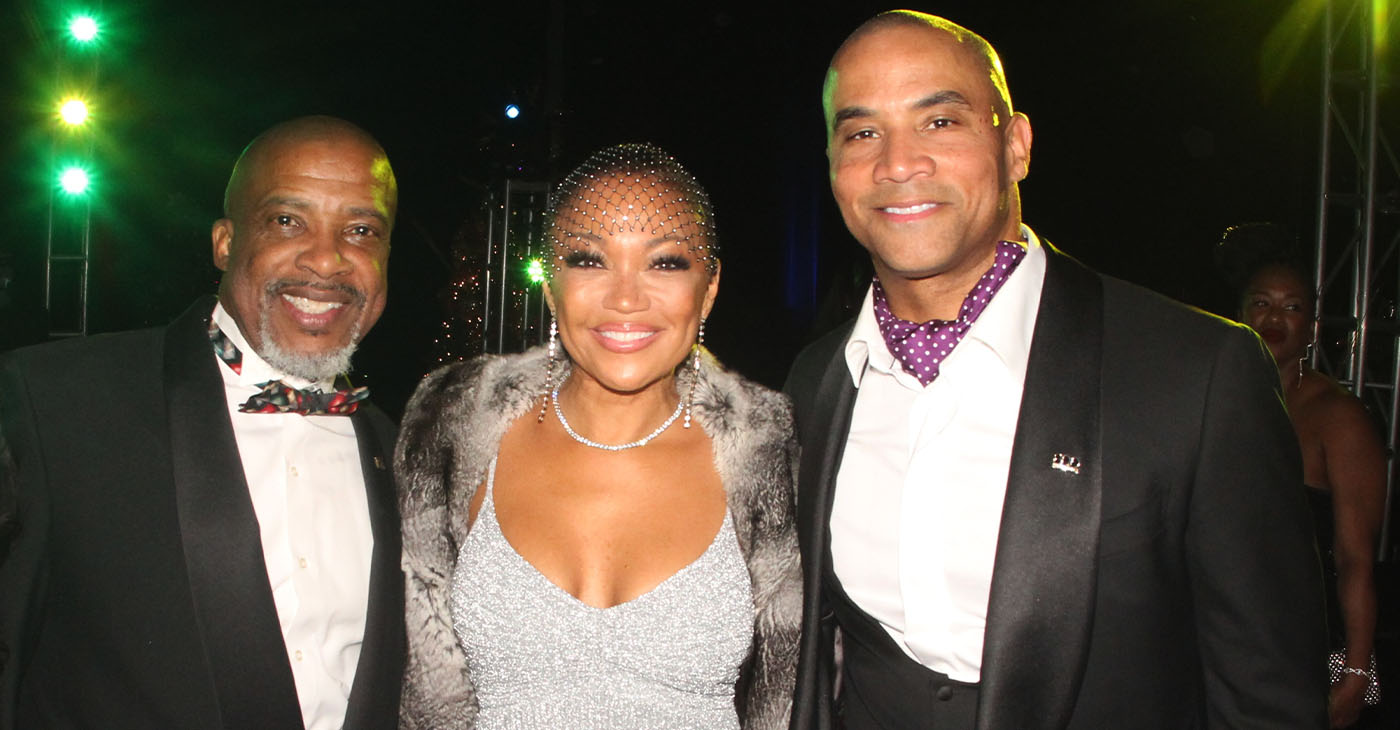
By Carla Thomas

The 100 Black Men of the Bay Area hosted their 35th Annual Scholarship Benefit and Awards Gala at the San Francisco Marriott Marquis on Saturday, Dec. 9. Themed “Making a Change 100 at a Time,” the event was headlined by singer Chanté Moore with performances by 16-year-old saxophone jazz musician Ayo Brame.
Community service award recipients included Alton Management Corporation, Roots Health Center and Bay Area broadcaster Dave Clark.
Maxine Reynolds, the widow of Alton Management Corportion’s late principal Al Reynolds, who passed away in April, graciously accepted the award. Over 31 years ago her husband and his business partner, Billy Hutton joined forces to form Alton Management Corporation with the intent on training and hiring young brothers and sisters in the housing industry. The property management firm worked with housing cooperatives and other organizations specializing in affordable housing throughout the Bay Area, Los Angeles and Atlanta recovering financially troubled properties.
“Many families have access to safe and affordable housing because my husband and the company are committed to serving clients in a dignified manner,” said Reynolds. “Billy Hutton carries on the company’s legacy.”
Kevin Mitchell, Director of Resource Development for the Roots Community Health Center in Oakland accepted the organization’s award. “There is a life expectancy difference of 15 years for individuals living in the hills as opposed to the inner-city flatlands,” he said. “We are changing the narrative because we are not fighters, we are healers.” Roots, through its medical and behavioral health care, health navigation, workforce enterprises, housing outreach and advocacy supports of those impacted by systemic inequities and poverty.
Beloved KTVU Channel 2 broadcaster Dave Clark was also honored for his community coverage. Clark spoke from the heart about his pursuit of reporting the good news in the Black community in the midst of the often negative news of the world. Originally from Philadelphia, Clark said he was determined to be a broadcaster and his parents supported his dream of trailblazing. Clark went on to win awards for reporting on the landmark O.J. Simpson trial and the Northridge Earthquake. “I’m able to stand before you today because of the support from my amazing wife Lucretia,” said Clark. Lucretia was Clark’s classmate in the 3rd grade.
Alameda County Supervisor (D-1) Keith Carson was honored with the Lifetime Achievement Award. Carson, though not in attendance, was recognized for his ability to bridge the gap between resources and disparities in the community representing District 1 and roles chairing the East Bay Economic Development Alliance, the Alameda County Budget Work Group Committee, the Alameda County Personnel, Administration and Legislation Committee, and the Alameda County Health Committee.
“Our mission is to improve the quality of life within the Bay Area and beyond by advancing the social, economic, health and educational progress of African Americans,” said 100 Black Men president Chuck Baker. “We focus on the low to moderate income community, and offer programming and resources to support wise financial, health and lifestyle choices that can lead to family-sustaining wages and long-term career and life success.”
“Our motto, ‘What They See Is What They’ll Be’ refers to a ‘lead by example’ approach that resonates with our youth who often lack the exposure or positive behavior modeling from caring and successful African American men,” said 100 Black Men board member, Dr. Lawrence VanHook, pastor of The Community Church.
Gala Chairman Danny L. Williams, was excited to celebrate the occasion with singer Chanté Moore performing. “Moore is a class act,” he said. “She performed for our 25th gala and we are proud to have her 10 years later at our 35th year gala.”
Young adult speaker, Ricky Jackson said because of the mentoring of the organization he went from a troubled teen to a dual degreed student in his twenties.
Joseph Simmons, Pastor of Greater St. Paul in Oakland was awarded as 100 Black Man of the Year. “He embodies our brotherhood creed and is all about the work to be done,” said President Chuck Baker.
For more information visit: www.100blackmenba.org














Activism
Oakland Post: Week of September 30 – October 6, 2026
The printed Weekly Edition of the Oakland Post: Week of September 30 – October 6, 2026

To enlarge your view of this issue, use the slider, magnifying glass icon or full page icon in the lower right corner of the browser window.
Activism
Oakland Post: Week of September 23 – 29, 2026
The printed Weekly Edition of the Oakland Post: Week of September 23 – 29, 2026

To enlarge your view of this issue, use the slider, magnifying glass icon or full page icon in the lower right corner of the browser window.
Activism
Oakland Post: Week of September 16 – 22, 2026
The printed Weekly Edition of the Oakland Post: Week of September 16 – 22, 2026

To enlarge your view of this issue, use the slider, magnifying glass icon or full page icon in the lower right corner of the browser window.



OP-ED: Proposition 44 Would Put a Price on Trust

OP-ED: Proposition 40: It’s Time to Play Chess, Not Checkers

Listening as a Lifeline: A Doula’s Witness to Black Maternal Health

New Protections for Ticket Buyers: Gov. Newsom Signs Assemblymember Isaac Bryan’s Bill

‘We Don’t Talk Trash — We Pick Up Trash!’

Zakiya Jendayi Arrested, Locked Out of Home by Sheriff’s Deputies

Oakland Post: Week of September 30 – October 6, 2026

Asm. Corey Jackson Announces Launch of 24-Hour Childcare in His District

IN MEMORIAM: The Rev. Leon “Sonny” Clark, Longtime Orange County Pastor and Community Leader, Dies at 72

Poll: Becerra Widens His Lead Over Hilton; Californians Split on Wealth Tax

From Historic Memories to New Possibilities: Oakland Celebrates Coliseum 60

County Office of Education Says OUSD Finances Are Getting Healthier, Materially Stronger

LIVE FREE Sunday Dinner Brings Faith, Fellowship and Civic Conversation to Oakland

Remembering Chauncey Bailey as Student Journalists Face Threats to Truth-Telling

BLACspace Cooperative Invites Bay Area to Experience Oakland’s Black Cultural Ecosystem Through a BLAC Map Tour + Party

Standoff for Justice: Our Homes Are Worth Fighting For

Oakland Post: Week of August 26 – September 1, 2026

Frontier Airlines’ Return to Oakland Airport Brings Flights, Jobs and Opportunity

Gubernatorial Candidate Steve Hilton Blasts California New Tire Rules; Newsom Hits Back

Chef Sharon Lee Blends Culinary Excellence, Education and Empowerment

Jackie Wright Champions Bay Area Stories, Filmmakers and Cultural Institutions

Misnamed ‘Parent’ PAC Seeks to Influence Oakland School Board Elections

Oakland Coliseum Project Opens Door for Small Businesses to Build Bigger

Big City Mayors Ask for “Yes” Vote on Housing Bond Measure; Conservatives Say “No”

Gov. Newsom’s Latest Appointees Include Sacramento Advocate for Formerly Incarcerated Students; State’s New Tech Chief

Longtime BWOPA Member Brendalyn Goodall Appointed to California Workforce Development Board

Gov. Newsom Signs Law Shielding Immigration Aid Workers From Doxing Threats

Oakland Post: Week of September 2 – 8, 2026

Secretary of State Shirley N. Weber Urges Californians to Vote Early as Voter ID Battle Intensifies

IN MEMORIAM: Dolly Parton Dead at 80 — How She Built a Legacy of Love and Earned Her Place in Black Culture

The Conversation With Al McFarlane 6/23/26

Media Monday 6/22/26

LIVE! ASK ALMA! — TUES. 6.23.26 7PM EST

Car Buying Secrets: 4 Hidden Checks Before You Sign!

Is This 550 HP Charger Worth YOUR Money? AutoNetwork Review

Celebrating Juneteenth – Frederick Douglass on education and resistance

LIVE! — ASK ALMA! — TUES. 6.19.26 7PM EST

Hyundai Ioniq 5 Parking, Safety, and 360 View #shorts

2025 Ioniq 5 New Wiper & Powerful Performance! #shorts

Electric SUV Range: Is 259 Miles Enough? #shorts

EV Charging: How Fast Can You Charge an Electric Vehicle? #shorts

Biometric Cooling… Messaging Seats…Come on! 2025 Infiniti QX80 Autograph 4WD

Charged Up: Witness the Magic of a Fully Electric Car! #shorts

Range Rover Sport PHEV Included…: See What’s Inside This Luxury SUV! #shorts

Invisible Hood View: Perfect Parking with X-Ray Vision! #shorts
-
 Community3 weeks ago
Misnamed ‘Parent’ PAC Seeks to Influence Oakland School Board Elections
-

 Activism3 weeks ago
Oakland Post: Week of September 9 – 15, 2026
-

 Community3 weeks ago
Richmond Tiny House Village Farm & Garden Set to Open Gates on Sept. 26
-

 Black History3 weeks ago
Latest Massacre in Haiti Reveals Cruelty U.S. Deportations
-

 Black History3 weeks ago
OPINION: Nolan Wells’ Death One of Several Signifying Racial Terror Lives on in U.S. South
-

 Business2 weeks ago
Mayor Lee Announces $1 Million Kaiser Permanente Grant for Pilot Program to Address Homelessness, Clean Up Public Spaces throughout Oakland
-

 Community3 weeks ago
Democratic Clubs Interview Candidates for Oakland School Board
-

 Uncategorized3 weeks ago
NBA All-Star Damian Lillard Returns Home for 15th Annual Backpack Giveaway
