
Politics
Shadow of Clinton War Vote Hangs Over Other 2016 Contenders


Dec. 17, 2014 file photo, Sen. Marco Rubio, R-Fla. (AP Photo/J. Scott Applewhite, File)
Julie Pace, ASSOCIATED PRESS
WASHINGTON (AP) — In 2002, Sen. Hillary Rodham Clinton cast a vote in favor of the Iraq war that would later come to haunt her presidential campaign.
Now, a new crop of senators eying the White House — Republicans Marco Rubio of Florida, Rand Paul of Kentucky and Ted Cruz of Texas — will face a similar choice over authorizing military action in the Middle East.

A vote in favor of President Barack Obama’s use-of-force resolution would give the potential candidates a share of the responsibility for the outcome of military action in a combustible region. And as Clinton learned well, the public’s support for a military campaign can quickly fade, making the long-term implications of the vote difficult to predict.
Obama asked lawmakers this week to approve a three-year offensive against the Islamic State group and affiliated forces. His request includes no constraints on geographical boundaries but would bar “enduring offensive combat” — intentionally vague language that some lawmakers fear leaves open the prospect of a U.S.-led ground war.
So far, most of the 2016 hopefuls currently in Congress have sidestepped questions about how they would vote on Obama’s measure, which could be amended before they have to say yes or no. Among Republicans, Rubio has been perhaps the most specific in outlining his views, saying he opposes the president putting constraints on his ability to use military force against an enemy.
“What we need to be authorizing the president to do is to destroy them and to defeat them, and allow the commander in chief — both the one we have now and the one who will follow — to put in place the tactics, the military tactics, necessary to destroy and defeat ISIL,” Rubio said, using a common acronym for the Islamic State group.
A spokesman for Paul said Friday that the senator is reviewing the legislation but has not decided how he would vote. Cruz has called for Congress to “strengthen” the legislation by making sure the president is committed to clear objectives. He also has suggested the authorization should include a provision to directly arm the Iraqi Kurds, but it is unclear what other changes he wants to see.
Despite Americans’ war weariness, there is public support for formally authorizing the mission. An NBC News/Marist poll released Friday showed that 54 percent of respondents want their member of Congress to vote for Obama’s request.
Clinton, who is laying the groundwork for another presidential run, will also be pressed to take a position. But this time around, she will have the advantage of weighing in from the outside, without the pressure of voting.
“You can talk about the subject without actually being pinned down on a particular vote that you’re going to have to defend for years to come,” said Jim Manley, a longtime aide to the late Edward Kennedy, the Massachusetts Democrat who worked to get Clinton and other Democrats to vote against the 2002 war authorization.
Clinton has made no public comments since Obama sent lawmakers the draft legislation earlier this week, and her spokesman did not respond to a fresh request for her position Friday.
The former secretary of state has previously called the fight against the Islamic State a “long-term struggle” and has said military action is essential to prevent the group from making further advances.
The military campaign against the Islamic State militants began six months ago, and Obama is, in effect, seeking Congress’ approval retroactively. He has said the current mission is legally justified under the 2002 authorization President George W. Bush used to start the Iraq war — the resolution Clinton voted for.
By the time Obama and Clinton faced off in the 2008 Democratic primary, the Iraq war was deeply unpopular. Obama saw Clinton’s vote for the military conflict as a way to draw a distinction with his better-known rival, arguing that while he was not in the Senate in 2002, he would have voted against giving Bush the war powers.
The 2002 vote and its political implications have continued to shadow the way lawmakers have responded to war-power requests.
In 2013, Congress balked at Obama’s request to authorize strikes in Syria and never held a vote. And while congressional leaders pushed the president for months to seek authorization for the Islamic State campaign, lawmakers insisted Obama be the one to actually draft a resolution.
As with Obama’s current request, there was public support for Bush’s Iraq resolution in 2002. A Gallup Poll a few weeks before the high-stakes vote found that 57 percent of Americans said Congress should “pass a resolution to support sending American ground troops to the Persian Gulf in an attempt to remove Saddam Hussein from power in Iraq.” About 38 percent said it should not.
As the Iraq war dragged on, and the death toll and financial costs mounted, the conflict became deeply unpopular.
By the time Clinton and Obama were facing off for the Democratic nomination, surveys showed a majority of Americans believed going into Iraq was the wrong decision — a warning for potential 2016 candidates trying to read the tea leaves ahead of their own war powers vote.
___
AP writer Ken Thomas and AP News Survey Director Emily Swanson contributed to this report.
Follow Julie Pace at http://twitter.com/jpaceDC.
Copyright 2015 The Associated Press. All rights reserved. This material may not be published, broadcast, rewritten or redistributed.
###





Activism
Oakland Post: Week of March 18 – 24, 2026
The printed Weekly Edition of the Oakland Post: Week of March 18 – 24, 2026


To enlarge your view of this issue, use the slider, magnifying glass icon or full page icon in the lower right corner of the browser window.

Activism
Oakland Post: Week of March 11 -17, 2026
The printed Weekly Edition of the Oakland Post: Week of March 11 – 17, 2026
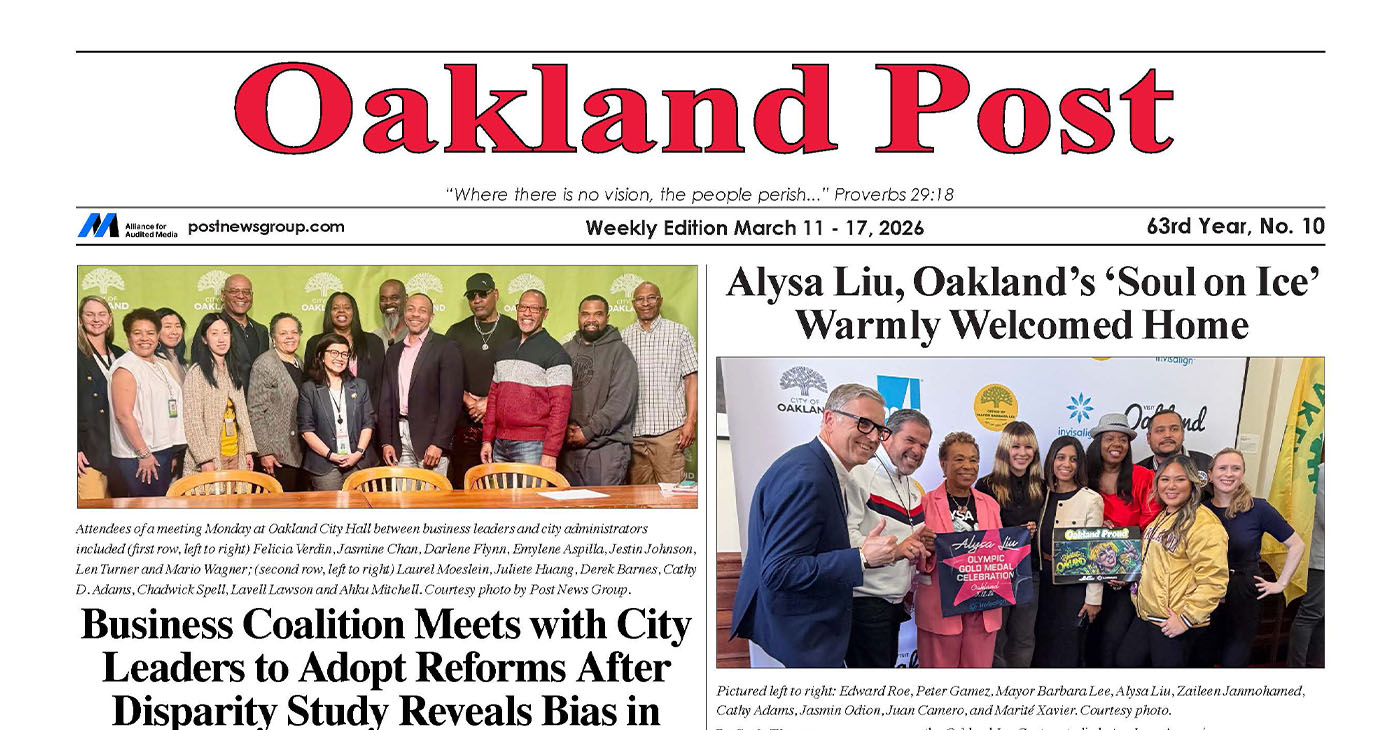
To enlarge your view of this issue, use the slider, magnifying glass icon or full page icon in the lower right corner of the browser window.
Activism
Oakland Post: Week of March 4 – 10, 2026
The printed Weekly Edition of the Oakland Post: Week of March 4 – 10, 2026

To enlarge your view of this issue, use the slider, magnifying glass icon or full page icon in the lower right corner of the browser window.

WORK FROM HOME
Home-based business with potential monthly income of $10K+ per month. A proven training system and website provided to maximize business effectiveness. Perfect job to earn side and primary income. Contact Lynne for more details: Lynne4npusa@gmail.com 800-334-0540


Black Artists in America, Installation Three Wraps at the Dixon Gallery and Gardens

Grief, Advocacy, and Education: A Counselor Reflects on Black Maternal Health

Future of Florida’s Black History Museum in Limbo

New Research Shows the Many Benefits of Early Learning

South Hampton K-8 Students Among Top 10 Finalists for Samsung’s ‘Solve for Tomorrow’ Competition

Cuba: No Negotiation with US on the President or Political System

Brooklyn Academy of Music Names Jamaican-Born Tamara McCaw as President

Trinidad & Tobego – U.S. Launches WhatsApp Channel for American Citizens in the Country

Oakland Post: Week of March 18 – 24, 2026

AI Innovation vs. Ethics and Environmental Impact

AI, Web3, and Digital Reparations

What If You Owned Your AI Agent?

Season 7, Episode 3 – January Reporter’s Roundtable 📱

Season 7, Episode 3 – January Reporter’s Roundtable

AI, Media, and Power | Part 2, Real-World Impacts and Tradeoffs

Reflecting on Black History Milestones in Birmingham AL

CITY OF SAN LEANDRO STATE OF CALIFORNIA PUBLIC WORKS DEPARTMENT ENGINEERING DIVISION NOTICE TO BIDDERS FOR ANNUAL STREET OVERLAY/REHABILITATION 2019-21 – PHASE III

Oakland Post: Week of February 18 – 24, 2026

Oakland Post: Week of February 25 – March 3, 2026

PRESS ROOM: NBA Hall of Fame Nominee Terry Cummings Joins 100 Black Men of DeKalb County to Launch Victory & Values Initiative

Trump’s MAGA Allies are Creating Executive Order Plan to Steal the 2026 Midterms

Oakland Post: Week of March 4 – 10, 2026

U.S. manufacturing rebounds – how foundry services are adapting to rising demand

Chase Oakland Community Center Hosts Alley-Oop Accelerator Building Community and Opportunity for Bay Area Entrepreneurs

Poll Shows Support for Policies That Help Families Afford Child Care

OP-ED: One Hundred Years of Black Workers Telling the Truth

Advancements in solar technology that are changing the way we power the world

Woman’s Search for Family’s Roots Leads to Ancestor John T. Ward – A Successful Entrepreneur and Conductor on the Underground Railroad

PRESS ROOM: Civil Rights TV Launches in Selma as the World’s First 24/7 Civil Rights Television Network

COMMENTARY: Women of Color Shape Our Past and Future

Hyundai Ioniq 5 Parking, Safety, and 360 View #shorts

2025 Ioniq 5 New Wiper & Powerful Performance! #shorts

Electric SUV Range: Is 259 Miles Enough? #shorts

EV Charging: How Fast Can You Charge an Electric Vehicle? #shorts

Biometric Cooling… Messaging Seats…Come on! 2025 Infiniti QX80 Autograph 4WD

Charged Up: Witness the Magic of a Fully Electric Car! #shorts

Range Rover Sport PHEV Included…: See What’s Inside This Luxury SUV! #shorts

Invisible Hood View: Perfect Parking with X-Ray Vision! #shorts

AI Is Reshaping Black Healthcare: Promise, Peril, and the Push for Improved Results in California

ESSAY: Technology and Medicine, a Primary Care Point of View

Sanctuary Cities

The RESISTANCE – FREEDOM NOW

STATE OF THE PEOPLE: Freddie

ECONOMIC BOYCOTT DAY!!!!!

I told You So
-
 Activism4 weeks ago
Oakland Post: Week of March 4 – 10, 2026
-
 #NNPA BlackPress4 weeks ago
Woman’s Search for Family’s Roots Leads to Ancestor John T. Ward – A Successful Entrepreneur and Conductor on the Underground Railroad
-
 #NNPA BlackPress4 weeks ago
COMMENTARY: Women of Color Shape Our Past and Future
-
 Activism3 weeks ago
Oakland Post: Week of March 11 -17, 2026
-

 #NNPA BlackPress4 weeks ago
OP-ED: NNPA Launches 2026 “Leadership Matters” Video Series
-

 #NNPA BlackPress4 weeks ago
Advocates Raise Alarm Over ICE Operation, MOU and Detention Risks in Baltimore County
-

 #NNPA BlackPress4 weeks ago
Pete Buttigieg to Join Mayor Randall Woodfin for Community Town Hall in Birmingham
-

 Advice3 weeks ago
Financial Wellness and Mental Health: Managing Money Stress in College
