
Crime
Sanctuary Cities Undermined by Police Officers Working with ICE
WASHINGTON INFORMER — New Mexico, California, Philadelphia, Chicago. These are some of the city, county and state governments that have attempted to protect immigrants from local law enforcement working with immigration authorities by becoming “sanctuary” locations.

By Katherine Lewin, Special to The Informer via DiversityInc

New Mexico, California, Philadelphia, Chicago. These are some of the city, county and state governments that have attempted to protect immigrants from local law enforcement working with immigration authorities by becoming “sanctuary” locations.
These sanctuary cities are meant to protect immigrants from a myriad of injustices, including holding people in jail on local charges past their release date at the request of Immigration and Customs Enforcement (ICE) officers who want to pick them up for deportation.
Last month, leaders of Bernalillo County, New Mexico’s largest county, learned that the sanctuary policy was being disobeyed from inside the jail.
Staff at the Bernalillo County jail in Albuquerque were letting ICE officers use its database and informing them when a “person of interest” was being released. Staff members let immigration officers walk into the private areas of the jail and even use the county computers to look up names, birthplaces and addresses. No staff member has been disciplined.
Bernalillo County is not the only sanctuary having this problem. Immigration officials have informal relationships with local police. The American Civil Liberties Union reported that a detective in Orange County, California, regularly looked up license plate information for an immigration officer.
While the immigration officers say that sanctuary cities make the streets less safe, studies have shown that the majority of immigrants follow the laws and commit less crime than native-born Americans.
However, unauthorized immigrants make up less than four percent of the total U.S. population and make up less than six percent of the total US prison population. State-based studies have also shown that immigrants are both much more likely to be targeted and convicted of a crime but commit far less crime than native-born Americans.
A study by the Cato Institute, which uses figures from Texas in 2015 as a case study to look at how crime rates compare among immigrant and native-born populations, showed that the rate per 100,000 residents in each subpopulation was 899 for undocumented immigrants, 611 for legal immigrants and 1,797 for native-born Americans.
“As a percentage of their respective populations, there were 56 percent fewer criminal convictions of illegal immigrants than of native-born Americans in Texas in 2015,” author Alex Nowrasteh wrote in the study. “The criminal conviction rate for legal immigrants was about 85 percent below the native-born rate.” The data shows similar patterns for violent crimes such as homicide and property crimes such as larceny.
Another study, published in March 2018 in the journal Criminology, looked at population-level crime rates to see if places with more undocumented immigrants have higher rates of crime. The answer: no.
States with more undocumented immigrants tended to have lower crime rates than states with smaller shares in the years 1990 through 2014.
“Increases in the undocumented immigrant population within states are associated with significant decreases in the prevalence of violence,” the study found.














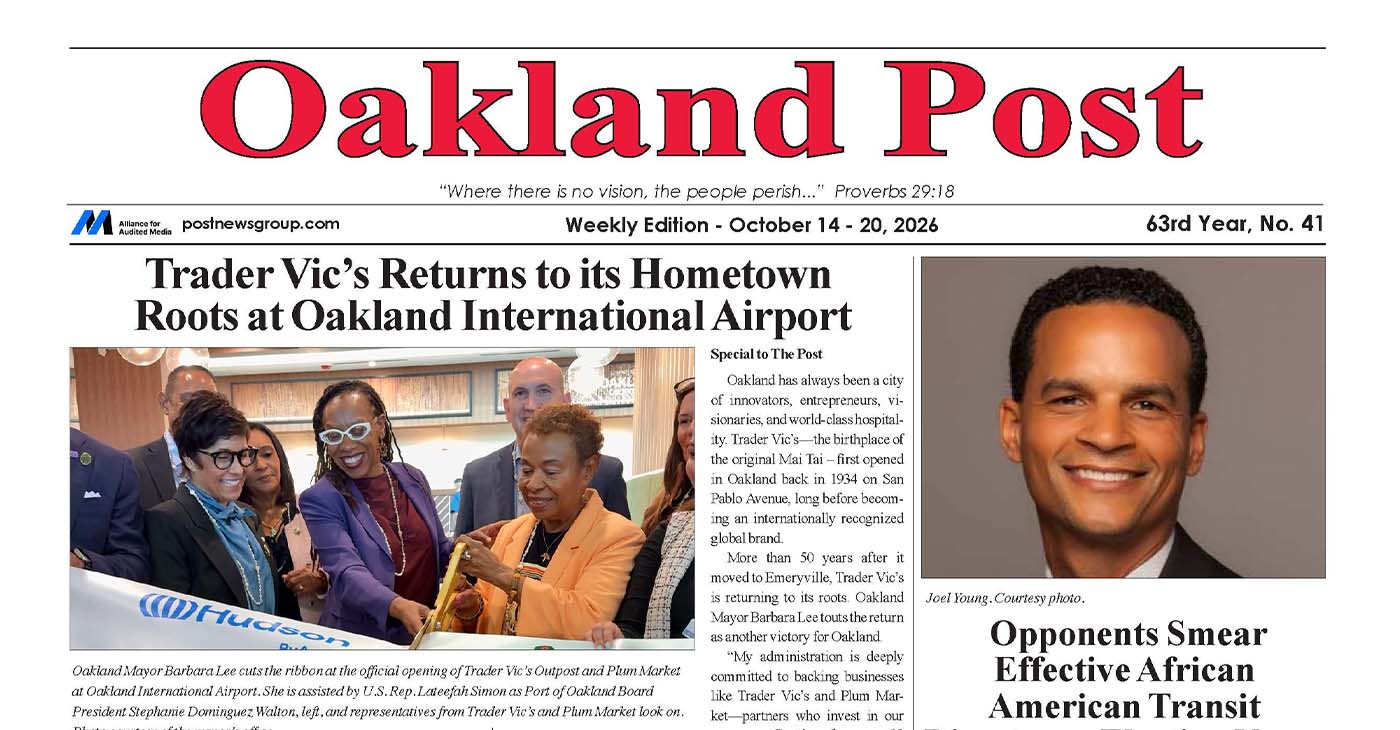
To enlarge your view of this issue, use the slider, magnifying glass icon or full page icon in the lower right corner of the browser window.
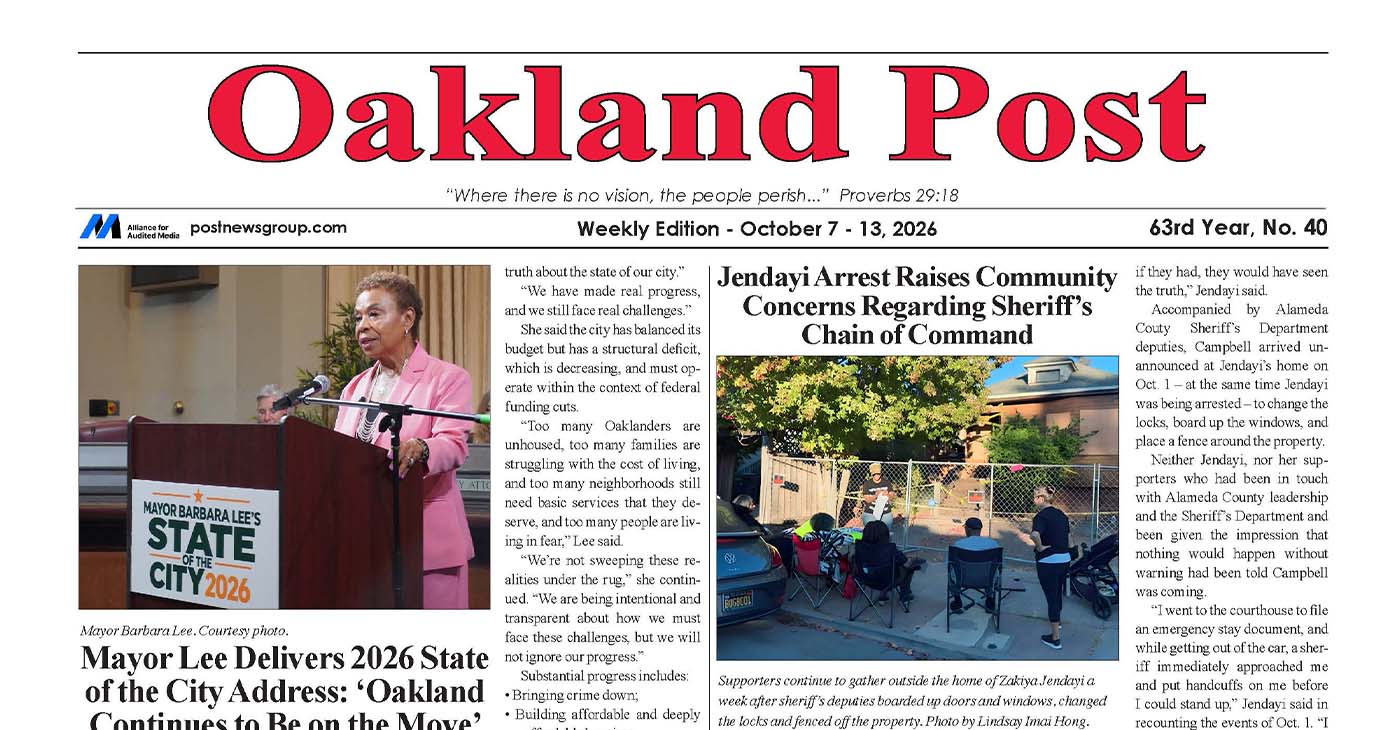
To enlarge your view of this issue, use the slider, magnifying glass icon or full page icon in the lower right corner of the browser window.
Activism
Oakland Post: Week of September 30 – October 6, 2026
The printed Weekly Edition of the Oakland Post: Week of September 30 – October 6, 2026

To enlarge your view of this issue, use the slider, magnifying glass icon or full page icon in the lower right corner of the browser window.



Mayor Barbara Lee Holds Special State of the City Address in Deep East Oakland

Practitioners of African Traditional Spirituality Offer Ancestral Reverence Ritual Oct. 31

It’s Time to Lose Weight Before the Holidays

Trader Vic’s Returns to Its Oakland Roots

Oakland Coal Terminal Backed by Trump Would Be Bigger, Dirtier Than Promised, Says Report

Opponents Smear Effective African American Transit Director as Election Nears

Oakland Post: Week of October 14 – 20, 2026

OP-ED: The Black Church Writes AI’s Next Chapter

OP-ED: The Black Church Writes AI’s Next Chapter

WCCUSD Joins Statewide Organic School Food Purchasing Cooperative

Democrats, Community Groups Back Measure EE to Change How Oakland Is Governed

Four Tips to Help You Plan a Holiday “Staycation”

Veterans Housing Project Proposed for South Richmond
PRESS ROOM: Transformative Justice Coalition 2026 Voting Rights Champion Awards Reception ‘Yesterday Is Today: The Battle For Voting Rights

Mayor Lee Delivers 2026 State of the City Address: ‘Oakland Continues to Be on the Move’

Misnamed ‘Parent’ PAC Seeks to Influence Oakland School Board Elections

Oakland Post: Week of September 2 – 8, 2026

Oakland Post: Week of September 9 – 15, 2026

Poll: Becerra Widens His Lead Over Hilton; Californians Split on Wealth Tax

County Office of Education Says OUSD Finances Are Getting Healthier, Materially Stronger

Richmond Tiny House Village Farm & Garden Set to Open Gates on Sept. 26

Latest Massacre in Haiti Reveals Cruelty U.S. Deportations

Mayor Lee Announces $1 Million Kaiser Permanente Grant for Pilot Program to Address Homelessness, Clean Up Public Spaces throughout Oakland

OPINION: Nolan Wells’ Death One of Several Signifying Racial Terror Lives on in U.S. South

Listening as a Lifeline: A Doula’s Witness to Black Maternal Health

Zakiya Jendayi Arrested, Locked Out of Home by Sheriff’s Deputies

BLACspace Cooperative Invites Bay Area to Experience Oakland’s Black Cultural Ecosystem Through a BLAC Map Tour + Party

Oakland Post: Week of September 16 – 22, 2026

Democratic Clubs Interview Candidates for Oakland School Board

Oakland People’s Arms Embargo Coalition Demands End to Military Shipments Thru Oakland

The Conversation With Al McFarlane 6/23/26

Media Monday 6/22/26

LIVE! ASK ALMA! — TUES. 6.23.26 7PM EST

Car Buying Secrets: 4 Hidden Checks Before You Sign!

Is This 550 HP Charger Worth YOUR Money? AutoNetwork Review

Celebrating Juneteenth – Frederick Douglass on education and resistance

LIVE! — ASK ALMA! — TUES. 6.19.26 7PM EST

Hyundai Ioniq 5 Parking, Safety, and 360 View #shorts

2025 Ioniq 5 New Wiper & Powerful Performance! #shorts

Electric SUV Range: Is 259 Miles Enough? #shorts

EV Charging: How Fast Can You Charge an Electric Vehicle? #shorts

Biometric Cooling… Messaging Seats…Come on! 2025 Infiniti QX80 Autograph 4WD

Charged Up: Witness the Magic of a Fully Electric Car! #shorts

Range Rover Sport PHEV Included…: See What’s Inside This Luxury SUV! #shorts

Invisible Hood View: Perfect Parking with X-Ray Vision! #shorts
-
 Economy3 weeks ago
Poll: Becerra Widens His Lead Over Hilton; Californians Split on Wealth Tax
-
 Business3 weeks ago
County Office of Education Says OUSD Finances Are Getting Healthier, Materially Stronger
-
 Business4 weeks ago
Mayor Lee Announces $1 Million Kaiser Permanente Grant for Pilot Program to Address Homelessness, Clean Up Public Spaces throughout Oakland
-
 Black History2 weeks ago
Listening as a Lifeline: A Doula’s Witness to Black Maternal Health
-
 Lead Story2 weeks ago
Zakiya Jendayi Arrested, Locked Out of Home by Sheriff’s Deputies
-
 Art3 weeks ago
BLACspace Cooperative Invites Bay Area to Experience Oakland’s Black Cultural Ecosystem Through a BLAC Map Tour + Party
-
 Activism4 weeks ago
Oakland Post: Week of September 16 – 22, 2026
-
 Uncategorized4 weeks ago
Oakland People’s Arms Embargo Coalition Demands End to Military Shipments Thru Oakland
