
Government
Promote Diversity and Inclusion at Fed Reserve
HUDSON VALLEY PRESS — Senator Kamala D. Harris re-introduced the Ensuring Diverse Leadership Act

By Hudson Valley Press
WASHINGTON, D.C. – U.S. Senator Kamala D. Harris re-introduced the Ensuring Diverse Leadership Act, legislation to ensure that at least one minority and one female candidate are interviewed for each vacancy for the presidency of a reserve bank at each of the twelve reserve banks in the Fed (San Francisco, Boston, New York, Philadelphia, Cleveland, Richmond, Atlanta, Chicago, St. Louis, Minneapolis, Kansas City, and Dallas).
Of the more than 130 individuals who have served as presidents of the twelve reserve banks, only 3 have been non-white. In 2017, Raphael Bostic became the first African American reserve bank president when he became president of the Atlanta Fed. Additionally, there have been only seven women to ever serve as a reserve bank president.
“Bringing greater diversity to the Federal Reserve will ensure that more perspectives are heard as major decisions are being made about our nation’s economic future and will produce better outcomes for the American people,” said Senator Harris. “We must do more to ensure that this country’s leadership reflects the people they serve—not just at the Federal Reserve, but across all levels of government.”
In addition to ensuring diverse candidates are interviewed for the position of president, the bill would also require that reserve banks submit a report to the Senate Banking Committee, the House Financial Services Committee, and the Office of the Inspector General of the Federal Reserve System within 60 days of filling a vacancy for a presidency detailing how many candidates were considered and providing demographic information on them. The bill would also make technical corrections to the Federal Reserve Act to replace the term “Chairman” with the term “Chair.”

The Diverse Leadership Act is influenced by the National Football League’s “Rooney Rule,” which was established in 2003 to boost diversity among the league’s head coaching positions. The adoption of this policy has more than doubled the number of NFL coaches of color in the first twelve seasons of its use, when compared to the first twelve seasons beforehand.
The Ensuring Diverse Leadership Act is co-sponsored by U.S. Senators Dianne Feinstein (D-CA), Cory Booker (D-NJ), Kirsten Gillibrand (D-NY), and Elizabeth Warren (D-MA).
This bill is the Senate companion to legislation introduced by Representative Joyce Beatty (OH-3) in the House. Senator Harris originally introduced the Ensuring Diverse Leadership Act during the 115th Congress.
This article originally appeared in the Hudson Valley Press.












Featured
Attorney General Bonta Serves Investigative Subpoena on Nvidia
California Attorney General Rob Bonta has issued an investigative subpoena to Nvidia following reports regarding former CEO Jensen Huang’s relationship with an alleged Chinese spy. The California Department of Justice is investigating whether the company’s advanced chips or confidential information were improperly transferred to China. Authorities are also examining if Nvidia misled the public and investors about these potential security risks in violation of state law. Officials are currently evaluating the company’s conduct to determine if legal action is warranted. To learn more about this investigation, read more.

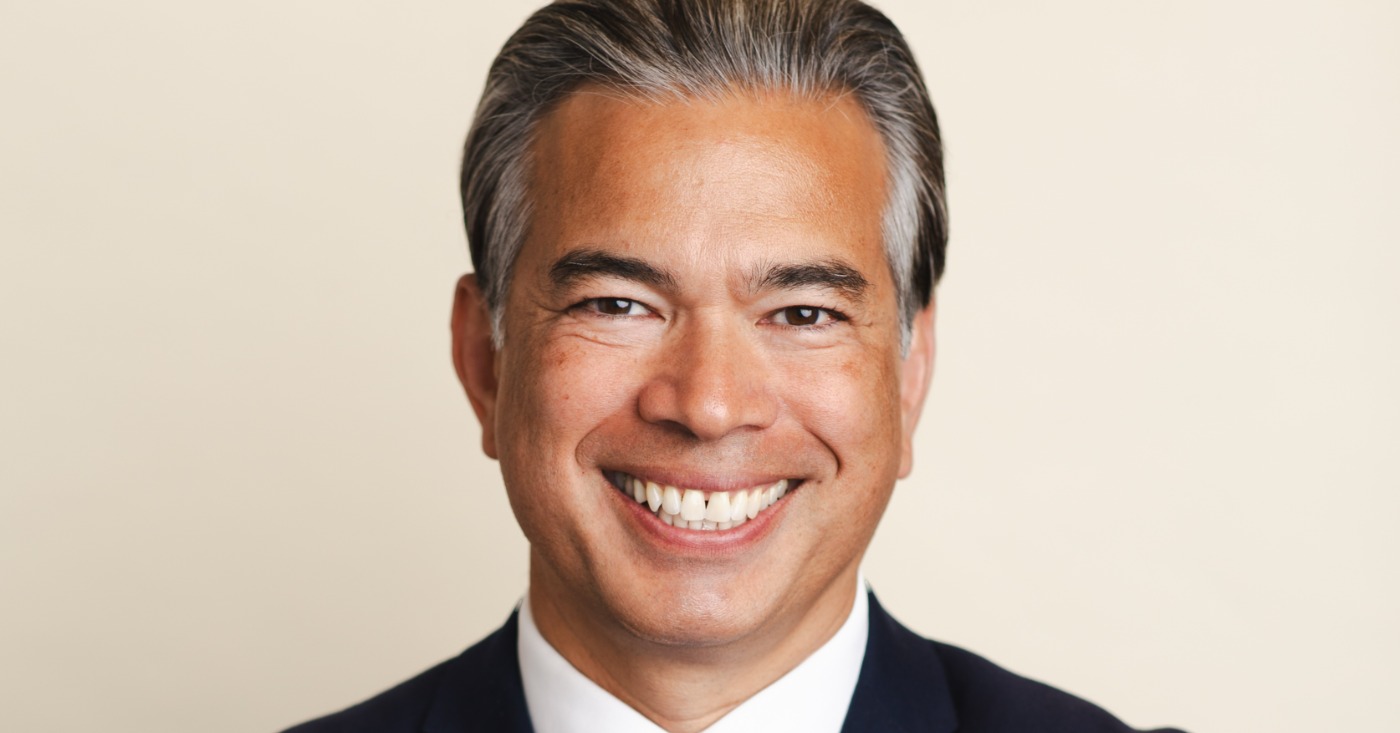
California Attorney General Rob Bonta served an investigative subpoena on Nvidia related to the news of former Nvidia CEO Jensen Huang’s affair with an alleged Chinese spy.
The California Department of Justice is asking Nvidia whether its advanced chips or confidential information may have gone to China and whether Nvidia misled investors and the public.
The information received through the subpoena will help the California Department of Justice evaluate whether Nvidia’s actions violated California law.
“The conduct of Nvidia and its former CEO raises bright red flags, including about the ways in which the company may have misled investors.
“My office is investigating whether Nvidia or Jensen Huang’s actions resulted in China obtaining advanced chips or confidential information — and if Nvidia misled investors and the public about this risk, in violation of the law,” said Attorney General Bonta in Thursday.
“Nvidia is in a messy, transnational situation but the underlying principle of our corporate securities law is clear: Companies cannot mislead their investors.”
The California Department of Justice is the source of this story.


Community
A Record 216 Firearms Collected at East Oakland Gun Buy-Back Event
The Oakland Police Department and community partners recently hosted the “Guns to Gardens” buyback event, collecting a record 216 firearms. This total marks the largest collection in more than a decade, surpassing the previous high of 130 guns set in 2022. Participants received a total of $18,000 in gift cards for surrendering weapons ranging from compact pistols to military-style assault rifles and ghost gun kits. Officials confirmed that every weapon collected will eventually be repurposed to serve a new community function. Read more.

Over the weekend, the Oakland Police Department (OPD) and community partners hosted “Guns to Gardens,” a gun buyback event with strong community participation. OPD collected a record 216 firearms, exceeding the previous high of more than 130 in 2022 and marking the largest collection in more than a decade.
“Thanks to the generosity of our faith-based coalition, the Kaiser Foundation, and local partners, we distributed $18,000 in gift cards to community members who turned in their firearms,” said Oakland Mayor Barbara Lee.
The buyback follows the graduation of the 197th academy of Oakland Police Department (OPD) cadets on Nov. 6. The nine cadets are already making their mark connecting with residents, honoring the department’s history, and supporting department events.
In their first month, the Cadets helped clean the Remember Them monument at Henry J. Kaiser Memorial Park. They learned about Oakland Police Officer John Grubensky, who died in the line of duty while guiding community members to safety during the Oakland Hills Fire and is honored on the monument.
The Cadets handed out candy at OPD’s annual Trunk or Treat celebration and helped with the 197th Police Academy graduation ceremony.

Most recently, the Cadets participated in an inspection and pinning ceremony, marking another milestone in their development and service to our community.
OPD thanks Kaiser Permanente and PG&E for their donations, which led to the reinstatement of the Cadet Program. This program offers young people ages 15½ to 20½ opportunities to engage with their community, gain experience, and explore careers in public safety.
But it was the veteran officers that handled the buyback at St. Benedict’s Catholic Church at 2245 82nd Ave.in East Oakland.
The weapons collected on Nov. 14 ranged from compact pistols to assault weapons. One participant also surrendered equipment used to create homemade firearms, commonly known as “ghost guns.”
“I was shocked to see the number of assault weapons, military-style firearms, and ghost guns turned in,” said Oakland Police Chief James Beere. “Every firearm removed from our streets is one less that could be used in a shooting or other act of violence. By choosing to turn in unwanted guns, we help protect our neighborhoods and ultimately save lives.”
OPD and Lee thanked the community partners, volunteers, and participants for their continued support in this effort.
“Every single gun collected will be transformed into garden tools and given back to the community at future events,” said Lee. “A huge thank you to everyone who participated, our dedicated partners, and OPD for making Oakland safer.”
Paul Chambers is the strategic communications manager for the Oakland Police Department.
Business
City Council Hearing Shines a Light on Failures of City’s Prompt Payment Policy
Oakland’s Finance and Management Committee recently held a hearing to address systemic failures in the city’s Prompt Payment Policy, which mandates that vendors be paid within 20 business days. Despite official reports claiming a 96% success rate, local business leaders and Councilmember Janani Ramachandran argue the data ignores the struggles of small firms and nonprofits. Many contractors reported waiting months or even a year for compensation, forcing some to take out loans to survive. Community leaders are now demanding greater accountability for department heads to ensure the city’s business community remains viable. Read more.

For years, many small businesses and nonprofits have not been paid on time
A City Council hearing this week shined a light on the shortcomings of the implementation of Oakland’s Prompt Payment Policy, which requires the city to pay vendors and consultants within 20 business days for work done for the city.
The hearing, led by Councilmember Janani Ramachandran at the City Council’s Finance and Management Committee on Tuesday, was a discussion of the track record of implementation of the Prompt Payment Policy, which was enacted in 2008 as part of the Oakland Municipal Code to ensure that local vendors are paid promptly and to “increase local business contracting opportunities with the city,” according to a city report.
In 2014, the ordinance was extended to cover local grant recipients.
Ensuring that this policy lives up to its promise is a crucial part of the city’s pledge in the wake of the findings of a Disparity Study in 2024 to end decades of discrimination preventing Black-owned, women-owned, and other small local businesses from obtaining contracts in their own hometown.

“Small businesses are the lifeblood of our city: timely payment is critical for small businesses and nonprofit organizations that provide direct services to our youth and young adults that are typically underfunded and rely on predictable cash flow to sustain operations,” said Ramachandran in a memo requesting a report from city staff on the implementation of the Prompt Payment Policy.
Many small businesses and nonprofits have complained loudly for years that they have not been paid on time. Though the city has produced a report that says over the past five years 96% of vendors were paid promptly, there are concerns that the report did not focus sufficiently on the treatment of small businesses and nonprofits.
In addition, the report did not cover whether subcontractors are paid promptly. A vast majority of the city’s contracts go to a handful of large “prime” contracts, and many small companies perform work as subcontractors of the larger firms.
Speakers at Tuesday’s hearing reported that small companies and nonprofits have not been paid for months or for as long as year, forcing them to take out loans or go out of business while waiting to be reimbursed for costs for employees and resources for work already completed.
City staff did acknowledge that at present the city does not track whether “prime” contactors pay their subcontractors on time.
Speaking at the hearing, Councilmember Ken Houston said that the failure to pay on time has been an issue in the city for at least 15 years.
Cathy Adams, president and CEO of the Oakland African American Chamber of Commerce and representing the Oakland Business Coalition and city’s multi-cultural chambers of commerce, said, “Our small businesses deserve to be paid on time for work they have already performed.”
“(The staff report) does not tell the whole story because the city does not track payment to subcontractors,” she said. “Our (small) businesses cannot operate on promises. They have employees to pay, insurance to maintain, suppliers to compensate, and families dependent on them. When payments are delayed, businesses suffer. Some may not survive.
“Accountability requires prime contractors to pay their subcontractors promptly with clear payment requirements written into every contract (with the city),” she said.
In a statement to the Oakland Post, Adams said, “The City must conduct a comprehensive audit of every department to identify operational failures, inadequate staffing performance, and breakdowns in management oversight.”
“Department heads must be held accountable, and employees who consistently fail to perform their responsibilities must face corrective action, including termination when warranted,” she continued. “Our businesses deserve to be paid promptly for work performed. We are not asking for special treatment; we are demanding fair treatment.”
“Under Mayor Barbara Lee’s leadership, Oakland is moving in the right direction, but we cannot allow bureaucratic failures to undermine our business community,” Adams said.



Native American Health Center Connects 140 Community Members to Career Opportunities During Native American Heritage Month

Oakland Chamber of Commerce Faces $42,000 Ethics Fine for Campaign Violation

Attorney General Bonta Serves Investigative Subpoena on Nvidia

A Record 216 Firearms Collected at East Oakland Gun Buy-Back Event

City Council Hearing Shines a Light on Failures of City’s Prompt Payment Policy

IN MEMORIAM: Claude T. Everhart, San Francisco’s First Black Deputy Mayor, Dies at 73

UC Doctors, Nurses and Community Rally to Demand ICE Out of UC Hospitals

Hypertension and Heart Disease: Doctors, Advocates and Patients Are Tackling the Leading Cause of Death for Black Californians

Marin City Is Especially Vulnerable to El Niño High Tides, Strong Winds, Flooding and Power Outages

‘We’re Committed to Delivering the Change that the American People Deserve’

Staying Ready: What Every Californian Should Know About Preparing for El Niño

Oakland Post: Week of November 18 – 24, 2026

Oakland Post: Week of November 11 -17, 2026

Alameda County Supervisor Miley to Propose Illegal Dumping Ordinance

Oakland City Council Extends AI Data Center Moratorium for 10 Months.

COMMENTARY: Valarie Bachelor and Jennifer Brouhard are Excellent School Board Members and Deserve to Be Reelected

OUSD Receives State Review of District Finances; Outlines Progress Since January

HISTORY MADE: Keisha Lance Bottoms Becomes First Black Woman Elected Governor in American History

SEIU Local 1000 and State of California Will Continue to Negotiate New Labor Contract

Golden State Valkyries Become Bay Area Legends Winning WNBA Championship on Halloween Night

COMMENTARY: Your California Living Trust Could Be Next: When Evidence Isn’t Enough

Fate of Bay Area Public Transit Hinges on Regional Transit Measure

Chase Launches Fraud & Scam Prevention Month

Post News Group Nov. 3 Election Endorsements

Mayor Barbara Lee Holds Special State of the City Address in Deep East Oakland

Democrats, Community Groups Back Measure EE to Change How Oakland Is Governed

From Backyard Grilling to Jack London Square: Jamale Carlyle’s Chicken Wing Success Story

Richmond Neighbors Put Pantry Power on the Map

It’s Time to Lose Weight Before the Holidays

21st Annual Taste of Soul: California’s Largest Black Street Festival Comes Alive With Culture, Music and Connections

The Conversation With Al McFarlane 6/23/26

Media Monday 6/22/26

LIVE! ASK ALMA! — TUES. 6.23.26 7PM EST

Car Buying Secrets: 4 Hidden Checks Before You Sign!

Is This 550 HP Charger Worth YOUR Money? AutoNetwork Review

Celebrating Juneteenth – Frederick Douglass on education and resistance

LIVE! — ASK ALMA! — TUES. 6.19.26 7PM EST

Hyundai Ioniq 5 Parking, Safety, and 360 View #shorts

2025 Ioniq 5 New Wiper & Powerful Performance! #shorts

Electric SUV Range: Is 259 Miles Enough? #shorts

EV Charging: How Fast Can You Charge an Electric Vehicle? #shorts

Biometric Cooling… Messaging Seats…Come on! 2025 Infiniti QX80 Autograph 4WD

Charged Up: Witness the Magic of a Fully Electric Car! #shorts

Range Rover Sport PHEV Included…: See What’s Inside This Luxury SUV! #shorts

Invisible Hood View: Perfect Parking with X-Ray Vision! #shorts
-
 Commentary3 weeks ago
COMMENTARY: Valarie Bachelor and Jennifer Brouhard are Excellent School Board Members and Deserve to Be Reelected
-
 Education3 weeks ago
OUSD Receives State Review of District Finances; Outlines Progress Since January
-
 Black History3 weeks ago
HISTORY MADE: Keisha Lance Bottoms Becomes First Black Woman Elected Governor in American History
-
 Business3 weeks ago
SEIU Local 1000 and State of California Will Continue to Negotiate New Labor Contract
-
 Community3 weeks ago
Golden State Valkyries Become Bay Area Legends Winning WNBA Championship on Halloween Night
-
 Business3 weeks ago
COMMENTARY: Your California Living Trust Could Be Next: When Evidence Isn’t Enough
-
 Business4 weeks ago
Fate of Bay Area Public Transit Hinges on Regional Transit Measure
-
 Commentary3 weeks ago
Post News Group Nov. 3 Election Endorsements
