
Bay Area
OUSD is No Longer Publishing its COVID Data
Teachers, students and the Oakland Education Association had been vocal about COVID safety issues during the last two school years. Last January, OUSD teachers protested, as did students, in independent non-union affiliated sick-out and/or walk-out actions calling for better COVID safety measures. OEA pressed the district and negotiated over safety issues, and eventually struck a safety agreement deal that included making high quality masks available for free at all schools. This year, though, there have not been COVID protests. None of the four newsletters OEA has released this year have the word COVID in them, and its website no longer has any navigable page for COVID resources.

By Zack Haber
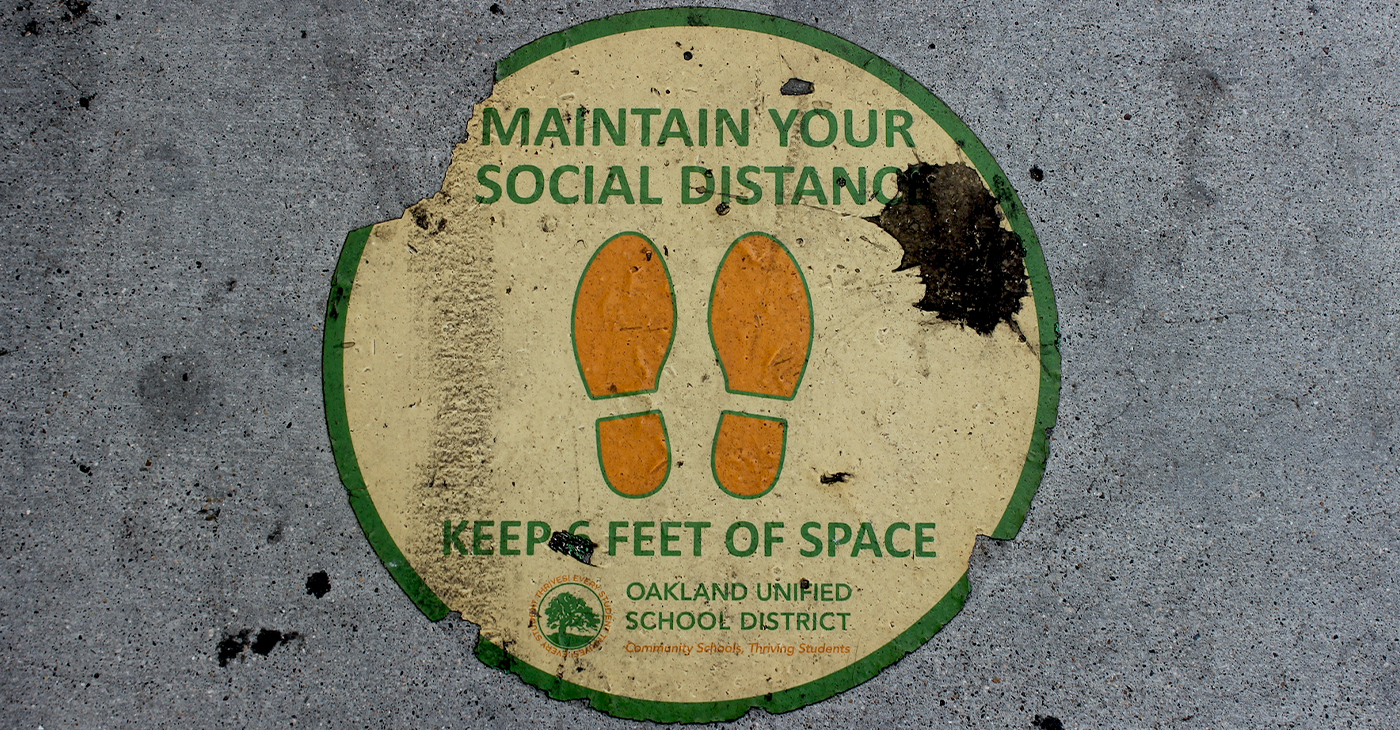
The Oakland Unified School District is no longer publishing data this school year to inform students, staff, parents and the public about positive COVID cases in schools.
“The district is responding to all positive cases of which we are notified,” wrote OUSD spokesperson John Sasaki in an email to the Post News Group. “However, consistent with state and county guidance, we are no longer aggregating and cleaning the data in the same way we were last year.”
During last school year, OUSD, along with neighboring school districts, published regularly updated dashboards that informed the public about positive COVID cases both district wide and in individual schools. While OUSD has retired its COVID dashboard, the Alameda, Berkeley, Emeryville, and San Leandro Unified School Districts are continuing to update theirs.
In an email, Berkeley Unified School District spokesperson Trish McDermott wrote that her district continues to “share our case count information with our community on our dashboard to inform their own choices about masking and testing.”
Spokesperson Keziah Moss wrote that the San Leandro School District has “continually operated with full transparency with our staff and families.” Moss called the publicly accessible COVID data “helpful to everyone as we monitor health and wellness in our schools.”
In an interview with the Post News Group, OUSD parent Innosanto Nagara expressed frustration about the dashboard’s removal, and also cast doubt on the adequacy of OUSD’s process of testing and collecting COVID data.
“Without the dashboard I have no idea how many students have COVID,” said Nagara. “But it’s not just the dashboard that’s gone. Basically, the whole system of monitoring, testing, and reporting is gone too.”
According to Nagara, last school year his son was tested for COVID twice a week at the school he attends, Melrose Leadership Academy, but that practice has ended.
“Before this school year started our school sent out an email saying you could come pick up a test,” said Nagara. “And that was all I’ve heard about testing.”
According to Sasaki, OUSD’s decision to retire its dashboard is “in alignment with” a resolution the school board passed on June 22. The resolution no longer requires the district to publish its COVID data and ended bi-weekly testing at all schools. While the district is still required to distribute take-home tests to students and host staffed testing hubs, there are no requirements as to how many tests must be distributed or how many hubs must remain open. Sasaki says rapid tests are available to all students who are symptomatic or exposed. This month, OUSD has two to four testing hubs for PCR testing open during weekdays from 8 a.m. to 4 p.m., which is roughly the same hours that schools are open.
Board Director Mike Hutchinson, who introduced the resolution, told this reporter in a message that the resolution’s intent was “resetting the district’s response to COVID this year, so we are in alignment with the state and the CDC and still have flexibility to shift if needed.”
“Thankfully we don’t need the same level of testing or reporting that we did last year,” wrote Hutchinson. “It’s good news that we’ve been able to scale back and shift our response to COVID.”
All elected directors currently serving on the school board voted to approve Hutchinson’s resolution. Director Kyra Mungia, who was appointed to the board, had not yet taken on her position when the vote was held.
In an email to this reporter, Board Director Sam Davis wrote that while he had been “an advocate of more available [COVID] data” during last school year, he “didn’t see any reason to push back against” Hutchinson’s resolution for this year. Davis called the gathering and reporting of COVID data as “a big lift,” and wrote that “it does not seem like schools should be under the burden of doing that work when it is not being done for any of the places where people are gathering in large numbers, usually unmasked, such as bars, concerts and restaurants, in ways that are probably contributing a lot more to community transmission than schools are.”
Board Directors Aimee Eng, Clifford Thompson, and VanCedric Williams, did not respond to multiple requests for comment for this story. Director Gary Yee did not answer when asked why he voted to approve Hutchinson’s resolution but wrote in an email he thought that Superintendent Dr Kyla Johnson-Trammell’s implementation of the resolution was consistent with its intent.
During public comments of a school board meeting on Aug. 24, Dorothy Graham criticized OUSD for no longer publishing COVID data.
“How are families supposed to understand the spread of COVID in our schools and the risk to our students with no data?” she asked.
Graham is a former director of the Alameda Health Consortium and has over 40 years experience working in public health. She’s also a high COVID risk individual with a grandson who attends an OUSD school. In an interview, Graham said she felt that OUSD is shifting its response from collective to individual responsibility. Like other districts in the area and across the country, masks are now optional at OUSD. Grahams is critical of the district’s choice to no longer release COVID data while the end of required masking could put more people at risk and feels it’s especially important now that people have access to COVID data so they can make informed risk assessment choices.
“The data dashboard provided imperfect but vital information to understand where things were at,” Graham said. “You could see the spikes in cases and know how urgent it was to test.”
As the OUSD school year started in early August, the CDC was saying COVID transmission was high throughout the Bay Area. It is unclear how widespread COVID is now and if it is less of a risk this school year. Vaccinations provide protection for many people against the worst COVID symptoms, but their potency wanes as time passes and over 25% of students and 45% of Black students are not vaccinated.
It is also unclear how widespread COVID is currently in Alameda county. Since last spring, private and state health institutes and departments have been saying that COVID case rates have likely become increasingly undercounted as take-home COVID tests are more available while government testing is less available. The increased ability to test independently has caused people to report their cases to health departments less frequently. The county’s data dashboards currently show that rates of reported COVID cases over the last four months have sharply fallen. They also show COVID related hospitalizations and inpatient rates have sharply risen for about the last six months. The county is currently administering tests at about the same rate as they were at the start of the pandemic.
Graham feels not many people are speaking out about OUSD related COVID issues.
“I was the only person to mention the word COVID at the board meeting,” she said. “Voices you’d expect to be speaking out about this, aren’t.”
Teachers, students and the Oakland Education Association had been vocal about COVID safety issues during the last two school years. Last January, OUSD teachers protested, as did students, in independent non-union affiliated sick-out and/or walk-out actions calling for better COVID safety measures. OEA pressed the district and negotiated over safety issues, and eventually struck a safety agreement deal that included making high quality masks available for free at all schools. This year, though, there have not been COVID protests. None of the four newsletters OEA has released this year have the word COVID in them, and its website no longer has any navigable page for COVID resources.
In a statement emailed to this reporter, OEA President Keith Brown wrote that “We can’t let our guard down against COVID.” Brown pointed out that agreements made with the district last school year have continued into this year. These include providing classrooms with quality air filtration, providing substitute teachers in classrooms, and ensuring that “OUSD maintains a stockpile of high-quality masks and rapid tests.”
According to Brown, OEA has also been encouraging more transparency in relation to COVID data this year.
“Our safety agreement sets the minimum, and we will continue to encourage OUSD to go above and beyond,” Brown wrote, “including transparently reporting known cases.”
In the meantime, OUSD parent Innosanto Nagara and grandparent Dorothy Graham remain unsatisfied with the district’s COVID procedures and want more transparency.
“I feel like we sent kids in this year like COVID was over from the district’s concern,” said Nagara.
“I think they retired the dashboard very prematurely.” said Graham. “Why is this controversial? Releasing the data should just be common sense.”







Activism
Oakland Post: Week of March 11 -17, 2026
The printed Weekly Edition of the Oakland Post: Week of March 11 – 17, 2026


To enlarge your view of this issue, use the slider, magnifying glass icon or full page icon in the lower right corner of the browser window.

Activism
Oakland Post: Week of March 4 – 10, 2026
The printed Weekly Edition of the Oakland Post: Week of March 4 – 10, 2026

To enlarge your view of this issue, use the slider, magnifying glass icon or full page icon in the lower right corner of the browser window.
Activism
Oakland Post: Week of February 25 – March 3, 2026
The printed Weekly Edition of the Oakland Post: Week of – February 25 – March 3, 2026

To enlarge your view of this issue, use the slider, magnifying glass icon or full page icon in the lower right corner of the browser window.

WORK FROM HOME
Home-based business with potential monthly income of $10K+ per month. A proven training system and website provided to maximize business effectiveness. Perfect job to earn side and primary income. Contact Lynne for more details: Lynne4npusa@gmail.com 800-334-0540


Financial Wellness and Mental Health: Managing Money Stress in College

Oakland Post: Week of March 11 -17, 2026

Women & Wealth: Tips for Navigating Your Lifelong Financial Journey

COMMENTARY: Women of Color Shape Our Past and Future

Woman’s Search for Family’s Roots Leads to Ancestor John T. Ward – A Successful Entrepreneur and Conductor on the Underground Railroad

Advocates Raise Alarm Over ICE Operation, MOU and Detention Risks in Baltimore County

Pete Buttigieg to Join Mayor Randall Woodfin for Community Town Hall in Birmingham

WATCH: Week One – NNPA’s “Leadership Matters” Video Series

Oakland Post: Week of March 4 – 10, 2026

OP-ED: NNPA Launches 2026 “Leadership Matters” Video Series

PRESS ROOM: PMG and Cranbrook Horizons-Upward Bound Launch Journey Fellowship Cohort 2

Los Angeles Summit Brings Together Leaders to Tackle Poverty and Affordability

Civil Rights TV Launches 24/7 Network Focused on Black History, Education and Equity

REVIEW: The Ultimate Hot Girl Summer Getaway: Sunseeker Resort Florida

COMMENTARY: How You Stop a Prescription Medicine is as Important as How You Start

Book Review: Books on Black History and Black Life for Kids

Community Celebrates Turner Group Construction Company as Collins Drive Becomes Turner Group Drive

Discrimination in City Contracts

California Launches Study on Mileage Tax to Potentially Replace Gas Tax as Republicans Push Back

COMMENTARY: The Biases We Don’t See — Preventing AI-Driven Inequality in Health Care

Black History Events in the East Bay

Post Newspaper Invites NNPA to Join Nationwide Probate Reform Initiative

Art of the African Diaspora Celebrates Legacy and Community at Richmond Art Center

New Bill, the RIDER Safety Act, Would Support Transit Ambassadors and Safety on Public Transit

COMMENTARY: The National Protest Must Be Accompanied with Our Votes

Oakland Post: Week of February 4 – 10, 2026

Oakland Post: Week of February 11 – 17, 2026

Dorothy Lee Bolden: Uniting Domestic Workers

After Don Lemon’s Arrest, Black Officials Raise Concerns About Independent Black Media

Reflecting on Black History Milestones in Birmingham AL

Hyundai Ioniq 5 Parking, Safety, and 360 View #shorts

2025 Ioniq 5 New Wiper & Powerful Performance! #shorts

Electric SUV Range: Is 259 Miles Enough? #shorts

EV Charging: How Fast Can You Charge an Electric Vehicle? #shorts

Biometric Cooling… Messaging Seats…Come on! 2025 Infiniti QX80 Autograph 4WD

Charged Up: Witness the Magic of a Fully Electric Car! #shorts

Range Rover Sport PHEV Included…: See What’s Inside This Luxury SUV! #shorts

Invisible Hood View: Perfect Parking with X-Ray Vision! #shorts

AI Is Reshaping Black Healthcare: Promise, Peril, and the Push for Improved Results in California

ESSAY: Technology and Medicine, a Primary Care Point of View

Sanctuary Cities

The RESISTANCE – FREEDOM NOW

STATE OF THE PEOPLE: Freddie

ECONOMIC BOYCOTT DAY!!!!!

I told You So

-
 #NNPA BlackPress4 weeks ago
Reflecting on Black History Milestones in Birmingham AL
-
 #NNPA BlackPress4 weeks ago
PRESS ROOM: NBA Hall of Fame Nominee Terry Cummings Joins 100 Black Men of DeKalb County to Launch Victory & Values Initiative
-

 #NNPA BlackPress4 weeks ago
U.S. manufacturing rebounds – how foundry services are adapting to rising demand
-

 #NNPA BlackPress4 weeks ago
OP-ED: One Hundred Years of Black Workers Telling the Truth
-

 Activism3 weeks ago
Oakland Post: Week of February 25 – March 3, 2026
-

 #NNPA BlackPress4 weeks ago
Advancements in solar technology that are changing the way we power the world
-

 #NNPA BlackPress3 weeks ago
Trump’s MAGA Allies are Creating Executive Order Plan to Steal the 2026 Midterms
-

 #NNPA BlackPress4 weeks ago
PRESS ROOM: Civil Rights TV Launches in Selma as the World’s First 24/7 Civil Rights Television Network
