
Opinion
Opinion: Worthy of Justice (Part 2)

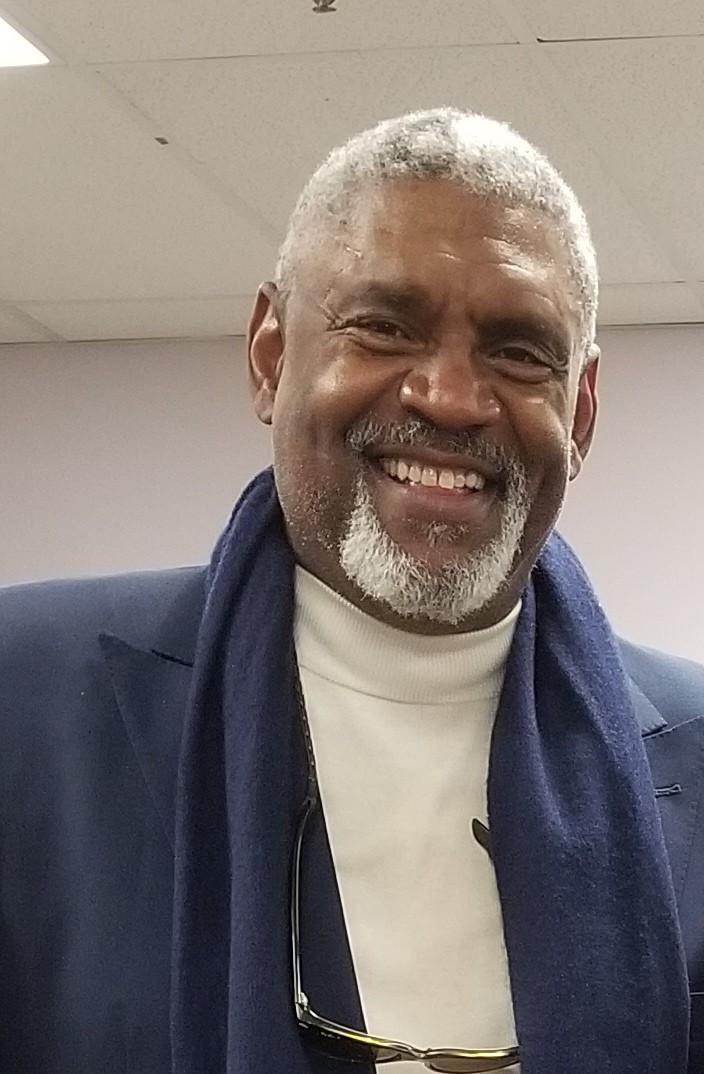
Columnist Leo Bazile began a series of articles examining morality and other aspects of the Reparations topic during this 2019 political climate. Reginald W. Lyles’ column is a theological response to Bazile’s work.
Last week, Lyles’ column (part 1) closed with a historical examination of the mind set before the Civil War, concluding that Africans were of such an inferior stock that they had no rights that the white man was bound to respect.
Out of this erroneous and racist thinking, hundreds of years of indoctrination and oppression were and still are forced upon the psyche and thinking of African Americans.
To counteract and repair this oppressive thinking. Liberation Theology emerged.
Liberation Theology emphasizes social concern for the poor and political liberation for oppressed peoples. In the 1950s and 1960s, liberation theology was the political praxis (the process by which a theory’, lesson, or skill is enacted, embodied, or realized), of Latin American theologians, such as Gustavo Gutierrez of Peru, Leonardo Boff of Brazil, Juan Luis Segundo of Uruguay, and Jon Sobrino of Spain, who popularized the phrase “preferential option for the poor.”
Liberation Theology also found the voice of James Cone in his books, “A Black Theology of Liberation” and “The Cross and the Lynching Tree,” which attempts to help people of African descent overcome oppression. He especially focused on injustices committed against African Americans and Black South Africans during the periods of U.S. segregation and South Africa’s apartheid, respectively.
Katie G. Cannon and Jacquelyn Grant’s book, “Womanist Theology,” emphasizes interrogating the social construction of Black womanhood in the Black community and assuming a liberation perspective so African American women can live emboldened lives within the African American community and within the larger society’.
These liberation theologies shed the light of justice.
We are experiencing dark days all over the world and especially here in the United States, where fascism and bigotry are emerging and thriving.
oligarchs are flourishing everywhere: Donald Trump of the United States, Rodrigo Duterte of the Philippines, Marine Le Pen of France, Vladimor Putin of Russia, Bashar al-Assad of Syria, Matteo Salvini of Italy, Benjamin Netanyahu of Israel, Boris Johnson of England, King Salman of Saudi Arabia, and many more.
The last time forces like these emerged so fully on a worldwide scale, we literally fought wars to quell the evil: WWII, two atomic bombs, the casualties of 20 million military personnel, 40 million civilians, and many who died because of deliberate genocide, massacres, mass-bombings, disease, and starvation. Six million Jew’s in the Holocaust and 300,000 Chinese in the Rape of Nanjing died under mass oppression.
The Bible says in Micah 6:8: “He has shown you, O mortal, what is good. And what does the Lord require of you? To act justly and to love mercy and to walk humbly with your God.”
Everyone is deserving and must do justice, but we must also demand it from and for ourselves, and all those around us. We must apply justice to everyone. And, we must be mindful in the struggle that power concedes nothing without a demand.
The demand for reparations is gaining traction in the United States. We must boldly embrace this political issue because African Americans built this country with free slave labor. Yet we have been “red-lined” from benefiting from the wealth we built – by segregationist alliances of immoral government legislation, unethical banking policies, and an unscrupulous real estate industry.
African Americans deserve reparations. African Americans deserve to be made whole.
African Americans must understand and believe that they deserve justice in the forms of reparations, economic justice, environmental justice, housing justice, food justice, water justice, and equal treatment in the justice system.
African Americans’ demand for justice is not radical, or communist, or socialist, or any other imagined label designed to demean, intimidate and shame them. On the contrary, all children of God are wonderfully made and deserving of justice.

Activism
Oakland Post: Week of February 11 = 17, 2026
The printed Weekly Edition of the Oakland Post: Week of – February 11 – 17, 2026


To enlarge your view of this issue, use the slider, magnifying glass icon or full page icon in the lower right corner of the browser window.

#NNPA BlackPress
COMMENTARY: The National Protest Must Be Accompanied with Our Votes
Just as Trump is gathering election data like having the FBI take all the election data in Georgia from the 2020 election, so must we organize in preparation for the coming primary season to have the right people on ballots in each Republican district, so that we can regain control of the House of Representatives and by doing so, restore the separation of powers and balance that our democracy is being deprived of.
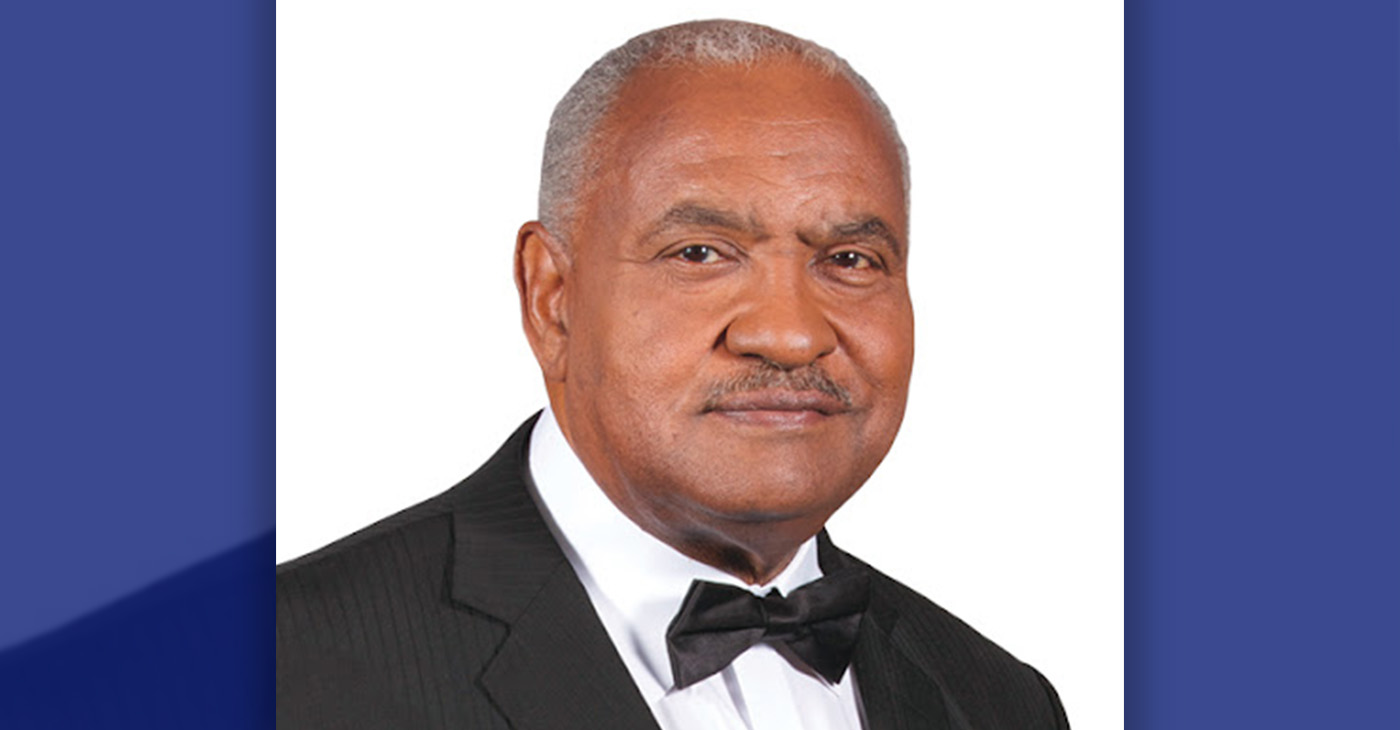
By Dr. John E. Warren, Publisher San Diego Voice & Viewpoint Newspaper
As thousands of Americans march every week in cities across this great nation, it must be remembered that the protest without the vote is of no concern to Donald Trump and his administration.
In every city, there is a personal connection to the U.S. Congress. In too many cases, the member of Congress representing the people of that city and the congressional district in which it sits, is a Republican. It is the Republicans who are giving silent support to the destructive actions of those persons like the U.S. Attorney General, the Director of Homeland Security, and the National Intelligence Director, who are carrying out the revenge campaign of the President rather than upholding the oath of office each of them took “to Defend The Constitution of the United States.”
Just as Trump is gathering election data like having the FBI take all the election data in Georgia from the 2020 election, so must we organize in preparation for the coming primary season to have the right people on ballots in each Republican district, so that we can regain control of the House of Representatives and by doing so, restore the separation of powers and balance that our democracy is being deprived of.
In California, the primary comes in June 2026. The congressional races must be a priority just as much as the local election of people has been so important in keeping ICE from acquiring facilities to build more prisons around the country.
“We the People” are winning this battle, even though it might not look like it. Each of us must get involved now, right where we are.
In this Black History month, it is important to remember that all we have accomplished in this nation has been “in spite of” and not “because of.” Frederick Douglas said, “Power concedes nothing without a struggle.”
Today, the struggle is to maintain our very institutions and history. Our strength in this struggle rests in our “collectiveness.” Our newspapers and journalists are at the greatest risk. We must not personally add to the attack by ignoring those who have been our very foundation, our Black press.
Are you spending your dollars this Black History Month with those who salute and honor contributions by supporting those who tell our stories? Remember that silence is the same as consent and support for the opposition. Where do you stand and where will your dollars go?
Activism
Post Newspaper Invites NNPA to Join Nationwide Probate Reform Initiative
The Post’s Probate Reform Group meets the first Thursday of every month via Zoom and invites the public to attend. The Post is making the initiative national and will submit information from its monthly meeting to the NNPA to educate, advocate, and inform its readers.

By Tanya Dennis
The National Newspaper Publishers Association (NNPA) represents the Black press with over 200 newspapers nationwide.
Last night the Post announced that it is actively recruiting the Black press to inform the public that there is a probate “five-alarm fire” occurring in Black communities and invited every Black newspaper starting from the Birmingham Times in Alabama to the Milwaukee Times Weekly in Wisconsin, to join the Post in our “Year of Action” for probate reform.
The Post’s Probate Reform Group meets the first Thursday of every month via Zoom and invites the public to attend. The Post is making the initiative national and will submit information from its monthly meeting to the NNPA to educate, advocate, and inform its readers.
Reporter Tanya Dennis says, “The adage that ‘When America catches a cold, Black folks catch the flu” is too true in practice; that’s why we’re engaging the Black Press to not only warn, but educate the Black community regarding the criminal actions we see in probate court: Thousands are losing generational wealth to strangers. It’s a travesty that happens daily.”
Venus Gist, a co-host of the reform group, states, “ Unfortunately, people are their own worst enemy when it comes to speaking with loved ones regarding their demise. It’s an uncomfortable subject that most avoid, but they do so at their peril. The courts rely on dissention between family members, so I encourage not only a will and trust [be created] but also videotape the reading of your documents so you can show you’re of sound mind.”

In better times, drafting a will was enough; then a trust was an added requirement to ‘iron-clad’ documents and to assure easy transference of wealth.
No longer.
As the courts became underfunded in the last 20 years, predatory behavior emerged to the extent that criminality is now occurring at alarming rates with no oversight, with courts isolating the conserved, and, I’ve heard, many times killing conservatees for profit. Plundering the assets of estates until beneficiaries are penniless is also common.”
Post Newspaper Publisher Paul Cobb says, “The simple solution is to avoid probate at all costs. If beneficiaries can’t agree, hire a private mediator and attorney to work things out. The moment you walk into court, you are vulnerable to the whims of the court. Your will and trust mean nothing.”
Zakiya Jendayi, a co-host of the Probate Reform Group and a victim herself, says, “In my case, the will and trust were clear that I am the beneficiary of the estate, but the opposing attorney said I used undue influence to make myself beneficiary. He said that without proof, and the judge upheld the attorney’s baseless assertion. In court, the will and trust is easily discounted.”
The Black press reaches out to 47 million Black Americans with one voice. The power of the press has never been so important as it is now in this national movement to save Black generational wealth from predatory attorneys, guardians and judges.
The next probate reform meeting is on March 5, from 7 – 9 p.m. PST. Zoom Details:
Meeting ID: 825 0367 1750
Passcode: 475480
All are welcome.


WORK FROM HOME
Home-based business with potential monthly income of $10K+ per month. A proven training system and website provided to maximize business effectiveness. Perfect job to earn side and primary income. Contact Lynne for more details: Lynne4npusa@gmail.com 800-334-0540


Oakland Post: Week of February 11 = 17, 2026

Rising Optimism Among Small And Middle Market Business Leaders Suggests Growth for California

Discrimination in City Contracts

COMMENTARY: The National Protest Must Be Accompanied with Our Votes

Congresswoman Simon Votes Against Department of Homeland Security, ICE Funding

Post Newspaper Invites NNPA to Join Nationwide Probate Reform Initiative

Community Celebrates Turner Group Construction Company as Collins Drive Becomes Turner Group Drive

New Bill, the RIDER Safety Act, Would Support Transit Ambassadors and Safety on Public Transit

Trump’s White House Pushes to Control California Wildfire Recovery

Gov. Newsom, AG Bonta to Local Law Enforcement: You Have Authority to Investigate Federal Agents

Dorothy Lee Bolden: Uniting Domestic Workers

Cracking Down on Human Trafficking, California DOJ Announces 120 Arrests

COMMENTARY: The Biases We Don’t See — Preventing AI-Driven Inequality in Health Care

California Launches Study on Mileage Tax to Potentially Replace Gas Tax as Republicans Push Back

Book Review: Books on Black History and Black Life for Kids

OP-ED: AB 1349 Puts Corporate Power Over Community

Protecting California’s Black Moms and Babies: Policies and Programs Struggle to Fix Deep-Rooted Maternal Health Inequities

Why Peace on Earth Begins with Birth, a Q&A with Midwife Nikki Helms

Jefferson County (AL) Democrats Open Qualifying for 2026 Primary Elections

Skater Emmanuel Savary Sharpens Routines for the 2026 U.S. Championships

COMMENTARY: With Gratitude and Praise for 2026

Life Expectancy in Marin City, a Black Community, Is 15-17 Years Less than the Rest of Marin County

From Civil Rights to ICE Raids, Trump’s Unchecked Power Puts Every Community at Risk
From Civil Rights to ICE Raids, Trump’s Unchecked Power Puts Every Community at Risk

OP-ED: The Dream Cannot be Realized Without Financial Freedom

Travis Scott Teaches Us How to Give Forward

Four Stolen Futures: Will H-E-B Do The Right Thing?

Oakland Post: Week of January 28, 2025 – February 3, 2026

Newsom’s Finance Director Joe Stephenshaw Opens 2026-27 Budget Debate with Cautious Plan

Street Lines: 2025 Jeep Wagoneer S Limited 4XE

Hyundai Ioniq 5 Parking, Safety, and 360 View #shorts

2025 Ioniq 5 New Wiper & Powerful Performance! #shorts

Electric SUV Range: Is 259 Miles Enough? #shorts

EV Charging: How Fast Can You Charge an Electric Vehicle? #shorts

Biometric Cooling… Messaging Seats…Come on! 2025 Infiniti QX80 Autograph 4WD

Charged Up: Witness the Magic of a Fully Electric Car! #shorts

Range Rover Sport PHEV Included…: See What’s Inside This Luxury SUV! #shorts

Invisible Hood View: Perfect Parking with X-Ray Vision! #shorts

AI Is Reshaping Black Healthcare: Promise, Peril, and the Push for Improved Results in California

ESSAY: Technology and Medicine, a Primary Care Point of View

Sanctuary Cities

The RESISTANCE – FREEDOM NOW

STATE OF THE PEOPLE: Freddie

ECONOMIC BOYCOTT DAY!!!!!

I told You So
-
 Activism2 weeks ago
Life Expectancy in Marin City, a Black Community, Is 15-17 Years Less than the Rest of Marin County
-
 #NNPA BlackPress4 weeks ago
OP-ED: The Dream Cannot be Realized Without Financial Freedom
-
 Activism2 weeks ago
Oakland Post: Week of January 28, 2025 – February 3, 2026
-

 Activism3 weeks ago
Oakland Post: Week of January 21 – 27, 2026
-

 Activism2 weeks ago
Medi-Cal Cares for You and Your Baby Every Step of the Way
-
Uncategorized2 weeks ago
Homegoing Service for Education Advocate Oscar Wright, 101
-

 Activism1 week ago
After Don Lemon’s Arrest, Black Officials Raise Concerns About Independent Black Media
-
 Business1 week ago
California Launches Study on Mileage Tax to Potentially Replace Gas Tax as Republicans Push Back
