
Bay Area
Opinion: Let’s Set the Record Straight: Coal is Already Shipped Through Oakland and It Is Safe


Let’s set the record straight. The Environmental Protection Agency (EPA) has authorized the shipment of millions of tons of coal throughout the Bay Area for years. These shipments include coal cars running through the city of Oakland, through Jack London Square, the Army Base and other rail points. Over the many years that this has occurred, there have been no reported adverse health effects, nor have there been reports of unhealthy levels of coal dust registered on any of the air monitors operating in West Oakland.
For these reasons and many more, I state unequivocally that the Op Ed in the Post on Nov. 7, ‘We Still Object to Coal’, disregards science, the truth and the welfare of the citizens of Oakland! There are no inaccuracies in the “ITS” (Insight Terminal Solutions) Post article of Oct. 31, ‘Bulk Commodity Terminal Operator Agrees to “Oakland Protocol” Phase-in Plan to Ban Coal’. To the contrary, the inaccuracies are in the article by opponents of the multi-commodity bulk terminal.
But you need not take my word for it. Renowned local physicians Dr. Washington Burns and Dr. Geoffrey Watson, who have dedicated their lives to caring for Oakland’s underserved residents, state without equivocation that coal does not pose a health threat to Oakland residents; neither as it is currently shipped and certainly not under the process that will be used by ITS. As well, when the case was brought before the federal court on Oakland’s frivolous argument that coal was dangerous, Ninth Circuit Judge Vincent Chhabria ruled that the City failed to produce “evidence that the proposed coal operations would pose a substantial health or safety danger.”
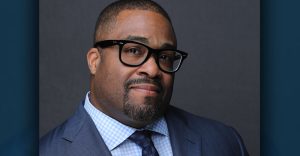
The new state-of-the-art Oakland Protocol process is safe. ITS will use covered railcars and a fully encapsulated delivery system that eliminates the possibility of coal dust release. The terminal is also good for Oakland and the community. It will bring hundreds of millions of dollars in city revenue and community benefits.
Building the terminal also has the benefit of using coal to eliminate coal. Under the provisions of the 5-3-0 plan, 5 million tons of coal a year would be shipped through the terminal for the first 10 years of operation, and 3 million tons per year for the next 10 years, no more coal would be shipped through the ITS facility for the remainder of the 66- year lease. This would amount to a 92 percent reduction, and eliminate an estimated 900 million tons of coal, that would otherwise legally be allowed to be shipped through the terminal in accordance with the ruling of the federal judge. Coal will help pay the cost to build the terminal, but it will also be eliminated in 20 years.
The opposition author also suggests that shipment in covered cars is dangerous because of the potential for spontaneous combustion. This is nonsense! Rail cars have been covered for decades, enclosing various commodities, including coal. Coal is transported along the Mississippi River in covered containers, and by sea in covered containers without combustion or other danger. The manufacturer that ITS will use, Eco-Fab, has been covering rail cars in Europe since the 1970s without incident. This claim of potential spontaneous combustion, like the safety issue, is made up to advance the world view of coal opponents. It has nothing whatsoever to do with what will happen in Oakland
Failure to issue permits to build a terminal will have devastating legal implications for Oakland. The city will have to repay the state of California over $242 million that the state advanced for development. The city will owe $500 million in damages to California Capital Investment Group for wrongfully denying the development and not issuing the appropriate permits. The terminal, under its signed 66-year lease with the city, has secured all CEQA permits to operate a multi-commodity terminal that can handle upwards of 15 million tons annually, all of which could be coal per our lease if the city forces the owners to go through a long and costly legal challenge. If the city fails to act, it could jeopardize the option of phasing out coal under the 5-3-0 plan.
More to the point however, the City would needlessly lose out on hundreds of high paying jobs, invaluable job training and additional revenue streams that, over the life of the lease, could total hundreds of millions of dollars. These dollars could be earmarked specifically for the City’s most underserved and needy citizens.
Thus, the truth is the risk of perpetuating this fraud by the City of Oakland is stunning. It has been this author’s observation that citizens in Oakland, particularly those who would most benefit and who are most underserved, in fact very much desire to see this terminal built.
See the article by Pastor LJ Jennings, entitled ‘Our Community, Our Voice, We Speak for Us!’ in the Oakland Post.











Activism
Oakland Post: Week of March 11 -17, 2026
The printed Weekly Edition of the Oakland Post: Week of March 11 – 17, 2026

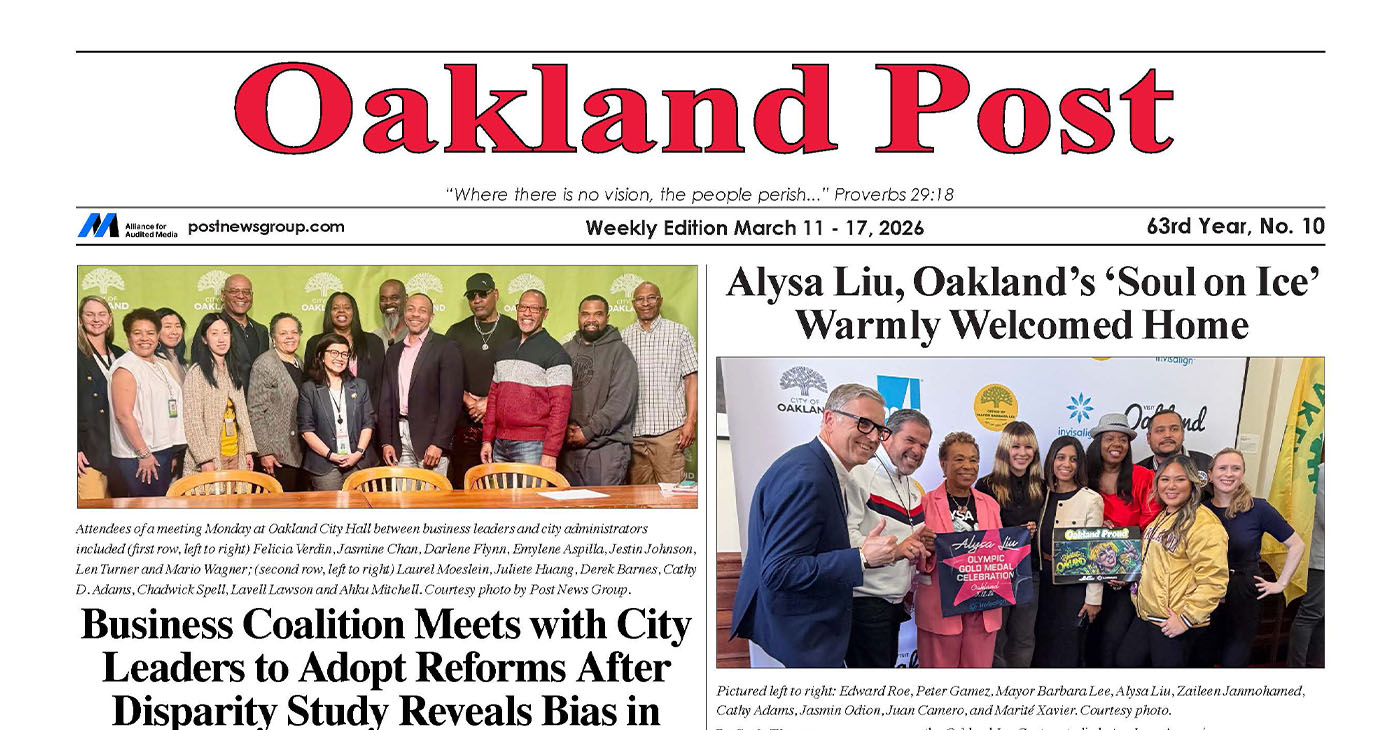
To enlarge your view of this issue, use the slider, magnifying glass icon or full page icon in the lower right corner of the browser window.

Activism
Oakland Post: Week of March 4 – 10, 2026
The printed Weekly Edition of the Oakland Post: Week of March 4 – 10, 2026

To enlarge your view of this issue, use the slider, magnifying glass icon or full page icon in the lower right corner of the browser window.
Activism
Oakland Post: Week of February 25 – March 3, 2026
The printed Weekly Edition of the Oakland Post: Week of – February 25 – March 3, 2026

To enlarge your view of this issue, use the slider, magnifying glass icon or full page icon in the lower right corner of the browser window.

WORK FROM HOME
Home-based business with potential monthly income of $10K+ per month. A proven training system and website provided to maximize business effectiveness. Perfect job to earn side and primary income. Contact Lynne for more details: Lynne4npusa@gmail.com 800-334-0540


Financial Wellness and Mental Health: Managing Money Stress in College

Oakland Post: Week of March 11 -17, 2026

Women & Wealth: Tips for Navigating Your Lifelong Financial Journey

COMMENTARY: Women of Color Shape Our Past and Future

Woman’s Search for Family’s Roots Leads to Ancestor John T. Ward – A Successful Entrepreneur and Conductor on the Underground Railroad

Advocates Raise Alarm Over ICE Operation, MOU and Detention Risks in Baltimore County

Pete Buttigieg to Join Mayor Randall Woodfin for Community Town Hall in Birmingham

WATCH: Week One – NNPA’s “Leadership Matters” Video Series

Oakland Post: Week of March 4 – 10, 2026

OP-ED: NNPA Launches 2026 “Leadership Matters” Video Series

PRESS ROOM: PMG and Cranbrook Horizons-Upward Bound Launch Journey Fellowship Cohort 2

Los Angeles Summit Brings Together Leaders to Tackle Poverty and Affordability

Civil Rights TV Launches 24/7 Network Focused on Black History, Education and Equity

REVIEW: The Ultimate Hot Girl Summer Getaway: Sunseeker Resort Florida

COMMENTARY: How You Stop a Prescription Medicine is as Important as How You Start

Book Review: Books on Black History and Black Life for Kids

California Launches Study on Mileage Tax to Potentially Replace Gas Tax as Republicans Push Back

Community Celebrates Turner Group Construction Company as Collins Drive Becomes Turner Group Drive

Discrimination in City Contracts

COMMENTARY: The Biases We Don’t See — Preventing AI-Driven Inequality in Health Care

Black History Events in the East Bay

Post Newspaper Invites NNPA to Join Nationwide Probate Reform Initiative

Art of the African Diaspora Celebrates Legacy and Community at Richmond Art Center

New Bill, the RIDER Safety Act, Would Support Transit Ambassadors and Safety on Public Transit

COMMENTARY: The National Protest Must Be Accompanied with Our Votes

Oakland Post: Week of February 4 – 10, 2026

Oakland Post: Week of February 11 – 17, 2026

Dorothy Lee Bolden: Uniting Domestic Workers

After Don Lemon’s Arrest, Black Officials Raise Concerns About Independent Black Media

Reflecting on Black History Milestones in Birmingham AL

Hyundai Ioniq 5 Parking, Safety, and 360 View #shorts

2025 Ioniq 5 New Wiper & Powerful Performance! #shorts

Electric SUV Range: Is 259 Miles Enough? #shorts

EV Charging: How Fast Can You Charge an Electric Vehicle? #shorts

Biometric Cooling… Messaging Seats…Come on! 2025 Infiniti QX80 Autograph 4WD

Charged Up: Witness the Magic of a Fully Electric Car! #shorts

Range Rover Sport PHEV Included…: See What’s Inside This Luxury SUV! #shorts

Invisible Hood View: Perfect Parking with X-Ray Vision! #shorts

AI Is Reshaping Black Healthcare: Promise, Peril, and the Push for Improved Results in California

ESSAY: Technology and Medicine, a Primary Care Point of View

Sanctuary Cities

The RESISTANCE – FREEDOM NOW

STATE OF THE PEOPLE: Freddie

ECONOMIC BOYCOTT DAY!!!!!

I told You So
-
 #NNPA BlackPress4 weeks ago
Reflecting on Black History Milestones in Birmingham AL
-

 #NNPA BlackPress4 weeks ago
PRESS ROOM: NBA Hall of Fame Nominee Terry Cummings Joins 100 Black Men of DeKalb County to Launch Victory & Values Initiative
-

 #NNPA BlackPress4 weeks ago
U.S. manufacturing rebounds – how foundry services are adapting to rising demand
-

 Activism3 weeks ago
Oakland Post: Week of February 25 – March 3, 2026
-

 #NNPA BlackPress4 weeks ago
OP-ED: One Hundred Years of Black Workers Telling the Truth
-

 #NNPA BlackPress4 weeks ago
Trump’s MAGA Allies are Creating Executive Order Plan to Steal the 2026 Midterms
-

 #NNPA BlackPress4 weeks ago
Advancements in solar technology that are changing the way we power the world
-

 #NNPA BlackPress4 weeks ago
PRESS ROOM: Civil Rights TV Launches in Selma as the World’s First 24/7 Civil Rights Television Network
