
Opinion
OPINION: Remembering the Sin and Shame of Lynching in America

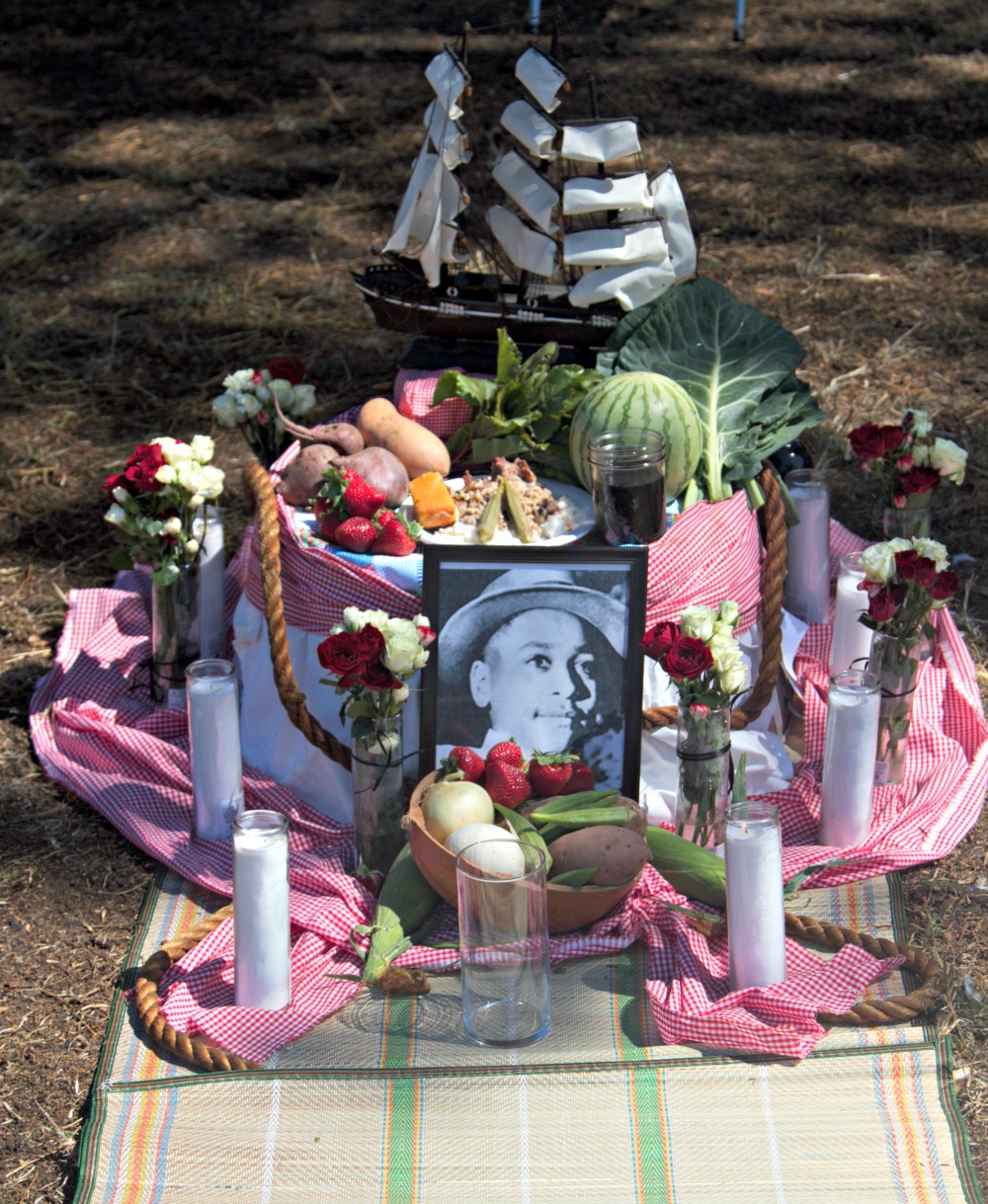
The lynching rope is part of the altar for Omnira Institute’s ‘Ritual of Remembrance’ Juneteenth celebration on June 10 at Lake Merritt.
“Where there’s a will, there’s a way,” the old folks used to say when facing obstacles, often under their breaths.
“Where there’s a tree, there’s a rope,” is the next line, almost a rejoinder, acknowledging the constancy of unpredictable trouble, an expression fraught with grief, fear and loss.
One that a Black child born in the North in the 1950s didn’t know referred to the South’s “Strange Fruit.”
I am not sure if you can see it, the rope, on the altar, honoring and remembering the victims of white supremacy, lynched individually or in pairs or groups, these descendants of enslaved people whose only (proven) crime was to be Black. They were all killed by “person or persons unknown,” yet for decades after the Emancipation Proclamation, lynchings were very public events often occurring on the courthouse lawn.
 Town newspapers sometimes announced the day and time the spectacle would take place and trains were specially scheduled to transport the spectators: men, women, and even small children. Newspapers covered lynchings in graphic detail. Photographs showed desecrated bodies of Black people surrounded by triumphant sometimes even grinning white spectators. Again, “the persons unknown.” Black people certainly knew who terrorized them. The memory of such horrors haunted Black communities, a hobbling fear lasting generations. The frequency of the lynchings would stimulate the Great Migration, surging right after World War I.
The most renown lynching was of 14-year-old Emmett Till in 1955, and the blood lust of the South appeared to wane under the withering scorn of the world. But the lynching of the Civil Rights workers in 1963 revealed otherwise as the search for their bodies in the river turned up many more, defiled, unidentified, unburied, unmourned. Like the tabloids showing the victorious crowds, social media in 2017 allows us to see ‘lynchings’ in real time.
There are so many, I honestly don’t have the heart to keep up.
Two weeks ago I glanced at an account on Facebook. Below three school portraits of impossibly young Black males, the headline was almost a taunt: “Did you know these youth were killed by the police this week? …Neither did we.” Then, on Monday I received another Facebook notice of a pregnant, mentally- challenged Black woman in Seattle killed by police in front of her other children.
I am doing my best, as our people say, to stay or be “woke,” but I confess I did not have the stomach to read further. It is 2017, and lynching not only continues, it is increasing. Like the mobs of the old days, police become judge, jury and executioner. Hidden under police department policy, the names of “persons unknown” are not released until the victim’s memory (ex. Mike Brown) is sullied.
On the rare occasion that police are actually tried for murder, lackluster prosecution ensures that they are seldom convicted. And now it’s not just the police, but individual white men who decide they want to kill Black people just because they feel like it. Timothy Caughman, a homeless Black man in New York, was stabbed to death in March by a man who came from Maryland for that express purpose.
In the 1920s and 1930s, not ‘giving ground’ to a white person, like refusing to step off the sidewalk or even bumping into a white girl while running to catch a train, were lynchable offenses, and it appears they are again. Five days before his graduation in May, Bowie State College student Richard Collins III was stabbed to death while waiting for an Uber ride for refusing to “yield ground” to a white University of Maryland student.
“Where there’s a will, there’s a way; where there’s a tree there’s a rope,” the old folks said.
I had been directed by spirit to make a noose with the coarse rope, but I didn’t know how. I am glad I didn’t. Symbolically, it would knot the possibility inherent in the third line, the last utterance of this trinity.
“Where there’s life, there’s hope.” Yes. And I hope that the ancestors understood.


Activism
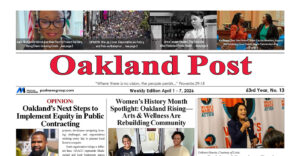
Oakland Post: Week of April 1 – 7, 2026
The printed Weekly Edition of the Oakland Post: Week of April 1 – 7, 2026
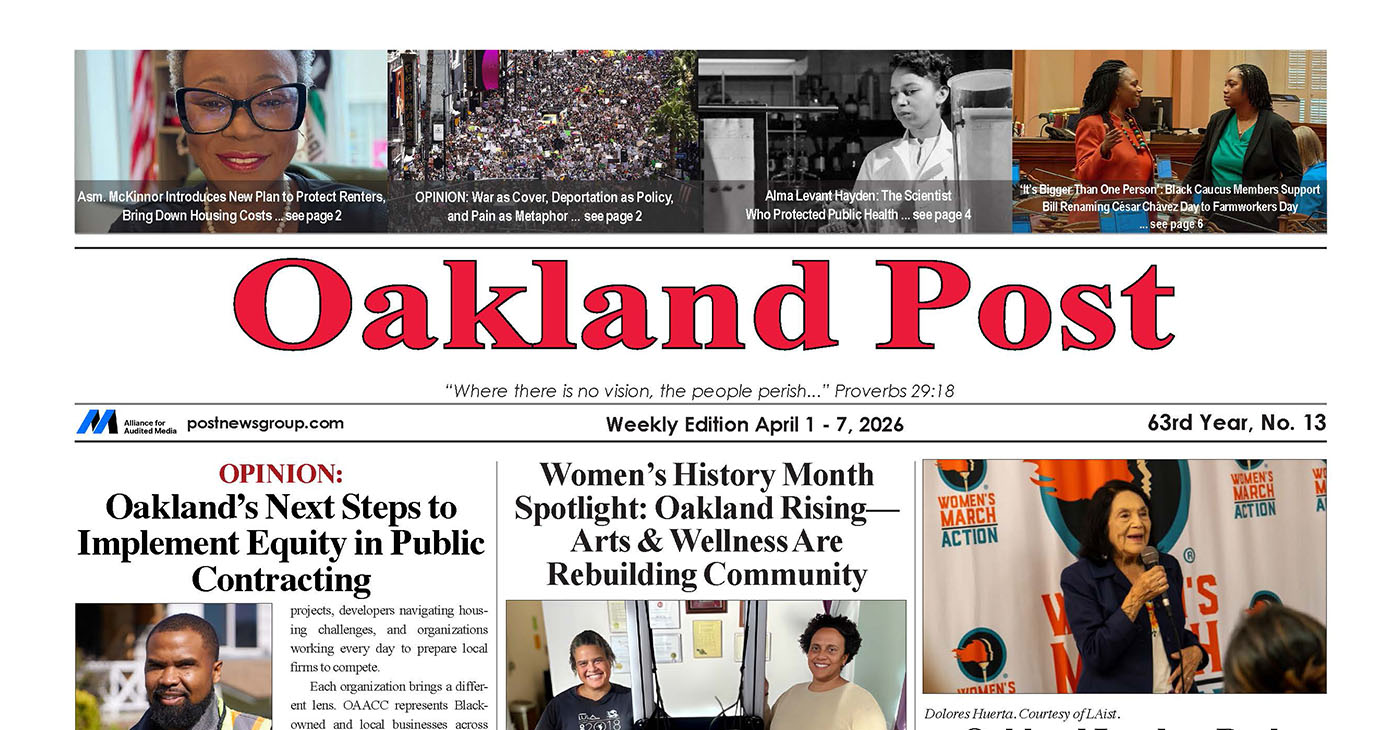
To enlarge your view of this issue, use the slider, magnifying glass icon or full page icon in the lower right corner of the browser window.
Activism
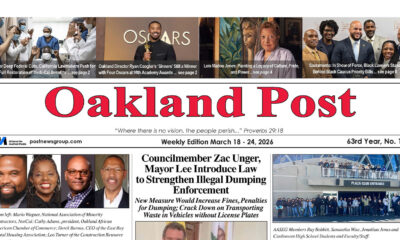
Oakland Post: Week of March 18 – 24, 2026
The printed Weekly Edition of the Oakland Post: Week of March 18 – 24, 2026
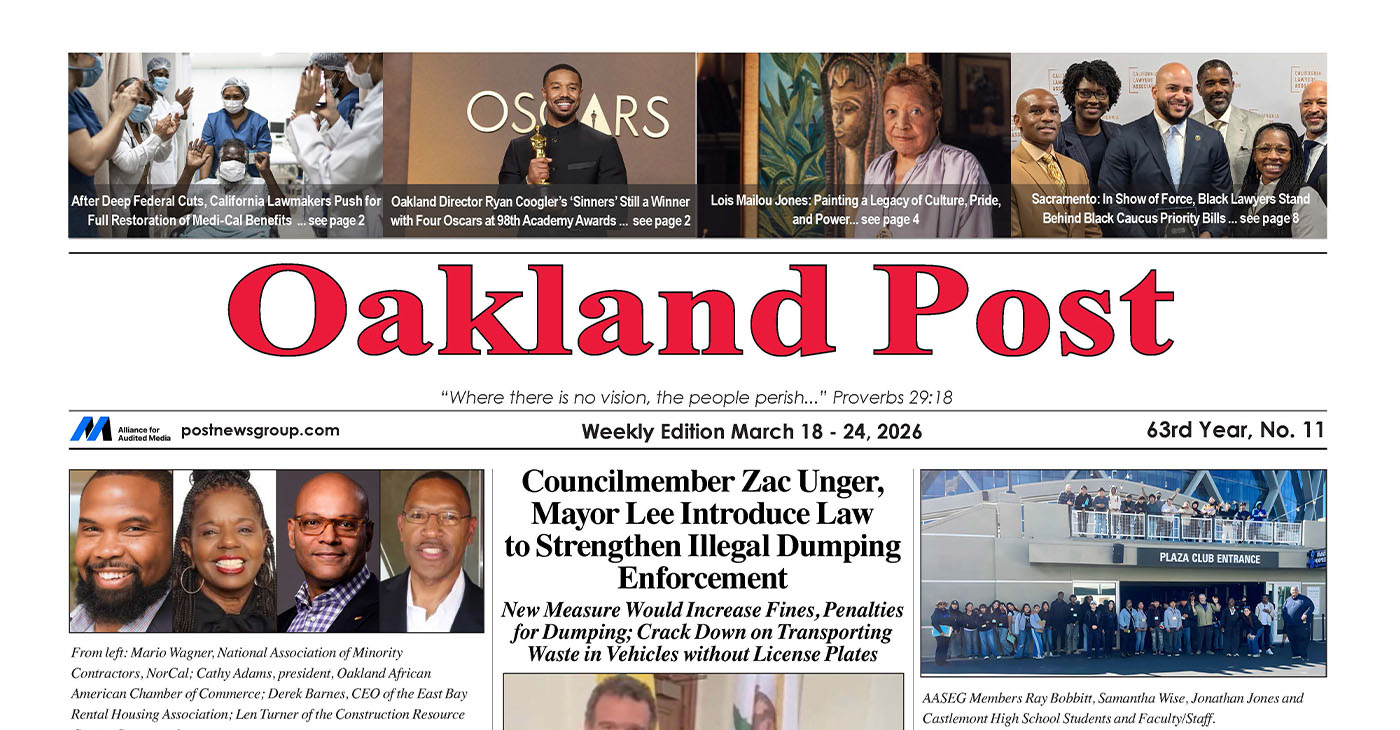
To enlarge your view of this issue, use the slider, magnifying glass icon or full page icon in the lower right corner of the browser window.
Activism
Oakland Post: Week of March 11 -17, 2026
The printed Weekly Edition of the Oakland Post: Week of March 11 – 17, 2026
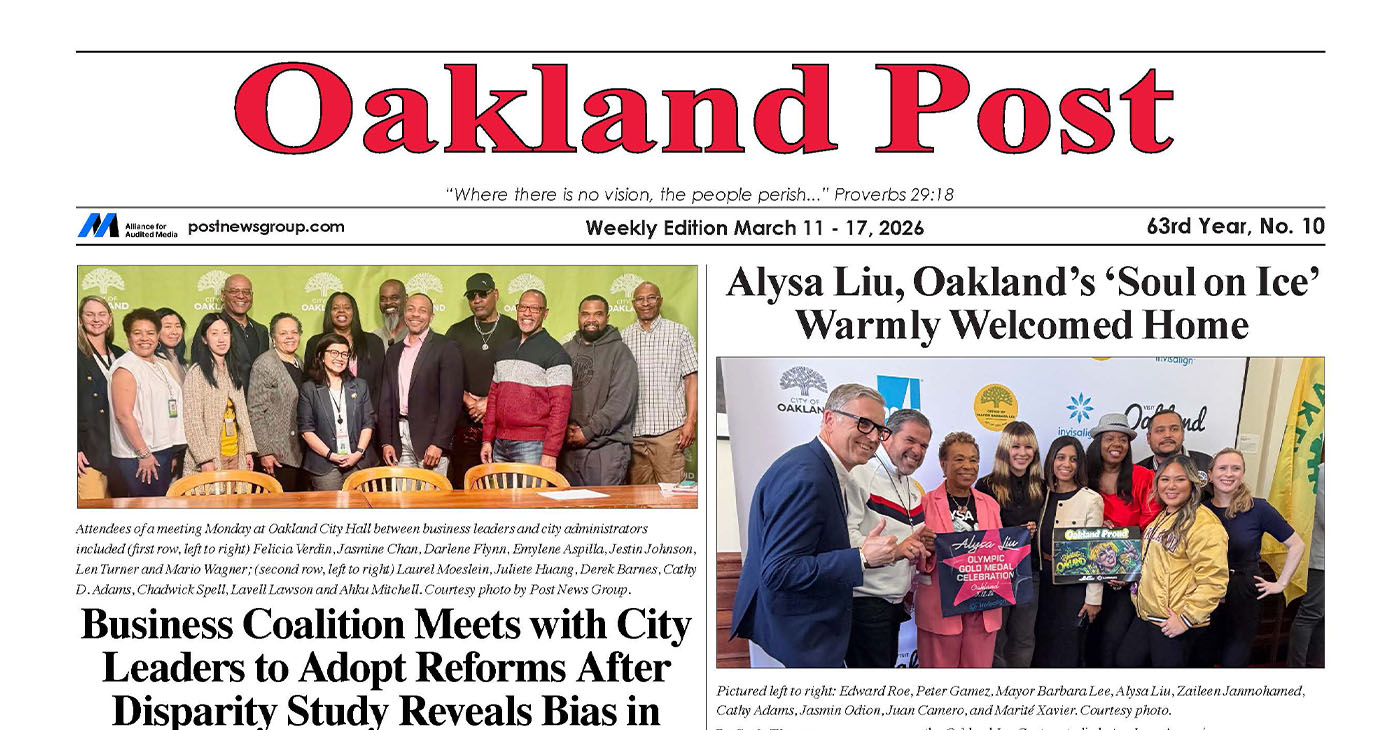
To enlarge your view of this issue, use the slider, magnifying glass icon or full page icon in the lower right corner of the browser window.
WORK FROM HOME
Home-based business with potential monthly income of $10K+ per month. A proven training system and website provided to maximize business effectiveness. Perfect job to earn side and primary income. Contact Lynne for more details: Lynne4npusa@gmail.com 800-334-0540


Oakland Post: Week of April 1 – 7, 2026

Black Artists in America, Installation Three Wraps at the Dixon Gallery and Gardens

Grief, Advocacy, and Education: A Counselor Reflects on Black Maternal Health

Future of Florida’s Black History Museum in Limbo

New Research Shows the Many Benefits of Early Learning

South Hampton K-8 Students Among Top 10 Finalists for Samsung’s ‘Solve for Tomorrow’ Competition

Cuba: No Negotiation with US on the President or Political System

Brooklyn Academy of Music Names Jamaican-Born Tamara McCaw as President

Trinidad & Tobego – U.S. Launches WhatsApp Channel for American Citizens in the Country

Oakland Post: Week of March 18 – 24, 2026

AI Innovation vs. Ethics and Environmental Impact

AI, Web3, and Digital Reparations

What If You Owned Your AI Agent?

Season 7, Episode 3 – January Reporter’s Roundtable 📱

Season 7, Episode 3 – January Reporter’s Roundtable

Reflecting on Black History Milestones in Birmingham AL

Oakland Post: Week of February 25 – March 3, 2026

Oakland Post: Week of March 4 – 10, 2026

PRESS ROOM: NBA Hall of Fame Nominee Terry Cummings Joins 100 Black Men of DeKalb County to Launch Victory & Values Initiative

Trump’s MAGA Allies are Creating Executive Order Plan to Steal the 2026 Midterms

U.S. manufacturing rebounds – how foundry services are adapting to rising demand

Poll Shows Support for Policies That Help Families Afford Child Care

Oakland Post: Week of March 11 -17, 2026
Oakland Post: Week of March 18 – 24, 2026

OP-ED: One Hundred Years of Black Workers Telling the Truth

Advancements in solar technology that are changing the way we power the world

Financial Wellness and Mental Health: Managing Money Stress in College

Woman’s Search for Family’s Roots Leads to Ancestor John T. Ward – A Successful Entrepreneur and Conductor on the Underground Railroad

COMMENTARY: Women of Color Shape Our Past and Future

PRESS ROOM: Civil Rights TV Launches in Selma as the World’s First 24/7 Civil Rights Television Network

Hyundai Ioniq 5 Parking, Safety, and 360 View #shorts

2025 Ioniq 5 New Wiper & Powerful Performance! #shorts

Electric SUV Range: Is 259 Miles Enough? #shorts

EV Charging: How Fast Can You Charge an Electric Vehicle? #shorts

Biometric Cooling… Messaging Seats…Come on! 2025 Infiniti QX80 Autograph 4WD

Charged Up: Witness the Magic of a Fully Electric Car! #shorts

Range Rover Sport PHEV Included…: See What’s Inside This Luxury SUV! #shorts

Invisible Hood View: Perfect Parking with X-Ray Vision! #shorts

AI Is Reshaping Black Healthcare: Promise, Peril, and the Push for Improved Results in California

ESSAY: Technology and Medicine, a Primary Care Point of View

Sanctuary Cities

The RESISTANCE – FREEDOM NOW

STATE OF THE PEOPLE: Freddie

ECONOMIC BOYCOTT DAY!!!!!

I told You So

-
 Activism3 weeks ago
Oakland Post: Week of March 11 -17, 2026
-
 Activism3 weeks ago
Oakland Post: Week of March 18 – 24, 2026
-
 Advice3 weeks ago
Financial Wellness and Mental Health: Managing Money Stress in College
-
 #NNPA BlackPress2 weeks ago
Brooklyn Academy of Music Names Jamaican-Born Tamara McCaw as President
-
 #NNPA BlackPress2 weeks ago
Grief, Advocacy, and Education: A Counselor Reflects on Black Maternal Health
-
 #NNPA BlackPress2 weeks ago
New Research Shows the Many Benefits of Early Learning
-

 Advice4 weeks ago
Women & Wealth: Tips for Navigating Your Lifelong Financial Journey
-
 #NNPA BlackPress2 weeks ago
Black Artists in America, Installation Three Wraps at the Dixon Gallery and Gardens
