
Opinion
Op-Ed: Proposed City Bond Will Harm Low Income Homeowners

By Pastor Gerald Agee, Andy Nelson and Elena Serrano,
The Oakland City Council will vote July 19 an unprecedented $600 million Infrastructure bond, allocating $350 million for street and sidewalk improvements, $150 million for facilities upgrades, and $100 million for “Anti-Displacement” and Affordable Housing.
 
Oakland’s streets and sidewalks in our flatland neighborhoods are a sad mess, so why did a group of long-time Oakland faith, community, and small business leaders write a letter to the mayor and council expressing strong concerns about the bond?

Elena Serrano
First and foremost, the city’s proposed bond will exacerbate displacement pressures for low-income homeowners and does not effectively protect Oakland’s long-time, lower-income, predominately African American people from displacement.
Research shows that there are an estimated 10,000 Oakland homeowners who are at high risk of losing their homes because they’re paying 50 percent or more of their income towards housing costs.
African Americans are disproportionately impacted with 32 percent of African American homeowners at high risk, three times the rate of other homeowners in Oakland.
Rather than utilizing the majority of the Bond funds for anti-displacement measures, Mayor Schaaf and Councilmembers Abel Guillen and Annie Campbell-Washington are proposing to add about $400 more to the property taxes of already struggling homeowners to pay for citywide improvements from which these residents may not be around to benefit.
The city’s proposal of a rebate program is insufficient given that struggling homeowners would have to first pay more property taxes and then apply and wait for the city to refund them.
And when those homeowners are behind on tax payments, interest and penalties then accrue on that additional $400 tax. We are already seeing seniors losing their homes to a few thousand in back property taxes—the City’s bond will only exacerbate this crisis.

Andy Nelson
The bond will also incentivize landlords to raise rents for tenants – while the city’s bond costs can’t be passed through to tenants of rent controlled units, about 40 percent of Oakland’s rental housing stock can’t be covered under local rent control protections so costs can be passed along to tenants in these units.
Second, before the City burdens its lower income residents, it should implement alternatives like the new State Enhanced Infrastructure Financing District that utilizes existing taxes or pass a real estate transfer surcharge on properties selling for over $1 million.
Third, there is no Equity Plan in place to ensure that flatland neighborhoods, historically neglected by City public works, will receive priority for the $350 million streets and sidewalks fund or ensure that sidewalks will be prioritized over bike lanes.
Fourth, the language on community oversight is vague and lacks sufficient accountability to provide confidence for a public that’s felt burned by previous City tax measures.
So why weren’t these issues adequately addressed and more funds dedicated to anti-displacement measures?
Perhaps this bond misses the point when it comes to the needs of Oaklanders because the city lacked an inclusive community process when vetting the Bond and lost an opportunity to get meaningful feedback from residents.
In contrast, the process for developing Alameda County’s Housing Bond was a model of inclusive policy-making. County leaders organized over 10 community stakeholder forums, conducted proactive outreach to different community, faith, and civic groups, and held over 6 public meetings-
Our experience informs us that Oakland does best when its elected officials act on their rhetoric of caring about the most vulnerable residents, with real, tangible, and inclusive policy action.
The city should go back to the drawing board, hold an inclusive resident engagement process in all parts of Oakland, and then return with a bond proposal that we can all get behind.
By Pastor Gerald Agee, Friendship Christian Center, Andy Nelson, District 5 homeowner and long time Oakland community member/advocate, Elena Serrano, EastSide Arts Alliance Collective




Activism
Oakland Post: Week of April 1 – 7, 2026
The printed Weekly Edition of the Oakland Post: Week of April 1 – 7, 2026
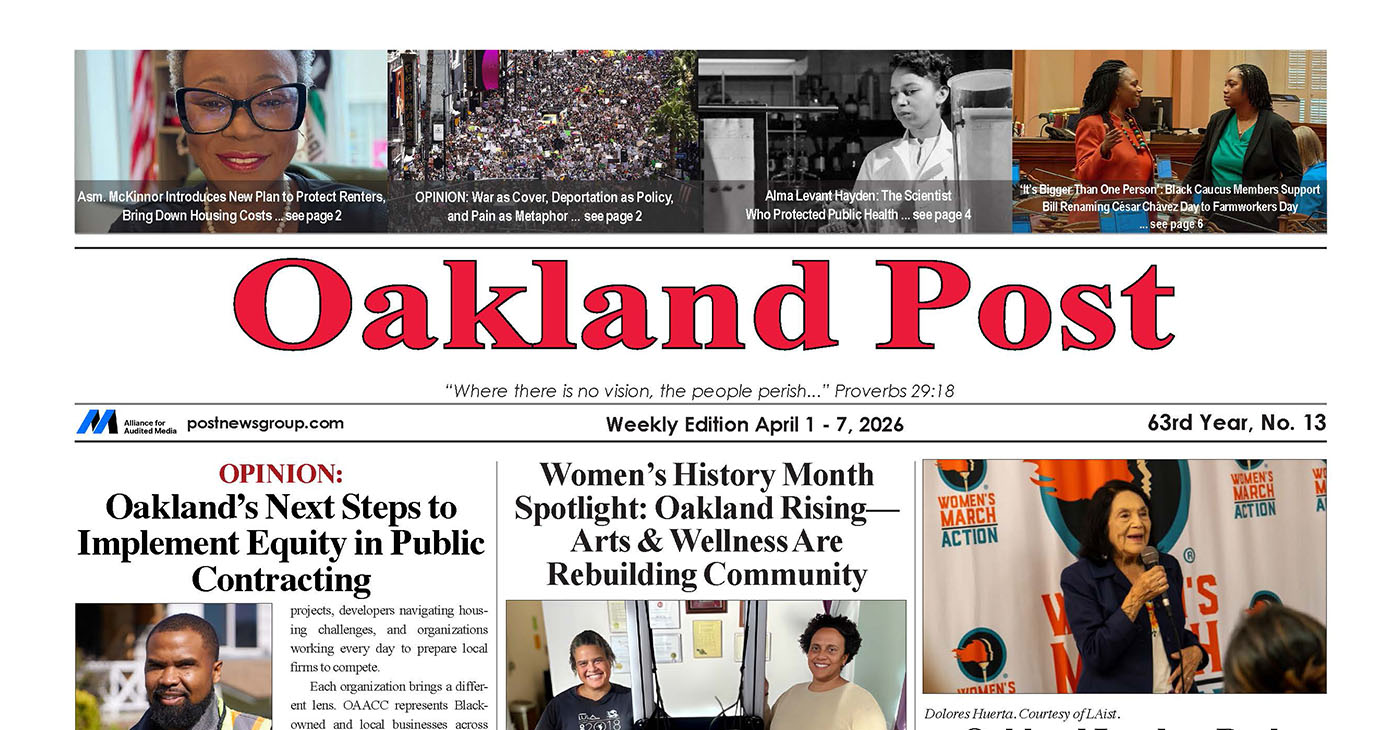
To enlarge your view of this issue, use the slider, magnifying glass icon or full page icon in the lower right corner of the browser window.
Activism
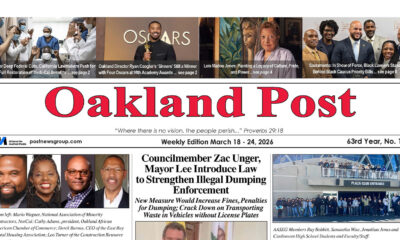
Oakland Post: Week of March 18 – 24, 2026
The printed Weekly Edition of the Oakland Post: Week of March 18 – 24, 2026
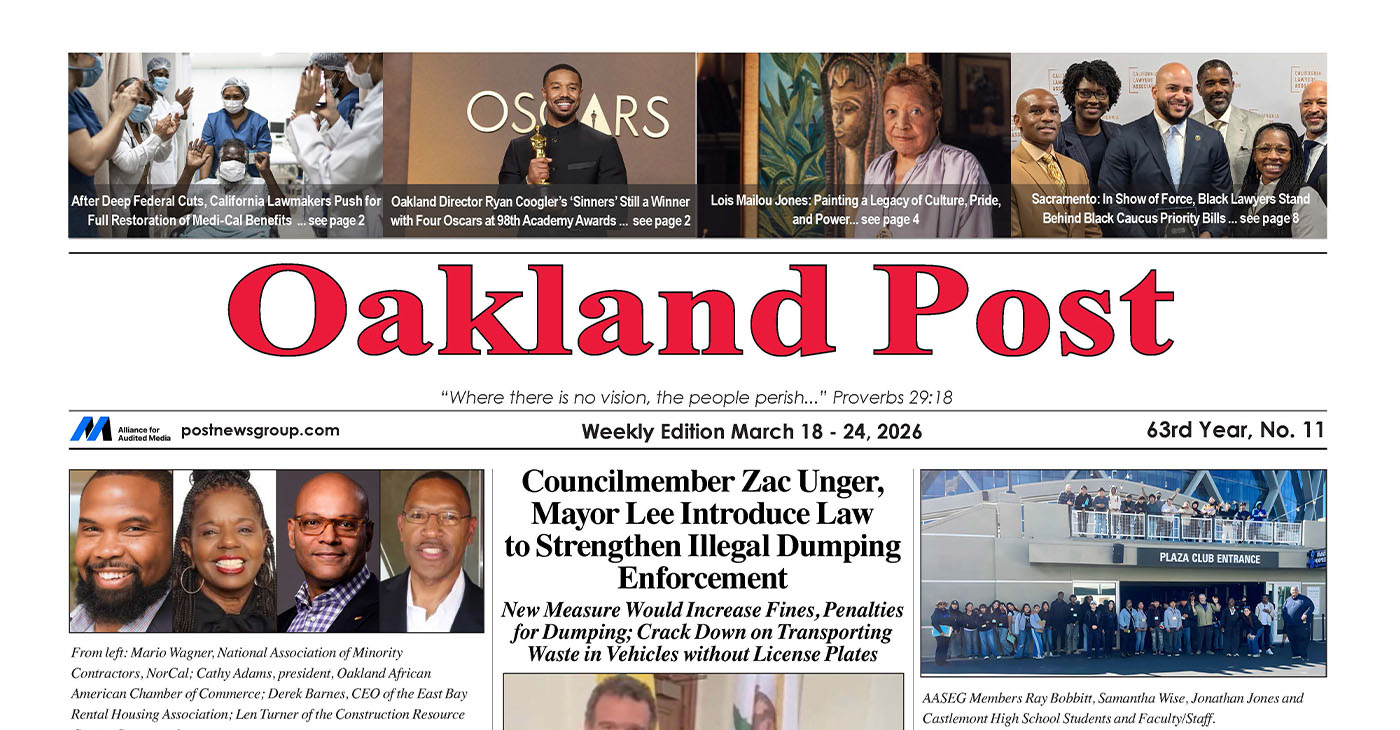
To enlarge your view of this issue, use the slider, magnifying glass icon or full page icon in the lower right corner of the browser window.
Activism
Oakland Post: Week of March 11 -17, 2026
The printed Weekly Edition of the Oakland Post: Week of March 11 – 17, 2026
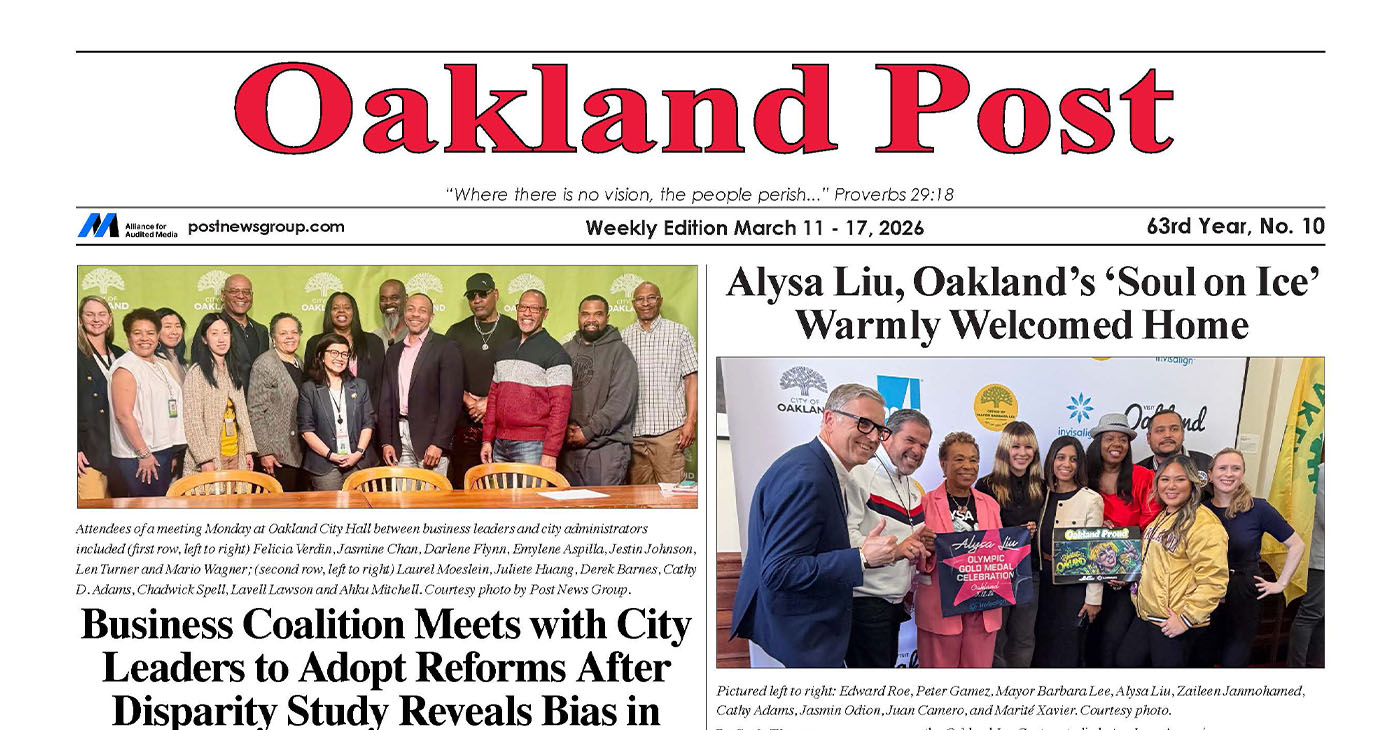
To enlarge your view of this issue, use the slider, magnifying glass icon or full page icon in the lower right corner of the browser window.
WORK FROM HOME
Home-based business with potential monthly income of $10K+ per month. A proven training system and website provided to maximize business effectiveness. Perfect job to earn side and primary income. Contact Lynne for more details: Lynne4npusa@gmail.com 800-334-0540


Oakland Post: Week of April 1 – 7, 2026

Black Artists in America, Installation Three Wraps at the Dixon Gallery and Gardens

Grief, Advocacy, and Education: A Counselor Reflects on Black Maternal Health

Future of Florida’s Black History Museum in Limbo

New Research Shows the Many Benefits of Early Learning

South Hampton K-8 Students Among Top 10 Finalists for Samsung’s ‘Solve for Tomorrow’ Competition

Cuba: No Negotiation with US on the President or Political System

Brooklyn Academy of Music Names Jamaican-Born Tamara McCaw as President

Trinidad & Tobego – U.S. Launches WhatsApp Channel for American Citizens in the Country

Oakland Post: Week of March 18 – 24, 2026

AI Innovation vs. Ethics and Environmental Impact

AI, Web3, and Digital Reparations

What If You Owned Your AI Agent?

Season 7, Episode 3 – January Reporter’s Roundtable 📱

Season 7, Episode 3 – January Reporter’s Roundtable

Reflecting on Black History Milestones in Birmingham AL

Oakland Post: Week of February 25 – March 3, 2026

PRESS ROOM: NBA Hall of Fame Nominee Terry Cummings Joins 100 Black Men of DeKalb County to Launch Victory & Values Initiative

Oakland Post: Week of March 4 – 10, 2026

Trump’s MAGA Allies are Creating Executive Order Plan to Steal the 2026 Midterms

U.S. manufacturing rebounds – how foundry services are adapting to rising demand

Poll Shows Support for Policies That Help Families Afford Child Care

Oakland Post: Week of March 11 -17, 2026

OP-ED: One Hundred Years of Black Workers Telling the Truth

Advancements in solar technology that are changing the way we power the world
Oakland Post: Week of March 18 – 24, 2026

Woman’s Search for Family’s Roots Leads to Ancestor John T. Ward – A Successful Entrepreneur and Conductor on the Underground Railroad

Financial Wellness and Mental Health: Managing Money Stress in College

COMMENTARY: Women of Color Shape Our Past and Future

PRESS ROOM: Civil Rights TV Launches in Selma as the World’s First 24/7 Civil Rights Television Network

Hyundai Ioniq 5 Parking, Safety, and 360 View #shorts

2025 Ioniq 5 New Wiper & Powerful Performance! #shorts

Electric SUV Range: Is 259 Miles Enough? #shorts

EV Charging: How Fast Can You Charge an Electric Vehicle? #shorts

Biometric Cooling… Messaging Seats…Come on! 2025 Infiniti QX80 Autograph 4WD

Charged Up: Witness the Magic of a Fully Electric Car! #shorts

Range Rover Sport PHEV Included…: See What’s Inside This Luxury SUV! #shorts

Invisible Hood View: Perfect Parking with X-Ray Vision! #shorts

AI Is Reshaping Black Healthcare: Promise, Peril, and the Push for Improved Results in California

ESSAY: Technology and Medicine, a Primary Care Point of View

Sanctuary Cities

The RESISTANCE – FREEDOM NOW

STATE OF THE PEOPLE: Freddie

ECONOMIC BOYCOTT DAY!!!!!

I told You So

-
 Activism3 weeks ago
Oakland Post: Week of March 11 -17, 2026
-
 Activism2 weeks ago
Oakland Post: Week of March 18 – 24, 2026
-
 Advice3 weeks ago
Financial Wellness and Mental Health: Managing Money Stress in College
-
 #NNPA BlackPress2 weeks ago
Brooklyn Academy of Music Names Jamaican-Born Tamara McCaw as President
-
 #NNPA BlackPress2 weeks ago
Grief, Advocacy, and Education: A Counselor Reflects on Black Maternal Health
-

 Advice3 weeks ago
Women & Wealth: Tips for Navigating Your Lifelong Financial Journey
-
 #NNPA BlackPress2 weeks ago
New Research Shows the Many Benefits of Early Learning
-
 #NNPA BlackPress2 weeks ago
Black Artists in America, Installation Three Wraps at the Dixon Gallery and Gardens
