
Politics
Obama’s Tax Cuts Target Parents, Families with 2 Incomes


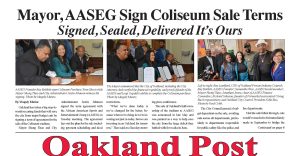
President Barack Obama delivers remarks at the Department of Homeland Security on his FY2016 budget proposal, on Monday, Feb. 2, 2015, in Washington. Obama warned congressional Republicans Monday that he won’t accept a spending plan that boosts national security at the expense of domestic programs for the middle class. (AP Photo/Evan Vucci)
STEPHEN OHLEMACHER, Associated Press
WASHINGTON (AP) — President Barack Obama is proposing nearly $280 billion in tax cuts for low- and middle-income families, but not everyone will benefit.
Obama’s proposed budget calls for a total of $1.5 trillion in new taxes over the next decade, mostly on corporations and high-income households. He would use much of that money to pay for targeted tax breaks for low- and middle-income families.
The proposed tax cuts would benefit households with two wage earners, families with young children in child care and those with older children in college. One proposal would automatically enroll workers in individual retirement accounts, unless they opt out. Another would extend the Earned Income Tax Credit to low-wage workers without children.
Obama calls his tax and spending plan “middle-class economics.” But middle-income families that don’t fit these categories won’t see many changes in their taxes, according to an analysis by the Tax Policy Center, a research group formed by the Urban Institute and the Brookings Institution.
For families making between $50,000 and $75,000 a year, about a quarter of them would get a tax cut, averaging $545, according to the analysis. About 6 percent would get a tax increase, and the rest — about 70 percent — would see no change in their tax bill.
Among the bottom 20 percent — families with incomes averaging $15,600 — nearly a third would get tax cuts averaging $617. The rest would see little or no change in their taxes.
“The key thing is that, overall, there will be winners, losers and a lot of people unaffected,” said Roberton Williams, a fellow at the Tax Policy Center.
The center’s analysis focused on the effects of the two-earner tax credit, the child-care credit, the expanded education credit, the tax credit for low-wage workers and the program making it easier for workers to enroll in retirement accounts, Williams said. The analysis also took into account Obama’s proposal to increase taxes on some investments and estates.
All of these proposals were part of Obama’s larger budget plan, which he unveiled Monday.
Obama would pay for middle-class tax cuts by raising taxes on the wealthy — including increasing the tax on capital gains — and changing the way the U.S. taxes the foreign profits of American corporations. Obama’s proposals are designed to further talks on Capitol Hill about revamping American business taxes, lowering the overall tax rate while eliminating or reducing many tax breaks.
Obama’s proposed tax increases, however, are running into strong opposition from Republicans in Congress.
“I want to work with this administration, and I hope that we can find common ground,” said Rep. Paul Ryan, R-Wis., chairman of the tax-writing House Ways and Means Committee. “But the president has to demonstrate that he’s interested in governing, not just posturing.”
Obama’s proposed tax cuts are getting a friendlier welcome — House Speaker John Boehner, R-Ohio, said he is open to Obama’s plan to increase a tax credit to help pay for childcare expenses. But Boehner has been critical of Obama’s overall plan.
The Obama administration says its proposal addresses decades of rising income and wealth inequality, and a tax system that “lets the wealthy shelter hundreds of billions of dollars from taxes each year.”
“The president’s budget proposes targeted policies to strengthen the middle class, level the playing field for American businesses, create more fairness in our tax code, and lay the groundwork for long-term economic growth for our country that is broadly shared, all while setting a course to put our country on sound fiscal footing,” Treasury Secretary Jacob Lew said in a statement.
Among Obama’s proposed tax cuts for middle- and low-income families:
— Create a tax credit of up to $500 for families with a second wage-earner, which the administration says would benefit 24 million couples. Cost: $89 billion over 10 years.
— Triple the child care tax credit — to a maximum of $3,000 per child — and make the full credit available to families with incomes up to $120,000. Families with higher incomes could get a reduced credit. Cost: $50 billion over 10 years.
Obama’s plan would repeal tax breaks for flexible spending accounts for child-care expenses.
— Extend the Earned Income Tax Credit to low-wage workers with no children. Cost: $60 billion over 10 years.
— Consolidate several education tax breaks into an enhanced tax credit of up to $2,500 a student to help pay for college expenses. The tax credit, which is scheduled to expire at the end of 2017, would be made permanent. Cost: $31 billion over 10 years.
Obama initially proposed to scale back the tax benefits of college savings accounts, known as 529 accounts. But he dropped the proposal after getting resistance from both Republicans and Democrats in Congress.
___
Follow Stephen Ohlemacher on Twitter: http://twitter.com/stephenatap
Copyright 2015 The Associated Press. All rights reserved. This material may not be published, broadcast, rewritten or redistributed.













Business
OP-ED: Proposition 44 Would Put a Price on Trust
The danger in Proposition 44 is not only its 90 percent figure. It is that the meaning of “qualifying” spending will be worked out later. A clinic preparing a budget today may not know whether a navigator, health educator, transportation program, outreach worker, technology upgrade, or other patient-support service will be counted the way it expects. Yet the financial consequence of getting it wrong could be immediate.





Business
OP-ED: Proposition 40: It’s Time to Play Chess, Not Checkers
Proposition 40 would impose a one-time 5 percent tax on the wealth of Californians with more than $1 billion in assets. Most of that money would go toward health care, with the remainder supporting food assistance and education-related programs.

Activism
Oakland Post: Week of September 30 – October 6, 2026
The printed Weekly Edition of the Oakland Post: Week of September 30 – October 6, 2026
To enlarge your view of this issue, use the slider, magnifying glass icon or full page icon in the lower right corner of the browser window.


OP-ED: Proposition 44 Would Put a Price on Trust

OP-ED: Proposition 40: It’s Time to Play Chess, Not Checkers

Listening as a Lifeline: A Doula’s Witness to Black Maternal Health

New Protections for Ticket Buyers: Gov. Newsom Signs Assemblymember Isaac Bryan’s Bill

‘We Don’t Talk Trash — We Pick Up Trash!’

Zakiya Jendayi Arrested, Locked Out of Home by Sheriff’s Deputies

Oakland Post: Week of September 30 – October 6, 2026

Asm. Corey Jackson Announces Launch of 24-Hour Childcare in His District

IN MEMORIAM: The Rev. Leon “Sonny” Clark, Longtime Orange County Pastor and Community Leader, Dies at 72

Poll: Becerra Widens His Lead Over Hilton; Californians Split on Wealth Tax

From Historic Memories to New Possibilities: Oakland Celebrates Coliseum 60

County Office of Education Says OUSD Finances Are Getting Healthier, Materially Stronger

LIVE FREE Sunday Dinner Brings Faith, Fellowship and Civic Conversation to Oakland

Remembering Chauncey Bailey as Student Journalists Face Threats to Truth-Telling

BLACspace Cooperative Invites Bay Area to Experience Oakland’s Black Cultural Ecosystem Through a BLAC Map Tour + Party

Standoff for Justice: Our Homes Are Worth Fighting For

Oakland Post: Week of August 26 – September 1, 2026

Frontier Airlines’ Return to Oakland Airport Brings Flights, Jobs and Opportunity

Gubernatorial Candidate Steve Hilton Blasts California New Tire Rules; Newsom Hits Back

Chef Sharon Lee Blends Culinary Excellence, Education and Empowerment

Jackie Wright Champions Bay Area Stories, Filmmakers and Cultural Institutions

Misnamed ‘Parent’ PAC Seeks to Influence Oakland School Board Elections

Oakland Coliseum Project Opens Door for Small Businesses to Build Bigger

Big City Mayors Ask for “Yes” Vote on Housing Bond Measure; Conservatives Say “No”

Gov. Newsom’s Latest Appointees Include Sacramento Advocate for Formerly Incarcerated Students; State’s New Tech Chief

Longtime BWOPA Member Brendalyn Goodall Appointed to California Workforce Development Board

Gov. Newsom Signs Law Shielding Immigration Aid Workers From Doxing Threats

Oakland Post: Week of September 2 – 8, 2026

Secretary of State Shirley N. Weber Urges Californians to Vote Early as Voter ID Battle Intensifies

IN MEMORIAM: Dolly Parton Dead at 80 — How She Built a Legacy of Love and Earned Her Place in Black Culture

The Conversation With Al McFarlane 6/23/26

Media Monday 6/22/26

LIVE! ASK ALMA! — TUES. 6.23.26 7PM EST

Car Buying Secrets: 4 Hidden Checks Before You Sign!

Is This 550 HP Charger Worth YOUR Money? AutoNetwork Review

Celebrating Juneteenth – Frederick Douglass on education and resistance

LIVE! — ASK ALMA! — TUES. 6.19.26 7PM EST

Hyundai Ioniq 5 Parking, Safety, and 360 View #shorts

2025 Ioniq 5 New Wiper & Powerful Performance! #shorts

Electric SUV Range: Is 259 Miles Enough? #shorts

EV Charging: How Fast Can You Charge an Electric Vehicle? #shorts

Biometric Cooling… Messaging Seats…Come on! 2025 Infiniti QX80 Autograph 4WD

Charged Up: Witness the Magic of a Fully Electric Car! #shorts

Range Rover Sport PHEV Included…: See What’s Inside This Luxury SUV! #shorts

Invisible Hood View: Perfect Parking with X-Ray Vision! #shorts
-
 Community3 weeks ago
Misnamed ‘Parent’ PAC Seeks to Influence Oakland School Board Elections
-
 Activism4 weeks ago
Oakland Post: Week of September 2 – 8, 2026
-

 Activism3 weeks ago
Oakland Post: Week of September 9 – 15, 2026
-

 Community3 weeks ago
Richmond Tiny House Village Farm & Garden Set to Open Gates on Sept. 26
-

 Black History3 weeks ago
Latest Massacre in Haiti Reveals Cruelty U.S. Deportations
-

 Black History3 weeks ago
OPINION: Nolan Wells’ Death One of Several Signifying Racial Terror Lives on in U.S. South
-

 Business2 weeks ago
Mayor Lee Announces $1 Million Kaiser Permanente Grant for Pilot Program to Address Homelessness, Clean Up Public Spaces throughout Oakland
-

 Community3 weeks ago
Democratic Clubs Interview Candidates for Oakland School Board
