
Politics
Obama and Kenya: 1st Trip to Father’s Homeland as President


In this Thursday, Feb. 5, 2008 file photo, a photograph of Barack Obama Sr., father of President Barack Obama, hangs on the wall of his step-grandmother Sarah Obama’s house in the village of Kogelo, near the shores of Lake Victoria, in Kenya. On Friday, July 24, 2015 Obama is due to arrive in Kenya, the country of his father’s birth, for the first time since he was a U.S. senator in 2006, and the first stop on his two-nation African tour in which he will also visit Ethiopia. (AP Photo/Ben Curtis, File)
JULIE PACE, AP White House Correspondent
WASHINGTON (AP) — When Barack Obama visited Kenya for the first time nearly 30 years ago, he was astonished that an airport worker recognized his last name.
It was a striking experience for a young man — and future American president — struggling to understand how a country he had never seen and a Kenyan family he barely knew had shaped his identity.
“My name belonged and so I belonged, drawn into a web of relationships, alliances, and grudges I did not yet understand,” Obama wrote in his memoir, “Dreams From My Father,” about the airport encounter.
This week, Obama will make his first visit to Kenya as U.S. president, a trip that will bear little resemblance to the 1988 one, when he arrived aboard commercial flight and his luggage got lost. Now, Air Force One will take Obama to a country where children, roads and schools now bear his name, and the world leader is seen as a local son.
Yet traveling with the trappings of the presidency appears likely to diminish the fulfillment of a trip to his father’s homeland.
“I’ll be honest with you, visiting Kenya as a private citizen is probably more meaningful to me than visiting as president because I can actually get outside of a hotel room or a conference center,” he said last week, adding that his trip still would be “symbolically important.”
Security concerns and the logistics of presidential travel will keep Obama at a distance from most Kenyans. He will skip a visit to Kogelo, the rural village in western Kenya where his father was born and buried, and where his stepgrandmother and other family members still live.
Obama’s two days of events will be confined to Nairobi, the capital where he will meet with Kenyan President Uhuru Kenyatta, attend the Global Entrepreneurship Summit, and speak to civil society leaders. On Sunday, he will go to Ethiopia.
Despite the limits on Obama’s movement and interactions with the Kenyan people, his visit is highly anticipated in the East African nation. Even as a U.S. senator, he was greeted by cheering crowds when he made his last visit to Kenya, in 2006.
Ahead of Obama’s arrival Friday, some Kenyans have adopted a rousing segment of an Obama speech as their cellphone ringtone. U.S. and Kenyan flags lined the road leading from Nairobi’s main airport.
Obama’s visit is like “a brother coming back,” said Nelly Ngugu, customer relations manager at a Nairobi cafe.
Before Obama’s travel plans were announced, there had been some disappointment that the U.S. president who has written and spoken emotionally of his Kenyan roots had not returned since taking office. Analysts questioned whether America’s first black president was missing an opportunity to give Africa more prominence in U.S. foreign policy.
Much of Obama’s international focus in his first term was on strengthening ties with Asia and trying to reset U.S. policy in the Middle East. His only visit to sub-Saharan Africa during his first four years in office was a short stop in Ghana.
At the time, there was persistent and inaccurate speculation that he was born in Kenya, not the United States. Some political opponents tried to use the rumors to undercut Obama’s eligibility for president. As late as 2011, a CBS/New York Times poll showed that one-quarter of all Americans believed Obama was not born in the U.S.
Obama’s re-election raised renewed hopes for a visit to Kenya, but the political situation there complicated those plans.
Kenyatta, the son of the country’s first president, was elected president in 2013, but faced charges in the International Criminal Court stemming from his alleged role in stoking ethnic violence following Kenya’s troubled 2007 election.
“The timing was not right for me as the president of the United States to be visiting Kenya when those issues are still being worked on and, hopefully, at some point resolved,” Obama said of his decision to pass over Kenya in favor of South Africa, Tanzania and Senegal during a 2013 trip to Africa.
The charges against Kenyatta were ultimately dropped, clearing the way for Obama to finally visit his father’s home country as president. With his arrival now imminent, the earlier disappointment appears to have faded, overtaken by anticipation and national pride.
In Kogelo, the Obama family’s home village, the family’s aging matriarch said even she would not feel bad if the president did not visit her. Sarah Obama, who Obama referred to as “Granny” in his memoir, said the president was coming to Kenya “to discharge his duty.
“He is a son here,” said the elder Obama, who was the second wife of the president’s grandfather. “I cannot be angered by him not coming to see me.”
___
Associated Press writers Christopher Torchia in Nairobi, Kenya, and Fred Ooko in Kogelo, Kenya, contributed to this report.
___
Follow Julie Pace at http://twitter.com/jpaceDC
Copyright 2015 The Associated Press. All rights reserved. This material may not be published, broadcast, rewritten or redistributed.










Business
OP-ED: Proposition 44 Would Put a Price on Trust
The danger in Proposition 44 is not only its 90 percent figure. It is that the meaning of “qualifying” spending will be worked out later. A clinic preparing a budget today may not know whether a navigator, health educator, transportation program, outreach worker, technology upgrade, or other patient-support service will be counted the way it expects. Yet the financial consequence of getting it wrong could be immediate.




Business
OP-ED: Proposition 40: It’s Time to Play Chess, Not Checkers
Proposition 40 would impose a one-time 5 percent tax on the wealth of Californians with more than $1 billion in assets. Most of that money would go toward health care, with the remainder supporting food assistance and education-related programs.

Activism
Oakland Post: Week of September 30 – October 6, 2026
The printed Weekly Edition of the Oakland Post: Week of September 30 – October 6, 2026

To enlarge your view of this issue, use the slider, magnifying glass icon or full page icon in the lower right corner of the browser window.




OP-ED: Proposition 44 Would Put a Price on Trust

OP-ED: Proposition 40: It’s Time to Play Chess, Not Checkers

Listening as a Lifeline: A Doula’s Witness to Black Maternal Health

New Protections for Ticket Buyers: Gov. Newsom Signs Assemblymember Isaac Bryan’s Bill

‘We Don’t Talk Trash — We Pick Up Trash!’

Zakiya Jendayi Arrested, Locked Out of Home by Sheriff’s Deputies

Oakland Post: Week of September 30 – October 6, 2026

Asm. Corey Jackson Announces Launch of 24-Hour Childcare in His District

IN MEMORIAM: The Rev. Leon “Sonny” Clark, Longtime Orange County Pastor and Community Leader, Dies at 72

Poll: Becerra Widens His Lead Over Hilton; Californians Split on Wealth Tax

From Historic Memories to New Possibilities: Oakland Celebrates Coliseum 60

County Office of Education Says OUSD Finances Are Getting Healthier, Materially Stronger

LIVE FREE Sunday Dinner Brings Faith, Fellowship and Civic Conversation to Oakland

Remembering Chauncey Bailey as Student Journalists Face Threats to Truth-Telling

BLACspace Cooperative Invites Bay Area to Experience Oakland’s Black Cultural Ecosystem Through a BLAC Map Tour + Party

Standoff for Justice: Our Homes Are Worth Fighting For

Oakland Post: Week of August 26 – September 1, 2026

Frontier Airlines’ Return to Oakland Airport Brings Flights, Jobs and Opportunity

Gubernatorial Candidate Steve Hilton Blasts California New Tire Rules; Newsom Hits Back

Jackie Wright Champions Bay Area Stories, Filmmakers and Cultural Institutions

Chef Sharon Lee Blends Culinary Excellence, Education and Empowerment

Misnamed ‘Parent’ PAC Seeks to Influence Oakland School Board Elections

Oakland Coliseum Project Opens Door for Small Businesses to Build Bigger

Gov. Newsom’s Latest Appointees Include Sacramento Advocate for Formerly Incarcerated Students; State’s New Tech Chief

Big City Mayors Ask for “Yes” Vote on Housing Bond Measure; Conservatives Say “No”

Longtime BWOPA Member Brendalyn Goodall Appointed to California Workforce Development Board

Oakland Post: Week of September 2 – 8, 2026

Gov. Newsom Signs Law Shielding Immigration Aid Workers From Doxing Threats

Secretary of State Shirley N. Weber Urges Californians to Vote Early as Voter ID Battle Intensifies

Oakland Post: Week of September 9 – 15, 2026

The Conversation With Al McFarlane 6/23/26

Media Monday 6/22/26

LIVE! ASK ALMA! — TUES. 6.23.26 7PM EST

Car Buying Secrets: 4 Hidden Checks Before You Sign!

Is This 550 HP Charger Worth YOUR Money? AutoNetwork Review

Celebrating Juneteenth – Frederick Douglass on education and resistance

LIVE! — ASK ALMA! — TUES. 6.19.26 7PM EST

Hyundai Ioniq 5 Parking, Safety, and 360 View #shorts

2025 Ioniq 5 New Wiper & Powerful Performance! #shorts

Electric SUV Range: Is 259 Miles Enough? #shorts

EV Charging: How Fast Can You Charge an Electric Vehicle? #shorts

Biometric Cooling… Messaging Seats…Come on! 2025 Infiniti QX80 Autograph 4WD

Charged Up: Witness the Magic of a Fully Electric Car! #shorts

Range Rover Sport PHEV Included…: See What’s Inside This Luxury SUV! #shorts

Invisible Hood View: Perfect Parking with X-Ray Vision! #shorts
-
 Community4 weeks ago
Misnamed ‘Parent’ PAC Seeks to Influence Oakland School Board Elections
-
 Activism4 weeks ago
Oakland Post: Week of September 9 – 15, 2026
-

 Community4 weeks ago
Richmond Tiny House Village Farm & Garden Set to Open Gates on Sept. 26
-

 Black History4 weeks ago
Latest Massacre in Haiti Reveals Cruelty U.S. Deportations
-

 Black History4 weeks ago
OPINION: Nolan Wells’ Death One of Several Signifying Racial Terror Lives on in U.S. South
-

 Business3 weeks ago
Mayor Lee Announces $1 Million Kaiser Permanente Grant for Pilot Program to Address Homelessness, Clean Up Public Spaces throughout Oakland
-

 Community4 weeks ago
Democratic Clubs Interview Candidates for Oakland School Board
-
 Uncategorized3 weeks ago
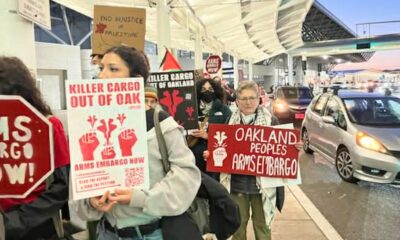
Oakland People’s Arms Embargo Coalition Demands End to Military Shipments Thru Oakland
