
Bay Area
Oakland Students Find Learning and Classroom Disparities in New Report
The Oakland-based student program, Energy Convertors, released their yearly report on learning proficiency and classroom management for the 2023-2024 school year. Fellows in the program found that students in Oakland Unified School District (OUSD) believed they were proficient in English and math curriculum, when in fact they were not. Energy Converters fellows surveyed 353 OUSD high school students (1% of all OUSD students) asking questions based on how they felt they were doing in their classes, how teachers were conveying proficiency goals to them, and whether teachers were keeping a conducive classroom environment.


By Magaly Muñoz
The Oakland-based student program, Energy Convertors, released their yearly report on learning proficiency and classroom management for the 2023-2024 school year. Fellows in the program found that students in Oakland Unified School District (OUSD) believed they were proficient in English and math curriculum, when in fact they were not.
Energy Converters fellows surveyed 353 OUSD high school students (1% of all OUSD students) asking questions based on how they felt they were doing in their classes, how teachers were conveying proficiency goals to them, and whether teachers were keeping a conducive classroom environment.
The report, titled “Demanding Proficiency over Pageantry”, found that 3 out of 4 students surveyed believed that they were reading on grade-level and 3 out of 5 students believed they were meeting the grade-level standard in math.
Nearly 75% of those surveyed also said that a teacher has not discussed whether they were reading or understanding math proficiently.
A study conducted by Families in Action (FIA) Oakland showed that in the 2021-22 school year only 36% of students were at grade-level reading proficiency and 26% were proficient in math.
The FIA study also showed that Black and Latino students had the lowest proficiencies in these areas at 12% and 15% respectively.
MarQuis Evans, program manager of Energy Converters, told the Post that their annual reports are based on the experiences and topics that their fellows are encountering at their schools. The students are asked to share how they feel about a particular situation, in this case how well they are doing in the classroom, and then tasked with researching the effects of those subjects in relation to Oakland students.
“A lot of students were voicing that they passed a class but they don’t necessarily know if they understand [the subject],” Evans said.
A goal of Energy Convertors is making sure the kids know that they have to be their biggest advocates in school. Teachers deal with many students over the course of their day so knowing how to ask the right questions about their educational needs is imperative.
Charles Cole, founder of Energy Convertors, said he’s pushing this responsibility onto students and their parents because they are ultimately the ones who have to deal with the consequences if they’re not staying on top of their work.
“No one is coming to save you,” Cole said.
Another finding in the report was that many students, 80% who took the survey, said they were not aware that they were chronically absent. To be considered chronically absent, a student has to miss 10% of the total school days in the year, which could mean anytime over 18 missing days.
Vulnerable groups in California such as students with disabilities, English-learners, and students of color all have high absentee rates ranging from 25% to 37%, according to the CA School Dashboard.
The report recommends that schools should use incentives, like rewards, to push kids into attending their classes. It also states that students should be communicating why they are missing from their classes and what support they might need in order to attend more frequently.
Michelle Coleman, former OUSD administrator and current principal in West Contra Costa, said it’s important for students to be able to express their concerns about their education.
Coleman explained that in her experience it helped to keep all stakeholders informed about what was going on. For example, the school would notify parents after a certain amount of absences and would offer support in cases where resources might help get the student to attend school more often.
She shared that she wished students understood that as much as they are having struggles, teachers are also trying their best to keep kids in line and help them achieve grade-level goals, but it’s hard for them to care more about their education than the student actually cares for.
“I have high expectations, but it’s because I believe in you, and I know you can do it, and I will help you get there, but I need you to help yourself first,” Coleman said.
Coleman stressed that the most important aspect in all this is that the students feel like they are succeeding and the people around them are rooting for them to do so. Educators are setting these kids up to be functioning members of society and to give back to the community the same way they were given opportunities and chances because it ultimately takes a village to raise these students.





Activism
Oakland Post: Week of March 11 -17, 2026
The printed Weekly Edition of the Oakland Post: Week of March 11 – 17, 2026
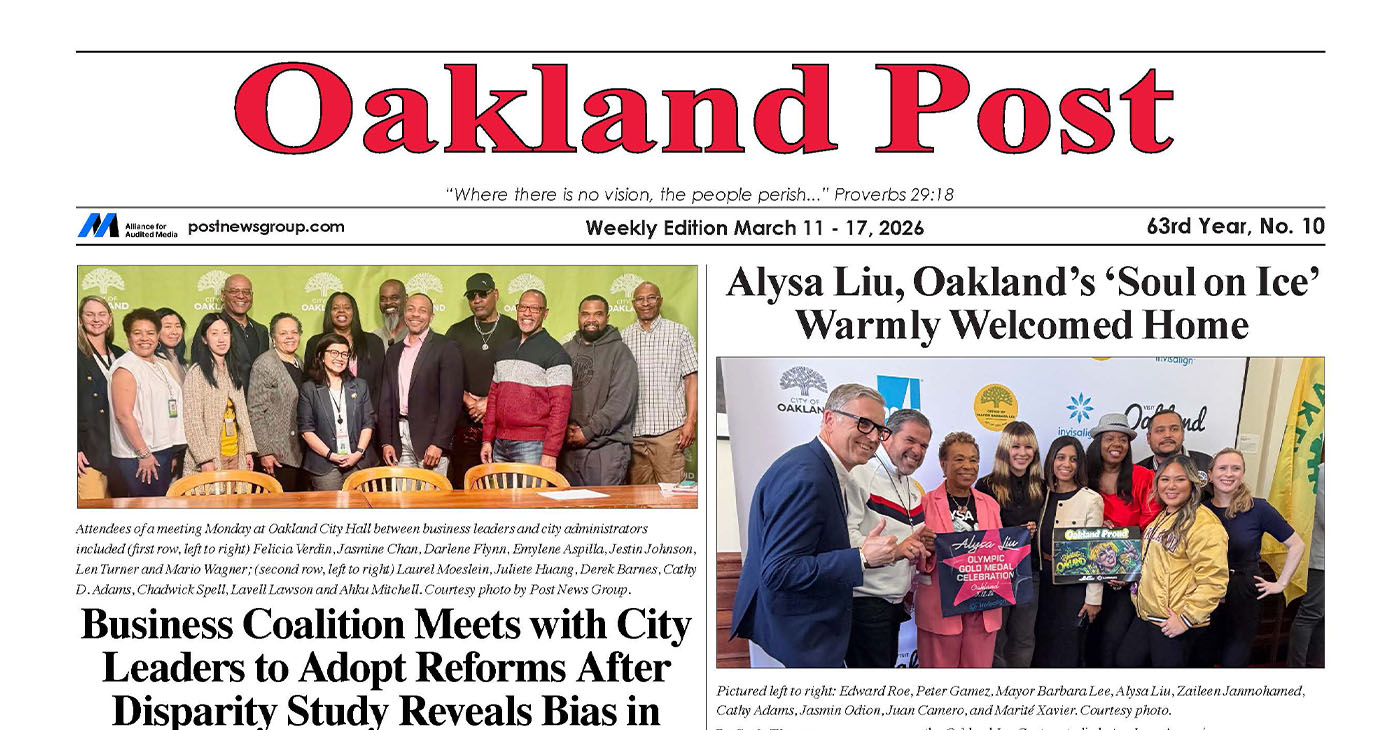
To enlarge your view of this issue, use the slider, magnifying glass icon or full page icon in the lower right corner of the browser window.
Activism
Oakland Post: Week of March 4 – 10, 2026
The printed Weekly Edition of the Oakland Post: Week of March 4 – 10, 2026

To enlarge your view of this issue, use the slider, magnifying glass icon or full page icon in the lower right corner of the browser window.
Activism
Oakland Post: Week of February 25 – March 3, 2026
The printed Weekly Edition of the Oakland Post: Week of – February 25 – March 3, 2026

To enlarge your view of this issue, use the slider, magnifying glass icon or full page icon in the lower right corner of the browser window.

WORK FROM HOME
Home-based business with potential monthly income of $10K+ per month. A proven training system and website provided to maximize business effectiveness. Perfect job to earn side and primary income. Contact Lynne for more details: Lynne4npusa@gmail.com 800-334-0540


Financial Wellness and Mental Health: Managing Money Stress in College

Oakland Post: Week of March 11 -17, 2026

Women & Wealth: Tips for Navigating Your Lifelong Financial Journey

COMMENTARY: Women of Color Shape Our Past and Future

Woman’s Search for Family’s Roots Leads to Ancestor John T. Ward – A Successful Entrepreneur and Conductor on the Underground Railroad

Advocates Raise Alarm Over ICE Operation, MOU and Detention Risks in Baltimore County

Pete Buttigieg to Join Mayor Randall Woodfin for Community Town Hall in Birmingham

WATCH: Week One – NNPA’s “Leadership Matters” Video Series

Oakland Post: Week of March 4 – 10, 2026

OP-ED: NNPA Launches 2026 “Leadership Matters” Video Series

PRESS ROOM: PMG and Cranbrook Horizons-Upward Bound Launch Journey Fellowship Cohort 2

Los Angeles Summit Brings Together Leaders to Tackle Poverty and Affordability

Civil Rights TV Launches 24/7 Network Focused on Black History, Education and Equity

REVIEW: The Ultimate Hot Girl Summer Getaway: Sunseeker Resort Florida

COMMENTARY: How You Stop a Prescription Medicine is as Important as How You Start

Book Review: Books on Black History and Black Life for Kids

Community Celebrates Turner Group Construction Company as Collins Drive Becomes Turner Group Drive

California Launches Study on Mileage Tax to Potentially Replace Gas Tax as Republicans Push Back

Discrimination in City Contracts

COMMENTARY: The Biases We Don’t See — Preventing AI-Driven Inequality in Health Care

Post Newspaper Invites NNPA to Join Nationwide Probate Reform Initiative

Black History Events in the East Bay

Art of the African Diaspora Celebrates Legacy and Community at Richmond Art Center

New Bill, the RIDER Safety Act, Would Support Transit Ambassadors and Safety on Public Transit

COMMENTARY: The National Protest Must Be Accompanied with Our Votes

Oakland Post: Week of February 4 – 10, 2026

Oakland Post: Week of February 11 – 17, 2026

Dorothy Lee Bolden: Uniting Domestic Workers

After Don Lemon’s Arrest, Black Officials Raise Concerns About Independent Black Media

Can You Afford a Mortgage but Not the Down Payment? Dream For All Offers Up to $150K

Hyundai Ioniq 5 Parking, Safety, and 360 View #shorts

2025 Ioniq 5 New Wiper & Powerful Performance! #shorts

Electric SUV Range: Is 259 Miles Enough? #shorts

EV Charging: How Fast Can You Charge an Electric Vehicle? #shorts

Biometric Cooling… Messaging Seats…Come on! 2025 Infiniti QX80 Autograph 4WD

Charged Up: Witness the Magic of a Fully Electric Car! #shorts

Range Rover Sport PHEV Included…: See What’s Inside This Luxury SUV! #shorts

Invisible Hood View: Perfect Parking with X-Ray Vision! #shorts

AI Is Reshaping Black Healthcare: Promise, Peril, and the Push for Improved Results in California

ESSAY: Technology and Medicine, a Primary Care Point of View

Sanctuary Cities

The RESISTANCE – FREEDOM NOW

STATE OF THE PEOPLE: Freddie

ECONOMIC BOYCOTT DAY!!!!!

I told You So

-

 #NNPA BlackPress3 weeks ago
Reflecting on Black History Milestones in Birmingham AL
-

 Bay Area4 weeks ago
CITY OF SAN LEANDRO STATE OF CALIFORNIA PUBLIC WORKS DEPARTMENT ENGINEERING DIVISION NOTICE TO BIDDERS FOR ANNUAL STREET OVERLAY/REHABILITATION 2019-21 – PHASE III
-

 #NNPA BlackPress3 weeks ago
PRESS ROOM: NBA Hall of Fame Nominee Terry Cummings Joins 100 Black Men of DeKalb County to Launch Victory & Values Initiative
-

 Activism4 weeks ago
Oakland Post: Week of February 18 – 24, 2026
-

 #NNPA BlackPress3 weeks ago
U.S. manufacturing rebounds – how foundry services are adapting to rising demand
-

 #NNPA BlackPress3 weeks ago
OP-ED: One Hundred Years of Black Workers Telling the Truth
-

 #NNPA BlackPress3 weeks ago
Advancements in solar technology that are changing the way we power the world
-

 Activism3 weeks ago
Oakland Post: Week of February 25 – March 3, 2026
