
Art
Oakland Public Library Announces Limited Edition Library Card Contest Celebrating African Americans and the Arts in Oakland
Oakland has a rich history of artistic innovation by African Americans that has shaped the culture, political landscape, and social justice movements in the city. This contest celebrates these contributions in the arts highlighting literature, poetry, visual arts, music, theatre, and the performing arts.

Oakland Media Office
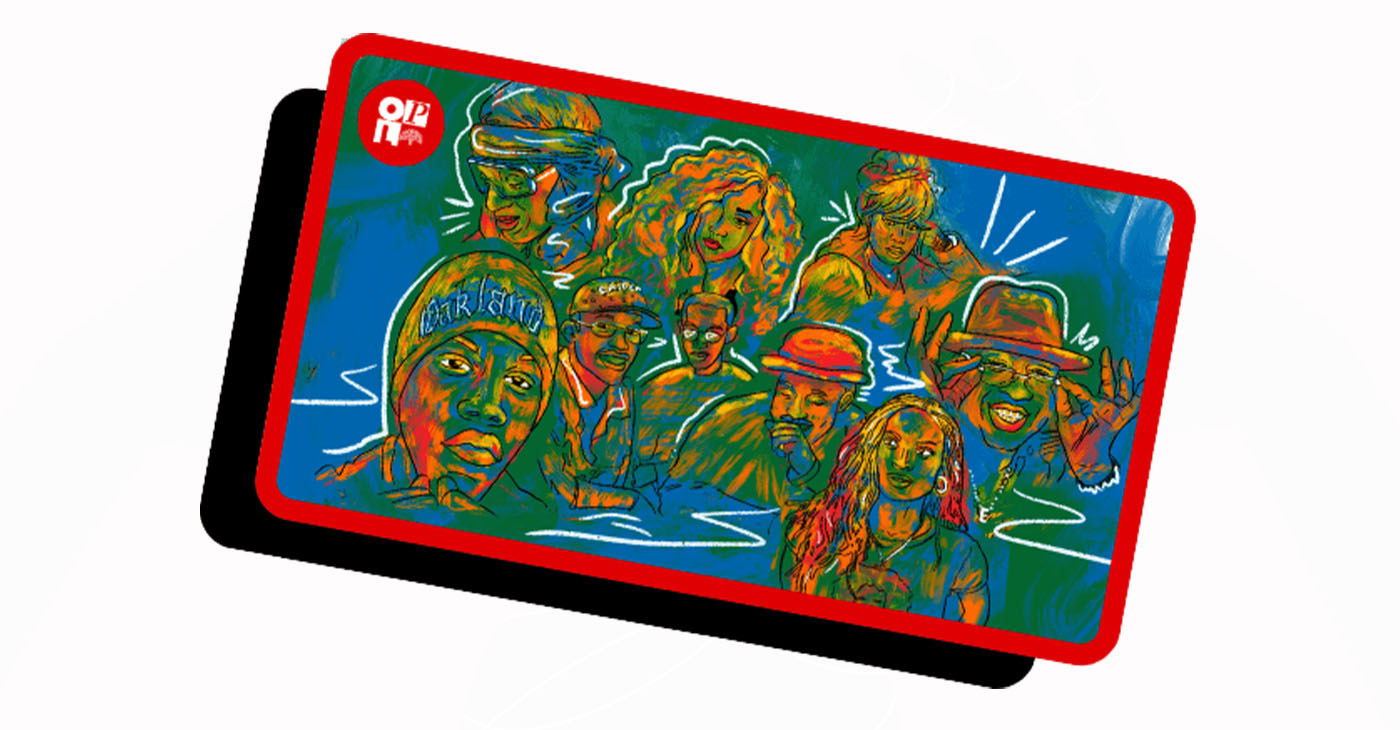
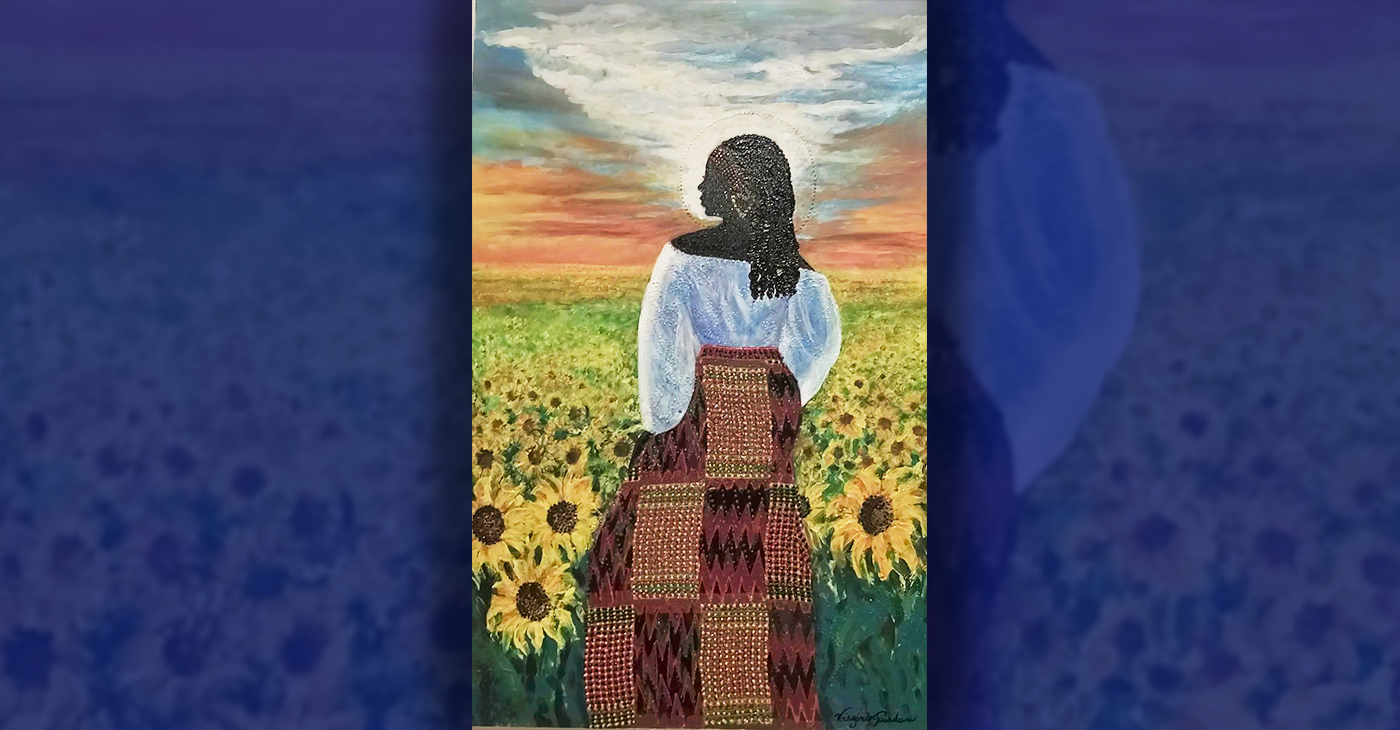
The Oakland Public Library is thrilled to announce the special limited-edition Library Card Contest, a creative initiative celebrating the contributions of African Americans to the arts in Oakland. Courtesy image created by Nikolitsa Paranomos for Oakland Public Library.
This contest will run from Oct. 15 to Nov. 15, with the winning designs featured on library cards available to patrons on Feb. 1, 2024, to celebrate Black History Month.
Oakland has a rich history of artistic innovation by African Americans that has shaped the culture, political landscape, and social justice movements in the city. This contest celebrates these contributions to the arts, highlighting literature, poetry, visual arts, music, theatre, and the performing arts.
Additionally, in celebration of the 50th anniversary of hip-hop, a special category is dedicated to this groundbreaking art form.
“We are excited to provide a platform for artists of all ages to celebrate the cultural heritage and artistic contributions of African Americans in Oakland,” said Library Director Jamie Turbak.
“This contest allows OPL to showcase the incredible talent and creativity of Oaklanders of all ages; I hope people will collect all six cards,” she said.
The contest is open to visual artists of all ages (children, teens, and adults). There will be six winners, two selected from each age group. Artists are encouraged to submit original, digital, or traditional artwork that represents their chosen category and reflects the theme.
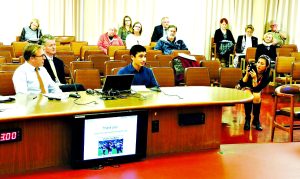
A panel of judges, including representatives from the Oakland Public Library and local artists, will evaluate submissions based on creativity, relevance to the theme, and artistic skill.
The winners will be officially notified on Dec. 5, and their art will be featured in an exhibit installation during Black History Month 2024. Additionally, winners will receive special recognition and prizes.
For more information, official rules, and submission guidelines, please visit: www.oaklandlibrary.org/artcontest
#OakLibraryArtContest @OakLibrary








Activism
Art of the African Diaspora Celebrates Legacy and Community at Richmond Art Center
Now in its 29th year, Art of the African Diaspora is the Bay Area’s longest-running exhibition of its kind. Its roots stretch back to 1989, when artist and educator Marie Johnson Calloway founded Colors of Black, a salon for African American artists. That gathering inspired artists Jan Hart-Schuyers and Rae Louise Hayward to establish The Art of Living Black at the Richmond Art Center in 1996.
By Carla Thomas
The 2026 Art of the African Diaspora exhibition is on display at the Richmond Art Center (RAC) through March 14. The one-room gallery bursts with more than 100 works – paintings, photographs, sculptures, and mixed-media pieces – each affirming the power, beauty, and vitality of cultural expression across the African diaspora.
Now in its 29th year, Art of the African Diaspora is the Bay Area’s longest-running exhibition of its kind. Its roots stretch back to 1989, when artist and educator Marie Johnson Calloway founded Colors of Black, a salon for African American artists. That gathering inspired artists Jan Hart-Schuyers and Rae Louise Hayward to establish The Art of Living Black at the Richmond Art Center in 1996. Their vision was to showcase the creativity of emerging and established Black artists, bridging communities and widening access to audiences historically excluded from mainstream art spaces.
Over the decades, that founding vision has expanded and evolved, carried forward by artists, family members, and the Richmond Art Center after the loss of Hart-Schuyers and Hayward. In 2018, a new generation of artists formed a steering committee to organize the event; a year later, the exhibition was renamed Art of the African Diaspora to embrace the broader global connections of people of African descent.
The new name reflects not only a broader cultural lens but also an empowered community network that supports artists across the Bay Area. As part of this year’s programming, RAC will host ‘Art of the African Diaspora: Public Art in Our Communities,’ a free panel on Sat., Feb. 21, from 12 to 1:30 p.m. Artists Kristine Mays, James Moore, and Malik Seneferu will join arts administrator Denise Pate for a conversation on the impact and process of public art. The discussion will be moderated by longtime arts advocate and producer Flo Wiley.
Each panelist brings a distinctive voice to the conversation. Mays, known for her ethereal wire sculptures that capture movement and spirit, has exhibited internationally and is represented in collections ranging from the Smithsonian to the Crocker Art Museum.
Sculptor and painter James Moore creates abstract metal works and colorful field paintings that explore movement, balance, and emotion. His recent public art installations include large-scale pieces in Richmond’s Shields-Reid Park. Malik Seneferu, a self-taught San Francisco native, has built a large body of work celebrating African American life through vibrant murals and expressive figurative art.
Representing the institutional side, Denise Pate oversees public arts investments as director of Community Investments at the San Francisco Arts Commission, advancing racial and cultural equity through funding and advocacy. Together, these artists and administrators will trace how public art emerges, from concept to community collaboration, and why it matters.
The Art of the African Diaspora exhibition runs through March 14 at the Richmond Art Center, 2540 Barrett Ave., Richmond. The center is open Wednesday through Saturday from 10 a.m. to 4 p.m. Admission and programs are free and open to the public.
Activism
‘I Was There Too’ Reveals the Hopes, Dangers of Growing Up in The Black Panther Party
On July 20, at the Oakland Museum of California’s Spotlight Sundays, Gabriel, the daughter of a Black Panther Party couple, Emory Douglas, minister of culture, and artist-educator, Gayle Asalu Dickson, gave a raw personal view of being raised in the middle of the Black Power Movement.

By Carla Thomas
Chronicles of the Black Panther Party are often shared from the perspectives of Huey Newton, Bobby Seale, Angela Davis, or Kathleen Cleaver. However, the view from a Panther’s child was unique on stage as Meres-Sia Gabriel performed, “I Was There Too.”
On July 20, at the Oakland Museum of California’s Spotlight Sundays, Gabriel, the daughter of a Black Panther Party couple, Emory Douglas, minister of culture, and artist-educator, Gayle Asalu Dickson, gave a raw personal view of being raised in the middle of the Black Power Movement.
Gabriel took the audience on her tumultuous journey of revolution as a child caught between her mother’s anger and her father’s silence as the Party and Movement were undermined by its enemies like the COINTELPRO and the CIA.
Gabriel remembers her mom receiving threats as the Party unraveled and the more lighthearted moments as a student at the Black Panther Party’s Community School.
The school was a sanctuary where she could see Black power and excellence in action.
It was there that she and other children were served at the complimentary breakfast program and had a front row seat to the organization’s social and racial justice mission, and self-determination, along with the 10-point platform where the party fought for equality and demanded its right to protect its community from police brutality.
On her journey of self-development, Gabriel recounted her college life adventures and transformation while immersed in French culture. While watching television in France, she discovered that her father had become a powerful post-revolution celebrity, sharing how high school and college-age youth led a movement that inspired the world.
Through family photographs, historical images projected on screen, personal narratives, and poetry, Gabriel presented accounts worth contemplating about the sacrifices made by Black Panther Party members. Her performance was backed by a jazz trio with musical director Dr. Yafeu Tyhimba on bass, Sam Gonzalez on drums, and pianist Sam Reid.

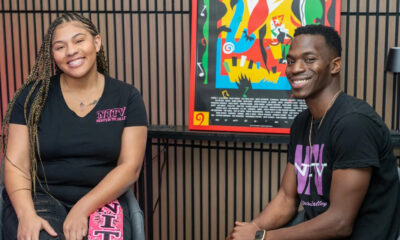
At the Oakland Museum of California, Amy Tharpe, Ayanna Reed, artist Meres-Sia Gabriel and Kenan Jones at the meet-and-greet after the “I Was There Too” multimedia production. Photo by Carla Thomas.
Gabriel’s poetry is featured in the “Black Power” installation at the Oakland Museum of California, and her father’s book, “Black Panther: The Revolutionary Art of Emory Douglas,” features her foreword. She accompanied her father on tour exhibiting his artwork from the Panther Party’s publication as Minister of Culture.
Gabriel considers her work as a writer and performer a pathway toward self-reflection and personal healing. While creating “I Was There Too,” she worked for a year with the production’s director, Ajuana Black.
“As director, I had the opportunity to witness, to create, to hold space with tenderness and trust,” said Black. “Her performance touched my soul in a way that left me breathless.”
With over two decades of musical theater experience, Black has starred in productions such as “Dreamgirls” as Lorrell and “Ain’t Misbehavin’s” Charlene. She also performs as the lead vocalist with top-tier cover bands in the Bay Area.
During the post-performance meet-and-greet in the (OMCA) Oakland Museum of California garden, Gabriel’s father posed for photos with family and friends.
“I am proud of her and her ability to share her truth,” he said. “She has a gift and she’s sharing it with the world.”
Shona Pratt, the daughter of the late BPP member Geronimo Pratt, also attended to support Gabriel. Pratt and Gabriel, known as Panther Cubs (children of the Black Panther Party), shared their experience on a panel in Richmond last year.
“Meres-Sia did a great job today,” said Pratt. “It was very powerful.”
Meres-Sia Gabriel was born and raised in Oakland, California. A graduate of Howard University in Washington, D.C., and Middlebury College School in France, Gabriel serves as a French instructor and writing coach.
Activism
The Past and Future of Hip Hop Blend in Festival at S.F.’s Midway
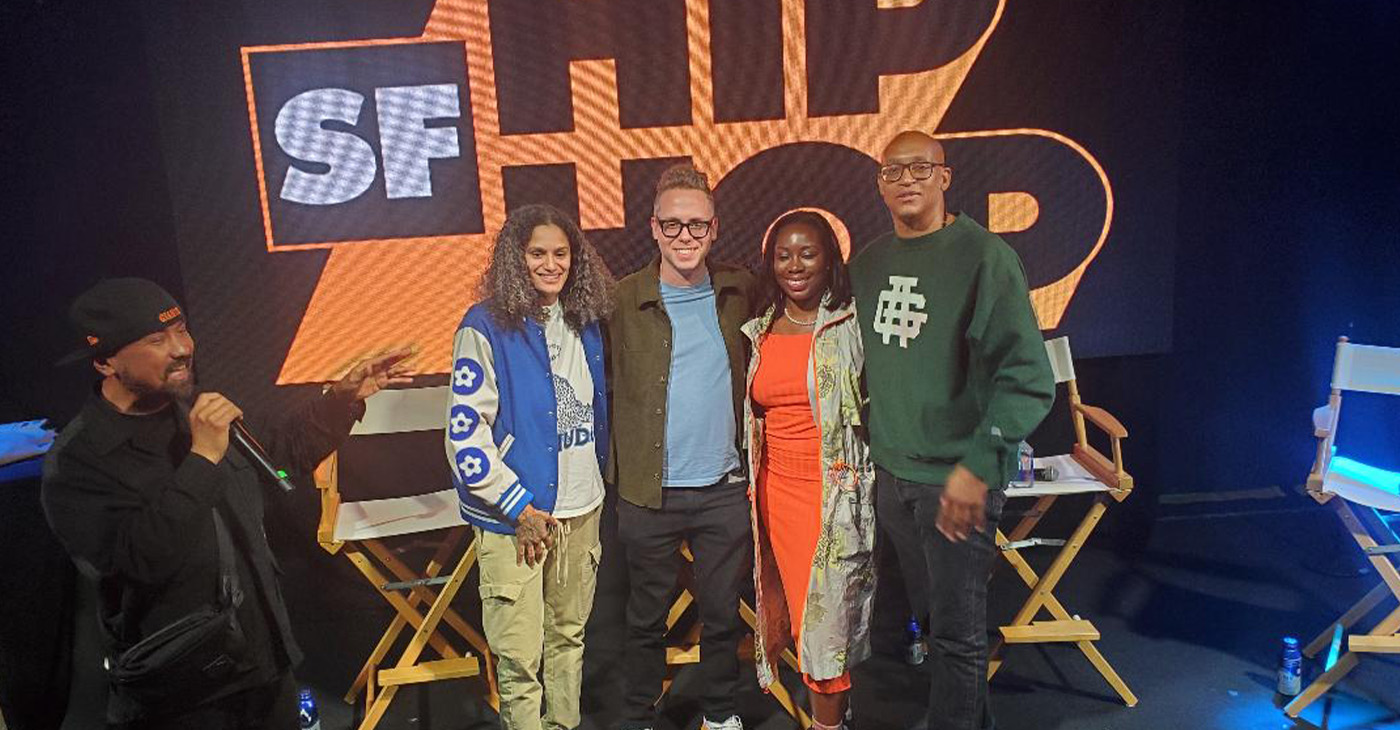
“The Music and AI: Ethics at the Crossroads” panel featured X.Eyee, CEO of Malo Santo and senior advisor for UC Berkeley’s AI Policy, Sean Kantrowitz, director of media and content @Will.I.A.’s FYI, Adisa Banjoko of 64 Blocks and Bishop Chronicles podcast, and Julie Wenah, chairwoman of the Digital Civil Rights Coalition.
By Carla Thomas
“Cultural Renaissance,” the first-ever SF Hip-Hop conference, occurred at The Midway at 900 Marin St. in San Francisco on July 18 and 19. Held across three stages, the event featured outdoor and indoor performance spaces, and a powerful lineup of hip-hop icons and rising artists.
Entertainment included Tha Dogg Pound, celebrating their 30th anniversary, Souls of Mischief, and Digable Planets. “Our organization was founded to preserve and celebrate the rich legacy of Hip-Hop culture while bringing the community together,” said SF Hip-Hop Founder Kamel Jacot-Bell.
“It’s important for us to bring together artists, innovators, and thought leaders to discuss how hip-hop culture can lead the next wave of technological and creative transformation,” said Good Trouble Ventures CEO Monica Pool-Knox with her co-founders, AJ Thomas and Kat Steinmetz.
From art activations to cultural conversations, the two-day event blended the intersections of AI and music. Panels included “Creative Alchemy – The Rise of the One-Day Record Label,” featuring producer OmMas Keith, composer-producer Rob Lewis, AI architect-comedian Willonious Hatcher, and moderator-event sponsor, AJ Thomas.
“The Legends of Hip-Hop and the New Tech Frontier” panel discussion featured hip-hop icon Rakim, radio personality Sway, chief revenue officer of @gamma, Reza Hariri, and music producer Divine. Rakim shared insights on culture, creativity, and his A.I. start-up NOTES.
“AI is only as good as the person using it,” said Rakim. “It cannot take the place of people.”
Rakim also shared how fellow artist Willonious helped him get comfortable with AI and its power. Rakim says he then shared his newfound tool of creativity with business partner Divine.
The panel, moderated by the Bay Area’s hip-hop expert Davey D, allowed Divine to speak about the music and the community built by hip-hop.
“Davey D mentored me at a time when I had no hope,” said Divine. “Without his support, I would not be here on a panel with Rakim and Willonious.”
Hatcher shared how his AI-produced BBL Drizzy video garnered millions of views and led to him becoming one of Time magazine’s 100 most influential AI creators.
“The Music and AI: Ethics at the Crossroads” panel featured X.Eyee, CEO of Malo Santo and senior advisor for UC Berkeley’s AI Policy, Sean Kantrowitz, director of media and content @Will.I.A.’s FYI, Adisa Banjoko of 64 Blocks and Bishop Chronicles podcast, and Julie Wenah, chairwoman of the Digital Civil Rights Coalition.
“Diverse teams solve important questions such as: ‘How do we make sure we bring diverse people to the table, with diverse backgrounds and diverse lived experiences, and work together to create a more culturally sound product,’” said Wenah.
Self-taught developer, X.Eyee said, “You have to learn the way you learn so you can teach yourself anything. Future jobs will not be one roadmap to one individual skill; you will be the orchestrator of teams comprised of real and synthetic humans to execute a task.”
Activist Jamal Ibn Mumia, the son of political prisoner Mumia Abu Jamal, greeted Black Panther Party illustrator Emory Douglas, who was honored for his participation in the Black Power Movement. Douglas was presented with a statue of a black fist symbolizing the era.
“It’s an honor to be here and accept this high honor on behalf of the Black Panther Party,” said Douglas, holding the Black Power sculpture. “It’s an art (my illustrations) that’s been talked about. It’s not a ‘me’ art, but a ‘we’ art. It’s a reflection of the context of what was taking place at the time that inspired people.
“To be inspired by is to be in spirit with, to be in spirit with is to be inspired by, and to see young people continue on in the spirit of being inspired by is a very constructive and powerful statement in the way they communicate,” Douglas said.
His work embodied the soul of the Black Panther Party, and as its minister of culture and revolutionary artist, he definitely keeps the Panther Party soul alive, and his work is everywhere.
“Brother Emory Douglas is an icon in the community,” said JR Valrey of the Block Report.
“Fifty years later, he’s still standing,” said Ibn Mumia, raising his fist in the traditional Black Power salute.
“Emory is a living legend and so deserving of this award,” Valrey said. “We have to honor our elders.”

WORK FROM HOME
Home-based business with potential monthly income of $10K+ per month. A proven training system and website provided to maximize business effectiveness. Perfect job to earn side and primary income. Contact Lynne for more details: Lynne4npusa@gmail.com 800-334-0540


Black Artists in America, Installation Three Wraps at the Dixon Gallery and Gardens

Grief, Advocacy, and Education: A Counselor Reflects on Black Maternal Health

Future of Florida’s Black History Museum in Limbo

New Research Shows the Many Benefits of Early Learning

South Hampton K-8 Students Among Top 10 Finalists for Samsung’s ‘Solve for Tomorrow’ Competition

Cuba: No Negotiation with US on the President or Political System

Brooklyn Academy of Music Names Jamaican-Born Tamara McCaw as President

Trinidad & Tobego – U.S. Launches WhatsApp Channel for American Citizens in the Country

Oakland Post: Week of March 18 – 24, 2026

AI Innovation vs. Ethics and Environmental Impact

AI, Web3, and Digital Reparations

What If You Owned Your AI Agent?

Season 7, Episode 3 – January Reporter’s Roundtable 📱

Season 7, Episode 3 – January Reporter’s Roundtable

AI, Media, and Power | Part 2, Real-World Impacts and Tradeoffs

Reflecting on Black History Milestones in Birmingham AL

CITY OF SAN LEANDRO STATE OF CALIFORNIA PUBLIC WORKS DEPARTMENT ENGINEERING DIVISION NOTICE TO BIDDERS FOR ANNUAL STREET OVERLAY/REHABILITATION 2019-21 – PHASE III

Oakland Post: Week of February 18 – 24, 2026

Oakland Post: Week of February 25 – March 3, 2026

PRESS ROOM: NBA Hall of Fame Nominee Terry Cummings Joins 100 Black Men of DeKalb County to Launch Victory & Values Initiative

Trump’s MAGA Allies are Creating Executive Order Plan to Steal the 2026 Midterms

Oakland Post: Week of March 4 – 10, 2026

Chase Oakland Community Center Hosts Alley-Oop Accelerator Building Community and Opportunity for Bay Area Entrepreneurs

U.S. manufacturing rebounds – how foundry services are adapting to rising demand

Poll Shows Support for Policies That Help Families Afford Child Care

OP-ED: One Hundred Years of Black Workers Telling the Truth

Advancements in solar technology that are changing the way we power the world

Woman’s Search for Family’s Roots Leads to Ancestor John T. Ward – A Successful Entrepreneur and Conductor on the Underground Railroad

Oakland Post: Week of March 11 -17, 2026

COMMENTARY: Women of Color Shape Our Past and Future

Hyundai Ioniq 5 Parking, Safety, and 360 View #shorts

2025 Ioniq 5 New Wiper & Powerful Performance! #shorts

Electric SUV Range: Is 259 Miles Enough? #shorts

EV Charging: How Fast Can You Charge an Electric Vehicle? #shorts

Biometric Cooling… Messaging Seats…Come on! 2025 Infiniti QX80 Autograph 4WD

Charged Up: Witness the Magic of a Fully Electric Car! #shorts

Range Rover Sport PHEV Included…: See What’s Inside This Luxury SUV! #shorts

Invisible Hood View: Perfect Parking with X-Ray Vision! #shorts

AI Is Reshaping Black Healthcare: Promise, Peril, and the Push for Improved Results in California

ESSAY: Technology and Medicine, a Primary Care Point of View

Sanctuary Cities

The RESISTANCE – FREEDOM NOW

STATE OF THE PEOPLE: Freddie

ECONOMIC BOYCOTT DAY!!!!!

I told You So

-
 Activism4 weeks ago
Oakland Post: Week of March 4 – 10, 2026
-
 #NNPA BlackPress4 weeks ago
Woman’s Search for Family’s Roots Leads to Ancestor John T. Ward – A Successful Entrepreneur and Conductor on the Underground Railroad
-
 Activism3 weeks ago
Oakland Post: Week of March 11 -17, 2026
-
 #NNPA BlackPress4 weeks ago
COMMENTARY: Women of Color Shape Our Past and Future
-

 #NNPA BlackPress4 weeks ago
Advocates Raise Alarm Over ICE Operation, MOU and Detention Risks in Baltimore County
-

 Advice3 weeks ago
Financial Wellness and Mental Health: Managing Money Stress in College
-

 #NNPA BlackPress4 weeks ago
Pete Buttigieg to Join Mayor Randall Woodfin for Community Town Hall in Birmingham
-
 Activism2 weeks ago
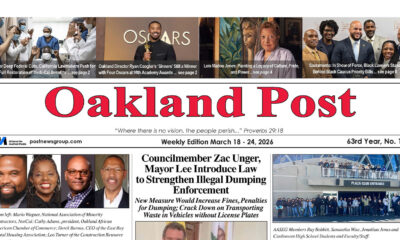
Oakland Post: Week of March 18 – 24, 2026
