
Bay Area
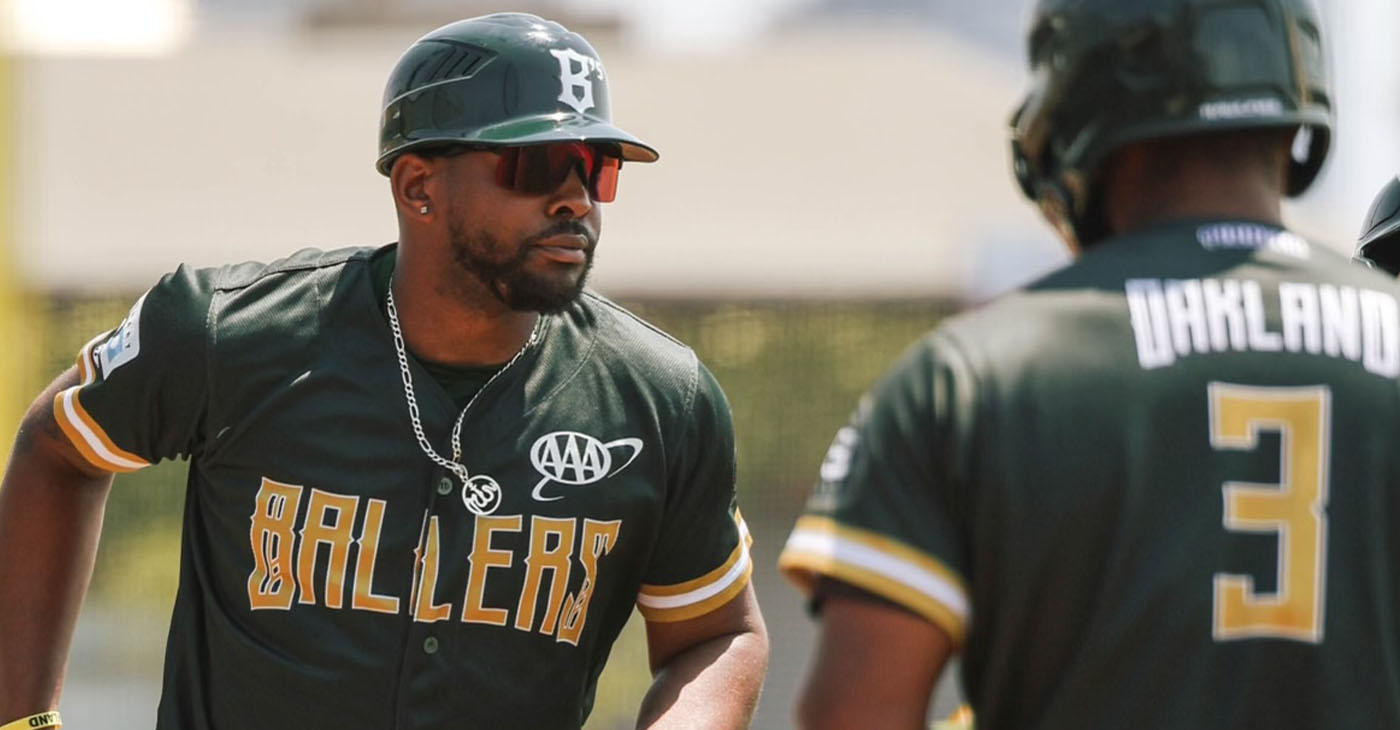
Oakland Baseball Native Returned to the Bay to Give Back to The Town
He was diagnosed with a form of heart arrhythmias, which led to his release from the A’s. Unfortunately, other teams could not be convinced to take a chance on him due to heart problems, so he spent no more than a season with any organization over the next five years. In 2021, now heartbroken over what had transpired throughout his career, he decided to retire from playing baseball. Despite being frustrated, he wanted to have fun during his last season. “As an athlete, you never want to feel like the game is kicking you out. You want to walk away on your own terms,” Harris said. “I wanted to be in a position where I can transition my life from being a player to other opportunities.”

By Magaly Munoz

If anyone knows the struggles of breaking into minor league baseball, it’s James Harris.
Harris, an Oakland native, was drafted by the Tampa Bay Rays in 2011, starting a tumultuous 10-year career of jumping from one team to the next, and he had health problems that would hinder his career progress.
After dedicating almost his entire life to playing baseball, Harris never imagined he would be released and signed to 11 different teams over a decade.
“The experience is humbling,” Harris explained.
“I think that for most people, [the emotions] goes both ways, where you probably start off a little bit of anger because you feel like you’re better than other guys that are staying. But then you have to humbly look in the mirror and say, ‘Well, what do I need to do differently if given the opportunity again?’” Harris said.
Midway through his career, Harris experienced episodes of passing out while on the field, leading to several weeks of testing with multiple cardiologists. This caused him to miss six weeks of the season.
He was diagnosed with a form of heart arrhythmias, which led to his release from the A’s. Unfortunately, other teams could not be convinced to take a chance on him due to heart problems, so he spent no more than a season with any organization over the next five years.
In 2021, now heartbroken over what had transpired throughout his career, he decided to retire from playing baseball. Despite being frustrated, he wanted to have fun during his last season.
“As an athlete, you never want to feel like the game is kicking you out. You want to walk away on your own terms,” Harris said. “I wanted to be in a position where I can transition my life from being a player to other opportunities.”
And new opportunities were exactly what he found, and not too far away from the field he knew and loved.
Soon after leaving baseball, Harris began working with kids during his off time, coaching and training players of all ages. This evolved into coaching travel ball teams and eventually partnering with BJ Boyd, his former A’s teammate, to start their own training team called Backyard Boyz.
Boyd knew from the start that the partnership would be able to build something big to give back to the community.
Harris and Boyd understood how expensive and time consuming the sport was, on top of how confusing breaking into the big leagues would be for the young players who had the drive to move to the next level beyond high school. They provide kids with mentorship and opportunities to play in front of college scouts at little to no cost.
This is not about money or building themselves up at others’ expense, they want to see Oakland kids thriving with opportunities that are not easy to come by without families paying exorbitant fees.
The players love Harris, Boyd said, because he’s been in their shoes before, so he understands what it really takes to go to the next level. The kids look up to them because they dream of being where the two have already been.
“The motivation and the goal behind [Backyard Boyz] is to help be a platform and a resource for as many kids as possible. Everyone doesn’t have an advocate speaking on their behalf [like this resource],” Harris said.
Around the time of starting Backyard Boyz, Harris began working with a new pioneer league team, the Ballers, that came to Oakland during peak baseball desperation.
The A’s, Oakland’s major league baseball team since 1968, had just announced their plans to leave the city to find a new home in Las Vegas when the Ballers announced their plans to dig roots in the town. The B’s hoped to take away the doom and gloom that the A’s were leaving with fans and give locals something new to take pride in.
Oakland has gotten a reputation for losing professional sports teams. The longtime NFL team, Oakland Raiders, moved to Las Vegas in 2020, and the Golden State Warriors left their city arena empty to play across the bridge in San Francisco in 2019.
Harris first joined the growing B’s team as marketing and sales guy, promoting the team to locals and building up the hype the new team would bring. Midway through the teams first season, Harris was asked to step up as an assistant coach.
Because of his background in running baseball camps and playing in the minor league, the change of position seemed like a no-brainer to Ballers Manager Aaron Miles.
“[Harris] would hang around the batting cage and talk ball with the players. He was another knowledgeable baseball guy for players to lean on,” Miles said.
The Ballers finished their season by making it to the Pioneer League playoffs, but ultimately lost 6-4 to the Yolo High Wheelers in the first round.
Although the coaching is at different levels, Harris is honored to be a part of maintaining the legacy of Oakland sports at a time when fans are feeling discouraged. The Ballers and Backyard Boyz are allowing him to create impact in the lives of players who are at unique stages of their careers, whether that’s starting out in high school or trying to use the Pioneer League as a stepping stone into something bigger.
“It means a lot to me to be a part of [the Ballers] and to see how it’s directly impacted people. The amount of people I’ve met doing this, and working with the little leagues has been extremely humbling,” Harris said. “I think that this is going to be huge for the community.”


Activism
Oakland Post: Week of September 30 – October 6, 2026
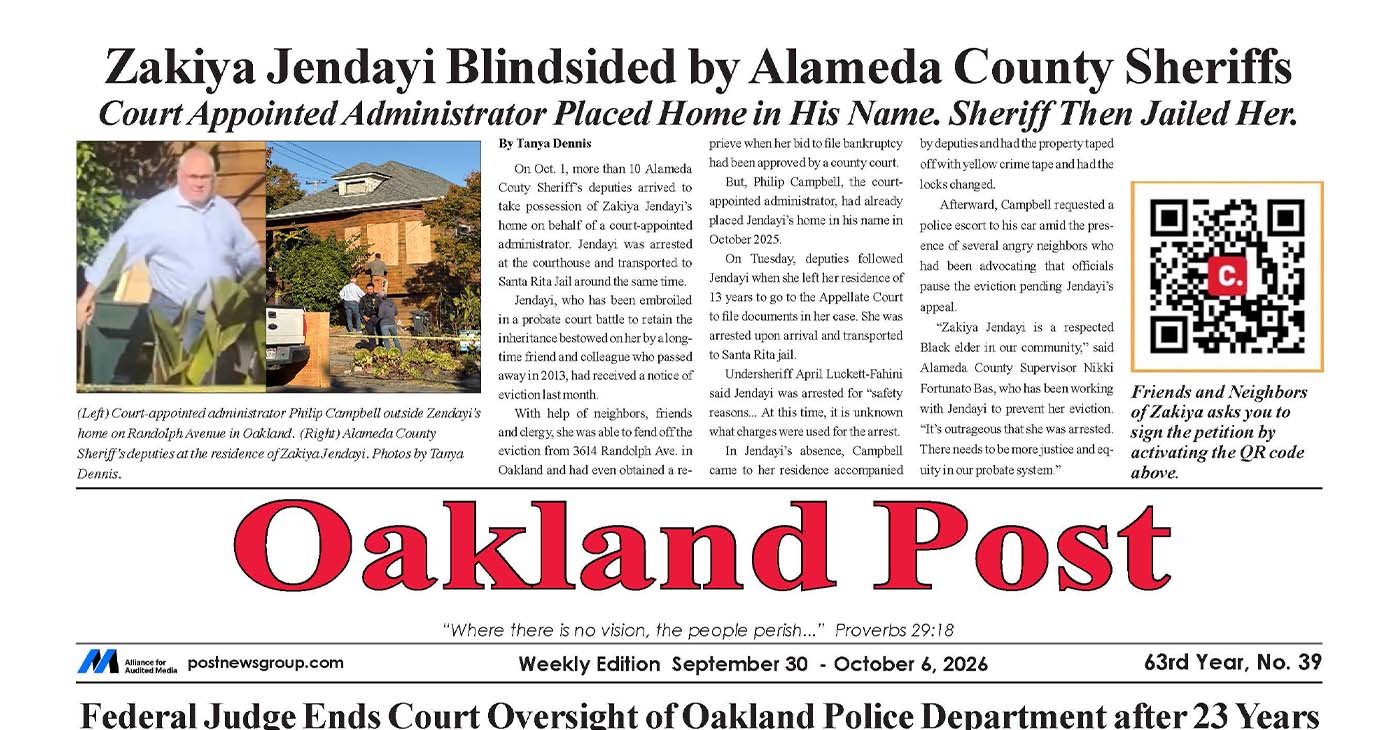
The printed Weekly Edition of the Oakland Post: Week of September 30 – October 6, 2026

To enlarge your view of this issue, use the slider, magnifying glass icon or full page icon in the lower right corner of the browser window.

Activism
Oakland Post: Week of September 23 – 29, 2026
The printed Weekly Edition of the Oakland Post: Week of September 23 – 29, 2026

To enlarge your view of this issue, use the slider, magnifying glass icon or full page icon in the lower right corner of the browser window.
Activism
Oakland Post: Week of September 16 – 22, 2026
The printed Weekly Edition of the Oakland Post: Week of September 16 – 22, 2026

To enlarge your view of this issue, use the slider, magnifying glass icon or full page icon in the lower right corner of the browser window.


OP-ED: Proposition 44 Would Put a Price on Trust

OP-ED: Proposition 40: It’s Time to Play Chess, Not Checkers

Listening as a Lifeline: A Doula’s Witness to Black Maternal Health

New Protections for Ticket Buyers: Gov. Newsom Signs Assemblymember Isaac Bryan’s Bill

‘We Don’t Talk Trash — We Pick Up Trash!’

Zakiya Jendayi Arrested, Locked Out of Home by Sheriff’s Deputies

Oakland Post: Week of September 30 – October 6, 2026

Asm. Corey Jackson Announces Launch of 24-Hour Childcare in His District

IN MEMORIAM: The Rev. Leon “Sonny” Clark, Longtime Orange County Pastor and Community Leader, Dies at 72

Poll: Becerra Widens His Lead Over Hilton; Californians Split on Wealth Tax

From Historic Memories to New Possibilities: Oakland Celebrates Coliseum 60

County Office of Education Says OUSD Finances Are Getting Healthier, Materially Stronger

LIVE FREE Sunday Dinner Brings Faith, Fellowship and Civic Conversation to Oakland

Remembering Chauncey Bailey as Student Journalists Face Threats to Truth-Telling

BLACspace Cooperative Invites Bay Area to Experience Oakland’s Black Cultural Ecosystem Through a BLAC Map Tour + Party

Standoff for Justice: Our Homes Are Worth Fighting For

Oakland Post: Week of August 26 – September 1, 2026

Frontier Airlines’ Return to Oakland Airport Brings Flights, Jobs and Opportunity

Gubernatorial Candidate Steve Hilton Blasts California New Tire Rules; Newsom Hits Back

Chef Sharon Lee Blends Culinary Excellence, Education and Empowerment

Jackie Wright Champions Bay Area Stories, Filmmakers and Cultural Institutions

Misnamed ‘Parent’ PAC Seeks to Influence Oakland School Board Elections

Oakland Coliseum Project Opens Door for Small Businesses to Build Bigger

Big City Mayors Ask for “Yes” Vote on Housing Bond Measure; Conservatives Say “No”

Gov. Newsom’s Latest Appointees Include Sacramento Advocate for Formerly Incarcerated Students; State’s New Tech Chief

Longtime BWOPA Member Brendalyn Goodall Appointed to California Workforce Development Board

Gov. Newsom Signs Law Shielding Immigration Aid Workers From Doxing Threats

Oakland Post: Week of September 2 – 8, 2026

Secretary of State Shirley N. Weber Urges Californians to Vote Early as Voter ID Battle Intensifies

IN MEMORIAM: Dolly Parton Dead at 80 — How She Built a Legacy of Love and Earned Her Place in Black Culture

The Conversation With Al McFarlane 6/23/26

Media Monday 6/22/26

LIVE! ASK ALMA! — TUES. 6.23.26 7PM EST

Car Buying Secrets: 4 Hidden Checks Before You Sign!

Is This 550 HP Charger Worth YOUR Money? AutoNetwork Review

Celebrating Juneteenth – Frederick Douglass on education and resistance

LIVE! — ASK ALMA! — TUES. 6.19.26 7PM EST

Hyundai Ioniq 5 Parking, Safety, and 360 View #shorts

2025 Ioniq 5 New Wiper & Powerful Performance! #shorts

Electric SUV Range: Is 259 Miles Enough? #shorts

EV Charging: How Fast Can You Charge an Electric Vehicle? #shorts

Biometric Cooling… Messaging Seats…Come on! 2025 Infiniti QX80 Autograph 4WD

Charged Up: Witness the Magic of a Fully Electric Car! #shorts

Range Rover Sport PHEV Included…: See What’s Inside This Luxury SUV! #shorts

Invisible Hood View: Perfect Parking with X-Ray Vision! #shorts
-
 Community3 weeks ago
Misnamed ‘Parent’ PAC Seeks to Influence Oakland School Board Elections
-

 Activism3 weeks ago
Oakland Post: Week of September 9 – 15, 2026
-

 Community3 weeks ago
Richmond Tiny House Village Farm & Garden Set to Open Gates on Sept. 26
-

 Black History3 weeks ago
Latest Massacre in Haiti Reveals Cruelty U.S. Deportations
-

 Black History3 weeks ago
OPINION: Nolan Wells’ Death One of Several Signifying Racial Terror Lives on in U.S. South
-

 Business2 weeks ago
Mayor Lee Announces $1 Million Kaiser Permanente Grant for Pilot Program to Address Homelessness, Clean Up Public Spaces throughout Oakland
-

 Community3 weeks ago
Democratic Clubs Interview Candidates for Oakland School Board
-
 Uncategorized3 weeks ago
NBA All-Star Damian Lillard Returns Home for 15th Annual Backpack Giveaway
