
Business
New Jersey, Leagues Renew Court Tussle Over Sports Gambling


New Jersey Gov. Chris Christie speaks during a news conference Thursday, Jan. 9, 2014, at the Statehouse in Trenton, N.J. A day after revelations that Christie’s administration may have closed highway lanes to exact political retribution, the prospective Republican presidential candidate is faced with what may be the biggest test in his political career. (AP Photo/Mel Evans)
DAVID PORTER, Associated Press
PHILADELPHIA (AP) — The fight over legalized sports gambling in New Jersey returned to a federal appeals court Tuesday, where attorneys for the state and the country’s major sports leagues spent nearly an hour parsing language in a decades-old federal statute and in recent court rulings.
At issue: Whether a 2014 New Jersey law repealing prohibitions against sports gambling violates the 1992 federal Professional and Amateur Sports Protection Act, which says states cannot “sponsor, operate, advertise, promote, license or authorize” sports betting.
A good portion of Tuesday’s oral arguments before the 3rd U.S. Circuit Court of Appeals focused on the meaning of the word “authorize,” and whether New Jersey did that when Gov. Chris Christie signed the law striking the betting prohibitions.
Attorneys from both sides endured sharp questioning from the court, which heard a previous incarnation of the case in 2013. In the ruling that followed that argument, the court said New Jersey couldn’t be prevented from repealing its sports gambling laws. The state seized on that language to write its 2014 law.
New Jersey is hoping sports gambling will reap tens of millions of dollars in revenue and help turn around the flagging fortunes of its casino and horse racing industries. The leagues have said expanding sports gambling will threaten the integrity of their games and lead to increased incidences of game-fixing.
Paul Clement, an attorney representing the NFL, NBA, NHL, Major League Baseball and the NCAA, said New Jersey wasn’t just repealing laws against sports gambling. He said the state would restrict sports betting to heavily regulated casinos and racetracks, limit bets to people over 21 and bar bets on in-state teams.
“A partial repeal that selects the favored venues and dictates who’s going to engage in sports gambling and on what games they’re going to bet on” amounts to state authorization, Clement said.
Arguing for New Jersey, Theodore Olson called it “Orwellian” that New Jersey would purportedly be in violation of federal law by allowing sports gambling in certain areas but would be OK if it allowed it everywhere. Besides, he added, “everything in New Jersey is regulated,” from muffler shops to beauty salons.
Ronald Riccio, a lawyer representing the New Jersey Thoroughbred Horsemen’s Association, told the judges that Monmouth Park, the only venue in the state to prepare to begin offering sports betting, would have its betting solely regulated by an independent group.
“It will also be under all state and federal consumer protection laws,” he said. “The only thing regulated is sports betting itself. The regulation is entirely up to the private sector as it sees fit.”
Though no casinos have committed to offering sports gambling while the case goes through the courts, the leagues contend that allowing sports gambling there amounts to the state playing a regulatory role because the casinos are state-licensed.
Judge Julio Fuentes queried Peter Phipps, a Department of Justice lawyer appearing in support of the leagues, on whether a sports betting operation would be functioning under a casino’s license if it hadn’t had to apply or pay a fee.
The judge likened it to driving a car with someone else’s license. “Isn’t a casino license not transferable? I can’t imagine it would cover somebody else’s sports betting operation,” Fuentes said.
The case dates back to 2012 when the leagues and NCAA sued the state to stop its initial sports gambling law from being implemented. The state has suffered court defeats since then and failed in an attempt to have the U.S. Supreme Court hear its constitutional challenge last year.
Attorneys on Tuesday acknowledged that the 2014 sports gambling law was worded explicitly to follow the 3rd Circuit’s 2013 ruling.
In recent months, NBA Commissioner Adam Silver and Major League Baseball Commissioner Rob Manfred have separately expressed some level of support for taking a new look at legalized sports betting outside Nevada, the only state to allow betting on individual games at betting parlors.
Copyright 2015 The Associated Press. All rights reserved. This material may not be published, broadcast, rewritten or redistributed.


Activism
Oakland Post: Week of March 4 – 10, 2026
The printed Weekly Edition of the Oakland Post: Week of March 4 – 10, 2026

To enlarge your view of this issue, use the slider, magnifying glass icon or full page icon in the lower right corner of the browser window.
Activism
Oakland Post: Week of February 25 – March 3, 2026
The printed Weekly Edition of the Oakland Post: Week of – February 25 – March 3, 2026

To enlarge your view of this issue, use the slider, magnifying glass icon or full page icon in the lower right corner of the browser window.
Activism
Chase Oakland Community Center Hosts Alley-Oop Accelerator Building Community and Opportunity for Bay Area Entrepreneurs
Over the past three years, the Alley-Oop Accelerator has helped more than 20 Bay Area businesses grow, connect, and gain meaningful exposure. The program combines hands-on training, mentorship, and community-building to help participants navigate the legal, financial, and marketing challenges of small business ownership.
By Carla Thomas
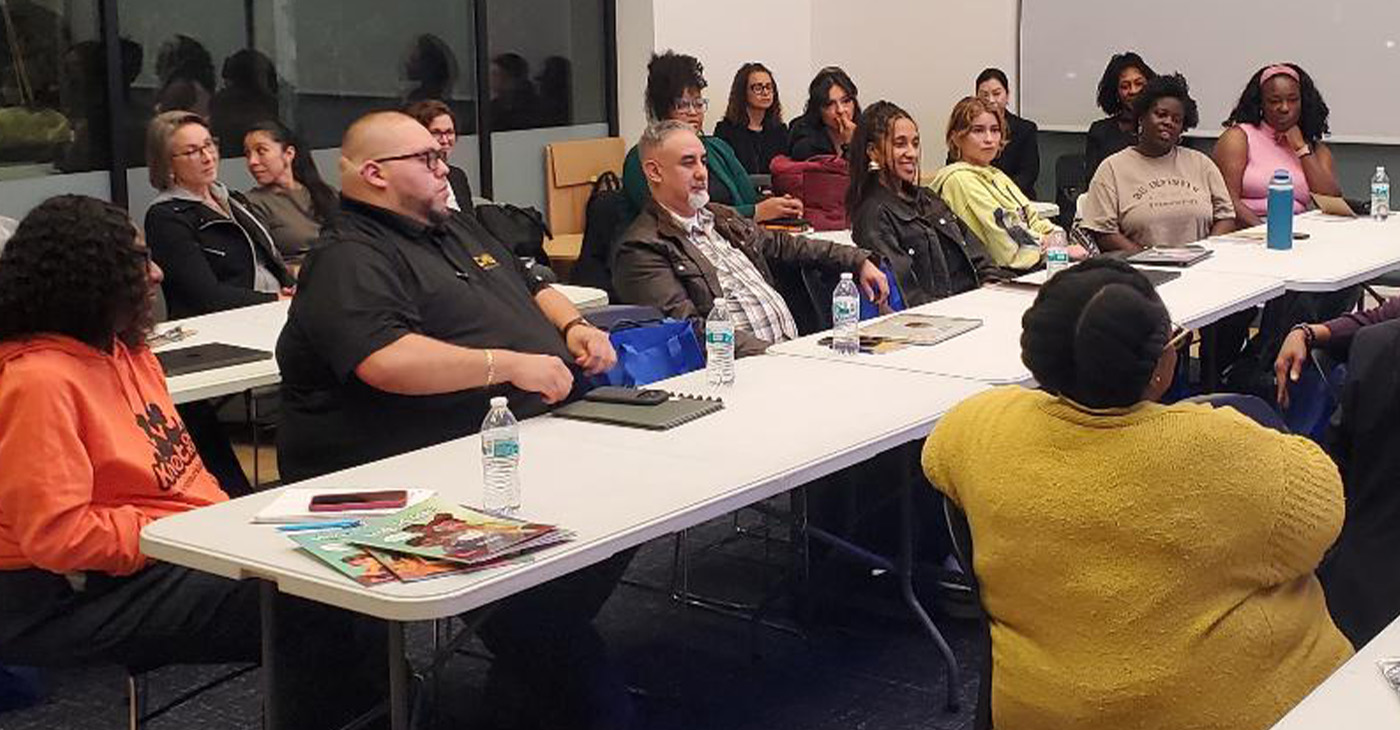
The Golden State Warriors and Chase bank hosted the third annual Alley-Oop Accelerator this month, an empowering eight-week program designed to help Bay Area entrepreneurs bring their visions for business to life.
The initiative kicked off on Feb. 12 at Chase’s Oakland Community Center on Broadway Street, welcoming 15 small business owners who joined a growing network of local innovators working to strengthen the region’s entrepreneurial ecosystem.
Over the past three years, the Alley-Oop Accelerator has helped more than 20 Bay Area businesses grow, connect, and gain meaningful exposure. The program combines hands-on training, mentorship, and community-building to help participants navigate the legal, financial, and marketing challenges of small business ownership.
At its core, the accelerator is designed to create an ecosystem of collaboration, where local entrepreneurs can learn from one another while accessing the resources of a global financial institution.
“This is our third year in a row working with the Golden State Warriors on the Alley-Oop Accelerator,” said Jaime Garcia, executive director of Chase’s Coaching for Impact team for the West Division. “We’ve already had 20-plus businesses graduate from the program, and we have 15 enrolled this year. The biggest thing about the program is really the community that’s built amongst the business owners — plus the exposure they’re able to get through Chase and the Golden State Warriors.”

According to Garcia, several graduates have gone on to receive vendor contracts with the Warriors and have gained broader recognition through collaborations with JPMorgan Chase.
“A lot of what Chase is trying to do,” Garcia added, “is bring businesses together because what they’ve asked for is an ecosystem, a network where they can connect, grow, and thrive organically.”
This year’s Alley-Oop Accelerator reflects that vision through its comprehensive curriculum and emphasis on practical learning. Participants explore the full spectrum of business essentials including financial management, marketing strategy, and legal compliance, while also preparing for real-world experiences such as pop-up market events.
Each entrepreneur benefits from one-on-one mentoring sessions through Chase’s Coaching for Impact program, which provides complimentary, personalized business consulting.
Garcia described the impact this hands-on approach has had on local small business owners. He recalled one candlemaker, who, after participating in the program, was invited to provide candles as gifts at Chase events.
“We were able to help give that business exposure,” he explained. “But then our team also worked with them on how to access capital to buy inventory and manage operations once those orders started coming in. It’s about preparation. When a hiccup happens, are you ready to handle it?”
The Coaching for Impact initiative, which launched in 2020 in just four cities, has since expanded to 46 nationwide.
“Every business is different,” Garcia said. “That’s why personal coaching matters so much. It’s life-changing.”
Participants in the 2026 program will each receive a $2,500 stipend, funding that Garcia said can make an outsized difference. “It’s amazing what some people can do with just $2,500,” he noted. “It sounds small, but it goes a long way when you have a plan for how to use it.”
For Chase and the Warriors, the Alley-Oop Accelerator represents more than an educational initiative, it’s a pathway to empowerment and economic inclusion. The program continues to foster lasting relationships among the entrepreneurs who, as Garcia put it, “build each other up” through shared growth and opportunity.
“Starting a business is never easy, but with the right support, it becomes possible, and even exhilarating,” said Oscar Lopez, the senior business consultant for Chase in Oakland.


WORK FROM HOME
Home-based business with potential monthly income of $10K+ per month. A proven training system and website provided to maximize business effectiveness. Perfect job to earn side and primary income. Contact Lynne for more details: Lynne4npusa@gmail.com 800-334-0540


COMMENTARY: Women of Color Shape Our Past and Future

Woman’s Search for Family’s Roots Leads to Ancestor John T. Ward – A Successful Entrepreneur and Conductor on the Underground Railroad

Advocates Raise Alarm Over ICE Operation, MOU and Detention Risks in Baltimore County

Pete Buttigieg to Join Mayor Randall Woodfin for Community Town Hall in Birmingham

WATCH: Week One – NNPA’s “Leadership Matters” Video Series

Oakland Post: Week of March 4 – 10, 2026

OP-ED: NNPA Launches 2026 “Leadership Matters” Video Series

PRESS ROOM: PMG and Cranbrook Horizons-Upward Bound Launch Journey Fellowship Cohort 2

Los Angeles Summit Brings Together Leaders to Tackle Poverty and Affordability

Civil Rights TV Launches 24/7 Network Focused on Black History, Education and Equity

REVIEW: The Ultimate Hot Girl Summer Getaway: Sunseeker Resort Florida

COMMENTARY: How You Stop a Prescription Medicine is as Important as How You Start

PRESS ROOM: From Congress to Corporate America: NNPA Spotlights Visionaries in New Video Series

Poll Shows Support for Policies That Help Families Afford Child Care

Oakland Post: Week of February 25 – March 3, 2026

Oakland Post: Week of January 28, 2025 – February 3, 2026

Life Expectancy in Marin City, a Black Community, Is 15-17 Years Less than the Rest of Marin County

Community Celebrates Turner Group Construction Company as Collins Drive Becomes Turner Group Drive

California Launches Study on Mileage Tax to Potentially Replace Gas Tax as Republicans Push Back

Discrimination in City Contracts

Book Review: Books on Black History and Black Life for Kids

Oakland Post: Week of January 21 – 27, 2026

COMMENTARY: The Biases We Don’t See — Preventing AI-Driven Inequality in Health Care

Post Newspaper Invites NNPA to Join Nationwide Probate Reform Initiative

Black History Events in the East Bay

Medi-Cal Cares for You and Your Baby Every Step of the Way

Art of the African Diaspora Celebrates Legacy and Community at Richmond Art Center

COMMENTARY: The National Protest Must Be Accompanied with Our Votes

New Bill, the RIDER Safety Act, Would Support Transit Ambassadors and Safety on Public Transit

After Don Lemon’s Arrest, Black Officials Raise Concerns About Independent Black Media

Hyundai Ioniq 5 Parking, Safety, and 360 View #shorts

2025 Ioniq 5 New Wiper & Powerful Performance! #shorts

Electric SUV Range: Is 259 Miles Enough? #shorts

EV Charging: How Fast Can You Charge an Electric Vehicle? #shorts

Biometric Cooling… Messaging Seats…Come on! 2025 Infiniti QX80 Autograph 4WD

Charged Up: Witness the Magic of a Fully Electric Car! #shorts

Range Rover Sport PHEV Included…: See What’s Inside This Luxury SUV! #shorts

Invisible Hood View: Perfect Parking with X-Ray Vision! #shorts

AI Is Reshaping Black Healthcare: Promise, Peril, and the Push for Improved Results in California

ESSAY: Technology and Medicine, a Primary Care Point of View

Sanctuary Cities

The RESISTANCE – FREEDOM NOW

STATE OF THE PEOPLE: Freddie

ECONOMIC BOYCOTT DAY!!!!!

I told You So
-
 Activism4 weeks ago
Community Celebrates Turner Group Construction Company as Collins Drive Becomes Turner Group Drive
-
 Business4 weeks ago
California Launches Study on Mileage Tax to Potentially Replace Gas Tax as Republicans Push Back
-
 Activism4 weeks ago
Discrimination in City Contracts
-
 Arts and Culture4 weeks ago
Book Review: Books on Black History and Black Life for Kids
-
 Activism4 weeks ago
COMMENTARY: The Biases We Don’t See — Preventing AI-Driven Inequality in Health Care
-
 Activism4 weeks ago
Post Newspaper Invites NNPA to Join Nationwide Probate Reform Initiative
-
 #NNPA BlackPress4 weeks ago
COMMENTARY: The National Protest Must Be Accompanied with Our Votes
-
 Activism4 weeks ago
New Bill, the RIDER Safety Act, Would Support Transit Ambassadors and Safety on Public Transit
