Commentary
Myrtis Dightman: The Jackie Robinson of Rodeo
Dightman never finished higher than third in the world standings despite his skills and showmanship. He retired in 1989 after a 30-year career. In 1997, he became the first living African American to be inducted into the Rodeo Hall of Fame.


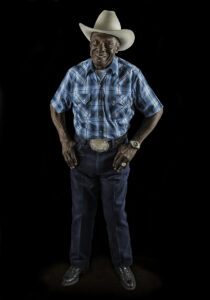
Myrtis Dightman Jr.
Despite what television westerns and American lore demonstrate, 1 in 4 of the real-life trailblazing, sharpshooting, horseback-riding cowboys were Black.
While Texas ranchers went off to war, their slaves maintained the cattle herds. It was then that they learned to tend cattle, a skill that would make them invaluable in the post-Civil War era. The cowboy lifestyle would soon came into its own in Texas cattle country. It remains a way of life today, especially for Myrtis Dightman (1935–).
Born in Crockett, Texas, Dightman is an esteemed cowboy and a pioneer bull rider. His father, Myrtis Dightman Sr., was a Hall-of-Fame bull rider who broke the color barrier in 1964 when he became the first Black cowboy to compete in the National Finals Rodeo. Dightman Jr. was raised on a ranch and quit school at age 15 to work there full time, alongside his brother, after their father’s death.
Living the ranch lifestyle, cowboys and rodeos piqued Dightman’s interest at an early age. Yet he always found it odd that there were “so few Black cowboys competing in rodeos.” And that, he later said, was the main reason he “jumped into the rodeo arena.”
Dightman first participated in the Prairie View Trail Ride in 1957, which had been established that year to promote Black western heritage. From 1958 to 1960 he worked as a bullfighter. In 1960 he began as a bull rider, competing more than five times in the world championship bull-riding competition. In 1966 he became the first black cowboy to qualify for the Professional Rodeo Association National Finals.
As the competition years passed, he would come close to, but not touch, the championship title. This wasn’t because he wasn’t qualified, or that the bulls’ their bucking was stronger than his ride. According to Dightman, “The championship title would disappear from my grasp each time a judge put the pencil to the paper.”
Years later Dightman would ask a fellow cowboy what it would take for him to win a world title. His friend offered: “Keep riding like you’ve been riding and turn white.”
Dightman would go on to qualify six more times, finishing third in the Professional Rodeo Cowboys Association World Standings in 1967 and 1968. He also won the Calgary Stampede in 1971. The following year, he won the bull-riding competition at the Cheyenne Frontier Days Rodeo and finished seventh in the world in the Professional Rodeo Association National Finals.
Dightman never finished higher than third in the world standings despite his skills and showmanship. He retired in 1989 after a 30-year career. In 1997, he became the first living African American to be inducted into the Rodeo Hall of Fame.
Despite the covert racism Dightman endured during his years on the rodeo circuit, he never lost his inner drive. He made it possible for future Black cowboys to participate in national events, and win.

