
National
Murder Indictment for Officer Who Shot Fleeing Black Man


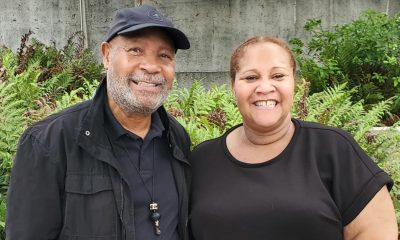
Walter Scott’s parents, Judy Scott and Walter Scott Sr., gather with attorneys for Scott family outside the Charleston County Courthouse, Monday, June 8, 2015, after a Charleston County grand jury handed down an indictment for murder against North Charleston Police Officer Michael Slager in the April 4 shooting death of Walter Scott in Charleston, S.C. Slager fatally shot Scott, who was unarmed, as he was trying to run from a traffic stop. (Grace Beahm/The Post and Courier via AP)
BRUCE SMITH, Associated Press
CHARLESTON, S.C. (AP) — It didn’t take long for a grand jury in South Carolina to indict a white former city policeman for murder in the shooting death of a black man who tried to flee from a traffic stop.
State investigators presented the case against former North Charleston officer Michael Slager to a Charleston County grand jury on Monday and prosecutor Scarlett Wilson announced the indictment a few hours later.
A bystander’s cellphone video shows Slager firing eight times as 50-year-old Walter Scott tried to run away on April 4. The killing enflamed a national debate about how black people are treated by white police officers.
But it caused no unrest in North Charleston, where community leaders and Scott’s family praised the government’s swift response. Slager was charged with murder by state law enforcement agents and fired from the police force immediately after Scott’s family released the video.
The indictment of Slager is the fourth in less than six months in which a grand jury in South Carolina has agreed that white officers should stand trial in the shootings of black men.
The grand jury that reviewed the shooting of Michael Brown by officer Darren Wilson in Ferguson, Missouri, met weekly for three months, hearing from 60 witnesses. Saint Louis County Prosecuting Attorney Bob McCulloch then spoke nearly 45 minutes, describing how jurors “poured their hearts and souls into this process” before deciding not to indict anyone in Brown’s death. Angry protests and riots ensued.
When riots in Baltimore followed the death in police custody of another young black man, Freddie Gray, State’s Attorney Marilyn Mosby charged six officers with crimes and then spent two weeks presenting evidence to a grand jury that affirmed nearly all the charges. “To the youth of this city, I will seek justice on your behalf. This is a moment. This is your moment,” Mosby said in a passionate speech.
Wilson, by contrast, made no speeches. She called reporters to her office to announce the indictment, and made very few comments.
Asked about the importance of the cellphone video of Scott’s death, she acknowledged that it’s helpful to have evidence that “depicts the crime, and we aren’t having to rely just on people’s perceptions.”
That said, “just because you have video in a case doesn’t mean it’s the be-all and end-all and the case is over,” she said. “The jury will be able to make up their own mind after seeing the video and hearing the testimony.”
Slager said he initially tried to stun Scott with his Taser when both men scuffled over the stun gun and he fired his handgun at Scott in self-defense. The video shows the men briefly scuffling before Scott runs away and the officer fires at Scott’s back.
Slager, 33, faces 30 years to life without parole if convicted. Wilson said the death penalty doesn’t apply because there are no aggravating circumstances such as robbery or kidnapping.
His defense lawyer, Andy Savage, said he won’t comment “until we have an opportunity to fully evaluate the state’s case and to compare it with our own investigation.”
Walter Scott’s brother Rodney Scott said the family is “very happy and pleased” with the indictment.
“This is just an example of if you keep the faith, even in the darkest times, you will see the light,” said Chris Stewart, a lawyer for Scott’s family who is preparing to file wrongful death civil suit against the city.
“We are going to patiently wait for the criminal trial in this case and we are going to patiently wait to see if the city, the police department and the chief are going to take responsibility in the civil suit,” Stewart added.
Copyright 2015 The Associated Press. All rights reserved. This material may not be published, broadcast, rewritten or redistributed.










Black History
Oakland Protesters Rally to Defend Haitian Immigrants and TPS
The Haiti Action Committee traces its roots to the international movement that emerged following Haiti’s 1991 military coup, which overthrew the nation’s first democratically elected president, Jean-Bertrand Aristide. Political violence sent thousands of Haitians fleeing the country, while U.S. policies resulted in refugees being intercepted at sea, repatriated, or detained at Guantanamo Bay.

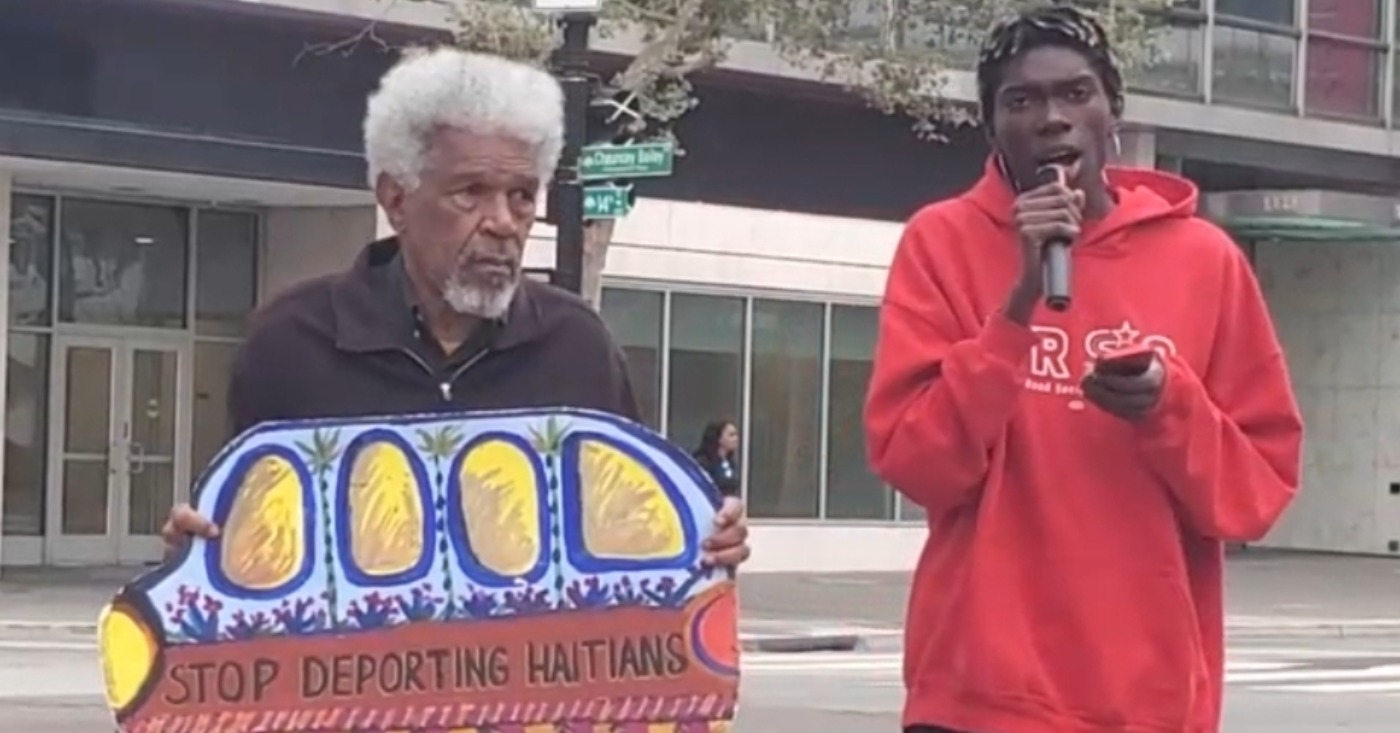
Protesters gathered in downtown Oakland near City Hall at 14th Street and Broadway on Thursday, Aug. 13, calling for protections for Haitian immigrants and an end to deportation policies affecting Haitian communities across the United States.
Organized as a call to action by the Legalization for All Network and supported by the Haiti Action Committee and other community organizations, the demonstration carried a clear message: “Defend TPS! Legalization, Not Deportation!”
Participants focused attention on the termination of Temporary Protected Status, or TPS, for Haiti and immigration policies protesters described as continuing attacks on Haitian immigrants under the Trump administration.
Haitian Romaine Charite of the Freedom Road Socialist Organization urged demonstrators to stand with Haitian families and led chants:
“When Haitians are under attack, what do we do? We fight back.”
Injustice to one is an injustice to us all.”
“Dump Trump!”
Charite and other protesters condemned the federal government’s treatment of Haitian immigrants, describing the policies as an attack on a population already facing extraordinary hardship.
Haiti’s TPS designation was terminated effective July 27, 2026, removing temporary deportation protections and work authorization for hundreds of thousands of Haitian beneficiaries who lacked another legal basis to remain in the United States.
Gerald Smith, a protester and former member of the Black Panther Party during the 1970s, said Haitians were being unfairly targeted and warned that ending TPS would have a devastating impact on Haitian families and communities.
“These policies are racially motivated and unfair,” Smith said. “Everyone deserves the right to self-determination and protection from persecution.”
The Haiti Action Committee cited the continuing political, economic and humanitarian crisis in Haiti as evidence that returning large numbers of immigrants to the country could place already vulnerable people at greater risk.
The Oakland gathering, which drew about 20 participants, reflected a decades-long history of Bay Area activism surrounding Haitian democracy, refugee rights and U.S. immigration policy.
The Haiti Action Committee traces its roots to the international movement that emerged following Haiti’s 1991 military coup, which overthrew the nation’s first democratically elected president, Jean-Bertrand Aristide. Political violence sent thousands of Haitians fleeing the country, while U.S. policies resulted in refugees being intercepted at sea, repatriated or detained at Guantanamo Bay.
Those policies sparked protests involving Haitian communities, Black activists, artists, college students, churches, labor organizations and human rights advocates. Prominent figures, including dancer and activist Katherine Dunham, tennis champion Arthur Ashe, and TransAfrica leader Randall Robinson, joined campaigns challenging the treatment of Haitian refugees.
In 1992, Haiti Action Committee joined other Bay Area organizations in a dramatic demonstration on San Francisco Bay. Boats carrying Haitian participants were intercepted by the U.S. Coast Guard while supporters gathered along the waterfront and reportedly chanted, “Let Them Land!”
More than three decades later, protesters have returned to the streets of Oakland, centering on protecting Haitian immigrants, opposing deportation and pressing for immigration policies that provide families with a pathway toward permanent legal residency.
For more information, visit Haitisolidarity.net.

Community
First 5 Alameda County Celebrates First Year of Measure C’s Implementation
Measure C, a community-led and voter-approved half-cent sales tax, was designed to generate approximately $150 million annually for early care and education. During its first year, the initiative reached more than 20,000 children and supported more than 6,400 early educators and caregivers throughout the county.
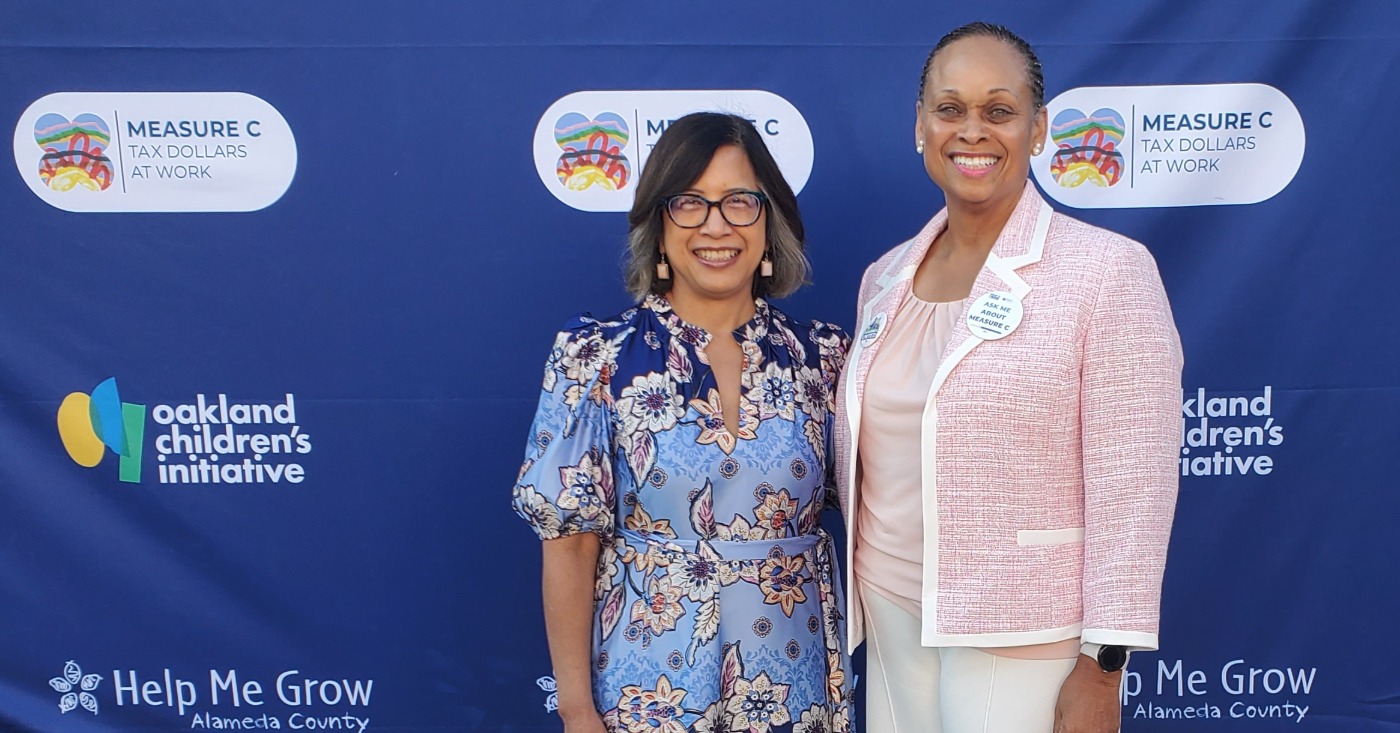
First 5 Alameda County marked the first anniversary of the impact of Measure C with a community celebration Friday, Aug. 7, at Children’s Fairyland in Oakland, highlighting more than $135 million invested to strengthen early childhood education, families and caregivers across Alameda County.
The celebration brought together families, educators, caregivers, advocates, elected officials and community leaders for an evening of music, cultural performances, and children’s activities.
“Oakland is on the move,” said Oakland Mayor Barbara Lee, commending all the advocates who helped win the victory for early childhood education and their providers.
Measure C, a community-led and voter-approved half-cent sales tax, was designed to generate approximately $150 million annually for early care and education. During its first year, the initiative reached more than 20,000 children and supported more than 6,400 early educators and caregivers throughout the county.
First 5 Alameda County CEO Kristin Spanos said, “In the first 10 months of Measure C being available after the Board of Supervisors adopted the 5-year plan, we’ve had over $135 million put directly into the community supporting children and providers with emergency grants, investments, and stipends.”

First 5 Alameda County, the public agency responsible for administering Measure C, focused on quickly moving voter-approved dollars into local communities while developing partnerships, accountability measures, and infrastructure intended to create long-term impact.
Alameda County District 5 Supervisor Nikki Fortunato Bas: “We’re celebrating the first year of getting money into families’ pockets and childcare providers’ pockets. This is about deploying very vital resources over the course of five years. It’s a billion-dollar impact.”
Community Advisory Council member Nancy Harvey said, “We are totally excited. It was a 10-year fight, and we fought tooth and nail. We had so much support from County Supervisors Nate Miley and Nikki Fortunato Bas, the unions, and the late Supervisor Wilma Chan. This is a historic event – people are watching Measure C all over the nation.”
Harvey explained that small childcare providers received a $40,000 grant, and larger providers received a $50,000 grant.
Childcare advocate and provider Lisa Zarodney of Livermore said, “When I got my emergency funds, I was about to close. The stipend allowed me to continue through 2026 and get all the babies on my wait list.”
In business for 27 years, Zarodney said she is now caring for the children of past clients.
“I couldn’t continue my legacy, my dream, and my passion without the funding from Measure C.”
Harvey emphasized that he next leg of the fight is to ensure workers have a sustainable wage.
“We are now pushing to raise the wage of workers to $25 to keep doors open and people employed,” she said.
First 5 Alameda County’s vision is to build an integrated and equity-centered early childhood system supporting children, families, and communities regardless of race, income, or neighborhood. As administrator of Measure C, the agency has worked to expand access to early care and education, strengthen family stability, and support the providers and caregivers families rely upon.
Through Measure C and partnerships with initiatives including the Oakland Children’s Initiative, First 5 Alameda County has sought to reduce fragmented services and better coordinate public resources.
HASHTAGS
#CarlaThomas #PostNewsGroup #OaklandPost #San FranciscoPost #MeasureC #First5AlamedaCounty #AlamedaCounty #Oakland #EarlyChildhoodEducation #EarlyLearning #ChildCare #ChildrenAndFamilies #FamilySupport #EarlyEducators #ChildCareProviders #CommunityInvestment #CommunityImpact #OaklandFamilies #BayAreaFamilies #EquityInEducation #StrongStart #InvestInChildren #OaklandNews #BayAreaNews
Commentary
From Palestine to Oakland: Seeds for Liberation Examines Shared Struggles for Freedom
The screening was hosted by the East Bay Democratic Socialists of America and the Dr. Huey P. Newton Foundation. Following the film, director Matthew Solomon joined local community leaders for a discussion about solidarity, resistance, and the historical connections explored throughout the documentary.

Community members gathered at the Black Panther Party Museum on Saturday, Aug. 15, in downtown Oakland for a screening of “Seeds for Liberation,” an award-winning documentary examining the Palestinian liberation movement and its connections to Black, Chicano and other movements for collective liberation.
The film reveals the face of conflict, struggle, and injustice today and yesterday. In one scene, a bleeding child pleads for help on a shell-shattered rooftop after a bombing in the Gaza Strip last year. In another scene, newly freed Nelson Mandela addresses thousands at the Oakland Coliseum in 1990, at the end of apartheid.
The screening was hosted by the East Bay Democratic Socialists of America and the Dr. Huey P. Newton Foundation. Following the film, director Matthew Solomon joined local community leaders for a discussion about solidarity, resistance, and the historical connections explored throughout the documentary.
Directed by Solomon and executive-produced by Donna Hadjikhani and Alana Hadid, “Seeds for Liberation” situates Palestinian experiences within the broader history of anti-imperialist and decolonial movements.
Through interviews with historians, legal scholars, activists and organizers, the documentary examines Palestinian resistance. It also details the role of social media in shaping the public’s understanding of the impact of Palestine’s 77-year occupation by Israeli forces, events in Gaza and the West Bank, and relationships between liberation movements across generations and geographic boundaries.
The film includes perspectives of people connected to the Black Liberation Army, La Raza Unida and the Stop Cop City movement. Those featured talk about colonialism, U.S. foreign policy, policing, racial justice and their views of what solidarity with Palestinians has meant.
Solomon developed the documentary following his previous film, “Reimagining Safety,” which explored alternatives to traditional policing.
“I use film as a medium to connect personal testimony with larger social and political questions,” said Solomon, who is currently touring the film across the nation as well as Canada and other countries.
Executive producer Hadjikhani brought a personal connection to the project. An Iranian American designer and social justice advocate, she traveled to Gaza and the West Bank as a college student in 1993 during the First Intifada. Hadid has since focused on Palestinian stories and other underrepresented voices.
The Oakland screening carried added historical significance because it was held in the Black Panther Party Museum, where the history of Black resistance and community organizing provided a backdrop for the film’s examination of interconnected struggles.
Activist and artist Cat Brooks passionately spoke about the fight for the freedom of all people. “No one is free until everyone is free,” she said.
Brooks played a key role in the struggle for justice for Oscar Grant, who was gunned down by a BART police officer in 2009 and is co-founder of the Anti Police-Terror Project (APTP), whose mission is to rapidly respond to and ultimately eradicate state violence in communities of color.
Rather than treating liberation movements as isolated chapters, “Seeds for Liberation” asks audiences to consider how movements separated by time, race and geography have influenced one another and how solidarity has continued to evolve across generations.
HASHTAGS
#PostNewsGroup #CarlaThomas #OaklandPost #SanFranciscoPost
#SeedsForLiberation #BlackPantherPartyMuseum #Oakland #Palestine #FreePalestine #BlackLiberation #ChicanoMovement #CollectiveLiberation #SocialJustice #CommunityOrganizing #Solidarity #DocumentaryFilm #IndependentFilm #OaklandEvents #EastBay #BlackHistory #LiberationMovements #MatthewSolomon #HueyPNewtonFoundation #BayAreaEvents

WORK FROM HOME
Home-based business with potential monthly income of $10K+ per month. A proven training system and website provided to maximize business effectiveness. Perfect job to earn side and primary income. Contact Lynne for more details: Lynne4npusa@gmail.com 800-334-0540


Oakland Protesters Rally to Defend Haitian Immigrants and TPS

First 5 Alameda County Celebrates First Year of Measure C’s Implementation

From Palestine to Oakland: Seeds for Liberation Examines Shared Struggles for Freedom

NABJ Convention Brings Black Journalists, Civic Leaders Together in Atlanta

At Sacramento Summit, Becerra Discusses Policy; Uses “Family” Metaphor to Frame Case for National Political Unity

$5 Billion Coliseum Vision Puts Oakland Jobs, Businesses at Center

Gov. Newsom Nominates 3 Black Women Judges to Serve on State Courts of Appeal

Oakland Observes Black August with Block Parties, Film Showings, Workshops

NPRC Elder Justice Symposium Invites Community to Join Effort to Protect Alameda County Elders

Four Candidates, Including Incumbent Barbara Lee, Qualify for Oakland Mayor’s Race

Oakland Observes Black August with Block Parties, Film Showings, Workshops

Oakland Post: Week of August 12 – 18, 2026

COMMENTARY: Why Local School Tax Measure G1 Will Not Be on the November Ballot

California Hispanic Chambers of Commerce Unveils: ‘Powering the Future’ Theme for 47th Annual Statewide Convention

Returning to Its Roots, the Oakland Black-Eyed Pea Festival Partners with the Freedom Farmers Market Sept. 12

Department of Homeland Security Demands California Secretary of State Shirley N. Weber Scrub Voter Rolls

New Judge Could Decide if Karmelo Anthony Gets a New Trial

Oakland Children’s Hospital Workers and Patients Rally for Pediatric Medical Care

“The Power to See Threats Sooner”: Gov. Newsom, Safety Officials Showcase California’s Investments in Hi-Tech Wildfire Prevention

Alpha Kappa Alpha Sorority, Inc. Celebrates New North Atlantic Regional Director

Surveillance Pricing Fight: State Senate Debates Bill Banning Retailers from Using AI to Set Prices Based on a Buyer’s Profile

Mount Zion MBC, Church of Jesus Christ of Latter-day Saints Partner to Bring 29,000 Meals to Alameda County

California Sen. Padilla Joins Colleagues to Introduce Bill Imposing Term Limits on Supreme Court Justices

Less Affluent School Districts, Including Sacramento City, Face Threat of State Takeover

Starting This Summer, California Car Buyers Can Get an Instant $3500 Off the Cost of Electric Vehicles

Car Wash Workers Cope with Lingering Impacts of ICE Raids

COMMENTARY: You Are Already Paying for the AI Boom

California Bill Would Let Abuse Victims Use Trauma as Legal Defense for Violent Crime

Fed Court to Decide Landmark First Amendment Case

Gov. Gavin Newsom Signs Law Streamlining Affordable Housing Rules

The Conversation With Al McFarlane 6/23/26

Media Monday 6/22/26

LIVE! ASK ALMA! — TUES. 6.23.26 7PM EST

Car Buying Secrets: 4 Hidden Checks Before You Sign!

Is This 550 HP Charger Worth YOUR Money? AutoNetwork Review

Celebrating Juneteenth – Frederick Douglass on education and resistance

LIVE! — ASK ALMA! — TUES. 6.19.26 7PM EST

Hyundai Ioniq 5 Parking, Safety, and 360 View #shorts

2025 Ioniq 5 New Wiper & Powerful Performance! #shorts

Electric SUV Range: Is 259 Miles Enough? #shorts

EV Charging: How Fast Can You Charge an Electric Vehicle? #shorts

Biometric Cooling… Messaging Seats…Come on! 2025 Infiniti QX80 Autograph 4WD

Charged Up: Witness the Magic of a Fully Electric Car! #shorts

Range Rover Sport PHEV Included…: See What’s Inside This Luxury SUV! #shorts

Invisible Hood View: Perfect Parking with X-Ray Vision! #shorts
-
 Featured2 weeks ago
Department of Homeland Security Demands California Secretary of State Shirley N. Weber Scrub Voter Rolls
-
 #NNPA BlackPress3 weeks ago
New Judge Could Decide if Karmelo Anthony Gets a New Trial
-
 Business4 weeks ago
Oakland Children’s Hospital Workers and Patients Rally for Pediatric Medical Care
-
 Environment2 weeks ago
“The Power to See Threats Sooner”: Gov. Newsom, Safety Officials Showcase California’s Investments in Hi-Tech Wildfire Prevention
-
 Black History3 weeks ago
Alpha Kappa Alpha Sorority, Inc. Celebrates New North Atlantic Regional Director
-
 Business4 weeks ago
Surveillance Pricing Fight: State Senate Debates Bill Banning Retailers from Using AI to Set Prices Based on a Buyer’s Profile
-
 Business4 weeks ago
Mount Zion MBC, Church of Jesus Christ of Latter-day Saints Partner to Bring 29,000 Meals to Alameda County
-
 Featured2 weeks ago
California Sen. Padilla Joins Colleagues to Introduce Bill Imposing Term Limits on Supreme Court Justices
