Activism
MLK: Letter from Birmingham Jail
It was a King supporter who smuggled the nearly 7,000 written words, handing them over to King’s lawyers. The letter was then transcribed and printed partially or in full in several publications including the New York Post, Liberation magazine, The New Leader, and The Christian Century. It was also published by The Atlantic (August 1963) under the title “The Negro Is Your Brother.”

By Tamara Shiloh
The year was 1963. Cries for equality and an end to injustice for Blacks in Birmingham, Ala., were silenced by the city’s mayor Eugene “Bull” Connor. Alabama Governor George Wallace, stood on the steps of the state capitol and declared: “Segregation now, segregation tomorrow, segregation forever.” This became the motto for those opposed to integration and the Civil Rights Movement.
Bombings targeting leaders of the Birmingham campaign triggered the Birmingham riot. Klan-led violence went unchecked. Massive protests for civil rights grew stronger.
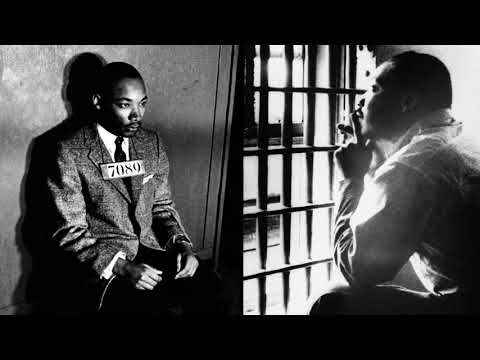
In April, Martin Luther King Jr. wrote from a cell in the city’s jail: “Birmingham is probably the most thoroughly segregated city in the United States. Its ugly record of brutality is widely known.”
These exact words targeted Birmingham for the next phase in the struggle for equality. A change that no one could have predicted was coming.
King and the Southern Christian Leadership Conference had joined with Birmingham’s Alabama Christian Movement for Human Rights (ACMHR). Their collective goal was to form a direct-action campaign that would cripple the city’s segregation system.


The city’s merchants would be under economic pressure if Blacks refused to patronize them during the Easter season. ACMHR Founder Fred Shuttlesworth described the campaign as “a moral witness to give our community a chance to survive.”
Despite a state court’s injunction and absence of a permit, King led the Easter boycott of white-owned stores peacefully on Good Friday. He was arrested by local police along with Ralph Abernathy and a few other protesters.
During the eight days of solitary confinement, King began to pen his response to white ministers who questioned why he and protesters had chosen to stage their protests in Birmingham. He did so on the margins of the Birmingham News.
It was a King supporter who smuggled the nearly 7,000 written words, handing them over to King’s lawyers. The letter was then transcribed and printed partially or in full in several publications including the New York Post, Liberation magazine, The New Leader, and The Christian Century. It was also published by The Atlantic (August 1963) under the title “The Negro Is Your Brother.”
Those pieces of paper had become the “Letter from Birmingham Jail,” the most important written document of the Civil Rights era of the time. It is one of the most famous defenses of nonviolent action against racism.
While incarcerated, King’s request for a phone call to Coretta Scott King had been denied. Coretta contacted the Kennedy administration, forcing Birmingham officials to permit the call. Bail money was made available, and King was released on April 20.
The Birmingham campaign was successful. Local officials removed White Only and Colored Only signs from restrooms and drinking fountains in downtown Birmingham, desegregated lunch counters, released demonstrators who were jailed, deployed a Negro job improvement plan, and created a biracial committee to monitor the agreement
Desegregation was slow, but change had finally arrived in what was once known as “the most segregated city in America.”
To listen to the letter in its entirety: “Martin Luther King Letter from Birmingham Jail,” by MLK.

