
Technology
Man Sentenced in Online Threat Case Tied to Larger Debate


In this Nov. 25, 2014 file photo, police officers watch protesters as smoke fills the streets in Ferguson, Mo. after a grand jury’s decision in the fatal shooting of Michael Brown. (AP Photo/Charlie Riedel, File)
MARTHA BELLISLE, Associated Press
SEATTLE (AP) — A Washington man who posted Facebook comments threatening a former Ferguson, Missouri, police officer will avoid prison but has been ordered to stay off social media sites in a case that is part of a broader legal debate about when social media rants go beyond hyperbole and become a crime.
Before U.S. District Judge Robert Lasnik handed down Jaleel Abdul-Jabbaar’s sentence Thursday, he said it was one of the hardest he has had to decide. He noted that in a separate case — the recent killings of two New York police officers — the gunman posted Facebook threats before shooting the officers.

But Lasnik accepted the defense argument that Abdul-Jabbaar’s comments were simply a strong reaction to the unfolding events in Ferguson, and he had no intention of following through on his threat to shoot Darren Wilson.
Abdul-Jabbaar told the judge he made a mistake, “and it won’t be repeated.”
The judge agreed that the two months Abdul-Jabbaar already spent behind bars was enough and ordered three years of supervised release.
In arguing for government monitoring of Abdul-Jabbaar’s computer, Assistant U.S. Attorney Todd Greenberg said: “It’s OK to be frustrated, it’s OK to be angry about current events, and it’s OK to express that frustration. But our society cannot tolerate the type of violent threats the defendant made.”
Abdul-Jabbaar pleaded guilty Feb. 2 for posting a threat against Wilson on Facebook that included a call to “give back those bullets that Police Officer Darren Wilson fired into the body of Mike Brown.”
Federal prosecutors said Abdul-Jabbaar posted inflammatory messages for months after the Aug. 9 killing of Brown sparked protests nationwide. Assistant Federal Public Defender Kyana Givens said each note was in response to the news of the day out of Ferguson.
The popularity of social media sites like Facebook and its users’ willingness to speak their minds have landed people in jail and left lawyers arguing over what constitutes a “true threat” — one not protected by the First Amendment — and what is simply an exercise of free speech.
“It’s definitely an area of law that is in a state of flux,” Judge Lasnik said.
The U.S. Supreme Court heard arguments in December on another Facebook threat case that legal experts say could answer some of those questions.
When Anthony Elonis’ wife left him, he vented on his Facebook page by posting violent threats against her in the form of rap lyrics. The justices are considering whether an “objective” standard should be used in these cases, meaning an average person would believe the writer intended to harm someone, or whether the threat was “subjective,” meaning he was just venting and didn’t intend to hurt anyone.
“Facebook ‘threats’ may be different because the person is not ‘sending them’ to the intended target; indeed, the target may find out from someone else,” said Loyola Law School Professor Marcy Strauss. “It also may depend on whether the ‘threat’ is written on the ‘victim’s’ wall, or whether it is posted on the speaker’s. Whether that is important may turn on the standard the Supreme Court adopts.”
U.S. Justice Department data shows the federal government has prosecuted many of these cases: 53 cases in 2012; 63 in 2013; and 53 cases in 2014.
Ayn Dietrich, an FBI spokeswoman in Seattle, said her agency often receives tips about social media posts, but this is the only case it has seen that focused on Ferguson.
“In general, when the FBI becomes aware of publicly posted messages online, the FBI has the authority to conduct an investigation when it has reasonable grounds to believe that an individual has engaged in criminal activity or is planning to do so,” she said. “This authority is based on the illegal activity, not on the individual’s political views, position, or any other beliefs.”
Another Seattle man, Mark Brian Verhul, received prison time last year for posting on Facebook a photograph and message that said: “This is the cop I am going to kill.” A Nevada man was indicted in January for posting threats on Facebook to kill an African American police officer.
In the case the judge referred to, a Massachusetts man was arrested for posting “Put Wings On Pigs” on his Facebook page in December. The message was a repeat of the final remarks of the man who shot the two New York officers.
___
Follow Martha Bellisle at https://twitter.com/marthabellisle
Copyright 2015 The Associated Press. All rights reserved. This material may not be published, broadcast, rewritten or redistributed.










Featured
Attorney General Bonta Serves Investigative Subpoena on Nvidia
California Attorney General Rob Bonta has issued an investigative subpoena to Nvidia following reports regarding former CEO Jensen Huang’s relationship with an alleged Chinese spy. The California Department of Justice is investigating whether the company’s advanced chips or confidential information were improperly transferred to China. Authorities are also examining if Nvidia misled the public and investors about these potential security risks in violation of state law. Officials are currently evaluating the company’s conduct to determine if legal action is warranted. To learn more about this investigation, read more.

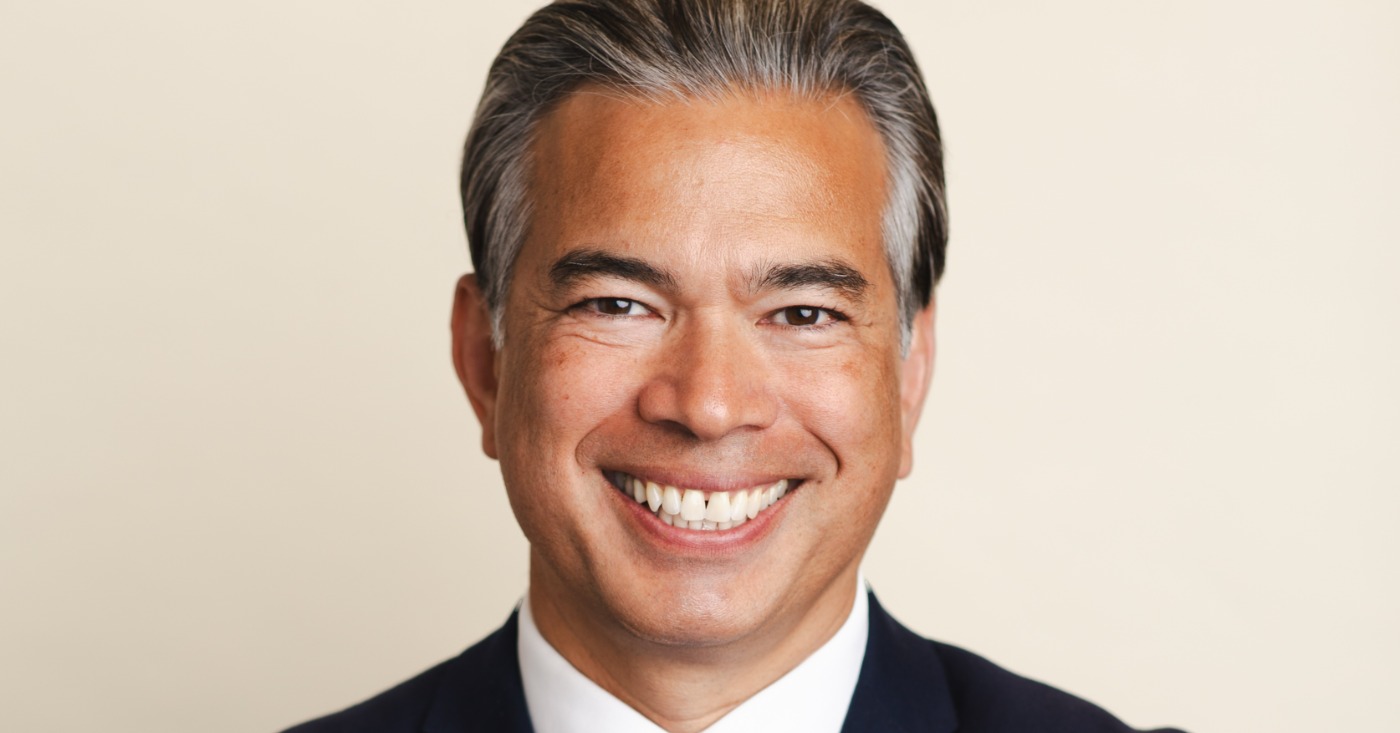

California Attorney General Rob Bonta served an investigative subpoena on Nvidia related to the news of former Nvidia CEO Jensen Huang’s affair with an alleged Chinese spy.
The California Department of Justice is asking Nvidia whether its advanced chips or confidential information may have gone to China and whether Nvidia misled investors and the public.
The information received through the subpoena will help the California Department of Justice evaluate whether Nvidia’s actions violated California law.
“The conduct of Nvidia and its former CEO raises bright red flags, including about the ways in which the company may have misled investors.
“My office is investigating whether Nvidia or Jensen Huang’s actions resulted in China obtaining advanced chips or confidential information — and if Nvidia misled investors and the public about this risk, in violation of the law,” said Attorney General Bonta in Thursday.
“Nvidia is in a messy, transnational situation but the underlying principle of our corporate securities law is clear: Companies cannot mislead their investors.”
The California Department of Justice is the source of this story.


Business
AG Bonta Announces Action on Cryptocurrency, Sextortion Fraud – Increasingly Targeting Gen-Z
California Attorney General Rob Bonta is warning residents about a surge in cryptocurrency fraud and online sextortion schemes that increasingly target Gen Z through social media platforms. With internet-based scams costing Americans nearly $21 billion in 2023, Bonta highlighted how artificial intelligence and deepfakes allow criminals to impersonate loved ones and promote fraudulent investment groups. The Attorney General’s Office has already shut down over 100 fraudulent websites and is now utilizing new legislative tools to recover assets for victims. Read more.

California Attorney General Rob Bonta warned residents about rising cryptocurrency fraud and online sextortion scams, urging Californians to recognize warning signs and protect themselves as scammers increasingly target younger people through social media.
Speaking at a news conference on Oct. 19, Bonta said Americans lost $20.9 billion to internet-based scams in 2025, including $11.4 billion to cryptocurrency scams. He said artificial intelligence, deepfakes, and malicious smart contracts have made fraud easier to carry out and more difficult to detect and prevent.
While older Californians remain targets, Bonta said his office has seen a sharp rise in reports of Gen Z consumers being targeted on platforms such as Twitch, TikTok, and Instagram.
One growing scheme involves so-called rug-pull scams, in which fraudsters promote low-priced stocks or volatile cryptocurrencies through online investment groups and streaming communities. After generating interest and driving up prices, scammers sell their holdings, causing values to collapse and leaving investors with losses.
Bonta also warned about sextortion, in which scammers trick or coerce victims into sharing explicit images before threatening to distribute them to friends and family unless they pay. He advised victims not to give in to demands, saying scammers often do not release the images when victims refuse to pay. Instead, he recommended ignoring and blocking the perpetrators.
Another scheme, known as recovery fraud, targets people who have already lost money to cryptocurrency scams. Fraudsters impersonate blockchain recovery specialists or law enforcement officials and demand additional payments while promising to recover stolen assets.
Bonta urged Californians to be skeptical of promises of large returns on small investments, fake cryptocurrencies resembling established ones, and celebrity endorsements that may have been generated using artificial intelligence. He also warned that scammers can use AI to impersonate loved ones through manipulated video and audio.
“Never use a crypto ATM,” Bonta said, emphasizing that transactions can be difficult to trace and reverse and that the machines lack adequate consumer protections.
His office has shut down more than 100 fraudulent websites over the past two years that collectively scammed victims out of at least $8.3 million, he said.
Bonta also highlighted Senate Bill 1208, which he said was recently signed into law. The measure allows law enforcement to petition a court to return seized cryptocurrency to victims, including when alleged perpetrators are outside U.S. jurisdiction.
Residents who have fallen victim to scams can report them to the California Department of Justice at oag.ca.gov/report.
Bonta also urged victims not to feel embarrassed, stressing that scammers are responsible for the harm they cause.
Black History
OP-ED: The Black Church Writes AI’s Next Chapter
BLACKPRESSUSA NEWSWIRE — I implore my fellow faith leaders to use these tools. Start now and use them with wisdom. We count on each and every one of you to make sure our communities help write the next chapter of this story. This rapid change is not as unfamiliar as it may sound. My first understanding of AI came from using a calculator for the first time in grade school. We did not call it AI, but it was a tool that helped me work through mathematical equations hours more efficiently.

For generations, the Black church has stood strong in our communities through every historical change this country has experienced. During the civil rights movement and in recent times, faith leaders have helped uplift Black sanctuaries to register voters, keep food pantries open for people in need, and sit with families in hospital rooms in their most desperate moments. When our people faced new trials, they could always look to our faith leaders and the church to lean in to help us be included in these transformative changes.
Artificial intelligence is the latest revolutionary change to impact our society, and much like other transformations before us, underserved communities often get left behind.
I was recently featured in a report entitled “Faith, Community & AI” and it found that people send ChatGPT more than 70 million messages a week about religion. Nearly 22 million involve studying sacred texts, and 16 million ask about religious practices and holy days. Our members make up part of those numbers. They bring questions of faith to these tools every day.
Pastors have noticed, and according to a September 2025 Lifeway Research survey of 1,003 Protestant pastors, 42 percent said they use or experiment with AI in ministry. I count myself among them.
I write my sermons by hand, through prayer and study. When I finish a draft, I ask ChatGPT this question: “Where might this sermon become unclear or difficult to follow for someone early in their walk of faith?” It shows me gaps in my preparation, like where I incorrectly assumed everyone would know the context of who the Pharisees were. Then, change comes from my own pen, not the robot. The tool helps me reach the person in the back pew while the message still comes from me.
If I could have my wish, our whole community would take a similar posture. We must use these tools, understand them, and most importantly be present to help shape them if we want to be included in the coming change.
I implore my fellow faith leaders to use these tools. Start now and use them with wisdom. We count on each and every one of you to make sure our communities help write the next chapter of this story. This rapid change is not as unfamiliar as it may sound. My first understanding of AI came from using a calculator for the first time in grade school. We did not call it AI, but it was a tool that helped me work through mathematical equations hours more efficiently.
It starts with training; there is no involvement without understanding. Free AI trainings have begun in our churches and community centers across the nation. Every faith leader should sign up and, when possible, encourage members of your congregations to join you. By learning how to use AI, we can better understand what it can do, make up our own minds about its impact, and have a say in how it shapes our communities.”
Next, we must be at the tables where the builders of these tools make decisions. Presence is the first step toward understanding, and that gap is only bridged through a coordinated effort. How can any tool serve a community well if that community is not part of the conversation? Our traditions, needs, and concerns must be accounted for, and Black faith leaders are already making that happen. OpenAI’s recent Faith report states plainly that AI should never become an arbiter of religious truth. I fully intend to hold the company to its word, and the most effective way I can do that is from inside.
I will close with this––we must diligently protect what only the church can give. A believer in Seoul, Korea quoted in the report warned, “if you pour every struggle into a private chat, your pastor and your friends may never learn you need help.” A chatbot will not sit with a grieving family or pray with you at two in the morning. As we adopt this technology, it is up to us to ensure it keeps people connected to each other and to their church.
Rev. Dr. Adolphus Lacey is senior pastor of Bethany Baptist Church in Brooklyn, New York.



Native American Health Center Connects 140 Community Members to Career Opportunities During Native American Heritage Month

Oakland Chamber of Commerce Faces $42,000 Ethics Fine for Campaign Violation

Attorney General Bonta Serves Investigative Subpoena on Nvidia

A Record 216 Firearms Collected at East Oakland Gun Buy-Back Event

City Council Hearing Shines a Light on Failures of City’s Prompt Payment Policy

IN MEMORIAM: Claude T. Everhart, San Francisco’s First Black Deputy Mayor, Dies at 73

UC Doctors, Nurses and Community Rally to Demand ICE Out of UC Hospitals

Hypertension and Heart Disease: Doctors, Advocates and Patients Are Tackling the Leading Cause of Death for Black Californians

Marin City Is Especially Vulnerable to El Niño High Tides, Strong Winds, Flooding and Power Outages

‘We’re Committed to Delivering the Change that the American People Deserve’

Staying Ready: What Every Californian Should Know About Preparing for El Niño

Oakland Post: Week of November 18 – 24, 2026

Oakland Post: Week of November 11 -17, 2026

Alameda County Supervisor Miley to Propose Illegal Dumping Ordinance

Oakland City Council Extends AI Data Center Moratorium for 10 Months.

COMMENTARY: Valarie Bachelor and Jennifer Brouhard are Excellent School Board Members and Deserve to Be Reelected

OUSD Receives State Review of District Finances; Outlines Progress Since January

HISTORY MADE: Keisha Lance Bottoms Becomes First Black Woman Elected Governor in American History

SEIU Local 1000 and State of California Will Continue to Negotiate New Labor Contract

Golden State Valkyries Become Bay Area Legends Winning WNBA Championship on Halloween Night

COMMENTARY: Your California Living Trust Could Be Next: When Evidence Isn’t Enough

Fate of Bay Area Public Transit Hinges on Regional Transit Measure

Chase Launches Fraud & Scam Prevention Month

Mayor Barbara Lee Holds Special State of the City Address in Deep East Oakland

Post News Group Nov. 3 Election Endorsements

Democrats, Community Groups Back Measure EE to Change How Oakland Is Governed

From Backyard Grilling to Jack London Square: Jamale Carlyle’s Chicken Wing Success Story

Richmond Neighbors Put Pantry Power on the Map

It’s Time to Lose Weight Before the Holidays

21st Annual Taste of Soul: California’s Largest Black Street Festival Comes Alive With Culture, Music and Connections

The Conversation With Al McFarlane 6/23/26

Media Monday 6/22/26

LIVE! ASK ALMA! — TUES. 6.23.26 7PM EST

Car Buying Secrets: 4 Hidden Checks Before You Sign!

Is This 550 HP Charger Worth YOUR Money? AutoNetwork Review

Celebrating Juneteenth – Frederick Douglass on education and resistance

LIVE! — ASK ALMA! — TUES. 6.19.26 7PM EST

Hyundai Ioniq 5 Parking, Safety, and 360 View #shorts

2025 Ioniq 5 New Wiper & Powerful Performance! #shorts

Electric SUV Range: Is 259 Miles Enough? #shorts

EV Charging: How Fast Can You Charge an Electric Vehicle? #shorts

Biometric Cooling… Messaging Seats…Come on! 2025 Infiniti QX80 Autograph 4WD

Charged Up: Witness the Magic of a Fully Electric Car! #shorts

Range Rover Sport PHEV Included…: See What’s Inside This Luxury SUV! #shorts

Invisible Hood View: Perfect Parking with X-Ray Vision! #shorts
-
 Commentary3 weeks ago
COMMENTARY: Valarie Bachelor and Jennifer Brouhard are Excellent School Board Members and Deserve to Be Reelected
-
 Education3 weeks ago
OUSD Receives State Review of District Finances; Outlines Progress Since January
-
 Black History3 weeks ago
HISTORY MADE: Keisha Lance Bottoms Becomes First Black Woman Elected Governor in American History
-
 Business3 weeks ago
SEIU Local 1000 and State of California Will Continue to Negotiate New Labor Contract
-
 Community3 weeks ago
Golden State Valkyries Become Bay Area Legends Winning WNBA Championship on Halloween Night
-
 Business3 weeks ago
COMMENTARY: Your California Living Trust Could Be Next: When Evidence Isn’t Enough
-
 Business4 weeks ago
Fate of Bay Area Public Transit Hinges on Regional Transit Measure
-
 Business4 weeks ago
Chase Launches Fraud & Scam Prevention Month
