
Employment
Lawmakers Approve “Upward Mobility” Bill, Proposing More Slots for Blacks on State Boards, Commissions
The bill also directs the Department of Human Resources (CalHR) to develop model upward mobility goals to include race, gender, and LGBTQ identity as factors to the extent permissible under state and federal equal protection laws.


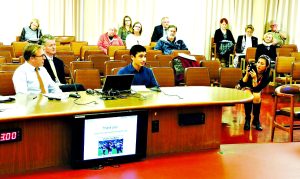
Assemblymember Chris Holden’s (D-Pasadena) ‘Upward Mobility Bill’ (AB 105) passed the California State Senate with a 29-to-8 vote on September 9.
The legislation promotes more opportunities for people of color in California’s civil services system and requires diversity on state boards and commissions. The bill now heads to the governor’s desk to either be signed into law or to be vetoed.
“Upward mobility is integral to achieving racial justice, and we should be setting the example,” said Holden. “The existing systems in place at our own state agencies fail to create inclusive workplace environments and hinder qualified individuals to move up within their department simply based on the color of their skin. Today, the Legislature took a bold step to fix the problem.”
Specifically, AB 105 would require the California State Personnel Board (SPB) to establish a process that includes best practices and emphasizes diversity in the announcement, design, and administration of exams for potential state employees.
The bill also directs the Department of Human Resources (CalHR) to develop model upward mobility goals to include race, gender, and LGBTQ identity as factors to the extent permissible under state and federal equal protection laws.
Additionally, AB 105 calls for state agencies to collect and report demographic data using more nuanced categories of Californians of African descent, similar to the data collected for Californians of Asian descent. This data will be critical in accurately reporting who among Californians of African descent is experiencing barriers to upward mobility.
Last year, Gov. Gavin Newsom signed AB 3121 into law, which was authored by former Assemblymember Dr. Shirley Weber, who is now Secretary of State. That bill established a task force to study and develop reparations proposals for African Americans. AB 105 would give the task force more accurate data to utilize in its deliberations.
CalHR data shows that the majority of non-white civil service personnel are paid a salary in the “$40,000 and below” range. When the salary range increases, the percentage of non-white civil servants working in upper-level or management positions decreases. The opposite is true for white civil servants who dominate in management and upper-level civil service positions.
The Sacramento Bee has published a series of letters written on behalf of Black employees working at state agencies such as the California Air Resources Board (CARB) and the California Department of Corrections and Rehabilitation with detailed accounts of how Black employees are passed up for promotions over white employees. The problem, however, is not limited to upward mobility. In early November, three Black employees at the California Office of Publishing found racial slurs written on cards at their desk.
“We already mandated the private sector to do their part. It’s time for the state to step up and do theirs,” said Holden.
Newsom has until Oct. 10, 2021, to sign the legislation.









Activism
Discrimination in City Contracts
The report was made public by Councilmember Carroll Fife, who brought it this week to the Council’s Life Enrichment Committee, which she chairs. Councilmembers, angry at the conditions revealed, unanimously approved the informational report, which is scheduled to go to an upcoming council meeting for discussion and action. The current study covers five years, 2016-2021, roughly overlapping the two tenures of Libby Schaaf, who served as mayor from January 2015 to January 2023.


Disparity Study Exposes Oakland’s Lack of Race and Equity Inclusion
Part 1
By Ken Epstein
A long-awaited disparity study funded by the City of Oakland shows dramatic evidence that city government is practicing a deeply embedded pattern of systemic discrimination in the spending of public money on outside contracts that excludes minority- and woman-owned businesses, especially African Americans.
Instead, a majority of public money goes to a disproportionate handful of white male-owned companies that are based outside of Oakland, according to the 369-page report produced for the city by Mason Tillman Associates, an Oakland-based firm that performs statistical, legal and economic analyses of contracting and hiring.
The report was made public by Councilmember Carroll Fife, who brought it this week to the Council’s Life Enrichment Committee, which she chairs. Councilmembers, angry at the conditions revealed, unanimously approved the informational report, which is scheduled to go to an upcoming council meeting for discussion and action.
The current study covers five years, 2016-2021, roughly overlapping the two tenures of Libby Schaaf, who served as mayor from January 2015 to January 2023.
The amount of dollars at stake in these contracts was significant in the four areas that were studied, a total of $486.7 million including $214.6 million on construction, $28.6 million on architecture, and engineering, $78.9 million on professional services, and $164.6 million on goods and services.
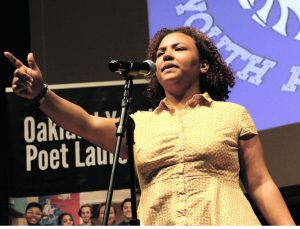
While the city’s policies are good, “the practices are not consistent with policy,” said Dr. Eleanor Ramsey, founder and CEO of Mason Tillman Associates.
There have been four disparity studies during the last 20 years, all showing a pattern of discrimination against women and minorities, especially African Americans, she said. “You have good procurement policy but poor enforcement.”
“Most minority- and women-owned businesses did not receive their fair share of city-funded contracts,” she continued. “Over 50% of the city’s prime contract dollars were awarded to white-owned male businesses that controlled most subcontracting awards. And nearly 65% of the city’s prime contracts were awarded to non-Oakland businesses.”
As a result, she said, “there is a direct loss of revenue to Oakland businesses and to business tax in the city… There is also an indirect loss of sales and property taxes (and) increased commercial office vacancies and empty retail space.”
Much of the discrimination occurs in the methods used by individual city departments when issuing outside contracts. Many departments have found “creative” ways to circumvent policies, including issuing “emergency” contracts for emergencies that do not exist and providing waivers to requirements to contract with women- and minority-owned businesses, Ramsey said.
Many of the smaller contracts – 59% of total contracts issued – never go to the City Council for approval.
Some people argue that the contracts go to a few big companies because small businesses either do not exist or cannot do the work. But the reality is that a majority of city contracts are small, under $100,000, and there are many Black-, woman- and minority-owned companies available in Oakland, said Ramsey.
“Until we address the disparities that we are seeing, not just in this report but with our own eyes, we will be consistently challenged to create safety, to create equity, and to create the city that we all deserve,” said Fife.
A special issue highlighted in the disparity report was the way city departments handled spending of federal money issued in grants through a state agency, Caltrans. Under federal guidelines, 17.06%. of the dollars should go to Disadvantaged Business Enterprises (DBEs).
“The fact is that only 2.16% of all the dollars awarded on contracts (went to) DBEs,” Ramsey said.
Speaking at the committee meeting, City Councilmember Ken Houston said, “It’s not fair, it’s not right. If we had implemented (city policies) 24 years ago, we wouldn’t be sitting here (now) waiving (policies).”
“What about us? We want vacations. We want to have savings for our children. We’re dying out here,” he said.
Councilmember Charlene Wang said that she noticed when reading the report that “two types of business owners that are consistently experiencing the most appalling discrimination” are African Americans and minority females.
“It’s gotten worse” over the past 20 years, she said. “It’s notable that businesses have survived despite the fact that they have not been able to do business with their own city.”
Also speaking at the meeting, Brenda Harbin-Forte, a retired Alameda County Superior Court judge, and chair of the Legal Redress Committee for the Oakland NAACP, said, “I am so glad this disparity study finally was made public. These findings … are not just troubling, they are appalling, that we have let these things go on in our city.”
“We need action, we need activity,” she said. “We need for the City Council and others to recognize that you must immediately do something to rectify the situation that has been allowed to go on. The report says that the city was an active or inactive or unintentional or whatever participant in what has been going on in the city. We need fairness.”
Cathy Adams, president of the Oakland African American Chamber of Commerce, said, “The report in my opinion was very clear. It gave directions, and I feel that we should accept the consultant Dr. Ramsey’s recommendations.
“We understand what the disparities are; it’s going to be upon the city, our councilmembers, and our department heads to just get in alignment,” she said.
Said West Oakland activist Carol Wyatt, “For a diverse city to produce these results is a disgrace. The study shows that roughly 83% of the city contracting dollars went to non-minority white male-owned firms under so-called race neutral policies
These conditions are not “a reflection of a lack of qualified local firms,” she continued. “Oakland does not have a workforce shortage; it has a training, local hire, and capacity-building problem.”
“That failure must be examined and corrected,” she said. “The length of time the study sat without action, only further heightens the need for accountability.”

Activism
New Bill, the RIDER Safety Act, Would Support Transit Ambassadors and Safety on Public Transit
The RIDER Safety Act would allow public transit agencies to hire transit ambassadors trained in de-escalation, crisis response, and rider education and engagement. Acting as a visible, non-enforcement presence to deter low-level incidents and reduce conflict, transit ambassadors would ease the burden from law enforcement and enhance public safety.

By Post Staff
A new federal bill would support transit ambassador, or transit support specialist, programs at public transit agencies across the country.
The bill, (D-CA-12), H.R. 6069, the Rapid Intervention and Deterrence for Enhanced Rider Safety Act, or the RIDER Safety Act, was introduced Jan. 30 by Congresswoman Lateefah Simon. (D-CA-12), H.R. 6069, the Rapid Intervention and Deterrence for Enhanced Rider Safety Act, or the RIDER Safety Act.
This legislation is based on Congresswoman Simon’s work at Bay Area Rapid Transit (BART) to create a first-in-the-nation Transit Ambassador Program, which previously earned a prestigious nationwide award for “Innovation in Public Safety.”
She announced the bill at a press conference at the 19th Street BART Station alongside BART leaders and other supporters.
The RIDER Safety Act would allow public transit agencies to hire transit ambassadors trained in de-escalation, crisis response, and rider education and engagement. Acting as a visible, non-enforcement presence to deter low-level incidents and reduce conflict, transit ambassadors would ease the burden from law enforcement and enhance public safety.
This bill would also create jobs provide meaningful work, training opportunities, and a pathway for career growth in local communities. In the House of Representatives, the bill is also co-led by Representatives Shomari Figures (AL-02), Nellie Pou (NJ-09), Mark DeSaulnier (CA-10), and John Garamendi (CA-08).

“I am incredibly proud to champion the RIDER Safety Act in Congress and continue my work to ensure transit is safe, accessible, and affordable to everyone. We have seen the success of the transit ambassador programs here in the East Bay, and I am dedicated to bringing this proven public safety model to the rest of the country,” said Congresswoman Simon.
“These are strong local jobs for people who want to support public safety on transit and serve as a resource to individuals who may be in crisis or in need of services,” she continued. “Strengthening safety on transit benefits us all and helps ensure our public transportation systems remain places of opportunity, dignity, and trust.”
“This bill is critical to ensure the safety of every passenger who relies on public transportation across the country,” said Congresswoman Nellie Pou. “The RIDER Safety Act builds on successful transit models already implemented in communities, including the Bay Area Rapid Transit (BART) through the leadership of Congresswoman Lateefah Simon during her time as BART President. By providing transit stations with medically trained, unarmed personnel, we can strengthen safety standards, reduce fare evasion, and give riders a greater peace of mind when getting from one place to the next.”
Activism
Dorothy Lee Bolden: Uniting Domestic Workers
Domestic work followed Bolden beyond high school. According to sources from the New York Times, Bolden said she would wake “at 4 a.m. to leave home by 6 a.m., and be on the job by 8 a.m., perform all those duties necessary to the proper management of a household for eight hours, leave there by 4 p.m. to be home by 6 p.m. where I would do the same things I’ve done all over again for my own family.”
By Tamara Shiloh
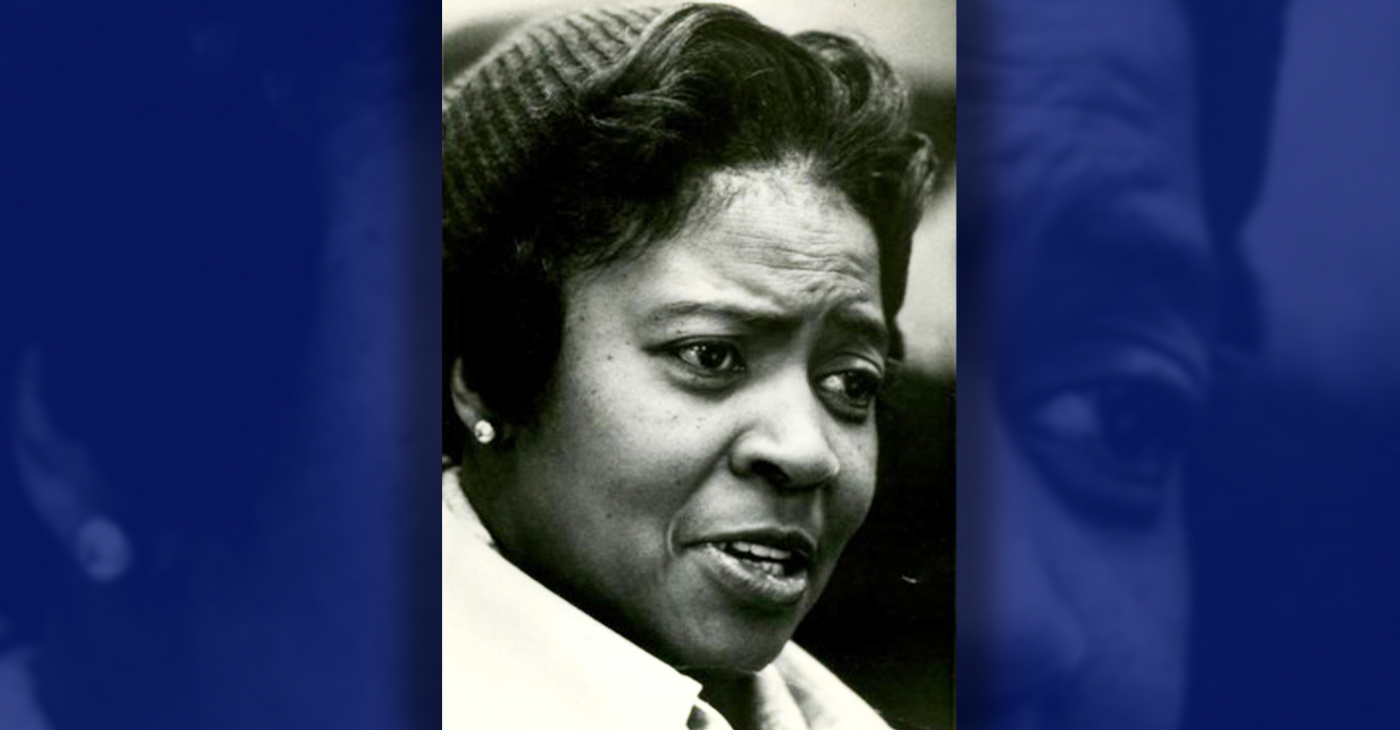
Her first experience with domestic work was at the age of nine. For $1.25 per week, Alabama-born Dorothy Lee Bolden (1923–2005), alongside her mother, washed soiled diapers for a White employer. Little did anyone know that this profession would spur Bolden to spearhead the movement for basic dignity and respect for generations of domestic workers.
Domestic work followed Bolden beyond high school. According to sources from the New York Times, Bolden said she would wake “at 4 a.m. to leave home by 6 a.m., and be on the job by 8 a.m., perform all those duties necessary to the proper management of a household for eight hours, leave there by 4 p.m. to be home by 6 p.m. where I would do the same things I’ve done all over again for my own family.”
It was Bolden’s experiences working as a domestic in 1940’s Atlanta that inspired her civil rights activism. A White female employer demanded that Bolden remain beyond her shift and wash dishes. Bolden refused. She was arrested and held in a county jail because “she was crazy.” There was no other reason for disobeying an order from a White person.
Bolden was never sentenced or institutionalized, but this event was the seed that grew into organization that would protect domestic workers across the United States: the National Domestic Workers Union of America.

Rosa Parks had made public transportation a major breeding ground for civil rights activism, so Bolden began organizing during the long bus rides her peers made to the wealthy neighborhoods. Many were fed up, working long hours for little pay, with little to no worker protections.
This organization of women would go on to fight for worker’s rights, create training programs, and teach workers to advocate for themselves. It was also important to Bolden to teach communication skills.
In the book Household Workers Unite, Bolden is quoted as saying: “You have to teach each maid how to negotiate… And this is the most important thing — communication. I would tell them it was up to them to communicate.”
But respect for Bolden’s activism was not shared by everyone. Although she consulted presidents Ford, Reagan, and Carter, she received several death threats from the Ku Klux Klan.
The New York Times reported that during the makings of an oral history project, Bolden said that “men claiming to be members of the KKK called her house and spoke about “whipping my behind,” but in coarser terms. “I told them any time they wanted to, come on over and grab it,” Bolden said during the interview. “It didn’t scare me, didn’t bother me. It made me angry. It made me determined to do what I had to do.”
Representative John Lewis of Georgia said that Bolden “spoke up, and she spoke out, and when she saw something that wasn’t fair, or just, or right, she would say something.”
The NDWU of America ran until the mid-1990s, but Bolden’s legacy lives on.


WORK FROM HOME
Home-based business with potential monthly income of $10K+ per month. A proven training system and website provided to maximize business effectiveness. Perfect job to earn side and primary income. Contact Lynne for more details: Lynne4npusa@gmail.com 800-334-0540


Black Artists in America, Installation Three Wraps at the Dixon Gallery and Gardens

Grief, Advocacy, and Education: A Counselor Reflects on Black Maternal Health

Future of Florida’s Black History Museum in Limbo

New Research Shows the Many Benefits of Early Learning

South Hampton K-8 Students Among Top 10 Finalists for Samsung’s ‘Solve for Tomorrow’ Competition

Cuba: No Negotiation with US on the President or Political System

Brooklyn Academy of Music Names Jamaican-Born Tamara McCaw as President

Trinidad & Tobego – U.S. Launches WhatsApp Channel for American Citizens in the Country

Oakland Post: Week of March 18 – 24, 2026

AI Innovation vs. Ethics and Environmental Impact

AI, Web3, and Digital Reparations

What If You Owned Your AI Agent?

Season 7, Episode 3 – January Reporter’s Roundtable 📱

Season 7, Episode 3 – January Reporter’s Roundtable

AI, Media, and Power | Part 2, Real-World Impacts and Tradeoffs

Reflecting on Black History Milestones in Birmingham AL

CITY OF SAN LEANDRO STATE OF CALIFORNIA PUBLIC WORKS DEPARTMENT ENGINEERING DIVISION NOTICE TO BIDDERS FOR ANNUAL STREET OVERLAY/REHABILITATION 2019-21 – PHASE III

Oakland Post: Week of February 18 – 24, 2026

Oakland Post: Week of February 25 – March 3, 2026

PRESS ROOM: NBA Hall of Fame Nominee Terry Cummings Joins 100 Black Men of DeKalb County to Launch Victory & Values Initiative

Trump’s MAGA Allies are Creating Executive Order Plan to Steal the 2026 Midterms

U.S. manufacturing rebounds – how foundry services are adapting to rising demand

Oakland Post: Week of March 4 – 10, 2026

Chase Oakland Community Center Hosts Alley-Oop Accelerator Building Community and Opportunity for Bay Area Entrepreneurs

Poll Shows Support for Policies That Help Families Afford Child Care

OP-ED: One Hundred Years of Black Workers Telling the Truth

Advancements in solar technology that are changing the way we power the world

Woman’s Search for Family’s Roots Leads to Ancestor John T. Ward – A Successful Entrepreneur and Conductor on the Underground Railroad

PRESS ROOM: Civil Rights TV Launches in Selma as the World’s First 24/7 Civil Rights Television Network

OP-ED: NNPA Launches 2026 “Leadership Matters” Video Series

Hyundai Ioniq 5 Parking, Safety, and 360 View #shorts

2025 Ioniq 5 New Wiper & Powerful Performance! #shorts

Electric SUV Range: Is 259 Miles Enough? #shorts

EV Charging: How Fast Can You Charge an Electric Vehicle? #shorts

Biometric Cooling… Messaging Seats…Come on! 2025 Infiniti QX80 Autograph 4WD

Charged Up: Witness the Magic of a Fully Electric Car! #shorts

Range Rover Sport PHEV Included…: See What’s Inside This Luxury SUV! #shorts

Invisible Hood View: Perfect Parking with X-Ray Vision! #shorts

AI Is Reshaping Black Healthcare: Promise, Peril, and the Push for Improved Results in California

ESSAY: Technology and Medicine, a Primary Care Point of View

Sanctuary Cities

The RESISTANCE – FREEDOM NOW

STATE OF THE PEOPLE: Freddie

ECONOMIC BOYCOTT DAY!!!!!

I told You So
-
 Activism4 weeks ago
Oakland Post: Week of March 4 – 10, 2026
-
 #NNPA BlackPress3 weeks ago
Woman’s Search for Family’s Roots Leads to Ancestor John T. Ward – A Successful Entrepreneur and Conductor on the Underground Railroad
-
 #NNPA BlackPress4 weeks ago
OP-ED: NNPA Launches 2026 “Leadership Matters” Video Series
-

 #NNPA BlackPress3 weeks ago
COMMENTARY: Women of Color Shape Our Past and Future
-

 #NNPA BlackPress3 weeks ago
Advocates Raise Alarm Over ICE Operation, MOU and Detention Risks in Baltimore County
-

 Activism2 weeks ago
Oakland Post: Week of March 11 -17, 2026
-

 #NNPA BlackPress3 weeks ago
Pete Buttigieg to Join Mayor Randall Woodfin for Community Town Hall in Birmingham
-

 Advice2 weeks ago
Financial Wellness and Mental Health: Managing Money Stress in College
