
Uncategorized
Kimberley Hayes, New Head of African American Art and Cultural Complex

By Lee
Hubbard

Kimberly Hayes
With a broad smile, Kimberley Hayes greeted the guests coming into the reception area on the third floor at the African American Art and Cultural Complex in San Francisco.
Though she had already been working for two weeks as the new executive director at the complex, this was her introduction to San Francisco and the neighboring African American community.
“I want to make an impact and I want the complex to matter in and out of the community and in San Francisco,” said Hayes.
As jazz played from speakers, she chatted with those who attended the reception, including the complex’s former executive director London Breed, former Supervisor Ann Marie Conroy, Cheryl Davis from Mo Magic and Black community activist Ed Donaldson.
Breed left the position at the complex, where she worked for 10 years, after being elected to the Board of Supervisors for District 5, which encompasses the Western Addition, Hayes Valley, Haight, and Lower Pacific Heights areas.
The Cultural Complex is a hub for the African American community in San Francisco. It is the home of the Sergeant Johnson Art Gallery, the Burial Clay Performing Arts Theatre, a state of the art music-recording studio, two other art galleries, a dance studio and a multi-purpose room.
Programs for Western Addition youth are also run out of the complex.
“Kim Hayes came from the corporate world to work with us,” said Rev. Arnold Townsend, a board member at the Cultural Complex. “She is dedicated to working with young people and in the community, and I am glad we have her.”
Hayes plans to initiative programs that will have a direct impact on people in the Western Addition and San Francisco’s African American community. A native of Virginia, she has a BA degree in political science from Hampton University and a MA in public administration from Farleigh Dickerson University in New Jersey.
A presidential intern in the Clinton administration, she worked as an organizer in the campaign to help elect Barack Obama in 2008. Hayes became familiar with the Cultural Complex after meeting Breed in 2008 in Washington DC at Obama’s inauguration.
“She was excited by what we were doing, and she would come out here and volunteer and helped fundraise,” said Breed. “Her hire is great for the cultural complex. Everything changes, and in this case, change is for the better.”
“For the past four years, I have seen her at least two times a year helping out in and around the African American Art Cultural complex,” said Melorra Green, visual arts coordinator and curator at the complex.
Hayes came to San Francisco from a job in sales and marketing for MTV in New York City. She said it was a hard choice to make, but she couldn’t pass up the opportunity to run the complex.
“I see the complex as a valuable commodity to the community,” said Hayes. “My goal is to take it to the next level.”


Uncategorized
PRESS ROOM: Transformative Justice Coalition 2026 Voting Rights Champion Awards Reception ‘Yesterday Is Today: The Battle For Voting Rights
BLACKPRESSUSA NEWSWIRE –

Featuring a Special Fireside Chat with 16th Street Baptist Church Bombing Survivor Sarah Collins Rudolph
WASHINGTON, D.C. — Sixty-three years after the bombing of Birmingham’s Sixteenth Street Baptist
Church shocked the conscience of the nation, Sarah Collins Rudolph—known as the “Fifth Little Girl”—will join the Transformative Justice Coalition (TJC) for a special Fireside Chat examining the enduring connection between the civil rights struggle of 1963 and the battle for voting and civil rights in 2026.
The Fireside Chat, hosted in partnership with Attorney A. Scott Bolden of Reed Smith, LLP, will be a featured part of TJC’s 2026 Voting Rights Champion Awards Reception, held in commemoration of the September 15, 1963 bombing of the Sixteenth Street Baptist Church in Birmingham, Alabama.
Collins Rudolph survived the bombing that killed four young girls, including her sister, Addie Mae Collins, and left her seriously injured. During this extraordinary conversation, she will share her firsthand experience of the bombing, its lifelong impact, and her continuing struggle for justice.
Her appearance comes at a consequential moment for voting and civil rights in America and offers a living reminder that the struggle against racial hatred, disenfranchisement, and injustice is not simply a chapter of history. Under the theme “Yesterday Is Today: The Battle for Voting and Civil Rights in 2026,” the evening will connect the sacrifices of the Civil Rights Movement with the continuing responsibility to protect voting rights and advance justice today.

WHAT: Transformative Justice Coalition 2026 Voting Rights Champion Awards Reception
“Yesterday Is Today: The Battle For Voting And Civil Rights In 2026”
Featuring a Special Fireside Chat with 16th Street Baptist Church Bombing Survivor Sarah Collins Rudolph
WHO: Barbara Arnwine, Esquire, Founder/President/Co-Leader, Transformative Justice Coalition
Daryl D. Jones, Esquire, Board Chair/Co-Leader, Transformative Justice Coalition
Sarah Collins Rudolph, Sixteenth Street Baptist Church Bombing Survivor
A. Scott Bolden, Esquire, Reed Smith, LLP; Sponsor of the Fireside Chat and Reception
WHEN: Wednesday, September 16, 2026, from 6:00 p.m. to 8:30 p.m. WHERE: Location will be emailed to registrants 48 hours before the event.
WHY: Attorney Barbara Arnwine, the President & Founder of the Transformative Justice Coalition (TJC), and Attorney Daryl Jones, Co-Leader and Board Chair of TJC, said of Mrs. Collins Rudolph’s appearance that “TJC believes that it is critically important that people hear from the sole survivor of the Sixteenth Street Baptist Church bombing.” Arnwine and Jones further stated that “this event will provide people with an opportunity to hear, first-hand, the results of racial hatred through the eyes of Mrs. Collins Rudolph, who was in the church with the four little girls who were killed at the time of the bombing.”
Attorney A. Scott Bolden, the sponsor of the Fireside Chat and Reception to benefit the non-profit Transformative Justice Coalition, said, “I am proud to support the work of the Transformative Justice Coalition. This is an organization that is truly in the trenches fighting for social justice and voting rights in America.” Bolden continued, “I have been an advocate for social justice my entire life. I strongly encourage people to come hear Mrs. Collins Rudolph and support the work of the Transformative Justice Coalition.”
TJC will bestow its 2026 Voting Rights Champion Award upon Collins Rudolph in recognition of her courage, perseverance, and continuing struggle for justice.
Attorney Arnwine and Attorney Jones concluded that, “Mrs. Collins Rudolph’s determination, heart, and perseverance to survive is to be applauded. This is the reason why TJC is bestowing upon her the 2026 ‘Voting Rights Champion Award.’ The character that Ms. Collins Rudolph displayed in her struggle to survive exemplifies the depth of commitment we must have today to protect our voting rights and work toward building a more robust, multicultural, and inclusive society for the future.”
REGISTRATION & SUPPORT: Registration for the Fireside Chat and Reception is available through Eventbrite or TJC’s website. Donations are tax-deductible to the extent permitted by law and are strongly encouraged. Proceeds will support the TJC John Lewis Make Good Trouble Vote Bus, which will travel across America to marginalized communities, register voters, and help take voters to the polls.
Founded in 2015 by Barbara Arnwine, president emeritus of the Lawyers Committee for Civil Rights, where she created the national election protection program. Ms. Arnwine serves as President and Founder of the Transformative Justice Coalition, which seeks to catalyze transformative institutional change that advances justice and equality in the United States and abroad. Learn more at tjcoalition.org.
This story originally appeared on Black Press USA as “PRESS ROOM: Transformative Justice Coalition 2026 Voting Rights Champion Awards Reception ‘Yesterday Is Today: The Battle For Voting Rights”. Auto-delivered via NNPA Newswire.

Uncategorized
Locals Can Get Locally Grown Produce Delivered Through Urban Tilth
The standard price is $50 per week, which Urban Tilth says reflects the true cost of fresh, sustainably sourced, locally grown produce. Urban Tilth offers a subsidized “Food for All” price of $15 per week for individuals and families with extremely limited financial resources. Both options provide the same produce and service.
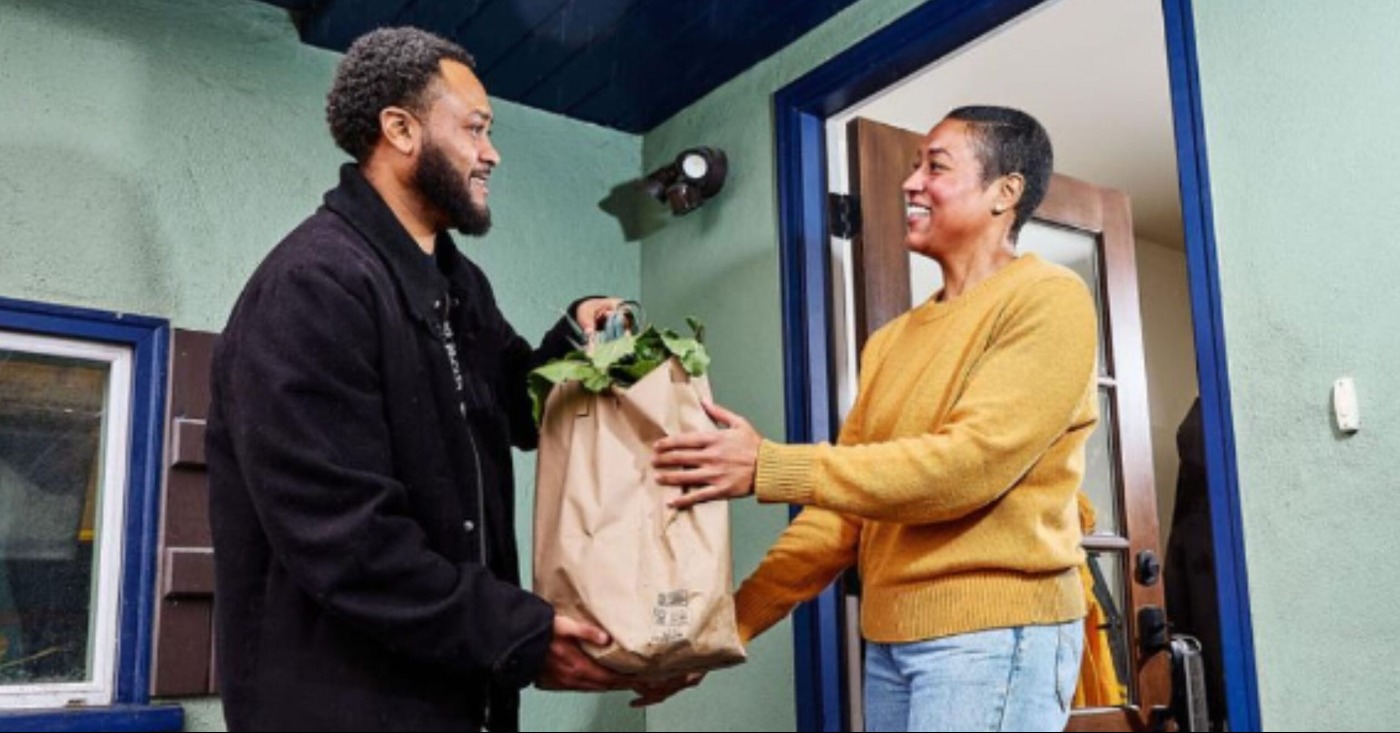
West County residents can receive locally grown produce through Urban Tilth’s Farm to Table Community Supported Agriculture (CSA) program, with home delivery and pickup options available.
Contra Costa County Supervisor John Gioia highlighted the program in his newsletter, pointing out that his district office in El Cerrito serves as a pickup location.
Weekly or bi-weekly subscriptions include seasonal greens, vegetables, fruits and herbs. Produce comes from Urban Tilth’s North Richmond Farm and farms within 200 miles of Richmond, including small family farms and those owned by BIPOC, women and LGBTQIA+ growers.
Subscriptions also support hands-on job training for local youth and volunteer opportunities.
The standard price is $50 per week, which Urban Tilth says reflects the true cost of fresh, sustainably sourced, locally grown produce. A subsidized “Food for All” price of $15 per week is available for individuals and families with extremely limited financial resources. Both options provide the same produce and service.
Gioia’s office is located at 11780 San Pablo Ave., Suite D, in El Cerrito. To sign up or learn more about pickup and delivery options, visit urbantilth.org/heal/csa.
Lead Story
New Protections for Ticket Buyers: Gov. Newsom Signs Assemblymember Isaac Bryan’s Bill
OAKLAND POST — Assembly Bill 1349 expands state regulation of original ticket sellers, resellers and online resale marketplaces. The law targets deceptive sales practices, ticket-buying software and speculative listings — tickets advertised for sale by sellers who do not possess them or have authorization to sell them.
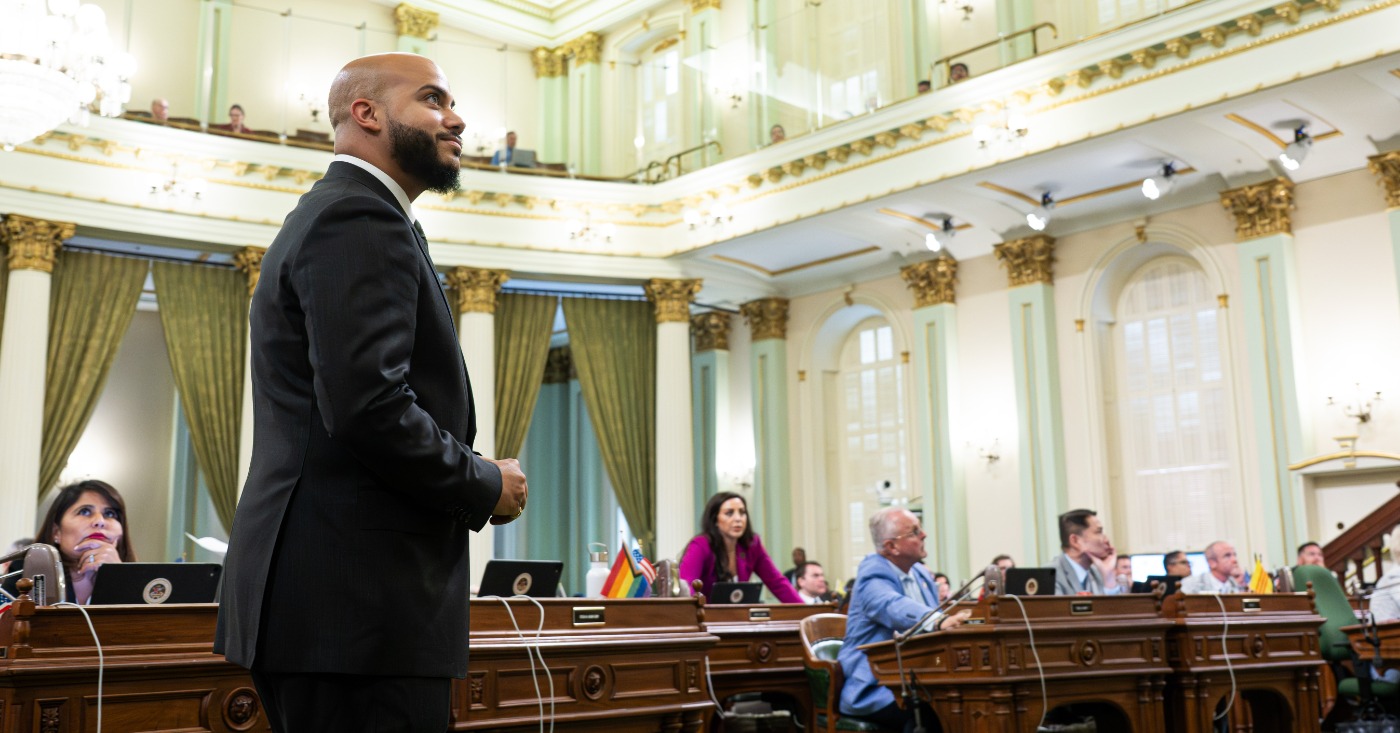
Gov. Gavin Newsom signed legislation on Sept. 27 authored by Assemblymember Isaac Bryan (D-Ladera Heights) that strengthens consumer protections for Californians purchasing tickets to concerts, sporting events and other live entertainment.
Assembly Bill 1349 expands state regulation of original ticket sellers, resellers and online resale marketplaces. The law targets deceptive sales practices, ticket-buying software and speculative listings — tickets advertised for sale by sellers who do not possess them or have authorization to sell them.
“Buying a ticket shouldn’t come with hidden risks or unfair practices,” Newsom wrote on social media after signing the measure.
Under AB 1349, ticket sellers are prohibited from listing tickets before they have been officially released unless they have authorization or a legally enforceable right to receive them. Online marketplaces must also take reasonable steps to prevent speculative ticket sales on their platforms.
The law prohibits sellers from using bots, multiple accounts, email addresses or internet protocol addresses to circumvent ticket limits, presale restrictions, electronic queues and other controls. It also bans websites and advertisements designed to mislead buyers into believing they are purchasing tickets from an authorized seller, venue or event organizer.
Sellers who violate certain provisions and fail to provide a promised ticket may be held liable for twice the ticket’s contracted price. Buyers may also recover nonrefundable expenses incurred while attempting to attend an event, along with reasonable attorney’s fees and court costs.
Pastor Tecoy Porter Sr., president of the National Action Network’s Sacramento chapter, said the law establishes needed accountability.
“Buying a ticket to a concert or show shouldn’t mean entering a marketplace where the rules are stacked against you. This year, we worked with a coalition of consumers, civil rights advocates, community groups, and businesses to make AB 1349 stronger. Consumers deserve enforceable rules that protect them. We thank Assemblymember Bryan for his leadership, and we will keep working to make ticketing fair for every Californian.”
Jose L. Barrera, national vice president for the Far West Region of the League of United Latin American Citizens, also praised the measure.
“Californian families deserve certain protections when they buy tickets. Assemblymember Bryan listened to communities across California and delivered a bill that puts fans first. We thank him and Governor Newsom for making it law.”


WCCUSD Joins Statewide Organic School Food Purchasing Cooperative

Democrats, Community Groups Back Measure EE to Change How Oakland Is Governed

Four Tips to Help You Plan a Holiday “Staycation”

Veterans Housing Project Proposed for South Richmond
PRESS ROOM: Transformative Justice Coalition 2026 Voting Rights Champion Awards Reception ‘Yesterday Is Today: The Battle For Voting Rights

Mayor Lee Delivers 2026 State of the City Address: ‘Oakland Continues to Be on the Move’

Oakland Awarded More than $14 Million in State Funding

Jendayi Arrest Raises Community Concerns Regarding Sheriff’s Chain of Command

Marin County Supes Expand Small Business Options with Home Kitchen Pilot Program

Allen Temple Baptist Church Hosts Free Prostate Cancer Screenings on Oct. 17

AC Transit Labor Unions Back Director Joel Young

Locals Can Get Locally Grown Produce Delivered Through Urban Tilth

‘ICE-Free Marin’ Supporters Press Supervisors as County Drafts Enforcement Restrictions

Oakland Post: Week of October 7 – 13, 2026

Ghana’s Ministry of Foreign Affairs Publishes Global Circle’s Vatican Reparations Call in Special Edition Alongside Heads of State

Misnamed ‘Parent’ PAC Seeks to Influence Oakland School Board Elections

Oakland Post: Week of September 2 – 8, 2026

Oakland Post: Week of September 9 – 15, 2026

Richmond Tiny House Village Farm & Garden Set to Open Gates on Sept. 26

Latest Massacre in Haiti Reveals Cruelty U.S. Deportations

County Office of Education Says OUSD Finances Are Getting Healthier, Materially Stronger

Poll: Becerra Widens His Lead Over Hilton; Californians Split on Wealth Tax

OPINION: Nolan Wells’ Death One of Several Signifying Racial Terror Lives on in U.S. South

Mayor Lee Announces $1 Million Kaiser Permanente Grant for Pilot Program to Address Homelessness, Clean Up Public Spaces throughout Oakland

Democratic Clubs Interview Candidates for Oakland School Board

BLACspace Cooperative Invites Bay Area to Experience Oakland’s Black Cultural Ecosystem Through a BLAC Map Tour + Party

Oakland People’s Arms Embargo Coalition Demands End to Military Shipments Thru Oakland

Oakland Post: Week of September 16 – 22, 2026

Zakiya Jendayi Arrested, Locked Out of Home by Sheriff’s Deputies

Two Looming Threats Every Alameda County Elder Should Know About

The Conversation With Al McFarlane 6/23/26

Media Monday 6/22/26

LIVE! ASK ALMA! — TUES. 6.23.26 7PM EST

Car Buying Secrets: 4 Hidden Checks Before You Sign!

Is This 550 HP Charger Worth YOUR Money? AutoNetwork Review

Celebrating Juneteenth – Frederick Douglass on education and resistance

LIVE! — ASK ALMA! — TUES. 6.19.26 7PM EST

Hyundai Ioniq 5 Parking, Safety, and 360 View #shorts

2025 Ioniq 5 New Wiper & Powerful Performance! #shorts

Electric SUV Range: Is 259 Miles Enough? #shorts

EV Charging: How Fast Can You Charge an Electric Vehicle? #shorts

Biometric Cooling… Messaging Seats…Come on! 2025 Infiniti QX80 Autograph 4WD

Charged Up: Witness the Magic of a Fully Electric Car! #shorts

Range Rover Sport PHEV Included…: See What’s Inside This Luxury SUV! #shorts

Invisible Hood View: Perfect Parking with X-Ray Vision! #shorts
-
 Business3 weeks ago
County Office of Education Says OUSD Finances Are Getting Healthier, Materially Stronger
-
 Economy3 weeks ago
Poll: Becerra Widens His Lead Over Hilton; Californians Split on Wealth Tax
-
 Business4 weeks ago
Mayor Lee Announces $1 Million Kaiser Permanente Grant for Pilot Program to Address Homelessness, Clean Up Public Spaces throughout Oakland
-
 Art3 weeks ago
BLACspace Cooperative Invites Bay Area to Experience Oakland’s Black Cultural Ecosystem Through a BLAC Map Tour + Party
-
 Uncategorized4 weeks ago
Oakland People’s Arms Embargo Coalition Demands End to Military Shipments Thru Oakland
-
 Activism4 weeks ago
Oakland Post: Week of September 16 – 22, 2026
-
 Lead Story2 weeks ago
Zakiya Jendayi Arrested, Locked Out of Home by Sheriff’s Deputies
-
 Community4 weeks ago
Two Looming Threats Every Alameda County Elder Should Know About
