
Marin County
Kerner Report Set Standard for What a Serious Presidential Candidate Should Champion

As the Democratic presidential primaries move onto Nevada, South Carolina and the many Super Tuesday states, candidates turn their attention to people of color, and particularly African Americans.
Many candidates find their rhetoric contradicted by their record; their promises conflicting with their performances.
Donald Trump now seeks to woo Black voters by taking credit for the economy, by touting the first steps in reducing mass incarceration, and by hyping so-called “opportunity zones.”
His history—rising to prominence with the vile racist campaign about whether Barack Obama is American, embracing the Nazis at Charlottesville, dedicating his administration to erasing all things Obama, framing his political appeal on race-bait politics—gives the lie to his histrionics.
The same occurs on the Democratic side.
Pete Buttigieg always sounds good, but African American leaders in his town excoriate his record as mayor on race and policing. Amy Klobuchar runs as a moderate, but her brutal record as a prosecutor limits her appeal. Mike Bloomberg has the resources to flood the zone, but he too struggles to explain his harsh, racially-biased stop-and-frisk policies as mayor of New York or his laughable embrace of right-wing nutcase theories that somehow anti-redlining policies triggered the financial crisis.
Bloomberg is joined by Joe Biden on what seems like an endless apology tour.
African American voters are not easily fooled. They have a clear agenda. They suffer structural inequality—more unemployment than whites, lower wages, worse jobs, worse schools, inadequate health care, unaffordable housing, unsafe neighborhoods befouled by pollution and poisons, inadequate childcare, lack of recreational facilities, and the outrages of a criminal justice system that is structurally biased against them. They want what most Americans want, and they have a trained eye about politicians.
Notably absent from the debate is a leader prepared to be as bold and as serious about the challenges facing African Americans as the Kerner Commission was 22 years ago. The commission, chaired by Illinois Gov. Otto Kerner, was created by President Lyndon Johnson in the wake of the devastating urban riots of the late ‘60s. It included leaders from both major parties, as well as representatives of labor, the police, business and civil rights groups.
It became famous for its stark warning: “Our nation is moving toward two societies, one black, one white—separate and unequal.”
Dr. Martin Luther King pronounced the report a “physician’s warning of approaching death, with a prescription for life.” In many ways, it was the last attempt to address honestly and seriously the structural inequalities that plague African Americans.
It told harsh truths: “What white Americans have never fully understood but what the Negro can never forget—is that white society is deeply implicated in the ghetto. White institutions created it, white institutions maintain it, and white society condones it.” It concluded that one main cause of the urban violence was white racism that left too many young African Americans without hope.
It offered not nostrums and pablum but a serious agenda to redress the maladies: new jobs, new housing, an end to de facto segregation, integration of schools, daycare for children, higher wages or income supplementation, greater services, and more diverse and sensitive police forces. It did not blink at the billions that this would cost, suggesting that the cost of not acting would be far greater.
The Kerner Report—and Johnson’s War on Poverty—was lost in the jungles of Vietnam.
The costs of that misbegotten war—in money, in lives and agony, and in political upheaval—torpedoed any serious effort to address our problems at home.
What the Kerner Report did leave was a marker: a measure of what it means to be serious in addressing the problems of our society.
Much has changed over the last half-century, yet too much is the same. Affirmative action has opened closed doors for some people of color. America is more diverse, yet still deeply divided. De facto residential segregation has been largely sustained. Inequality has grown more extreme. Schools are even more divided by class and race. Affordable housing is even less available. Structural racism still stains our criminal justice system.
So, as the politicians come campaigning for African American votes, they will get a hearing.
We appreciate the attention and gestures. But the Kerner Report set the standard for what a serious leader would champion.
We’ll see who comes close, if anyone does, to accepting that challenge.





Activism
Life Expectancy in Marin City, a Black Community, Is 15-17 Years Less than the Rest of Marin County
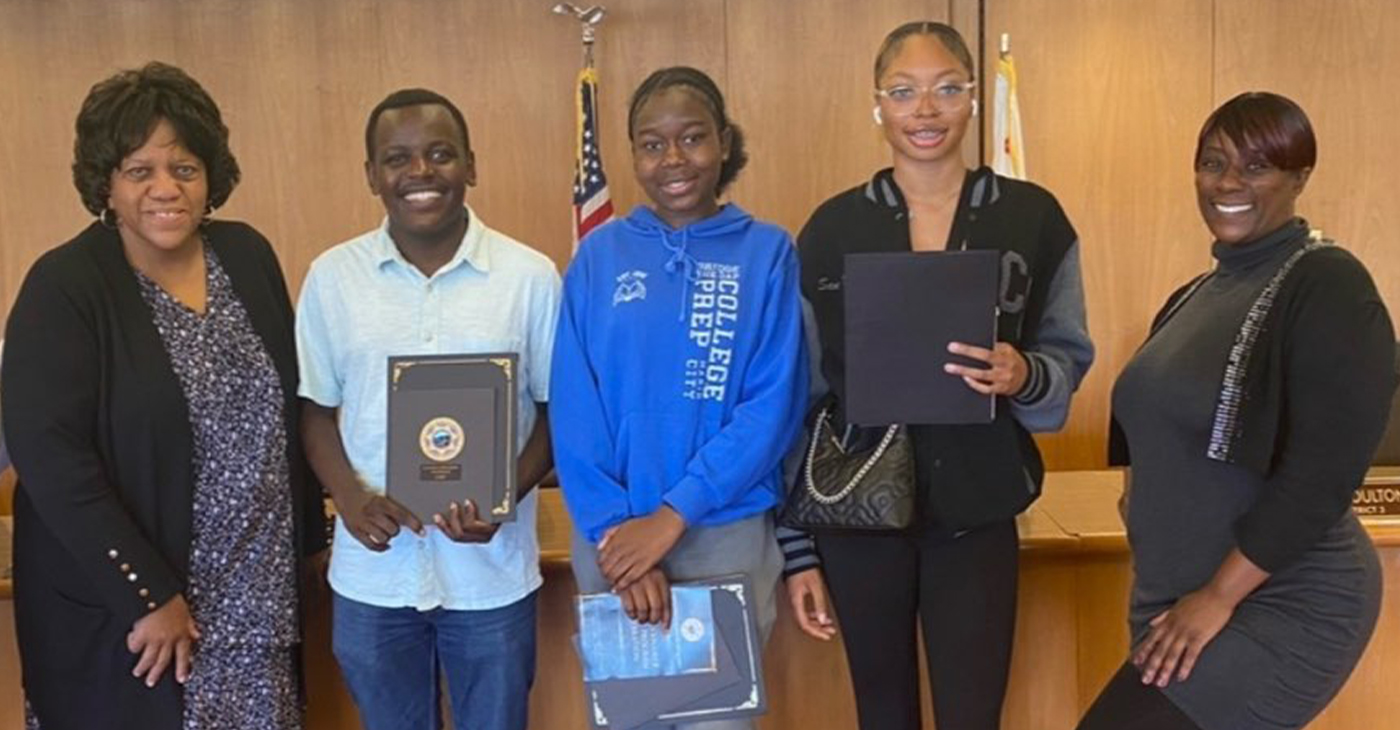
“Marin City residents have been fighting for years just to stay here. Residents live with the fear of being forced out, public housing torn down and rebuilt for the wealthy. Due to ongoing issues continually being ignored, residents feel they must be empowered to make their own decisions for the future survival and protection of their community,” said Terrie Green, a lifelong resident and executive director of Marin City Climate Resilience (MCCR).

By Ken Epstein
People may be aware of the existence of Marin City and know a little about its history as a center of U.S. resistance to fascism in the World War II. But fewer know of the community’s ongoing struggles to survive potential displacement while facing severe toxic health and environmental conditions on a daily basis.
These conditions cause chronic disease and premature death, dramatically shown in the sharp difference in life expectancy between Black and white people living in households only a few miles apart.
A historically African American enclave, Marin City, occupies a 0.5-square mile area between Mill Valley and Sausalito with its own freeway exit near the Golden Gate Bridge. In contrast, the rest of Marin County rates among the healthiest, wealthiest, and most environmentally friendly counties in the country. However, it is one of the least racially equitable counties in California, with Black residents being the most impacted, according to the Advancement Project, a civil rights organization,.
The community owes its continued existence to the World War II generation that came to the Bay Area from the South to work in the shipyards and to the resiliency of its residents. Despite often facing discriminatory practices, such as redlining and a segregated school district, Marin City residents have continually created a strong community rich in culture, spirituality, and community values.

The current statistics are brutal. At present, Marin City residents face more than a 17-year difference in life expectancy compared to neighboring cities and towns. Contributing to these conditions are a lack of investment in public housing and infrastructure: unsafe drinking water, air pollution caused by proximity to the U.S. 101 freeway, unsanitary stormwater drainage that produces mold and mildew, as well as old and broken lead pipes and sewage in homes.
As an unincorporated community, Marin City residents must rely primarily on the elected Marin County Board of Supervisors, Department of Public Works, Transportation Authority of Marin and Caltrans for the decisions and investments that impact their lives.
“Marin City residents have been fighting for years just to stay here. Residents live with the fear of being forced out, public housing torn down and rebuilt for the wealthy. Due to ongoing issues continually being ignored, residents feel they must be empowered to make their own decisions for the future survival and protection of their community,” said Terrie Green, a lifelong resident and executive director of Marin City Climate Resilience (MCCR).
MCCR’s focus is on environmental justice. Its purpose is to empower and advocate for individuals to embrace sustainable living, envision a future free of environmental harm and collectively work towards a better Marin City. MCCR’s motto is “Forever Marin City.”
MCCR has created a unique team of Marin City Youth Environmentalists who have studied and researched environmental issues impacting the health of the community.
Serenity Allen is an MCCR Youth Coordinator/Young Environmentalist studying to be a medical social worker at Xavier University. She has been working in the community for six years. “I strongly believe that where you live should not determine how long you are able to live,” she said.
Allen referred to the work done by former Marin County Public Health Officer Dr. Matt Willis, who stated that Marin City has a 17-year life expectancy difference between residents of Marin City (77 years) and more affluent areas like Ross (94 years).
“The research shows this gap is heavily correlated with race and socioeconomic status. Sausalito, which is not even two miles outside of Marin City, has a life expectancy of 92 years,” Allen said.
“Many elements contribute to this gap,” she said. “A major factor may be the 12 acres of toxic flood waters that pour down off the highway into low-lying Marin City.
In addition, “We do not have a barrier wall protecting us along our highway; the rest of Marin County has 16 barrier walls to protect from noise and air pollution. Marin City has been fighting for a barrier wall since 2008,” she said.
Octavien Green, an MCCR high school environmentalist, spoke about the impact of the absence of recreational facilities on health and wellness, particularly for youth.
“Lack of investment in our recreational facilities means we have fewer spaces and opportunities for physical activity, which contribute to serious health problems like heart disease, diabetes, weak bones and low energy, especially for kids. We are presently involved in an ongoing struggle just to rebuild a sports ball field for the community that’s been unusable for the last 15 years.”
“Marin City is the center of Black culture for all of Marin County,” said Green. “Historically, though, the county has not invested in the community, and you see it in the life expectancy, the highest chronic disease and disability rates and eight times the amount of asthma. In the last six weeks, we’ve had three young people in their 40s and 50s die from heart attacks. This is alarming and must be addressed.”
Looking toward next steps, she said, “The way forward is through incorporation,” which would mean that Marin City would have its own elected leadership to find solutions that determine the future of the community.
This is the first in a series of articles on Marin City, examining conditions in the community and interviewing both community members and public officials.

Activism
Marin Civic Center Library Marks Black History Month with 3 Events
The Civic Center Library’s Afternoon Book Club will celebrate and commemorate Black History and will meet in person on Thursday, Feb. 20 from 1-2 p.m. to discuss “The Nickel Boys” by Colson Whitehead. (This afternoon book club generally meets on the 3rd Thursday of every month from 1:00 p.m. to 2:00 p.m.)

By Godfrey Lee
The Marin County Civic Center Library in San Rafael will be celebrating Black History Month with presentations by Fauna Solomon on the steelpan drum, Keenan D. Webster on West African music and a book club discussion on “The Nickel Boys” by Colson Whitehead.
The library is located at 3501 Civic Center Dr., Room 427, in San Rafael, CA. 94903. Their phone number is (415) 473-6057.
Solomon will be sharing about the history and sounds of the steelpan drum on Friday, Feb. 14, from 12- 12:45 p.m. at the Civic Center Library.
Solomon is a former teacher and professional musician from Guyana, South America, and uses storytelling and performance to explore the complex and dynamic history of the instrument. Having played since age 5, Fauna has performed across the country. Her program traces the steelpan’s evolution from the West Indies to its global recognition, offering insight into its cultural and historical significance.
The Civic Center Library’s Afternoon Book Club will celebrate and commemorate Black History. It will meet in person on Thursday, Feb. 20 from 1-2 p.m. to discuss “The Nickel Boys” by Colson Whitehead. (This afternoon book club generally meets on the 3rd Thursday of every month from 1:00 p.m. to 2:00 p.m.)
A copy of the book can be requested online, or ask at the Info Desk of the Civic Center Library (or call 415-473-6057) for assistance in placing a hold.
“The Nickel Boys” is the story of two boys unjustly sentenced to a hellish reform school in Jim Crow-era Florida and is based on the real story of the Nickel Academy, a reform school that operated for 111 years and warped the lives of thousands of children.
When Elwood Curtis, a Black boy growing up in 1960s Tallahassee, is unfairly sentenced to the Nickel Academy, he finds himself trapped in a grotesque chamber of horrors. Elwood’s only salvation is his friendship with fellow “delinquent” Turner, which deepens despite Turner’s conviction that Elwood is hopelessly naive, that the world is crooked, and that the only way to survive is to scheme and avoid trouble. As life at the academy becomes ever more perilous, the tension between Elwood’s ideals and Turner’s skepticism leads to a decision whose repercussions will echo down the decades.
Later in the afternoon at the Civic Center Library, local musician Keenan D. Webster will be sharing about the traditional instruments of the Mandinka and the Mande-speaking people of West Africa on from 4-5 p.m. on Feb. 20.
Experience the Kora (West African Mandinka harp), the Kamele Ngoni (West African Mande harp), the Balaphone (Mandinka xylophone), and more. Feel the beauty, fire, and energy of this incredible music, and learn how these traditions gave birth to the banjo and influenced blues, jazz, and popular music of today.
Webster was born in Nashville, Tennessee. His love for the blues, spirituals, and gospel and folk music of the South deepened in his youth. As a teenager in Los Angeles, California, he became fascinated with African, Afro-Cuban, reggae, and other music from the African diaspora, and was further inspired to learn about his roots, music, culture and spirituality with the Gullah, Mandinka, Mende and Yoruba people of West Africa.
He started with drums of West Africa and Afro-Cuban roots. Then came jazz and Blues, playing the saxophone and flute, and later the Native American flute. He has a deep appreciation for world music and has familiarized himself with classical music from India, the Middle East, and Southeast Asia. Webster has been on a mission to use music for world peace, healing, to fight against racism, and to bring all people together.
Activism
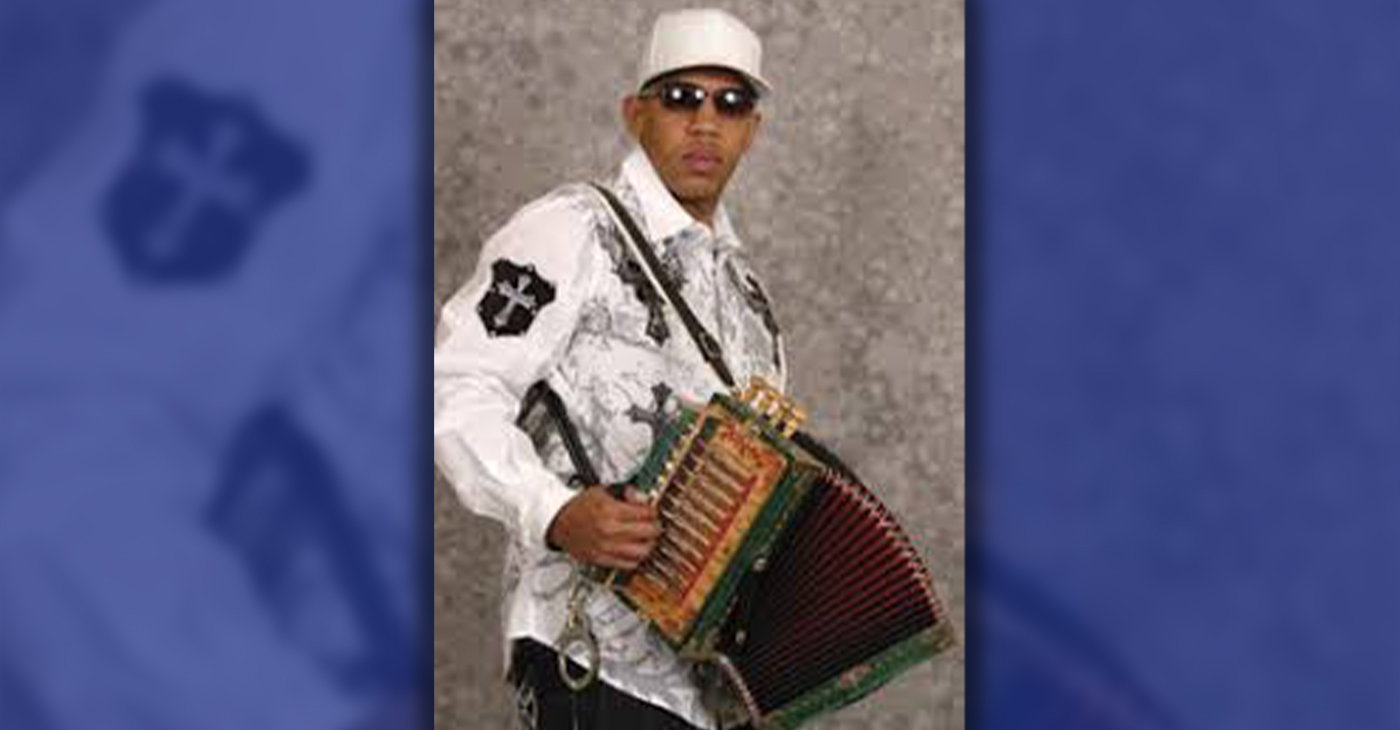
Andre Thierry Explores Zydeco Music at Marin City Library
Grammy-nominated Andre Thierry leads the musical program with an interactive, engaging experience that combines traditional and newly composed music.
By Godfrey Lee
The “Are You Ready to Learn” music program allows children, families, and adults, to explore the rich Kreole culture and Zydeco music of southwestern Louisiana.
Grammy-nominated Andre Thierry leads the musical program with an interactive, engaging experience that combines traditional and newly composed music.
The program, created by Thierry, showcases a mix of African and Native American Blues and French Kreole dance melodies with elements of Afro-Caribbean music.
Children and families sing and dance while learning about popular Zydeco instruments like vest rub boards, drums, and accordion.
For information on the program, go to https://www.andrethierry.com
The free program will take place on Sunday, Feb. 9, at 1 p.m., at the Marin City Library, 164 Donahue St., in Marin City. For more information, call 415-332-6158.
Thierry will be performing again the Fairfax Library, 2097 Sir Francis Drake Blvd., Fairfax, on Saturday, Feb. 15, at 11 a.m. For more information, call 415-453-8092.


WORK FROM HOME
Home-based business with potential monthly income of $10K+ per month. A proven training system and website provided to maximize business effectiveness. Perfect job to earn side and primary income. Contact Lynne for more details: Lynne4npusa@gmail.com 800-334-0540


Black Artists in America, Installation Three Wraps at the Dixon Gallery and Gardens

Grief, Advocacy, and Education: A Counselor Reflects on Black Maternal Health

Future of Florida’s Black History Museum in Limbo

New Research Shows the Many Benefits of Early Learning

South Hampton K-8 Students Among Top 10 Finalists for Samsung’s ‘Solve for Tomorrow’ Competition

Cuba: No Negotiation with US on the President or Political System

Brooklyn Academy of Music Names Jamaican-Born Tamara McCaw as President

Trinidad & Tobego – U.S. Launches WhatsApp Channel for American Citizens in the Country

Oakland Post: Week of March 18 – 24, 2026

AI Innovation vs. Ethics and Environmental Impact

AI, Web3, and Digital Reparations

What If You Owned Your AI Agent?

Season 7, Episode 3 – January Reporter’s Roundtable 📱

Season 7, Episode 3 – January Reporter’s Roundtable

AI, Media, and Power | Part 2, Real-World Impacts and Tradeoffs

Oakland Post: Week of February 11 – 17, 2026

Reflecting on Black History Milestones in Birmingham AL

CITY OF SAN LEANDRO STATE OF CALIFORNIA PUBLIC WORKS DEPARTMENT ENGINEERING DIVISION NOTICE TO BIDDERS FOR ANNUAL STREET OVERLAY/REHABILITATION 2019-21 – PHASE III

Oakland Post: Week of February 18 – 24, 2026

PRESS ROOM: NBA Hall of Fame Nominee Terry Cummings Joins 100 Black Men of DeKalb County to Launch Victory & Values Initiative

Oakland Post: Week of February 25 – March 3, 2026

Trump’s MAGA Allies are Creating Executive Order Plan to Steal the 2026 Midterms

U.S. manufacturing rebounds – how foundry services are adapting to rising demand

OP-ED: One Hundred Years of Black Workers Telling the Truth

Advancements in solar technology that are changing the way we power the world

Chase Oakland Community Center Hosts Alley-Oop Accelerator Building Community and Opportunity for Bay Area Entrepreneurs

Poll Shows Support for Policies That Help Families Afford Child Care

Oakland Post: Week of March 4 – 10, 2026

PRESS ROOM: Civil Rights TV Launches in Selma as the World’s First 24/7 Civil Rights Television Network

Ghana Mourns a Son of the African World

Hyundai Ioniq 5 Parking, Safety, and 360 View #shorts

2025 Ioniq 5 New Wiper & Powerful Performance! #shorts

Electric SUV Range: Is 259 Miles Enough? #shorts

EV Charging: How Fast Can You Charge an Electric Vehicle? #shorts

Biometric Cooling… Messaging Seats…Come on! 2025 Infiniti QX80 Autograph 4WD

Charged Up: Witness the Magic of a Fully Electric Car! #shorts

Range Rover Sport PHEV Included…: See What’s Inside This Luxury SUV! #shorts

Invisible Hood View: Perfect Parking with X-Ray Vision! #shorts

AI Is Reshaping Black Healthcare: Promise, Peril, and the Push for Improved Results in California

ESSAY: Technology and Medicine, a Primary Care Point of View

Sanctuary Cities

The RESISTANCE – FREEDOM NOW

STATE OF THE PEOPLE: Freddie

ECONOMIC BOYCOTT DAY!!!!!

I told You So
-
 #NNPA BlackPress4 weeks ago
Poll Shows Support for Policies That Help Families Afford Child Care
-
 Activism3 weeks ago
Oakland Post: Week of March 4 – 10, 2026
-

 #NNPA BlackPress3 weeks ago
Woman’s Search for Family’s Roots Leads to Ancestor John T. Ward – A Successful Entrepreneur and Conductor on the Underground Railroad
-

 #NNPA BlackPress4 weeks ago
OP-ED: NNPA Launches 2026 “Leadership Matters” Video Series
-

 #NNPA BlackPress3 weeks ago
Advocates Raise Alarm Over ICE Operation, MOU and Detention Risks in Baltimore County
-

 #NNPA BlackPress3 weeks ago
COMMENTARY: Women of Color Shape Our Past and Future
-

 #NNPA BlackPress3 weeks ago
Pete Buttigieg to Join Mayor Randall Woodfin for Community Town Hall in Birmingham
-
 Activism2 weeks ago
Oakland Post: Week of March 11 -17, 2026
