
Activism
IN MEMORIAM: Nikki Giovanni, Iconic Poet and Voice of the Black Arts Movement, Dies at 81
Nikki Giovanni rose to prominence during the 1960s as a fierce voice in the Black Arts Movement, alongside literary giants such as Amiri Baraka, Audre Lorde, Ntozake Shange, and Sonia Sanchez. Her early works, including “Black Feeling, Black Talk” (1968) and “Black Judgement” (1968), were steadfast in their militancy and pride. Her poetry grappled with the injustices faced by Black Americans, including the brutal murder of Emmett Till and the bombing of the 16th Street Baptist Church in Birmingham, which killed four Black girls.

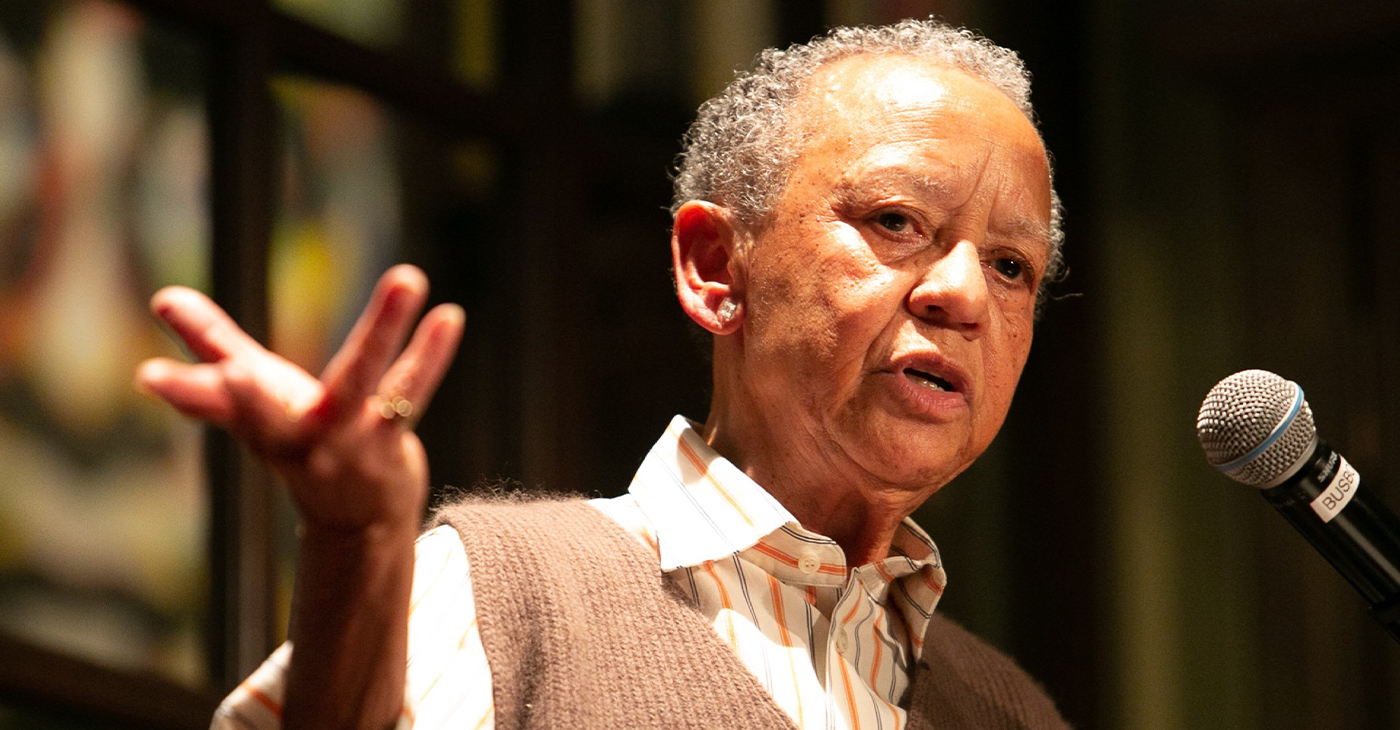
By Stacy M. Brown, NNPA Newswire
Nikki Giovanni, the groundbreaking poet, author, and professor whose work embodied the spirit of the Black Arts Movement and beyond, died on Monday in Blacksburg, Virginia. She was 81. Her wife, Virginia C. Fowler, confirmed the cause was complications from lung cancer.
Born Yolande Cornelia Giovanni Jr. on June 7, 1943, in Knoxville, Tennessee, Giovanni spent her formative years in Cincinnati, Ohio, but returned to Knoxville every summer with her sister to visit their grandparents. These visits helped shape her sense of identity and belonging, themes that would become central to her work.
She graduated with honors in history from Fisk University, a historically Black college in Nashville and her grandfather’s alma mater. While at Fisk, Giovanni’s defiant spirit and intellect were evident. Expelled briefly due to issues with authority, she returned after a period of reflection and was readmitted with the help of a supportive Dean of Women. This early experience of rebellion and reconciliation laid the groundwork for her unapologetic approach to life and art.
A Voice of Rebellion and Resilience
Giovanni rose to prominence during the 1960s as a fierce voice in the Black Arts Movement alongside literary giants such as Amiri Baraka, Audre Lorde, Ntozake Shange, and Sonia Sanchez.
Her early works, including “Black Feeling, Black Talk” (1968) and “Black Judgement” (1968), were steadfast in their militancy and pride. Her poetry grappled with the injustices faced by Black Americans, including the brutal murder of Emmett Till and the bombing of the 16th Street Baptist Church in Birmingham, which killed four Black girls.
At a time when mainstream publishers showed little interest in the work of a young Black woman writing what they labeled “militant” poetry, Giovanni took matters into her own hands. She self-published her work, founding a company to distribute her collections. “No one was much interested in a Black girl writing what was called ‘militant’ poetry,” she once wrote. “I thought of it as good poetry.”
Her boldness paid off. In 1972, at just 29 years old, she sold out Alice Tully Hall at Lincoln Center, reading her poetry to a crowd of more than 1,000 alongside the New York Community Choir.
The following year, for her 30th birthday, she filled the 3,000-seat Philharmonic Hall, where the choir joined her again, along with Melba Moore and Wilson Pickett. The audience erupted joyfully when she recited her now-iconic poem, “Ego-Tripping.” The piece, a celebration of Black female strength, begins with the lines:
“I was born in the congo
I walked to the fertile crescent and built
the sphinx…”
And concludes triumphantly:
“I am so perfect so divine so ethereal so surreal
I cannot be comprehended
except by my permission
I mean…I…can fly
Like a bird in the sky…”
A Prolific Career
In addition to her poetry, Giovanni wrote children’s books, essays, and a memoir, “Gemini: An Extended Autobiographical Statement on My First Twenty-Five Years of Being a Black Poet (1971).” She was known for her candid reflections on race, gender, and identity, blending the personal with the political in provocative and deeply human ways.
Giovanni’s interview with James Baldwin on the television program “Soul!” in 1971 remains a touchstone in American cultural history. Their two-hour conversation, filmed in London, explored the intersections of race, gender, and societal expectations. At one point, she posed a raw question about the cycle of violence affecting Black families: “What do you do about a man who is mistreated in the world and comes home and brutalizes his wife? Where does that leave his daughter?” Baldwin’s response: “Sweetheart. Our ancestors taught us how to do that.”
An Educator and Mentor
In 1987, Giovanni joined the faculty at Virginia Tech, where she became a University Distinguished Professor. She remained there for 35 years, influencing generations of students with her wit, wisdom, and unwavering commitment to truth.
Even in academia, her rebellious spirit shone through. Giovanni famously supported her student, Seung-Hui Cho, before he committed the tragic mass shooting at Virginia Tech in 2007. She had him removed from her class when she sensed his troubling nature.
Giovanni earned seven NAACP Image Awards, a Grammy nomination, and the distinction of having three of her books listed as New York Times and Los Angeles Times best-sellers—a rare feat for a poet.
Giovanni described herself as a dreamer. “My dream was not to publish or to even be a writer,” she remarked. “My dream was to discover something no one else had thought of. I guess that’s why I’m a poet. We put things together in ways no one else does.”
A Legacy of Dreams and Defiance
Giovanni’s poetry was a lifeline for many, especially young Black women who saw their power and potential reflected in her verses. She wasn’t just a poet but a cultural force who celebrated Blackness, womanhood, and the art of dreaming. “I’m a writer. I’m happy,” she said.
Nikki Giovanni leaves behind her son, Thomas, and her granddaughter. Her father, mother, sister, and aunt preceded her in death.














Activism
Oakland Post: Week of September 30 – October 6, 2026
The printed Weekly Edition of the Oakland Post: Week of September 30 – October 6, 2026

To enlarge your view of this issue, use the slider, magnifying glass icon or full page icon in the lower right corner of the browser window.

Activism
Oakland Post: Week of September 23 – 29, 2026
The printed Weekly Edition of the Oakland Post: Week of September 23 – 29, 2026

To enlarge your view of this issue, use the slider, magnifying glass icon or full page icon in the lower right corner of the browser window.
Activism
Oakland Post: Week of September 16 – 22, 2026
The printed Weekly Edition of the Oakland Post: Week of September 16 – 22, 2026

To enlarge your view of this issue, use the slider, magnifying glass icon or full page icon in the lower right corner of the browser window.



OP-ED: Proposition 44 Would Put a Price on Trust

OP-ED: Proposition 40: It’s Time to Play Chess, Not Checkers

Listening as a Lifeline: A Doula’s Witness to Black Maternal Health

New Protections for Ticket Buyers: Gov. Newsom Signs Assemblymember Isaac Bryan’s Bill

‘We Don’t Talk Trash — We Pick Up Trash!’

Zakiya Jendayi Arrested, Locked Out of Home by Sheriff’s Deputies

Oakland Post: Week of September 30 – October 6, 2026

Asm. Corey Jackson Announces Launch of 24-Hour Childcare in His District

IN MEMORIAM: The Rev. Leon “Sonny” Clark, Longtime Orange County Pastor and Community Leader, Dies at 72

Poll: Becerra Widens His Lead Over Hilton; Californians Split on Wealth Tax

From Historic Memories to New Possibilities: Oakland Celebrates Coliseum 60

County Office of Education Says OUSD Finances Are Getting Healthier, Materially Stronger

LIVE FREE Sunday Dinner Brings Faith, Fellowship and Civic Conversation to Oakland

Remembering Chauncey Bailey as Student Journalists Face Threats to Truth-Telling

BLACspace Cooperative Invites Bay Area to Experience Oakland’s Black Cultural Ecosystem Through a BLAC Map Tour + Party

Standoff for Justice: Our Homes Are Worth Fighting For

Oakland Post: Week of August 26 – September 1, 2026

Frontier Airlines’ Return to Oakland Airport Brings Flights, Jobs and Opportunity

Gubernatorial Candidate Steve Hilton Blasts California New Tire Rules; Newsom Hits Back

Chef Sharon Lee Blends Culinary Excellence, Education and Empowerment

Jackie Wright Champions Bay Area Stories, Filmmakers and Cultural Institutions

Misnamed ‘Parent’ PAC Seeks to Influence Oakland School Board Elections

Oakland Coliseum Project Opens Door for Small Businesses to Build Bigger

Big City Mayors Ask for “Yes” Vote on Housing Bond Measure; Conservatives Say “No”

Gov. Newsom’s Latest Appointees Include Sacramento Advocate for Formerly Incarcerated Students; State’s New Tech Chief

Longtime BWOPA Member Brendalyn Goodall Appointed to California Workforce Development Board

Gov. Newsom Signs Law Shielding Immigration Aid Workers From Doxing Threats

Secretary of State Shirley N. Weber Urges Californians to Vote Early as Voter ID Battle Intensifies

Oakland Post: Week of September 2 – 8, 2026

IN MEMORIAM: Dolly Parton Dead at 80 — How She Built a Legacy of Love and Earned Her Place in Black Culture

The Conversation With Al McFarlane 6/23/26

Media Monday 6/22/26

LIVE! ASK ALMA! — TUES. 6.23.26 7PM EST

Car Buying Secrets: 4 Hidden Checks Before You Sign!

Is This 550 HP Charger Worth YOUR Money? AutoNetwork Review

Celebrating Juneteenth – Frederick Douglass on education and resistance

LIVE! — ASK ALMA! — TUES. 6.19.26 7PM EST

Hyundai Ioniq 5 Parking, Safety, and 360 View #shorts

2025 Ioniq 5 New Wiper & Powerful Performance! #shorts

Electric SUV Range: Is 259 Miles Enough? #shorts

EV Charging: How Fast Can You Charge an Electric Vehicle? #shorts

Biometric Cooling… Messaging Seats…Come on! 2025 Infiniti QX80 Autograph 4WD

Charged Up: Witness the Magic of a Fully Electric Car! #shorts

Range Rover Sport PHEV Included…: See What’s Inside This Luxury SUV! #shorts

Invisible Hood View: Perfect Parking with X-Ray Vision! #shorts
-
 Community3 weeks ago
Misnamed ‘Parent’ PAC Seeks to Influence Oakland School Board Elections
-
 Activism4 weeks ago
Oakland Post: Week of September 2 – 8, 2026
-

 Activism3 weeks ago
Oakland Post: Week of September 9 – 15, 2026
-

 Community3 weeks ago
Richmond Tiny House Village Farm & Garden Set to Open Gates on Sept. 26
-

 Black History3 weeks ago
Latest Massacre in Haiti Reveals Cruelty U.S. Deportations
-

 Black History3 weeks ago
OPINION: Nolan Wells’ Death One of Several Signifying Racial Terror Lives on in U.S. South
-

 Business2 weeks ago
Mayor Lee Announces $1 Million Kaiser Permanente Grant for Pilot Program to Address Homelessness, Clean Up Public Spaces throughout Oakland
-

 Community3 weeks ago
Democratic Clubs Interview Candidates for Oakland School Board
