Community
Don’t Criminalize Domestic Violence Survivors, Advocates Say
Problems plaguing people affected by domestic violence are often compartmentalized when law enforcement officers – as well as criminal justice and social welfare authorities — try to solve them.
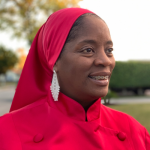
Problems plaguing people affected by domestic violence are often compartmentalized when law enforcement officers – as well as criminal justice and social welfare authorities — try to solve them.
That is a fragmented approach, advocates argue, which helps neither victims nor perpetrators, and it does not lead to lasting solutions to the problem.
Instead, those advocates say, domestic violence must be approached wholistically. Every aspect of the issue must be considered. That not only helps to end the criminalization of people who survive it, they explain. It is also a better path to ending the cycle of trauma and dysfunction that triggers and sustains it.
One of those advocates Democratic is state Sen. Sydney Kamlager (D-Los Angeles), who introduced AB 118, or the “CRISES ACT,” in December 2020 while she was still serving in the Assembly.
The acronym CRISES stands for “Community Response Initiative to Strengthen Emergency Systems.”
AB 118 seeks to implement a pilot program that would empower community-based organizations to serve as first responders instead of the police. That would place domestic violence advocates, mental and public health professionals on the frontlines, responding to calls when there are incidents of intimate partner abuse or other acts of violence in people’s homes.
Kamlager initially introduced the CRISES Act as AB 2054 in February 2020.
AB 2054 passed in the Legislature unanimously, but Gov. Gavin Newsom vetoed it, saying the Office of Emergency Services was not the appropriate location for the pilot program as proposed in legislation.
However, its legislative successor AB 118 also passed unanimously in the Assembly and is currently being considered in the Senate Appropriations Committee.
Cat Brooks, co-founder of the Anti Police-Terror Project in Oakland, thinks the bill will pass this time around. She bases her optimism on the pressure elected officials may be feeling due to a growing movement in the streets of cities, and states across the country, that is pushing for alternatives to badges and guns responding to community crisis.
The Anti Police Terror Project is a Black-led, multi-racial, intergenerational coalition that seeks to build a replicable and sustainable model to eradicate police terror in communities of color.
“This current political moment sort of creates the perfect storm for bills like the CRISIS Act to make it through, so I’m hopeful,” said Brooks.
The organization worked with others to create the Mental Health First Oakland program, a non-911 mobile crisis response to domestic violence, interpersonal violence, substance abuse, mental health and other community crisis, according to Brooks.
“I’m a survivor of domestic violence, and the police came. And following my husband having beat-the-you-know-what out of me, I’m the one who ended up going to jail,” she recalled.
She was 19, Black, and a woman in Las Vegas, she says. Under the city’s Primary Aggressor Law, police can decide who is mainly responsible for the domestic violence.
“That’s how they took me to jail, even though my husband had not a scratch on him, and I was covered in scratches and bruises and bleeding,” said Brooks. “I was targeted as a Black woman by White law enforcement, and I was sent to jail, and that happens to women over and over and over again.”
Unfortunately, her story is not an exception, she said. She believes race had less to do with her arrest than gender.
“We have to remember that we live in a patriarchy, and we also have to remember that the least believed human being walking America’s streets is the Black woman. The most stereotyped is the Black woman. The image that is portrayed of us is loud-mouthed, crazy, out-of-control, angry, violent,” said Brooks.
How those stereotypes factor into how law enforcement officers treat Black women is not discussed nearly enough in public discourse. But far too often those interactions are deadly or violent, she argued.
Brooks’ personal ordeal, she says, led her to start disbelieving that police officers are her friends or that they would help her. In fact, quite the opposite, they could actually end up making things much worse, she said.
For the duration of that relationship, she had no one to call, so she said she just took the abuse, which, she says, is true for so many Black, Brown and Indigenous women.
“They don’t call anyone because they don’t want the police to kill them. They don’t want the police to kill their partners. They don’t want to go to jail,” said Brooks.
The tragedy helped propel her into activism and advocacy. Now, the Anti Police-Terror Project is on the verge of releasing its model for responding to interpersonal violence without police, she told California Black Media.
Members have worked closely with many organizations on the frontlines doing domestic violence work, because solutions must be local, said Brooks.
The organization provides principles and structures, but ultimately, the community must come together, identify where the safe house is, who the trauma responders are going to be, who are going to deal with the perpetrator in a way that’s not violent, and force accountability, without involving law enforcement, she explained.
According to Brooks, the Anti Police-Terror Project does a lot of educational work in the community, and they have found it interesting that mainstream media’s portrayal of abusers is like the 1984 movie, “The Burning Bed” starring Farrah Fawcett. In the movie, after nearly a decade of abuse, Fawcett’s character Francine Hughes douses gasoline over her sleeping husband and lights their bed on fire.
“They don’t think about that some families actually want to stay together, that some families actually want help for everybody. And for us, whether the family decides to stay together or not, we know that services and support and trauma work need to be done with both the perpetrator and the survivors. So, those are the kinds of things that we’re advocating for,” said Brooks.
The Oakland Post’s coverage of local news in Alameda County is supported by the Ethnic Media Sustainability Initiative, a program created by California Black Media and Ethnic Media Services to support community newspapers across California.
