
Transportation
DDOT, Residents at Odds over Bike Lanes
WASHINGTON INFORMER — A meeting scheduled for next month between the District Department of Transportation (DDOT) and those living along a stretch of Alabama Avenue in Southeast could potentially actualize what some residents said they’ve long yearned: a direct say in traffic safety measures in their neighborhood.

By Sam P. K. Collins
A meeting scheduled for next month between the District Department of Transportation (DDOT) and those living along a stretch of Alabama Avenue in Southeast could potentially actualize what some residents said they’ve long yearned: a direct say in traffic safety measures in their neighborhood.
For some, newly installed bike lanes between the 1800 and 2000 blocks of Alabama Avenue don’t reflect the needs of elderly residents who, despite losing their vehicles in hit-and-runs, have enjoyed the benefits of parking just feet from, and sometimes in front of, their home.
Several people, including an elderly woman with limited mobility who requested anonymity, said adjusting to the change has been a constant struggle.
“I don’t see what kind of safety the bike lane is making. DDOT made things more dangerous,” said the elder, a 32-year resident of the 1900 block of Alabama Avenue. She recalled enduring minor inconveniences to avoid parking on side streets, like carpooling and sharing a parking space with a neighbor who works during the night.
“I go to choir rehearsal and come right back,” she said.
The woman stressed that she and her neighbors never received notification that their portion of Alabama Avenue, near Giant and Turner Elementary School, would eventually change.
“At this point, DDOT needs to remove those bike lanes,” she said. “If we had known about it, maybe we could have fought it.”
A DDOT spokesperson described the newly installed bike lanes as part of a larger safety improvement project intended to slow traffic along a four-mile stretch of Alabama Avenue frequented by schoolchildren. Future additions, said to have been discussed during community meetings, in emails and in flyers over the past two years, include highly visible crosswalk markings, pedestrian refuge islands and enhanced stop and speed limit signs.
ANC Commissioner Cheryl Moore (SMD 8E02) and other residents living between the 1800 and 2000 block of Alabama Avenue have rebuffed DDOT’s assertion that they had widely notified affected parties about the impending changes. Moore, elected in January, recounted recent conversations with her predecessor, and between DDOT officials and residents about the communication lapses. Since mid-May, when they first walked outside to construction signs and workers in neon vests, some residents have racked up hundreds of dollars in parking tickets.
Councilmember Trayon White (D-Ward 8) has been outspoken about the ongoing situation, addressing a June 13 community meeting at Bellevue William O. Lockridge Library and engaging DDOT Director Jeff Marootian on other occasions regarding the issue.
“I’m concerned about our senior citizens not being able to get inside their homes,” White told The Informer. “DDOT has been very disrespectful in ignoring the community. I want action to come out of the meeting because the residents are fed up. I’m trying to figure out how bike lanes equate to safety. We expected to see speed bumps and stop signs.”
Data from the Brookings Institution’s Metropolitan Policy Program shows that communities located east of the Anacostia River — often with a lower concentration of Metro stations over several miles, more children and people walking longer distances, and wider streets — experienced the highest rate of pedestrian fatalities. Since 2013, five people — four pedestrians and a motorist — have died in crashes along Alabama Avenue. Recent fatalities elsewhere, specifically that of Abdul Seck on 16th and V streets Southeast in April, have shed light on the issue of pedestrian safety in Ward 8.
In response to Seck’s death, and out of frustration with what he considered DDOT’s insufficient safety upgrades to that area, lifelong Southeast resident Ronald Thompson Jr. and a friend painted highly visible crosswalks at the intersection of 16th and V streets in early May.
Thompson, a community safety advocate, recalled attending one of DDOT’s community engagement meetings at THEARC later that month. He said DDOT, just as they had done in endeavoring to improve 16th and V streets, dropped the ball in unveiling a plan for Alabama Avenue that didn’t reflect pressing community needs, including safe modes of public transportation and fewer lanes.
That error, for Thompson, made residents skeptical about embracing opportunities for positive change.
Thompson predicted the upcoming meeting would further determine how residents of Ward 8 see their relationship with the local power structure, in an era where bike lanes signify displacement.
“For a variety of reasons, DDOT has been forced to reengage stakeholders who have the ability to put pressure on folks and shake some things up,” he said. “I’m not always a fan of DDOT, but I want to see safe streets in my community. If DDOT doesn’t reengage, it makes it hard for me to defend them to my neighbors. The same way that we went out and painted a crosswalk, someone could scrub a bike lane.”
This article originally appeared in the Washington Informer.








Activism
New Bill, the RIDER Safety Act, Would Support Transit Ambassadors and Safety on Public Transit
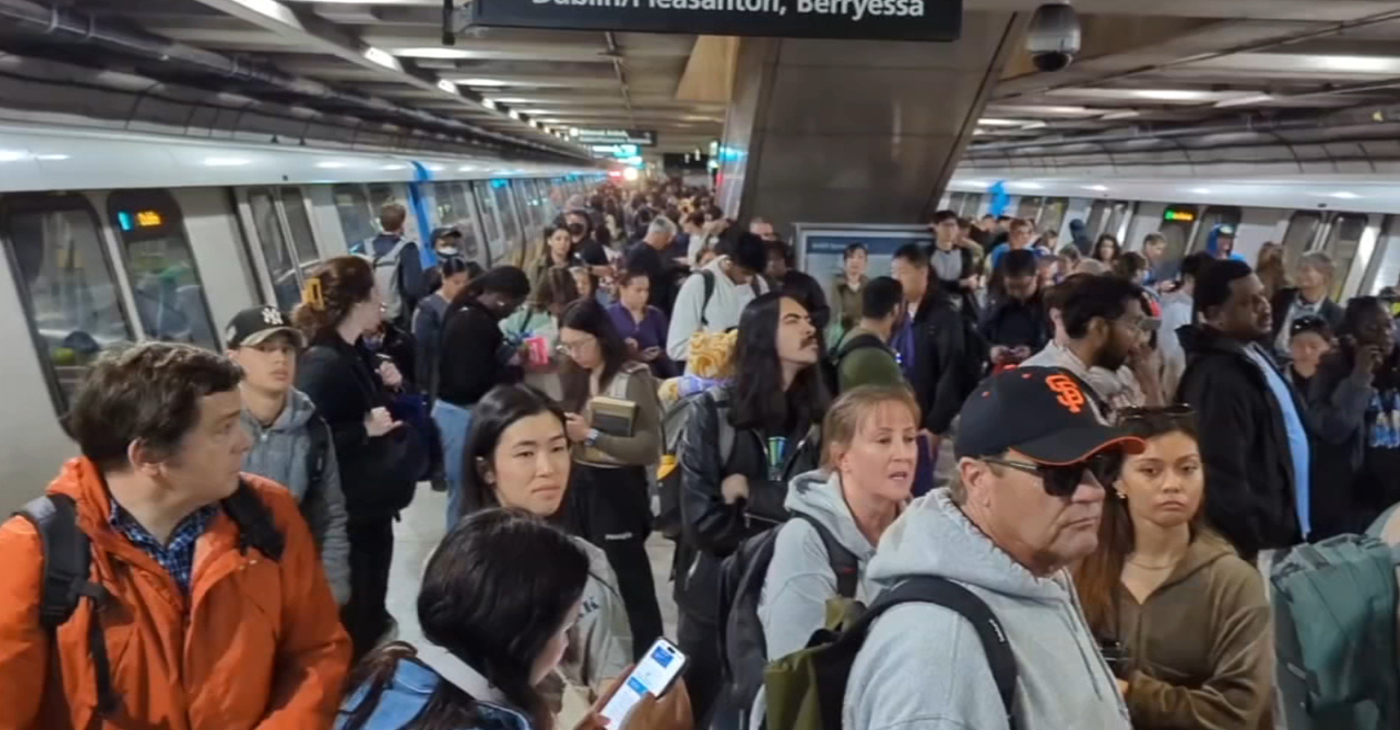
The RIDER Safety Act would allow public transit agencies to hire transit ambassadors trained in de-escalation, crisis response, and rider education and engagement. Acting as a visible, non-enforcement presence to deter low-level incidents and reduce conflict, transit ambassadors would ease the burden from law enforcement and enhance public safety.

By Post Staff
A new federal bill would support transit ambassador, or transit support specialist, programs at public transit agencies across the country.
The bill, (D-CA-12), H.R. 6069, the Rapid Intervention and Deterrence for Enhanced Rider Safety Act, or the RIDER Safety Act, was introduced Jan. 30 by Congresswoman Lateefah Simon. (D-CA-12), H.R. 6069, the Rapid Intervention and Deterrence for Enhanced Rider Safety Act, or the RIDER Safety Act.
This legislation is based on Congresswoman Simon’s work at Bay Area Rapid Transit (BART) to create a first-in-the-nation Transit Ambassador Program, which previously earned a prestigious nationwide award for “Innovation in Public Safety.”
She announced the bill at a press conference at the 19th Street BART Station alongside BART leaders and other supporters.
The RIDER Safety Act would allow public transit agencies to hire transit ambassadors trained in de-escalation, crisis response, and rider education and engagement. Acting as a visible, non-enforcement presence to deter low-level incidents and reduce conflict, transit ambassadors would ease the burden from law enforcement and enhance public safety.
This bill would also create jobs provide meaningful work, training opportunities, and a pathway for career growth in local communities. In the House of Representatives, the bill is also co-led by Representatives Shomari Figures (AL-02), Nellie Pou (NJ-09), Mark DeSaulnier (CA-10), and John Garamendi (CA-08).
“I am incredibly proud to champion the RIDER Safety Act in Congress and continue my work to ensure transit is safe, accessible, and affordable to everyone. We have seen the success of the transit ambassador programs here in the East Bay, and I am dedicated to bringing this proven public safety model to the rest of the country,” said Congresswoman Simon.
“These are strong local jobs for people who want to support public safety on transit and serve as a resource to individuals who may be in crisis or in need of services,” she continued. “Strengthening safety on transit benefits us all and helps ensure our public transportation systems remain places of opportunity, dignity, and trust.”
“This bill is critical to ensure the safety of every passenger who relies on public transportation across the country,” said Congresswoman Nellie Pou. “The RIDER Safety Act builds on successful transit models already implemented in communities, including the Bay Area Rapid Transit (BART) through the leadership of Congresswoman Lateefah Simon during her time as BART President. By providing transit stations with medically trained, unarmed personnel, we can strengthen safety standards, reduce fare evasion, and give riders a greater peace of mind when getting from one place to the next.”

Antonio Ray Harvey
$96 Million Allocated So Far to Black-Owned Firms as High-Speed Rail Project Expands Jobs, Boost Local Economies
Sen. Lola Smallwood-Cuevas (D-Los Angeles), a member of the California Legislative Black Caucus (CLBC) and Chair of the Senate Committee on Labor, Public Employment and Retirement, says the rail project “is exactly the kind of investment” California needs.

By Antonio Ray Harvey, California Black Media
As of May 31, the most recent data from the California High-Speed Rail Authority shows that 47 African American-owned firms are participating in the project as Disadvantaged Business Enterprises (DBEs).
A total of 936 Certified Small businesses are working on the high-speed rail program statewide, representatives of the high-speed rail project say.
The number of Black-owned DBE firms (5.2%) accounts for $96 million of the $1.136 billion allocated to minority firms thus far.
Sen. Lola Smallwood-Cuevas (D-Los Angeles), a member of the California Legislative Black Caucus (CLBC) and Chair of the Senate Committee on Labor, Public Employment and Retirement, says the rail project “is exactly the kind of investment” California needs.
Smallwood-Cuevas, speaking in Aug. 25 at the State Capitol Swing Space Annex — along with a coalition of Democratic state legislators and union leaders — provided an update on the California High-Speed Rail project and its efforts to employ people from the Black community and businesses.
“It builds a cleaner, more connected California while creating thousands of union jobs,” said Smallwood-Cuevas. “And we must ensure workforce equity, with pathways that open doors for workers who too often have been left out of good-paying careers.”
The remaining DBE minority-owned firms received the following amounts:
- Asian Subcontinent: 24 firms received approximately $65 million
- Asian-Pacific Islander: 52 firms received approximately $86 million
- Native American: 6 firms received approximately $39 million
- Hispanic/Latino: an unspecified number of DBE businesses received approximately $848 million
There are currently 328 certified DBEs participating in the project, according to the California High Speed Authority. The multi-billion-dollar project is billed to be committed to small, disabled, disadvantaged, and diverse businesses playing a major role in building the statewide high-speed rail project.
“As a Central Valley native, I know firsthand how transformative high-speed rail will be for our communities,” stated Assemblymember Lori D. Wilson (D-Suisun City) a member of the CLBC and Chair of the Assembly Transportation Committee.
“Stable and sustained funding is essential to delivering this project and fulfilling the promise made to voters.”
The news conference was hosted by Senate Transportation Chair, Sen. Dave Cortese (D-San Jose), who was promoting Senate Bill (SB) 545. He and the California High-Speed Rail Authority (CHSRA) urged the Legislature to commit to a steady, annual investment from a cap-and-trade program to fund the high-speed rail project.
Dr. Melanie Okoro, the Principal and Chief Executive Officer of Eco-Alpha, attended the briefing. Eco-Alpha is a Sacramento-headquartered small, women-owned, minority-certified firm.
The company, not classified as a DBE, earned its status as a certified small business and a certified women-minority small business through the California Public Utilities Commission (CPUC) and the Department of General Services (DGS). The certification allowed Eco-Alpha to be featured by CHSRA as a small business working on the project.
The Black-owned firm provides engineering and environmental services to the California High-Speed Rail project, primarily focused on facilities operation and Maintenance.
Okoro said laborers are not the only workers benefiting from the project. Professionals of color in engineering, with specialized knowledge and problem-solving skills to design, build, and maintain a wide array of structures, systems, and products, are looking forward to these “great opportunities.”
Bay Area
Former Mayor Willie L. Brown Endorses Dana Lang for BART Board District 7
Former San Francisco Mayor Willie L. Brown has announced his endorsement support for Dana Lang for BART Board District 7 Seat, which includes voters from both sides of the Bay, and in San Francisco includes Bay View Hunters Point and Treasure Island. Brown acknowledged that Lang has been a behind-the-scenes force in transportation funding for many years and can help BART manage its financial challenges.
By Oakland Post Staff
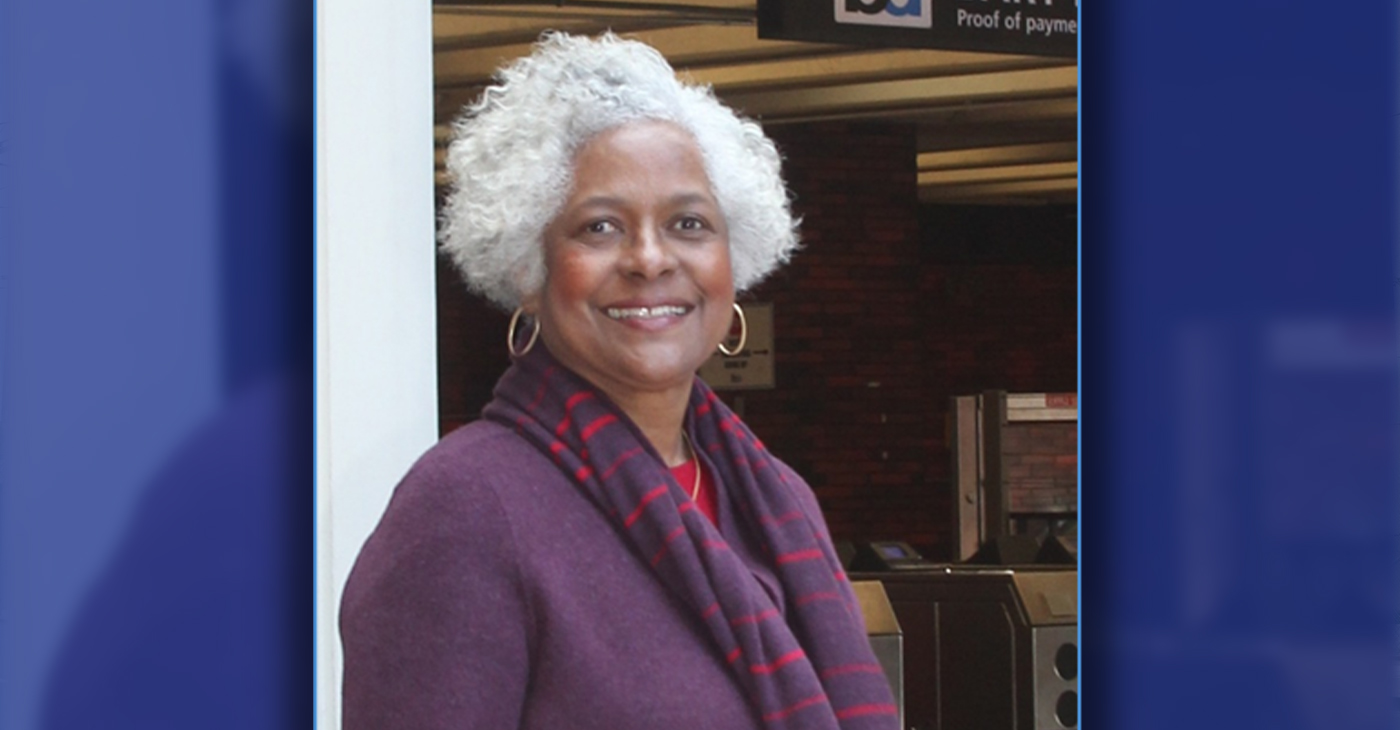
Former San Francisco Mayor Willie L. Brown has announced his endorsement support for Dana Lang for BART Board District 7 Seat, which includes voters from both sides of the Bay, and in San Francisco includes Bay View Hunters Point and Treasure Island.
Brown acknowledged that Lang has been a behind-the-scenes force in transportation funding for many years and can help BART manage its financial challenges.
“When I met with Dana Lang I asked many questions, then I asked others about her contributions. Getting to know her I realized that she truly understood transportation. At a time when BART is facing a “fiscal cliff” and an upcoming deficit of nearly $360 million per year, Dana is more than ready for this job, she is ready to meet the moment!”
Over the past 24 years Lang has been a funding and grants specialist with several municipal transportation agencies, including the Metropolitan Transportation Commission, San Francisco Muni, San Francisco Police Department and San Francisco International Airport (SFO).
Lang says, “I’ve faced a number of fiscal crises in my career — such as securing $52 million in new transit security funding for SFMTA (Muni) during the 2008 Great Recession, when others thought it was not possible. I have always managed to identify new funding and ways to make transit more secure. Facing a crisis is the best time to act, through advocacy and policy setting. We’ve got to keep BART running and make it safer and more vibrant in order to meet the needs of our riders, our work force, and our community.”
Lang grew up in the low-income minority community of East Palo Alto, CA, and knew that locating grants and resources could positively impact an entire city and its surrounding region — helping to create and retain agency jobs, getting transit riders to their workplaces, and encouraging small business development near transit hubs.
With that in mind, she pursued a bachelor’s degree in economics from Wellesley College, then an MBA from UC Berkeley’s Haas School of Business. She started her municipal career as a policy advisor to Mayor Elihu Harris and helped secure grants for the City of Oakland before moving to the Metropolitan Transportation Commission to serve as a transportation grants specialist.
During her 24-year career she has helped secure hundreds of millions of dollars for Bay Area transit agencies and municipalities. In addition to BART’s financial health, Lang’s priorities for BART also include safety, cleanliness, station vitality — and bringing riders back to BART. She has served on the BART Police Civilian Review Board since 2022.
Lang is also endorsed by BART Board Director Robert Raburn, former BART Board Director Carole Ward Allen, the Rev. Amos Brown, pastor of San Francisco’s Third Baptist Church, Alameda County supervisors Keith Carson and Nate Miley, former Oakland Mayor Elihu Harris, District 4 Oakland City Councilmember Janani Ramachandran, Oakland Chinatown leader Carl Chan, and many others.
Lang is seeking the BART Board District 7 Seat, which includes San Francisco’s Bay View Hunters Point and Treasure Island, a large portion of Oakland, the cities of Alameda, Emeryville, Piedmont, and a small portion of Berkeley.

WORK FROM HOME
Home-based business with potential monthly income of $10K+ per month. A proven training system and website provided to maximize business effectiveness. Perfect job to earn side and primary income. Contact Lynne for more details: Lynne4npusa@gmail.com 800-334-0540


Oakland Post: Week of April 8 – 14, 2026

Oakland Post: Week of April 1 – 7, 2026

Black Artists in America, Installation Three Wraps at the Dixon Gallery and Gardens

Grief, Advocacy, and Education: A Counselor Reflects on Black Maternal Health

Future of Florida’s Black History Museum in Limbo

New Research Shows the Many Benefits of Early Learning

South Hampton K-8 Students Among Top 10 Finalists for Samsung’s ‘Solve for Tomorrow’ Competition

Cuba: No Negotiation with US on the President or Political System

Brooklyn Academy of Music Names Jamaican-Born Tamara McCaw as President

Trinidad & Tobego – U.S. Launches WhatsApp Channel for American Citizens in the Country

Oakland Post: Week of March 18 – 24, 2026

AI Innovation vs. Ethics and Environmental Impact

AI, Web3, and Digital Reparations

What If You Owned Your AI Agent?

Season 7, Episode 3 – January Reporter’s Roundtable 📱

Reflecting on Black History Milestones in Birmingham AL

Oakland Post: Week of February 25 – March 3, 2026

Oakland Post: Week of March 4 – 10, 2026

PRESS ROOM: NBA Hall of Fame Nominee Terry Cummings Joins 100 Black Men of DeKalb County to Launch Victory & Values Initiative

Trump’s MAGA Allies are Creating Executive Order Plan to Steal the 2026 Midterms

U.S. manufacturing rebounds – how foundry services are adapting to rising demand

Poll Shows Support for Policies That Help Families Afford Child Care

Oakland Post: Week of March 11 -17, 2026
Oakland Post: Week of March 18 – 24, 2026

OP-ED: One Hundred Years of Black Workers Telling the Truth

Advancements in solar technology that are changing the way we power the world

Financial Wellness and Mental Health: Managing Money Stress in College

Woman’s Search for Family’s Roots Leads to Ancestor John T. Ward – A Successful Entrepreneur and Conductor on the Underground Railroad

COMMENTARY: Women of Color Shape Our Past and Future

PRESS ROOM: Civil Rights TV Launches in Selma as the World’s First 24/7 Civil Rights Television Network

Hyundai Ioniq 5 Parking, Safety, and 360 View #shorts

2025 Ioniq 5 New Wiper & Powerful Performance! #shorts

Electric SUV Range: Is 259 Miles Enough? #shorts

EV Charging: How Fast Can You Charge an Electric Vehicle? #shorts

Biometric Cooling… Messaging Seats…Come on! 2025 Infiniti QX80 Autograph 4WD

Charged Up: Witness the Magic of a Fully Electric Car! #shorts

Range Rover Sport PHEV Included…: See What’s Inside This Luxury SUV! #shorts

Invisible Hood View: Perfect Parking with X-Ray Vision! #shorts

AI Is Reshaping Black Healthcare: Promise, Peril, and the Push for Improved Results in California

ESSAY: Technology and Medicine, a Primary Care Point of View

Sanctuary Cities

The RESISTANCE – FREEDOM NOW

STATE OF THE PEOPLE: Freddie

ECONOMIC BOYCOTT DAY!!!!!

I told You So
-
 Activism3 weeks ago
Oakland Post: Week of March 11 -17, 2026
-
 Activism3 weeks ago
Oakland Post: Week of March 18 – 24, 2026
-
 Advice3 weeks ago
Financial Wellness and Mental Health: Managing Money Stress in College
-
 #NNPA BlackPress3 weeks ago
Brooklyn Academy of Music Names Jamaican-Born Tamara McCaw as President
-
 #NNPA BlackPress2 weeks ago
Grief, Advocacy, and Education: A Counselor Reflects on Black Maternal Health
-
 #NNPA BlackPress2 weeks ago
New Research Shows the Many Benefits of Early Learning
-
 #NNPA BlackPress2 weeks ago
Black Artists in America, Installation Three Wraps at the Dixon Gallery and Gardens
-

 Advice4 weeks ago
Women & Wealth: Tips for Navigating Your Lifelong Financial Journey
