
Politics
Concerns Rise Over U.S. Anti-Prison Rape Law’s Fate

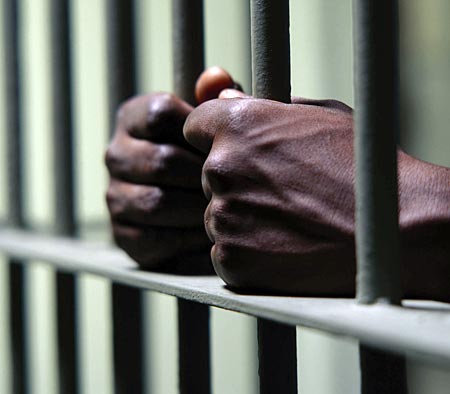
(Courtesy of spaulforrest.com)
Rebecca Boone, ASSOCIATED PRESS
(AP)—When Congress passed a law in 2003 aimed at ending sexual assault in U.S. prisons, jails and juvenile detention centers, survivors like Jan Lastocy were hopeful that it would help solve the long-ignored problem.
Lastocy and a coalition of inmate advocacy groups and evangelical groups had worked for years to convince policymakers and corrections officials that rape behind bars shouldn’t be accepted, even if the public had little sympathy for its victims.
“I felt vindicated because I had been fighting so hard, and for so long, to bring attention to this issue and get justice for myself and for all survivors,” said Lastocy, who was repeatedly raped by a guard while serving time for embezzlement.
Now, some advocates worry that a proposal to reduce the law’s financial penalties will severely damage it. The measure failed last fall, but its sponsor, Sen. John Cornyn, R-Texas, vows to re-introduce it in the new GOP-controlled Congress.
Cornyn said the funds include grants for worthy programs, such as ones that support rape and domestic violence victims. He said the law should be more narrowly tailored to affect money for prison construction, operations and administration.
The proposal has put some prison rape survivors on the opposite side of those who survived sexual assault on the outside.
Nearly two dozen organizations, including prison industry groups and the Rape, Abuse and Incest National Network, have lauded Cornyn’s efforts, and say they trust prison officials to work vigorously at reducing rapes even without financial penalties.
“There’s no desire to do anything less than help victims,” said Rebecca O’Connor, RAINN’s vice president of public policy, adding that her organization just wants to make sure the law is applied in a way that doesn’t harm existing programs.
Advocates say the measure is the latest sign that the law’s implementation is too slow.
Federal statistics show about 216,000 adult and juvenile inmates are sexually assaulted each year, compared to 238,000 people living outside of correction facilities in the U.S.
Allen Beck, a statistician with the U.S. Department of Justice who researches the incidence of prison rape, said the biggest indicator of prisoner sexual assault is the culture of the facility, not the number of inmates or security cameras.
“Really it’s about how the facilities are managed, in terms of institutional culture,” Beck said.
When Lastocy stepped into Camp Branch, a minimum security women’s prison in Michigan, in 1998, she was facing as much as 10 years in prison for attempting to embezzle several thousand dollars from her employer, ABO Security.
As she adjusted to the discovery after her arrest that she had bipolar disorder, rape quickly became a fact of life.
Like many prison rape survivors, she feared that the guard who raped her could extend her prison stay by writing her false tickets for breaking prison rules if she reported him. He was later convicted of sexually assaulting several inmates, including Lastocy.
When she learned that she may have been his first victim, she felt guilt for not speaking up, said Lastocy, who now is an advocate for prison rape survivors.
The passage of the law, however, gave her hope that there would be fewer victims. But like other advocates, she’s been frustrated by the pace of change at correctional institutions throughout the country.
So far, seven states have opted out of the law, and stand to lose 5 percent in federal money that goes toward prisons. Two states — New Jersey and New Hampshire — say they are in compliance, and 41 others are working to meet the law’s requirements.
The law’s backers say Cornyn’s proposal would essentially gut the penalty because little, if any, federal grant money actually goes toward prison administration, operations and constructions. Those are funded by state and local governments.
To take the provision out “would totally obliterate the incentive states have to comply with” the law, said U.S. District Judge Reggie B. Walton, the chairman of the former National Prison Rape Elimination Commission.
The commission developed the law’s requirements, which range from increased training of staff about sex abuse policies to screening new inmates to determine if they’re likely to commit sexual assault or to be assaulted.
In Texas, which has six facilities among those nationally with the highest prevalence rate of sexual assaults, officials used nearly $2.6 million in federal money to install extra cameras in some facilities and develop a sexual assault awareness curriculum.
The state has since opted out, and faces an $800,000 loss in federal funding.
Jason Clark, a corrections spokesman, said a requirement to prevent guards from seeing inmates of the opposite sex naked in the showers or during strip searches wouldn’t work because 40 percent of the correctional officer workforce is female.
Many states have trained staffers and educated inmates about how to spot and report sexual assault.
Addressing sexual assault and caring for victims “decreases the likelihood of an offender becoming a victim again and committing a violent act once he or she returns to the community,” said Norah West, Washington state’s corrections spokeswoman.
For Lastocy, the trauma didn’t end when she left prison. She still has nightmares, 15 years later. “As much as I despise him, I don’t even wish my rapist would be raped while he is in prison, because nobody deserves it,” she said.
Copyright 2015 The Associated Press. All rights reserved. This material may not be published, broadcast, rewritten or redistributed.
###





Activism
Oakland Post: Week of April 8 – 14, 2026
The printed Weekly Edition of the Oakland Post: Week of April 8 – 14, 2026


To enlarge your view of this issue, use the slider, magnifying glass icon or full page icon in the lower right corner of the browser window.

Activism
Oakland Post: Week of April 1 – 7, 2026
The printed Weekly Edition of the Oakland Post: Week of April 1 – 7, 2026

To enlarge your view of this issue, use the slider, magnifying glass icon or full page icon in the lower right corner of the browser window.
Activism
Oakland Post: Week of March 18 – 24, 2026
The printed Weekly Edition of the Oakland Post: Week of March 18 – 24, 2026

To enlarge your view of this issue, use the slider, magnifying glass icon or full page icon in the lower right corner of the browser window.


WORK FROM HOME
Home-based business with potential monthly income of $10K+ per month. A proven training system and website provided to maximize business effectiveness. Perfect job to earn side and primary income. Contact Lynne for more details: Lynne4npusa@gmail.com 800-334-0540


Oakland Post: Week of April 8 – 14, 2026

Oakland Post: Week of April 1 – 7, 2026

Black Artists in America, Installation Three Wraps at the Dixon Gallery and Gardens

Grief, Advocacy, and Education: A Counselor Reflects on Black Maternal Health

Future of Florida’s Black History Museum in Limbo

New Research Shows the Many Benefits of Early Learning

South Hampton K-8 Students Among Top 10 Finalists for Samsung’s ‘Solve for Tomorrow’ Competition

Cuba: No Negotiation with US on the President or Political System

Brooklyn Academy of Music Names Jamaican-Born Tamara McCaw as President

Trinidad & Tobego – U.S. Launches WhatsApp Channel for American Citizens in the Country

Oakland Post: Week of March 18 – 24, 2026

AI Innovation vs. Ethics and Environmental Impact

AI, Web3, and Digital Reparations

What If You Owned Your AI Agent?

Season 7, Episode 3 – January Reporter’s Roundtable 📱

Reflecting on Black History Milestones in Birmingham AL

Oakland Post: Week of February 25 – March 3, 2026

Oakland Post: Week of March 4 – 10, 2026

PRESS ROOM: NBA Hall of Fame Nominee Terry Cummings Joins 100 Black Men of DeKalb County to Launch Victory & Values Initiative
Oakland Post: Week of March 18 – 24, 2026

Trump’s MAGA Allies are Creating Executive Order Plan to Steal the 2026 Midterms

Oakland Post: Week of March 11 -17, 2026

Poll Shows Support for Policies That Help Families Afford Child Care

Financial Wellness and Mental Health: Managing Money Stress in College
New Research Shows the Many Benefits of Early Learning

Woman’s Search for Family’s Roots Leads to Ancestor John T. Ward – A Successful Entrepreneur and Conductor on the Underground Railroad
Brooklyn Academy of Music Names Jamaican-Born Tamara McCaw as President
Grief, Advocacy, and Education: A Counselor Reflects on Black Maternal Health
Future of Florida’s Black History Museum in Limbo

COMMENTARY: Women of Color Shape Our Past and Future

Hyundai Ioniq 5 Parking, Safety, and 360 View #shorts

2025 Ioniq 5 New Wiper & Powerful Performance! #shorts

Electric SUV Range: Is 259 Miles Enough? #shorts

EV Charging: How Fast Can You Charge an Electric Vehicle? #shorts

Biometric Cooling… Messaging Seats…Come on! 2025 Infiniti QX80 Autograph 4WD

Charged Up: Witness the Magic of a Fully Electric Car! #shorts

Range Rover Sport PHEV Included…: See What’s Inside This Luxury SUV! #shorts

Invisible Hood View: Perfect Parking with X-Ray Vision! #shorts

AI Is Reshaping Black Healthcare: Promise, Peril, and the Push for Improved Results in California

ESSAY: Technology and Medicine, a Primary Care Point of View

Sanctuary Cities

The RESISTANCE – FREEDOM NOW

STATE OF THE PEOPLE: Freddie

ECONOMIC BOYCOTT DAY!!!!!

I told You So
-
 Activism3 weeks ago
Oakland Post: Week of March 18 – 24, 2026
-
 Activism4 weeks ago
Oakland Post: Week of March 11 -17, 2026
-
 Advice4 weeks ago
Financial Wellness and Mental Health: Managing Money Stress in College
-
 #NNPA BlackPress3 weeks ago
New Research Shows the Many Benefits of Early Learning
-
 #NNPA BlackPress3 weeks ago
Brooklyn Academy of Music Names Jamaican-Born Tamara McCaw as President
-
 #NNPA BlackPress3 weeks ago
Grief, Advocacy, and Education: A Counselor Reflects on Black Maternal Health
-
 #NNPA BlackPress3 weeks ago
Future of Florida’s Black History Museum in Limbo
-
 #NNPA BlackPress3 weeks ago
Black Artists in America, Installation Three Wraps at the Dixon Gallery and Gardens
