
Commentary
COMMENTARY: The Agony and Normalcy of Gun Violence in America
When it comes to gun violence in America, it’s go big or get ignored. No one cares about the single victim. Unless there’s some strange twist, it won’t get the kind of media coverage that results in public outrage, with hundreds of people in the streets demanding that politicians take action.

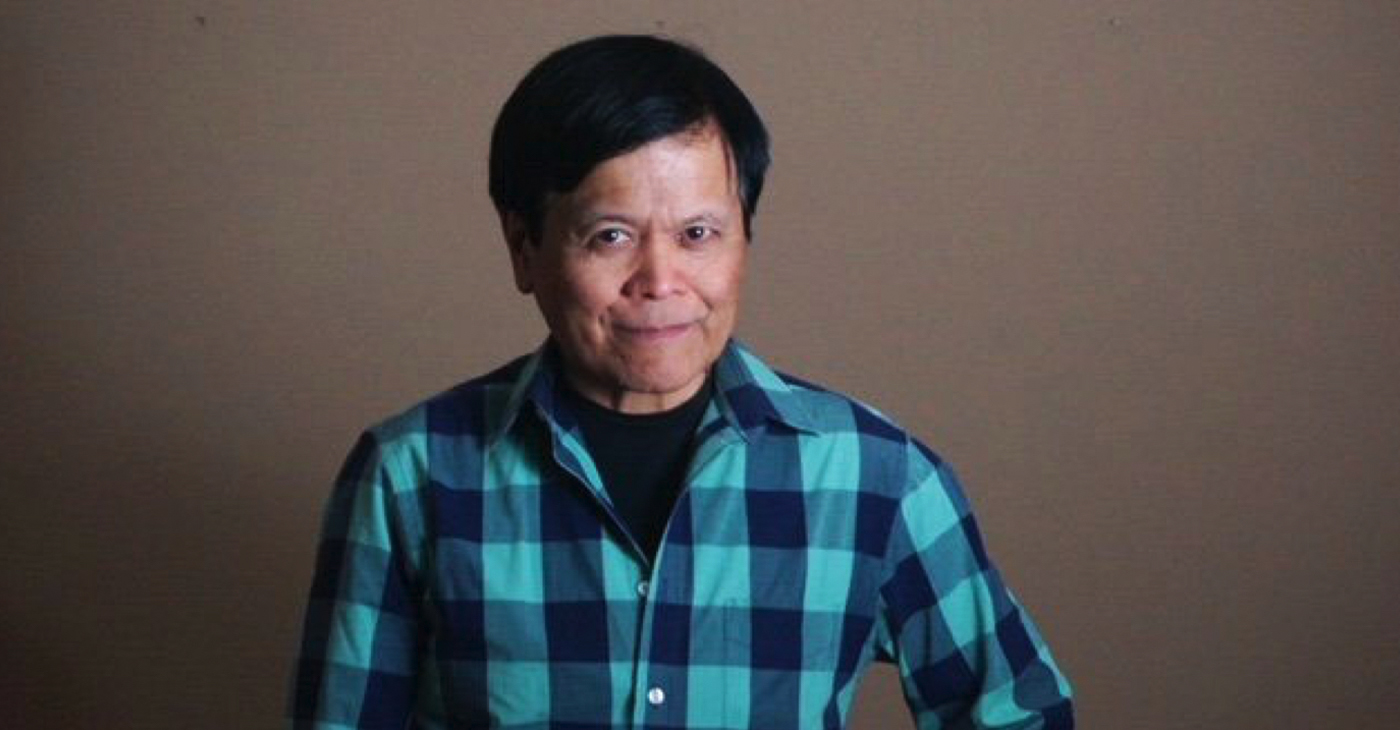
Emil Guillermo
When it comes to gun violence in America, it’s go big or get ignored.
No one cares about the single victim.
Unless there’s some strange twist, it won’t get the kind of media coverage that results in public outrage, with hundreds of people in the streets demanding that politicians take action.
We saw it recently in Tennessee.
And that’s why I want to tell you about the boy known to his mother as “Thai-Thai.”
Thai Khin was a young Asian American you never heard of unless you live in Stockton, California.
Unlike many teens in high school thinking about college and their future, there will be no tomorrow for Khin.
Not like another former Stockton resident who is now the mayor of Oakland.
No, Thai Khin is a 17-year-old with a GoFundMe page — to help his family pay for his funeral.
Khin was shot and killed on Wednesday, April 12 during school hours.
It wasn’t a school shooting. It was school-adjacent.
Khin wasn’t in class at César Chávez High School. He was in a nearby Unity Park playing basketball with a buddy.
That’s when someone tried to rob his friend of the gold necklace around his neck.
The buddy was pistol-whipped; Khin stepped in and tried to stop the fight.
The perp reacted by taking out a gun and putting a bullet into Khin, who died later at a local hospital.
“He had this joy for life. He was always smiling, always cracking jokes,” Jennifer Khin, Thai’s aunt, told the Stockton newspaper. “That’s what he did. If you were around Thai, you were smiling and you were laughing.”
But this was no joke. And now Thai Khin is part of America’s sad legacy.
Another one.
One is a bad number for a gun story. Because a single-victim incident is just a statistic in the Gun Violence Archive.
I reached out to Khin’s family, but I haven’t heard back. I still wanted to write about Khin because an Asian American dying from a gunshot wound shouldn’t be considered normal in America.
And because Khin’s kind of shooting death shouldn’t be greeted with relative silence.
When an Asian American teenager is shot and killed, we all should notice.
But last Monday on the week Khin died, America was already “gunned out” with the Louisville bank shooting, where five were killed.
America paid attention to that.
Yet, how many of the victims in Louisville can we recall a week later?
Or even the Nashville Covenant school shooting on March 27 that claimed three 9-year-olds and three adults in Tennessee?
For that matter, how many of the victims do we remember from the Uvalde school shooting in Texas last year?
Do you recall any of these victims?
There are either too many, or not enough. That’s America’s short attention span.
It appears that the media’s preference is to cover the mass shootings in America. They’re the newsworthy ones.
Single shootings happen so frequently now they are not considered newsworthy.
In other words, it’s what’s normal in America.
When Thai Khin died last week, the Gun Violence Archive, which usually shows deaths within the last 72 hours, listed Khin as the 76th death between April 11 and April 14. I counted 395 people injured. And 104 deaths.
If it were 104 gun deaths in a single event, maybe we’d all finally take notice and force legislators to take action.
But spread the gun deaths out over 72 hours and 104 deaths sound few alarms in America.
Most of the deaths also don’t appear to be caused by a high-powered AR-15 style weapon.
Many were simple handguns.
And that’s why banning assault weapons shouldn’t be the sole remedy as we look for answers. We should be focusing on America’s love of violence.
A gun is just a tool.
We need to talk more about ending violence, period.
How do we do that as a society? Fund public meditation classes? Or public mediation? Teach people non-violent communication skills? And not just for adults but for teens like Thai Khin?
Those paths may be more fruitful than waiting for politicians to defeat the gun lobby.
Consider how this past weekend was the 16th anniversary of the Virginia Tech assault where 32 people were murdered — 27 students and five faculty members in 2007. The Asian American perp also died.
Since then, there has been some legislative action, including background checks, but does any of that really get to the root cause? It impacts the tool. It doesn’t solve the problem. Focusing merely on weapons alone keeps us from the peace we seek as a society.
What if we bypassed the gun lobby and tried to figure out what happens in our personal interactions before a gun, or any weapon, becomes the “go to” answer.
Until we can do that, we won’t solve a thing.
As I write, there were more shootings reported over the past weekend.
The mass shooting was in Dadeville, Ala., where four young people were gunned down at a Sweet 16 party. Corbin Dahmontrey Holston, 23; Marsiah Emmanuel Collins, 19; Philstavious Dowdell, 18; Shaunkivia (KeKe) Nicole Smith, 17. There were 32 others injured. The perp is still on the loose.
In Kansas City, Ralph Yarl, 16, is still alive. But when he rang the doorbell of the wrong house looking for his siblings, why did 84-year-old resident Andrew Lester reach for a .32 caliber handgun? Why didn’t he offer a welcoming hand and say hello?
Lester, white, said he saw Yarl, a Black boy, and was in fear for his life.
How do we fix the implicit bias on Lester’s part?
That’s where our efforts should be.
And it’s not just race. A young white female, Kaylin Gillis, 20, in rural upstate New York pulled into a driveway by mistake. As she left, the white resident Kevin Monahan fired two shots, one killing Gillis. Why was the gun his first and not last resort?
In those cases, at least the perps have been apprehended.
In Thai Khin’s case, the perp got away and is still on the loose.
Justice?
Nobody is even thinking about justice for Thai Khin.
Visit the GoFundMe page for Thai Khin: https://www.gofundme.com/f/thai-khin
NOTE: I will talk about this column and other matters on “Emil Amok’s Takeout,” my micro-talk show. Live @2p Pacific. Livestream on Facebook; my YouTube channel; and Twitter. Catch the recordings on www.amok.com.
Emil Guillermo is an independent journalist/commentator.










Activism
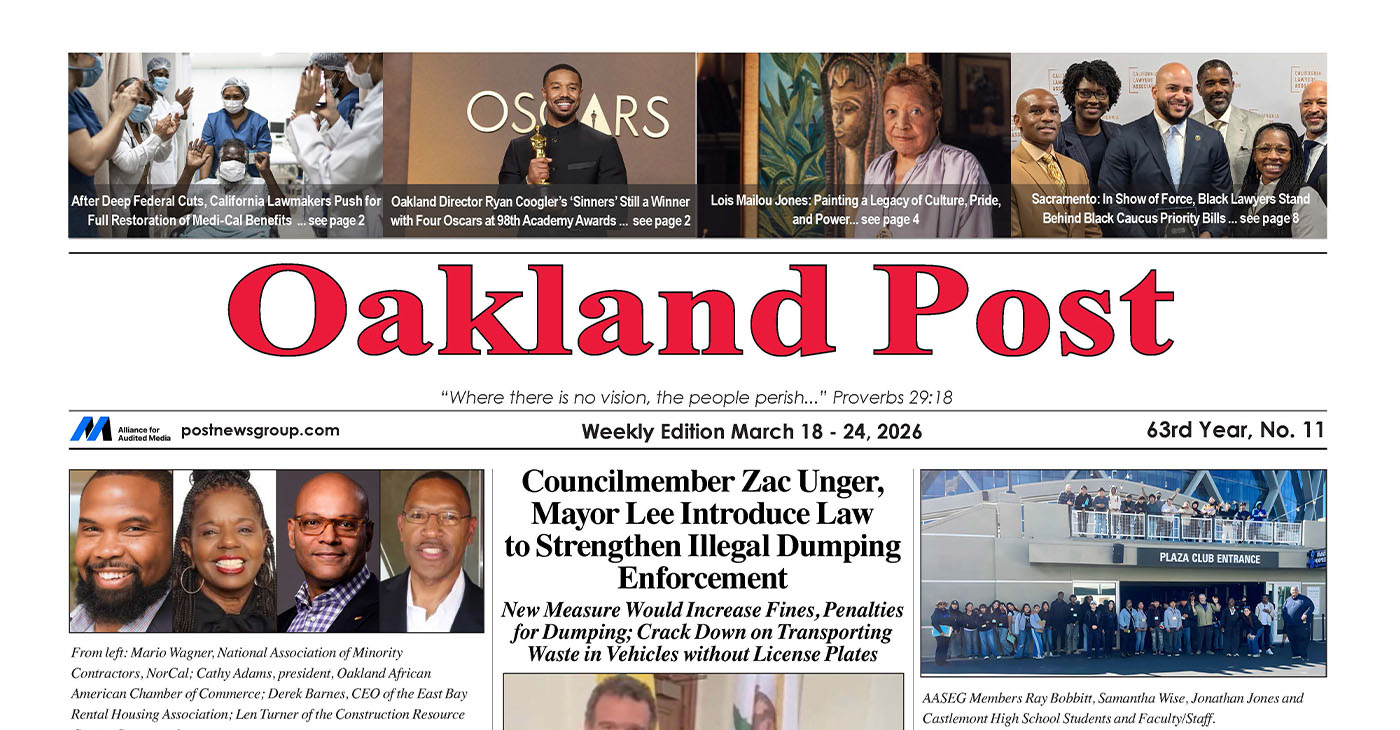
Oakland Post: Week of March 18 – 24, 2026
The printed Weekly Edition of the Oakland Post: Week of March 18 – 24, 2026
To enlarge your view of this issue, use the slider, magnifying glass icon or full page icon in the lower right corner of the browser window.
Advice
Financial Wellness and Mental Health: Managing Money Stress in College
While everyone’s financial situation is unique, several common sources of stress have the potential to strain your financial health. These include financial and economic uncertainty, existing debts, unexpected expenses, and mental or physical health changes. Financial stress may differ from situation to situation, but understanding the factors contributing to yours may help you begin to craft a plan for your unique circumstances.

Sponsored by JPMorganChase
As a college student, managing financial responsibilities can be stressful.
If you’ve found yourself staying up late thinking about your finances or just feeling anxious overall about your financial future, you’re not alone. In one survey, 78% of college students who reported financial stress had negative impacts on their mental health, and 59% considered dropping out. While finances can impact overall stress, taking steps to manage your finances can support your mental, emotional and physical well-being.
When it comes to money, the sources of stress may look different for each student, but identifying the underlying causes and setting goals accordingly may help you feel more confident about your financial future.
Consider these strategies to help improve your financial wellness and reduce stress.
Understand what causes financial stress
While everyone’s financial situation is unique, several common sources of stress have the potential to strain your financial health. These include financial and economic uncertainty, existing debts, unexpected expenses, and mental or physical health changes. Financial stress may differ from situation to situation, but understanding the factors contributing to yours may help you begin to craft a plan for your unique circumstances.
2. Determine your financial priorities
Start by reflecting on your financial priorities. For students this often includes paying for school or paying off student loans, studying abroad, saving for spring break, building an emergency fund, paying down credit card debt or buying a car. Name the milestones that are most important to you, and plan accordingly.
3. Create a plan and stick to it

While setting actionable goals starts you on the journey to better financial health, it’s essential to craft a plan to follow through. Identifying and committing to a savings plan may give you a greater sense of control over your finances, which may help reduce your stress. Creating and sticking to a budget allows you to better track where your money is going so you may spend less and save more.
4. Pay down debt
Many students have some form of debt and want to make progress toward reducing their debt obligations. One option is the debt avalanche method, which focuses on paying off your debt with the highest interest rate first, then moving on to the debt with the next-highest interest rate. Another is the debt snowball method, which builds momentum by paying off your smallest debt balance, and then working your way up to the largest amounts.
5. Build your financial resilience
Some financial stress may be inevitable, but building financial resilience may allow you to overcome obstacles more easily. The more you learn about managing your money, for instance, the more prepared you’ll feel if the unexpected happens. Growing your emergency savings also may increase resilience since you’ll be more financially prepared to cover unexpected expenses or pay your living expenses.
6. Seek help and support
Many colleges have resources to help students experiencing financial stress, like financial literacy courses or funds that provide some assistance for students in need. Talk to your admissions counselor or advisor about your concerns, and they can direct you to sources of support. Your school’s counseling center can also be a great resource for mental health assistance if you’re struggling with financial stress.
The bottom line
Financial stress can affect college students’ health and wellbeing, but it doesn’t have to derail your dreams. Setting smart financial goals and developing simple plans to achieve them may help ease your stress. Revisit and adjust your plan as needed to ensure it continues to work for you, and seek additional support on campus as needed to help keep you on track.
JPMorgan Chase Bank, N.A. Member FDIC
© 2026 JPMorgan Chase & Co.
Activism
Oakland Post: Week of March 11 -17, 2026
The printed Weekly Edition of the Oakland Post: Week of March 11 – 17, 2026
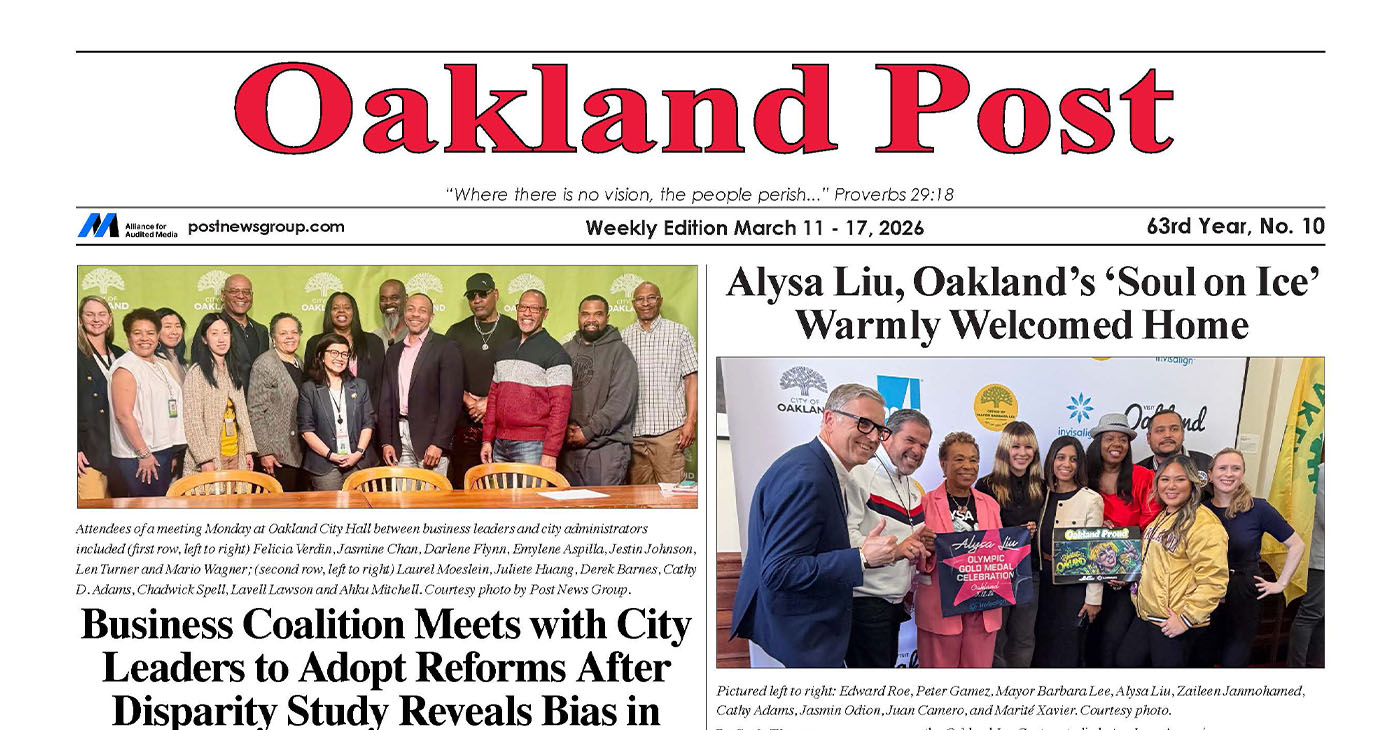
To enlarge your view of this issue, use the slider, magnifying glass icon or full page icon in the lower right corner of the browser window.

WORK FROM HOME
Home-based business with potential monthly income of $10K+ per month. A proven training system and website provided to maximize business effectiveness. Perfect job to earn side and primary income. Contact Lynne for more details: Lynne4npusa@gmail.com 800-334-0540


Black Artists in America, Installation Three Wraps at the Dixon Gallery and Gardens

Grief, Advocacy, and Education: A Counselor Reflects on Black Maternal Health

Future of Florida’s Black History Museum in Limbo

New Research Shows the Many Benefits of Early Learning

South Hampton K-8 Students Among Top 10 Finalists for Samsung’s ‘Solve for Tomorrow’ Competition

Cuba: No Negotiation with US on the President or Political System

Brooklyn Academy of Music Names Jamaican-Born Tamara McCaw as President

Trinidad & Tobego – U.S. Launches WhatsApp Channel for American Citizens in the Country

Oakland Post: Week of March 18 – 24, 2026

AI Innovation vs. Ethics and Environmental Impact

AI, Web3, and Digital Reparations

What If You Owned Your AI Agent?

Season 7, Episode 3 – January Reporter’s Roundtable 📱

Season 7, Episode 3 – January Reporter’s Roundtable

AI, Media, and Power | Part 2, Real-World Impacts and Tradeoffs

Reflecting on Black History Milestones in Birmingham AL

CITY OF SAN LEANDRO STATE OF CALIFORNIA PUBLIC WORKS DEPARTMENT ENGINEERING DIVISION NOTICE TO BIDDERS FOR ANNUAL STREET OVERLAY/REHABILITATION 2019-21 – PHASE III

Oakland Post: Week of February 18 – 24, 2026

Oakland Post: Week of February 25 – March 3, 2026

PRESS ROOM: NBA Hall of Fame Nominee Terry Cummings Joins 100 Black Men of DeKalb County to Launch Victory & Values Initiative

Trump’s MAGA Allies are Creating Executive Order Plan to Steal the 2026 Midterms

Oakland Post: Week of March 4 – 10, 2026

Chase Oakland Community Center Hosts Alley-Oop Accelerator Building Community and Opportunity for Bay Area Entrepreneurs

U.S. manufacturing rebounds – how foundry services are adapting to rising demand

Poll Shows Support for Policies That Help Families Afford Child Care

OP-ED: One Hundred Years of Black Workers Telling the Truth

Advancements in solar technology that are changing the way we power the world

Woman’s Search for Family’s Roots Leads to Ancestor John T. Ward – A Successful Entrepreneur and Conductor on the Underground Railroad

PRESS ROOM: Civil Rights TV Launches in Selma as the World’s First 24/7 Civil Rights Television Network

Oakland Post: Week of March 11 -17, 2026

Hyundai Ioniq 5 Parking, Safety, and 360 View #shorts

2025 Ioniq 5 New Wiper & Powerful Performance! #shorts

Electric SUV Range: Is 259 Miles Enough? #shorts

EV Charging: How Fast Can You Charge an Electric Vehicle? #shorts

Biometric Cooling… Messaging Seats…Come on! 2025 Infiniti QX80 Autograph 4WD

Charged Up: Witness the Magic of a Fully Electric Car! #shorts

Range Rover Sport PHEV Included…: See What’s Inside This Luxury SUV! #shorts

Invisible Hood View: Perfect Parking with X-Ray Vision! #shorts

AI Is Reshaping Black Healthcare: Promise, Peril, and the Push for Improved Results in California

ESSAY: Technology and Medicine, a Primary Care Point of View

Sanctuary Cities

The RESISTANCE – FREEDOM NOW

STATE OF THE PEOPLE: Freddie

ECONOMIC BOYCOTT DAY!!!!!

I told You So
-
 Activism4 weeks ago
Oakland Post: Week of March 4 – 10, 2026
-
 #NNPA BlackPress4 weeks ago
Woman’s Search for Family’s Roots Leads to Ancestor John T. Ward – A Successful Entrepreneur and Conductor on the Underground Railroad
-
 Activism3 weeks ago
Oakland Post: Week of March 11 -17, 2026
-

 #NNPA BlackPress4 weeks ago
COMMENTARY: Women of Color Shape Our Past and Future
-

 #NNPA BlackPress4 weeks ago
OP-ED: NNPA Launches 2026 “Leadership Matters” Video Series
-

 #NNPA BlackPress4 weeks ago
Advocates Raise Alarm Over ICE Operation, MOU and Detention Risks in Baltimore County
-

 #NNPA BlackPress4 weeks ago
Pete Buttigieg to Join Mayor Randall Woodfin for Community Town Hall in Birmingham
-

 Advice3 weeks ago
Financial Wellness and Mental Health: Managing Money Stress in College
