
Black History
COMMENATARY: Blackfolk, Is It Past Time for an Exit Strategy?
JACKSONVILLE FREE PRESS — With federal and state governments aligning with what the article describes as an “anti-Black program,” the article questions the efficacy of traditional civil rights strategies.

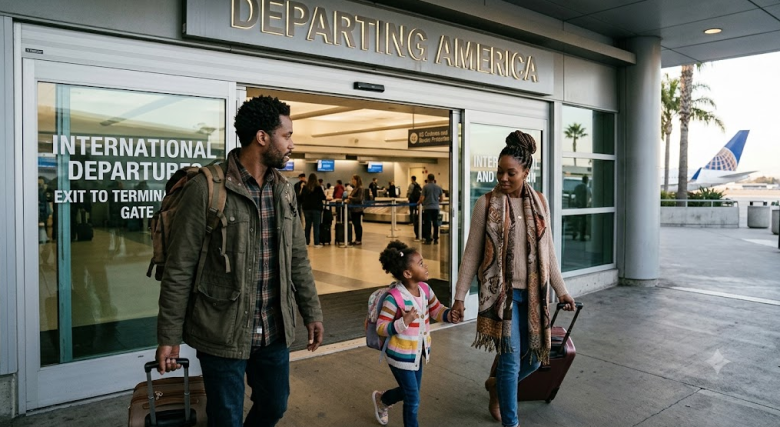
We have arrived at a terrifyingly familiar crossroads. Over the last year and a half, the current administration has executed its Project 2025 playbook to a tee, systematically dismantling the civil rights progress and hard-won gains of the past 60-plus years.
With every branch of the federal government aligned with this anti-Black program—and a majority of state governors and state supreme courts nodding in lockstep—the illusion of permanent legal protection has shattered.
The worst thing Blackfolk can do right now is assume that everything will “automagically” improve. History is screaming a different story. If we look closely at the repeating loops of the American experiment, we must ask an uncomfortable, urgent question: Is it past time for an exit strategy?
Historically, every single time Black people have fought, bled, and successfully forced this country to pivot away from its white supremacist foundations, a radical, violent political pushback has followed.
- The Reconstruction Precedent: After the abolition of slavery and the brief radiance of Reconstruction, the white backlash plunged Black America into Jim Crow—a violent rollback of rights that lasted roughly a century.
- The Modern Regression: The monumental gains of the Civil Rights and Black Power movements are being erased right in front of our eyes. In truth, the efforts to dismantle these wins didn’t start recently; they began while the ink on the Voting Rights Act was still wet.
Historians and social commentators today predict that it will take anywhere from 60 to 100 years for Black people living today to fully recover the legal protections, economic ground, and civil rights being stolen from us right now. That means the bitter, unvarnished truth is that most of us living today will not see better days in our lifetime.
If that’s true, why are we still organizing, marching, and voting with the exact same playbook and goals as before? We already know how that story ends: Anti-Black forces will always meet our appeals for justice with violent, economic, and political rollbacks. We need a new approach.
A 21st-century Underground Railroad
For months, national thought leader Lurie Daniel Favors has implored Black people and organizations to stop reacting defensively and start creating the framework for a “21st-century Underground Railroad.” This wouldn’t be a literal trail through the woods, but a sophisticated, underground network designed to allow Black people to escape systemic oppression, pool resources, and find genuine freedom.
But what does a modern exit strategy even look like? The options generally split into two distinct paths: The physical exit and the systemic exit.
“If hereditary bondmen would be free, they must themselves strike the blow… use every means—moral, intellectual, and physical—that promises success,” said the illustrious and under-appreciated Black liberation theologian Henry Highland Garnet, in his Address to the Slaves of the United States, given during the National Negro Convention of 1843. Garnet called for open rebellion against slavery. His idea for an “exit strategy” failed by one vote of being endorsed by the convention.
Option 1: The expatriate route (physical exit)
For some, the answer lies in leaving the United States entirely. This is not a new impulse. In the late 19th and early 20th centuries, Black intellectuals and colonization societies led by figures like Alexander Crummell, Garnet, and Martin Delany argued that Black humanity, creativity, and intellect could never fully flourish on a soil so deeply poisoned by anti-Blackness.
Crummell actively championed emigration, believing that building up self-determining communities elsewhere was a far nobler use of Black genius than begging for citizenship from a nation that despised them.
In 2026, the expatriate route means looking toward West African countries (such as Ghana, with its continued “Year of Return” initiatives), parts of the Caribbean, or European hubs that offer a lower baseline of anti-Blackness. The goal is to relocate to societies that welcome our humanity rather than criminalize it.
But how many of us have the economic capacity to make such a move? On the flip side, how many of us can afford to stay in the U.S. with anti-Blackness rising exponentially daily?
Option 2: Economic secession (systemic exit)
For others, the best exit strategy isn’t physical relocation, but a deliberate exit from America’s economic and social systems. This means creating our own self-reliant, self-determining networks right here. It looks like building independent food supply chains, autonomous security apparatuses, private educational institutions, and closed-loop economic systems. It’s the practice of being in America without being dependent on it. Multiple Black Power Movement members back in the 1960s and 70s called that creating a “nation within a nation.”
The danger of assuming “It can’t happen here”
This is not a message of gloom and doom; it is an urgent wake-up call. Global history is littered with stories of “othered” groups whose rights were slowly, methodically eroded by the dominant society. In almost every instance—from pre-WWII Europe to various global genocides—the erosion of rights started slowly, and then accelerated so fast that it appeared to come out of nowhere.
In every single one of those historical tragedies, there was always a small, prophetic minority calling for an exit strategy. And in every instance, the vast majority of the oppressed group pushed back, insisting that conditions could never get that bad.
Until they did.
Activating the exit
We don’t need a singular, definitive answer today, but we absolutely must begin organizing around the possibilities. Blackfolk need to take concrete steps immediately:
- Assess and Resource: Black organizations and individuals must audit their assets, identifying who has the means, dual citizenships, or remote capabilities to pivot.
- Build the Infrastructure: We must fund the infrastructure for both paths—supporting those who choose to build autonomous zones of survival in the States, and establishing legal and financial pipelines for those who choose to leave.
- Normalize the Conversation: We must strip away the stigma of “giving up” on America. Leaving a burning house isn’t cowardice; it’s intelligence.
We can no longer afford the luxury of hope without a contingency plan. Whether we choose to exit geographically or economically, we must build the backdoor now. History has shown us the script—it’s time we finally change our ending.
Based on reporting by Jacksonville Free Press.












Black History
IN MEMORIAM: Claude T. Everhart, San Francisco’s First Black Deputy Mayor, Dies at 73
Claude T. Everhart, the first African American deputy mayor of San Francisco and a dedicated community advocate for five decades, passed away on October 27 at the age of 73. A former member of the Black Panther Party, Everhart rose from community organizing to serve as chief of staff for Mayor Art Agnos, where he helped lead the city through the aftermath of the 1989 Loma Prieta earthquake. His career spanned significant roles in youth development and municipal policy. Visit BlackPressUSA.com to read more.
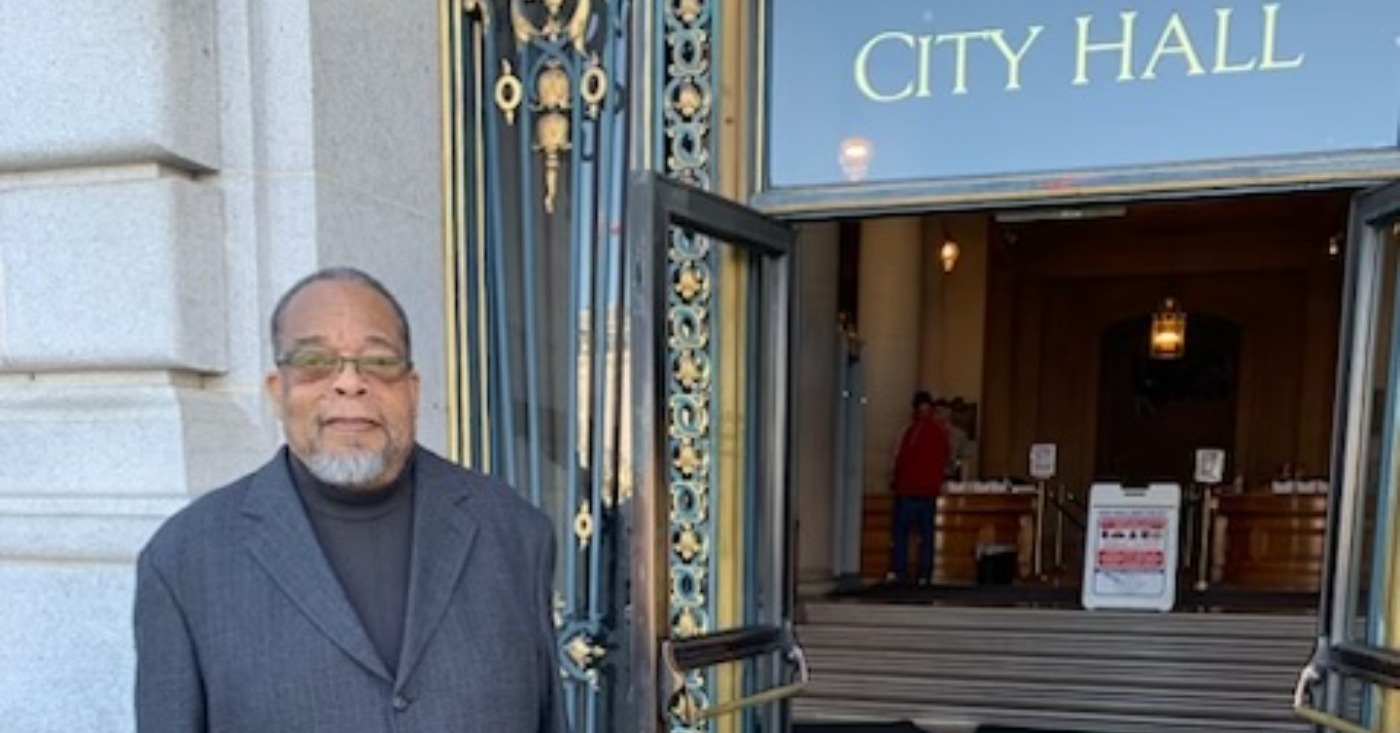

Claude T. Everhart, first African American deputy mayor and chief of staff to former San Francisco Mayor Art Agnos who served working families and communities of color for 50 years, died on Oct 27 in Oakland. He was 73.
“Claude Everhart was… He was the engine room of our administration’s most significant efforts to improve the lives of our city’s most underserved populations San Francisco has lost a true champion of the people, and I have lost a very dear friend and a trusted partner,” Agnos said in a statement.
Born in San Francisco in 1952, Everhart graduated from Lowell High in ’70. As a student, he was involved in the Black Panther Party, participating in various demonstrations, the San Francisco State College strike, and the Party’s Free Breakfast Program.
As a teen, he led the Oceanview–Merced–Ingleside Community Organization, created summer jobs for youth, and opened a group home as an alternative to incarceration.
In 1974, he became the first executive director of Young Community Developers (YCD) The program was founded by a group of young Black activists who pushed City Hall for funding to train residents for jobs at the Hunters Point Naval Shipyard.

More than 50 years later, YCD is still providing job readiness training, reentry services for formerly incarcerated adults, and youth programming, and Everhart remained on the board into recent years.
Everhart joined Agnos’ staff in 1976, became his chief of staff and then executive deputy mayor when Agnos was elected mayor in 1988.
In that role, he was part of the leadership team that led San Francisco through the October 17, 1989, Loma Prieta earthquake (the city’s worst since 1906). The administration rebuilt the damaged infrastructure and decided to take down the quake-damaged Embarcadero Freeway, thereby opening the waterfront. They would not move the unhoused people displaced from the damaged shelters until new housing was available, and they created “Beyond Shelter,” which became a nationally recognized network of multi-service centers for the unhoused.
He took a few unpopular stands on behalf of the disadvantaged. He fought against the homeporting of the USS Missouri at Hunters Point on grounds of gentrification, demanded a full clean-up of the yard, and pushed for investigations and redress in the wake of allegations of racial discrimination in both the Police and Fire Departments.
He was instrumental in setting up the Mayor’s Office of Youth and Children’s Services, helped to divest the city’s retirement system from South Africa, brought a supermarket to Hunters Point, and worked to increase city contracting with minority-owned businesses.
He later served as a VP at Waste Management of Alameda County and as a political consultant to several people, including former Oakland Mayor Elihu Harris and San Francisco Assessor Doris Ward.
His legacy lives on through Jelani House (the family recovery and counseling program named for his late son), of which he was a board member and at the Ella Hill Hutch Community Center in the Fillmore, a long-standing youth and community center with a mural on the building in his honor.
Everhart is predeceased by his son Jelani. He is survived by his wife of 51 years, Sandra, and daughter, Maisha.
A memorial service will be held on Nov 23 at 11 a.m. at Jones Memorial UMC, 1975 Post St., San Francisco, CA 94115. In lieu of flowers, the family asks that donations be made to Young Community Developers and Jelani House.
Darolyn Davis is the president and CEO of D&A Communications.

Black History
‘We’re Committed to Delivering the Change that the American People Deserve’
House Speaker-designate Hakeem Jeffries recently outlined a legislative vision for the 120th Congress, emphasizing a commitment to affordability and government accountability. As the first Black congressman set to take up the Speaker’s gavel, Jeffries appeared alongside historic leadership selections Katherine Clark and Pete Aguilar to address the economic struggles facing American families. The Democratic nominee pledged to combat rising costs for groceries, housing, and healthcare while promising to address systemic corruption. Jeffries further detailed his strategy for representing diverse communities across the nation. Read more.
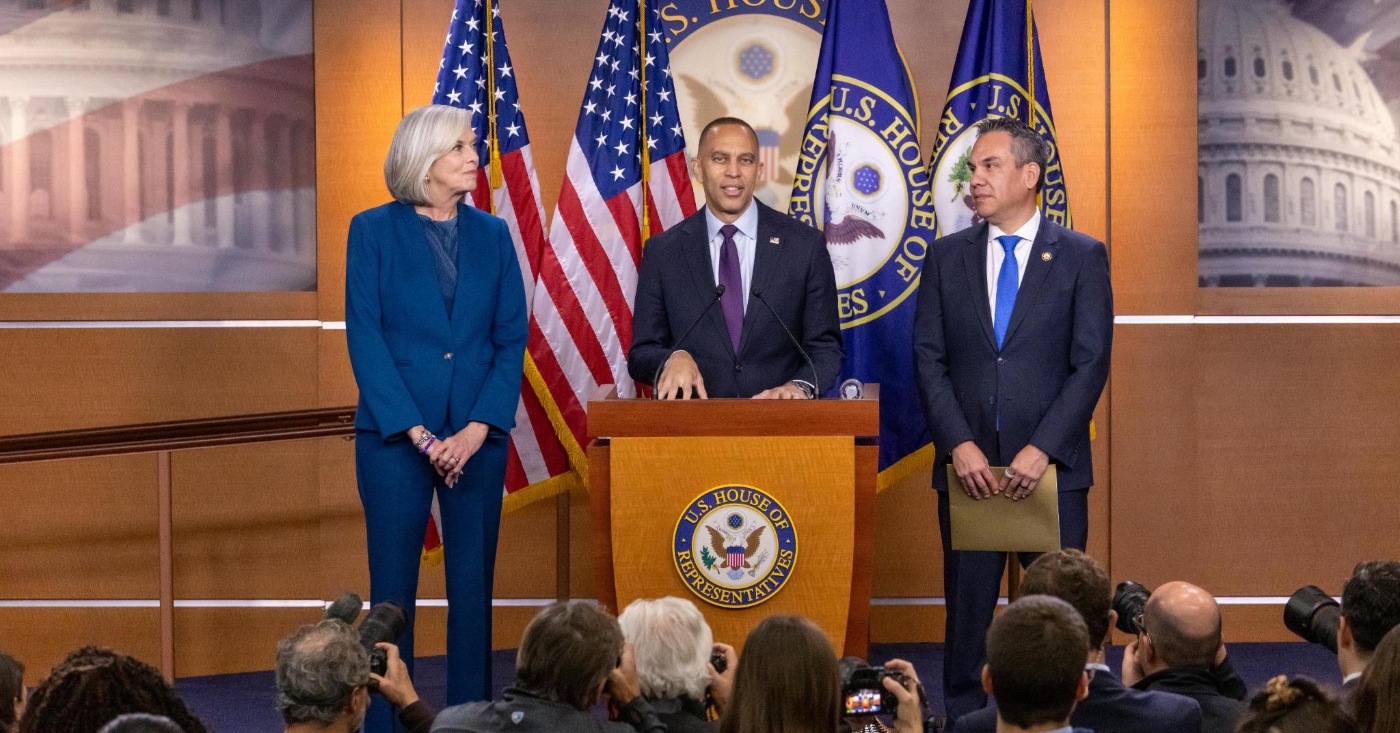
Hakeem Jeffries to become the first Black congressman to take up the Speaker’s gavel
House Speaker-designate Hakeem Jeffries held a press conference where he emphasized that House Democrats are committed to delivering on their vision of affordability and accountability for the American people in the 120th Congress.
His remarks are shared below.
“It’s a high honor and a distinct privilege to stand before the American people today as the Democratic nominee to be the next Speaker of the United States House of Representatives. It’s a particular honor to stand with two amazing leaders, patriots, colleagues and friends. Katherine Clark, the Democratic Leader, the Majority Leader in the 120th Congress, a historic elevation, and Pete Aguilar, the next Majority Whip of the 120th Congress, also a historic elevation.
“We collectively know as House Democrats that life is way too expensive here in the United States of America. There are far too many people in this country who are working hard, they’re playing by the rules, but they can’t thrive and they can barely survive. That’s not acceptable here in this great country, the wealthiest country in the history of the world. We know the American people are struggling. We know millions of people are drowning in this failed Republican economy, and House Democrats are committed to turning things around.
“Our message to the American people who are struggling in this failed economy is a simple one. We hear you. We see you. We feel you. And House Democrats are committed to making life better for you.

We’re going to fight to make healthcare affordable for every single American. And we’re going to fight to make sure that, in the face of the unprecedented corruption, chaos and cruelty visited upon the American people, that House Democrats will hold the crooks accountable, not for partisan reasons, but for patriotic ones, because the American people deserve better.
The 120th Congress is going to be the most diverse in America’s history. And we know that what brings people together are the challenges that Americans of every walk of life are experiencing. Our commitment is that we’re going to fight hard to make life better for everyone.
We’re going to fight for small-town America. We’re going to fight for urban America. We’re going to fight for rural America. We’re going to fight for the heartland of America. We’re going to fight for Black and brown communities all across America.
The people of this country are demanding bold, dramatic and transformational change. The status quo is unacceptable. And we’re committed to delivering, in a meaningful way, the type of change that the American people deserve so that everyone in this country can live an affordable life, a comfortable life and a good life.
U.S. Rep. Hakeem Jeffries’ media relations office is the source of this report.


To enlarge your view of this issue, use the slider, magnifying glass icon or full page icon in the lower right corner of the browser window.




Native American Health Center Connects 140 Community Members to Career Opportunities During Native American Heritage Month

Oakland Chamber of Commerce Faces $42,000 Ethics Fine for Campaign Violation

Attorney General Bonta Serves Investigative Subpoena on Nvidia

A Record 216 Firearms Collected at East Oakland Gun Buy-Back Event

City Council Hearing Shines a Light on Failures of City’s Prompt Payment Policy

IN MEMORIAM: Claude T. Everhart, San Francisco’s First Black Deputy Mayor, Dies at 73

UC Doctors, Nurses and Community Rally to Demand ICE Out of UC Hospitals

Hypertension and Heart Disease: Doctors, Advocates and Patients Are Tackling the Leading Cause of Death for Black Californians

Marin City Is Especially Vulnerable to El Niño High Tides, Strong Winds, Flooding and Power Outages

‘We’re Committed to Delivering the Change that the American People Deserve’

Staying Ready: What Every Californian Should Know About Preparing for El Niño

Oakland Post: Week of November 18 – 24, 2026

Oakland Post: Week of November 11 -17, 2026

Alameda County Supervisor Miley to Propose Illegal Dumping Ordinance

Oakland City Council Extends AI Data Center Moratorium for 10 Months.

COMMENTARY: Valarie Bachelor and Jennifer Brouhard are Excellent School Board Members and Deserve to Be Reelected

OUSD Receives State Review of District Finances; Outlines Progress Since January

HISTORY MADE: Keisha Lance Bottoms Becomes First Black Woman Elected Governor in American History

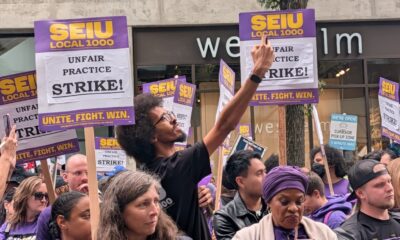
SEIU Local 1000 and State of California Will Continue to Negotiate New Labor Contract

Golden State Valkyries Become Bay Area Legends Winning WNBA Championship on Halloween Night

Fate of Bay Area Public Transit Hinges on Regional Transit Measure

COMMENTARY: Your California Living Trust Could Be Next: When Evidence Isn’t Enough

Chase Launches Fraud & Scam Prevention Month

Mayor Barbara Lee Holds Special State of the City Address in Deep East Oakland

Democrats, Community Groups Back Measure EE to Change How Oakland Is Governed

Post News Group Nov. 3 Election Endorsements

It’s Time to Lose Weight Before the Holidays

Richmond Neighbors Put Pantry Power on the Map

From Backyard Grilling to Jack London Square: Jamale Carlyle’s Chicken Wing Success Story

21st Annual Taste of Soul: California’s Largest Black Street Festival Comes Alive With Culture, Music and Connections

The Conversation With Al McFarlane 6/23/26

Media Monday 6/22/26

LIVE! ASK ALMA! — TUES. 6.23.26 7PM EST

Car Buying Secrets: 4 Hidden Checks Before You Sign!

Is This 550 HP Charger Worth YOUR Money? AutoNetwork Review

Celebrating Juneteenth – Frederick Douglass on education and resistance

LIVE! — ASK ALMA! — TUES. 6.19.26 7PM EST

Hyundai Ioniq 5 Parking, Safety, and 360 View #shorts

2025 Ioniq 5 New Wiper & Powerful Performance! #shorts

Electric SUV Range: Is 259 Miles Enough? #shorts

EV Charging: How Fast Can You Charge an Electric Vehicle? #shorts

Biometric Cooling… Messaging Seats…Come on! 2025 Infiniti QX80 Autograph 4WD

Charged Up: Witness the Magic of a Fully Electric Car! #shorts

Range Rover Sport PHEV Included…: See What’s Inside This Luxury SUV! #shorts

Invisible Hood View: Perfect Parking with X-Ray Vision! #shorts
-
 Commentary3 weeks ago
COMMENTARY: Valarie Bachelor and Jennifer Brouhard are Excellent School Board Members and Deserve to Be Reelected
-
 Education3 weeks ago
OUSD Receives State Review of District Finances; Outlines Progress Since January
-
 Black History3 weeks ago
HISTORY MADE: Keisha Lance Bottoms Becomes First Black Woman Elected Governor in American History
-
 Business3 weeks ago
SEIU Local 1000 and State of California Will Continue to Negotiate New Labor Contract
-
 Community3 weeks ago
Golden State Valkyries Become Bay Area Legends Winning WNBA Championship on Halloween Night
-
 Business4 weeks ago
Fate of Bay Area Public Transit Hinges on Regional Transit Measure
-
 Business3 weeks ago
COMMENTARY: Your California Living Trust Could Be Next: When Evidence Isn’t Enough
-
 Business4 weeks ago
Chase Launches Fraud & Scam Prevention Month
