
Op-Ed
Child Watch: Girls in Justice


By Marian Wright Edelman
NNPA Columnist
I’m grateful for a powerful new book, Girls In Justice by artist Richard Ross, a follow up to his moving earlier Juvenile In Justice, which combines Ross’s photographs of girls in the juvenile justice system with interviews he gathered from more than 250 detention facilities across the United States. If a picture is worth a thousand words, the deeply disturbing photographs speak volumes. Ross uses the power of photography to make visible the hidden and harsh world of girls in detention. These heart wrenching images coupled with the girls’ ages and life stories should move us to confront the cruel and unjust juvenile justice system in our nation.
These girls are ours: our neighbors, our children’s classmates, our daughters and granddaughters, sisters, cousins, and nieces — and, for some young children, our mothers. Girls In Justice begs the questions: Why are so many girls, especially girls of color, confined in our nation’s detention facilities? And what are we as a society going to do about it?
We must all work tirelessly to give hope and a fair chance to these girls and all children by promoting policies, programs, and supports that help them and their families, especially those most at risk. We must combat systemic problems that contribute to family and community dysfunction and wreak havoc on developing children including girls; we must dig beneath the surface and examine the root cause of girls’ “offenses” and why injustice saps the hopes of so many young lives on our watch.

In 2013, one in five girls in the United States was poor, and girls of color were disproportionately poor. From birth to young adulthood, children – especially poor children and children of color – encounter multiple and cumulative risk factors that often result in their being funneled into the prison pipeline through the juvenile and criminal justice systems and locked up behind bars. Such massive incarceration is sentencing millions of children to social and economic death. The pipeline to prison is lodged at the intersection of poverty and race and is intolerable in a professed society of opportunity.
While twice as many boys as girls are arrested, girls are the fastest growing segment of the juvenile justice system. As girls rock the cradle they rock the future, and we must pay attention to both girls and boys to ensure the development of healthy families.
Girls of color and poor girls face special challenges before they enter the juvenile justice system, during their confinement, and when they return to their communities after release. At the front end, racial disparities and the lack of appropriate treatment and support that run through every major child-serving system negatively impact their life chances by pushing more children into juvenile detention and adult prison. These include limited health and mental health care; lack of quality early childhood support experiences (including home visiting, Early Head Start and Head Start, child care, preschool, and kindergarten); children languishing in foster care waiting for permanent families and shunted through multiple placements; and failing schools with harsh zero tolerance discipline policies, mostly for nonviolent offenses, that suspend, expel, and discourage children who then too often drop out and do not graduate.
Girls in the system often encounter a unique set of challenges. Almost three quarters of them have been sexually or physically abused. Most are arrested for nonviolent offenses such as truancy, running away, or alcohol and substance use which can often be linked to severe abuse or neglect. These nonviolent offenses, or status offenses, would not be considered offenses for an adult. Poverty has an impact: although the trauma of sexual violence and abuse affects many girls, poor girls often lack adequate supports to keep them from juvenile detention.
Victimized girls often face more trauma and stigmatization by being held in juvenile detention facilities instead of diverted to appropriate community-based alternatives. Whether confinement is temporary or longer term, programs and personnel are often not equipped to deal with their unique needs and sometimes exacerbate the trauma. Reports are rampant of confined girls being emotionally, physically, and sexually abused, isolated, separated from their babies, unable to visit their family members regularly, and humiliated through common practices like pat downs.
It is way past time for every adult to take responsibility for reducing the number of girls and boys behind bars through prevention and diversion programs and community supports both before and after detention. And it is way past time for adults of every race and income group to break our silence about the pervasive breakdown of moral, family, community and national values, to place our children first in our lives, to rebuild family and community, to model the behavior we want our children to learn, and to never give up on any child.
We do not have a “child and youth problem” in America. Rather, we have a profound adult problem. It is time for adults to address it and to give all of our children true justice: hope, opportunity, and love.
Marian Wright Edelman is president of the Children’s Defense Fund whose Leave No Child Behind® mission is to ensure every child a Healthy Start, a Head Start, a Fair Start, a Safe Start and a Moral Start in life and successful passage to adulthood with the help of caring families and communities. For more information go to www.childrensdefense.org.
###





#NNPA BlackPress
COMMENTARY: Jim Crow 2.0 at the Pentagon
BLACKPRESSUSA NEWSWIRE — The American people are expected to believe that one extraordinary officer after another suddenly fails to meet some undefined standard of excellence. We are expected to ignore impeccable service records while accepting that political appointees alone possess the wisdom to determine who is worthy of advancement.


Pete Hegseth insists that he is restoring “merit” to the United States military. But after months of dismissals, blocked promotions, and ideological purges, the evidence tells a different story. His campaign against so-called “diversity, equity, and inclusion” has become something far more dangerous: an assault on equal opportunity that falls with particular force on African Americans, while also targeting women, Latinos, gay Americans, and transgender service members.
The latest example is both troubling and infuriating.
Once again, Defense Secretary Pete Hegseth has reportedly blocked the promotion of an exceptionally qualified woman—Rear Admiral Amy Bauernschmidt. Bauernschmidt is no ordinary officer. She became the Navy’s first woman to command a nuclear-powered aircraft carrier, one of the most demanding leadership assignments in the world. Her career reflects decades of exemplary performance, operational excellence, and leadership under extraordinary pressure.
Yet once again, a distinguished military career appears to have been subordinated to an ideological agenda masquerading as “merit.”
I call BS!

The American people are expected to believe that one extraordinary officer after another suddenly fails to meet some undefined standard of excellence. We are expected to ignore impeccable service records while accepting that political appointees alone possess the wisdom to determine who is worthy of advancement.

The pattern has become impossible to ignore.
General Charles Q. Brown Jr., only the second African American to serve as Chairman of the Joint Chiefs of Staff, was dismissed despite a career that placed him among the most accomplished military leaders of his generation.
Admiral Lisa Franchetti, the first woman ever to serve as Chief of Naval Operations, was removed despite decades of distinguished command experience.
Reports have documented interventions that blocked or delayed the promotions of Black officers and women selected through the military’s rigorous promotion system.
Now Rear Admiral Amy Bauernschmidt joins the growing list of highly accomplished officers whose careers have been derailed for reasons that have never been persuasively explained.
Where is Congress?
Its silence has become deafening.
Congress has an independent constitutional responsibility to oversee the armed forces. Instead, too many lawmakers have watched silently while one of the nation’s most respected institutions is subjected to ideological litmus tests and political interference.
This is not military reform. It is testosterone-fueled performative masculinity disguised as a philosophy of military excellence.
The irony is impossible to miss. Hegseth repeatedly invokes “merit,” yet his rhetoric begins with the assumption that Black officers, women, and other historically excluded Americans must somehow justify their achievements in ways that white male officers are rarely required to do.
That is not meritocracy. It is prejudice wrapped in patriotic language.
No one is asking that anyone be promoted because of race or gender. Americans simply expect that promotions be based on demonstrated competence, leadership, integrity, and service. The officers being targeted have already proven themselves repeatedly under one of the world’s most demanding evaluation systems.
Their records speak for themselves.
The attack on African American military leadership has been especially pernicious.
For generations, Black Americans fought in segregated units, earned decorations while denied equal treatment, and repeatedly demonstrated loyalty to a nation that often failed to extend them full citizenship. They broke barriers not because standards were lowered but because excellence finally overcame institutional discrimination.
Today’s campaign against “diversity” threatens to revive old assumptions under new slogans.
The implication that Black generals and admirals somehow owe their success to affirmative action rather than extraordinary performance echoes some of the ugliest stereotypes of the Jim Crow era. Yesterday’s segregationists claimed Black Americans were inherently less qualified. Today’s culture warriors simply employ more politically acceptable language while inviting the same suspicion about Black achievement.
That is why Hegseth’s campaign increasingly resembles Jim Crow 2.0.
The targets may now wear stars on their shoulders instead of military patches on segregated uniforms, but the underlying message is hauntingly familiar: Black excellence is presumed suspect, while white excellence is presumed earned.
America’s military became the finest fighting force in history because it opened its doors to talent wherever it could be found. It grew stronger after President Truman desegregated the armed forces. It became stronger when women assumed greater command responsibilities. It became stronger when every qualified American was given the opportunity to serve to the fullest extent of their abilities.
Diversity is not a concession. It is a strategic advantage.
The nation’s adversaries do not fear an American military because it is racially homogeneous. They fear it because it draws upon the talents of more than 340 million Americans whose diverse experiences, perspectives, and abilities make our armed forces unmatched anywhere in the world.
Every politically motivated dismissal of a distinguished officer sends a chilling message throughout the ranks: excellence alone may no longer be enough if you belong to the wrong demographic group.
That weakens morale. It weakens recruitment. It weakens retention.
And ultimately, it weakens national security.
Pete Hegseth has every right to pursue military readiness. He has no right to redefine merit in ways that repeatedly cast suspicion upon the accomplishments of Black officers, women, and others who have devoted their lives to defending this nation.
America deserves better. The men and women who wear the uniform deserve better. The Constitution deserves better.
And unless Congress finds the courage to exercise meaningful oversight, history may well remember this period not as a restoration of military excellence, but as the moment political ideology attempted to resurrect, in modern form, the old poison of exclusion.
Jim Crow did not strengthen America. Jim Crow 2.0 will not strengthen America’s military. It will only diminish it
Wade Henderson
Strategic Advisor
Civil and Human Rights
wade@wadejhenderson.com

Activism
Alameda County Makes History: Board of Supervisors Unanimously Adopts Reparations Action Plan
The Final Action Plan addresses disparities in housing, economic opportunity, education, health, environmental justice, public safety, arts and culture, land use, and other areas where historical government policies have contributed to inequitable outcomes for Black residents.
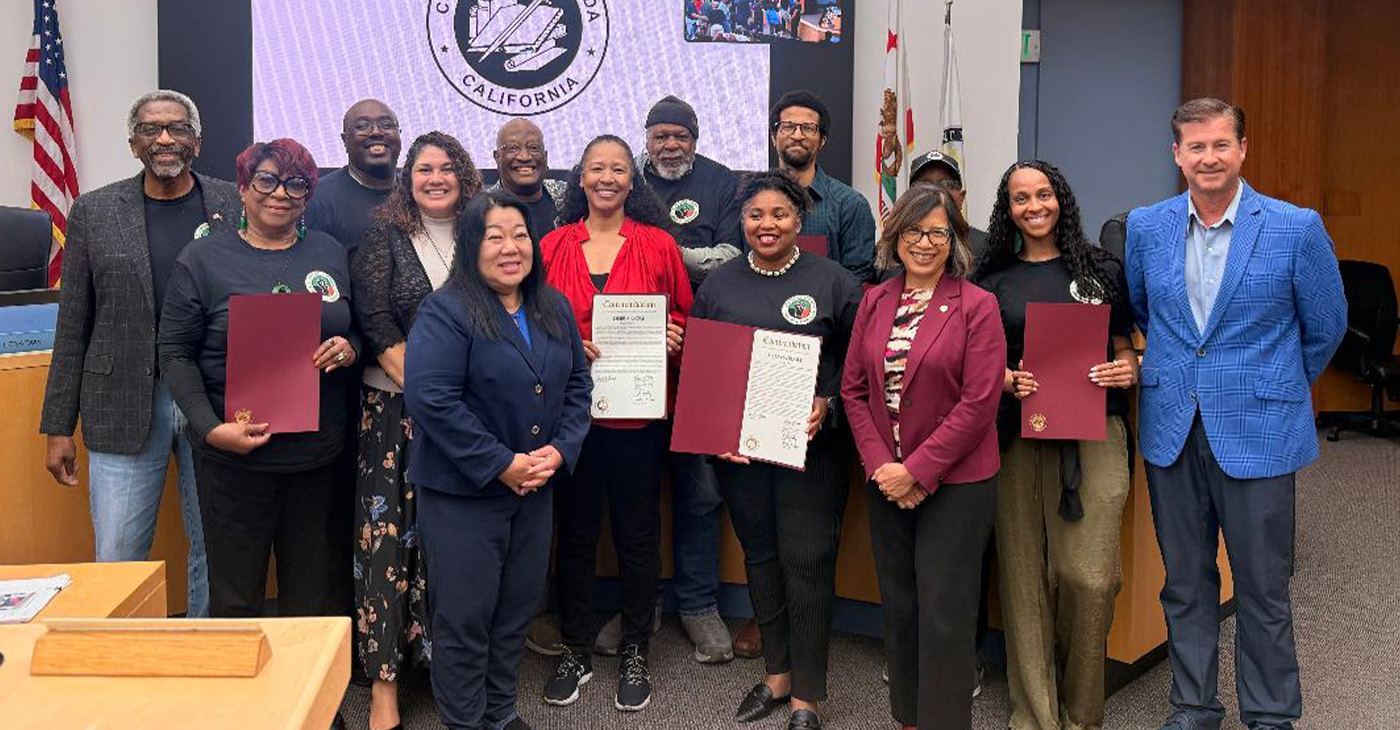
Landmark 5–0 Vote Advances One of the Nation’s Most Comprehensive County-Led Reparative Justice Efforts
Special to The Post
The Alameda County Board of Supervisors unanimously voted 5–0 on Tuesday to adopt the Final Action Plan of the Alameda County Reparations Commission, marking a historic milestone in the County’s commitment to advancing reparative justice for Black residents.
The vote follows nearly three years of work by the Alameda County Reparations Commission, which was seated in July 2023. Through extensive historical research, analysis of County data, public listening sessions, expert testimony, and community engagement, the Commission developed a comprehensive roadmap for addressing documented harms and expanding opportunity for future generations.
The Final Action Plan addresses disparities in housing, economic opportunity, education, health, environmental justice, public safety, arts and culture, land use, and other areas where historical government policies have contributed to inequitable outcomes for Black residents.
“This vote represents more than the adoption of a report,” said Debra Gore, Chair of the Alameda County Reparations Commission. “It is a commitment to truth, accountability, and action. Reparations are not about guilt or charity. They are about government’s responsibility to address documented harms created by its own policies and to build a more just future.”
During the Board meeting, Gore delivered a keynote address entitled “Redress as Constitutional First Principle,” presenting reparations as a constitutional principle rooted in the First Amendment’s guarantee of the right “to petition the Government for a redress of grievances.” Her remarks connected the nation’s founding ideals with Alameda County’s own data documenting continuing racial disparities.
At the conclusion of her address, Gore received a standing ovation from all five members of the Alameda County Board of Supervisors, recognizing both the Commission’s work and the significance of the Board’s action.
Grounded in County data and community testimony, the Commission’s recommendations reflect nearly three years of research and engagement with residents, historians, policy experts, advocates, and County staff. Together, they offer a roadmap for repairing documented harms while strengthening opportunity, accountability, and equity for future generations.
The Board’s action also includes a commitment to establish a standing committee to oversee implementation of the Action Plan, signaling that reparative justice will remain an ongoing County priority.
“History will remember this moment not because Alameda County acknowledged injustice,” Gore said. “History will remember that our County chose action. This vote demonstrates that government can confront difficult truths, listen to its residents, and take meaningful steps toward repair.”
Reached in an interview on July 1, Gore said she felt a sense of “joyfulness and reverence” for the ancestors and survivors of the harms of slavery through Jim Crow. “We might be the first in the country to pass an action plan with the commitment to ‘operationalize’ reparations.”
Gore is grateful to former Alameda County Supervisor Keith Carson, who asked her to serve on the commission, and current Supervisor Nate Miley, who asked her to be the chairperson.
Among the many who helped create and inspire the report, Gore pointed to former Oakland City Councilmember Leo Bazile, who has been calling for reparations since the 1960s, and the late Reparations Committee member Jesse Clyde Burleson, who provided insight on incarceration as an ongoing harm to the Black community. The report was dedicated to the memory of Burleson, who passed away on March 6 and who had been imprisoned from 1987-2018.
Gore also pointed to their avenue of approach on reparations, which was as much about the impact of slavery as it was about constitutional rights that had been systematically denied to Black people.
Members of the committee were: Cathy Adams, president and CEO of the Oakland African American Chamber of Commerce (OAAOCC) issued a statement supporting the reparations milestone.
OAACC “is grateful to former Supervisor Keith Carson, Supervisor Nate Miley, and the entire Alameda County Reparations Commission for their tireless efforts to develop a comprehensive action plan to address and repair the documented harms experienced by our local Black community,” Adams said.
“As an organization deeply committed to advancing workforce development, expanding access to capital, and creating opportunities for Black-owned businesses in Oakland and throughout Alameda County, we look forward to working alongside the steering committee to help deliver meaningful economic justice to those impacted by generations of systemic inequities.”
The Alameda County Reparations Commission extends its gratitude to the hundreds of residents who shared their experiences, the Commissioners who dedicated nearly three years of service, County staff, researchers, historians, and community partners whose work made this milestone possible.
With adoption of the Final Action Plan, Alameda County now begins the next phase of implementation in partnership with County leadership, community organizations, and residents. The commission will be dissolved, Gore says, and she looks forward to the next steps, one of which is the appointment of committee members.
Besides, Burleson, Gore and Bazile, members of the commission included: Natasha Triplett, Shenita Hurskin, Brandon T. Sass, Artavia Berry, Tiega N. Varlack, James Knowles, Vickie Stephens, Dr. Philip S. Gardiner, Dee Johnson, Larry McClendon (vice chair) , Carolyn (CJ) Johnson, Alan E. Dones, Jennifer A. Gayden, Lori Cox (vice chair), and Shadrick A. Small.
About the Alameda County Reparations Commission
Established by the Alameda County Board of Supervisors in July 2023, the Alameda County Reparations Commission was charged with examining the historical and ongoing harms experienced by Black residents resulting from government policies and practices and developing recommendations for repair. The Commission’s Final Action Plan provides a comprehensive framework for advancing equity, accountability, and opportunity throughout Alameda County.
Activism
OPINION: Unfair Media Attacks on OUSD Leadership for Not Closing Schools
Dr. Denise Saddler is a respected educator who leads with integrity, honesty, and decades of experience in service to OUSD. Since stepping into the role of interim superintendent, she has worked tirelessly alongside the Senior Leadership Team and fiscal consultants to address one of the most difficult financial situations our district has faced.
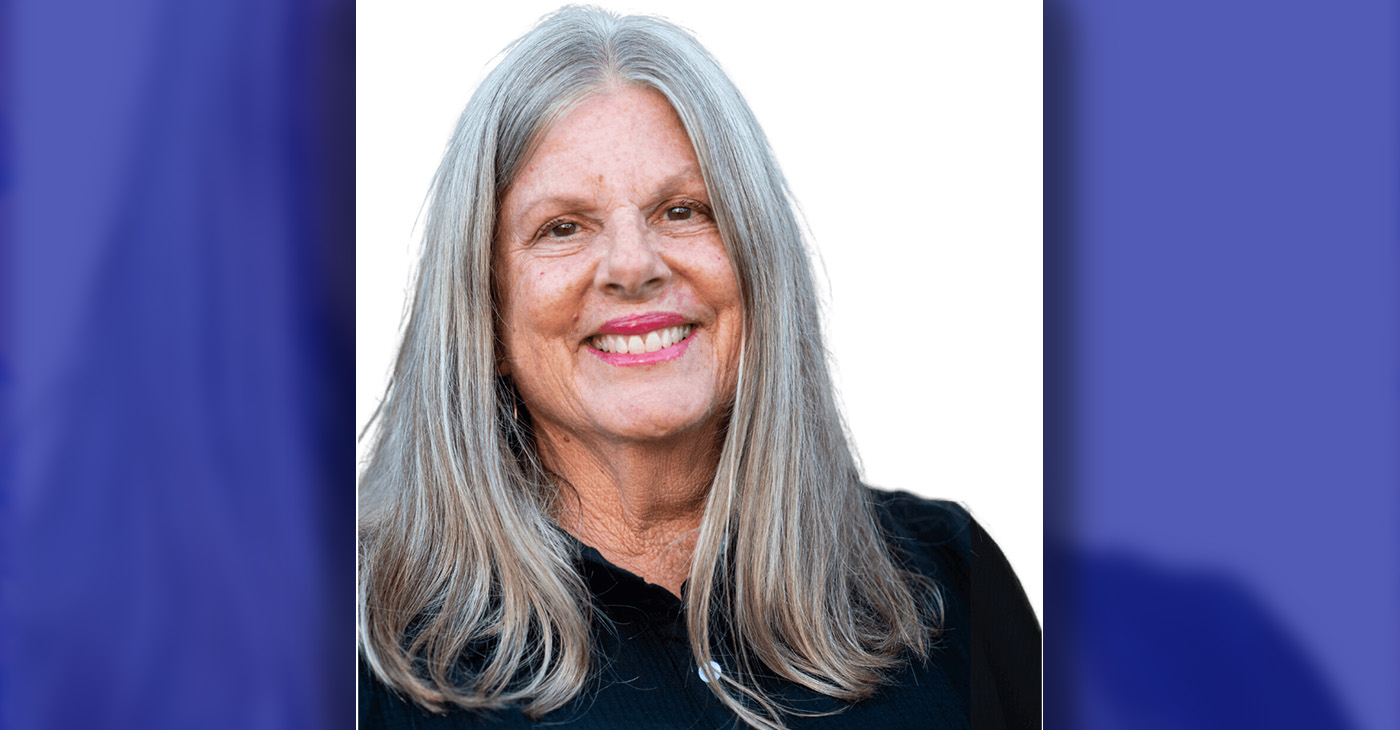
The school district has achieved ‘significant milestones that reflect disciplined leadership and a renewed commitment to fiscal responsibility,’ said Board President Jennifer Brouhard
By Jennifer Brouhard, Special to The Post
I am not going to directly respond to or amplify the personal attacks on the Oakland Unified School District’s dedicated leaders who are working every day on behalf of Oakland’s students.
Dr. Denise Saddler is a respected educator who leads with integrity, honesty, and decades of experience in service to OUSD. Since stepping into the role of interim superintendent, she has worked tirelessly alongside the Senior Leadership Team and fiscal consultants to address one of the most difficult financial situations our district has faced.
In December, the Board gave clear direction: bring forward a budget proposal that did not include a state loan and did not include school closures. Saddler and her team did exactly what the Board asked them to do.
There were differing opinions about how to address the district’s fiscal challenges. The two former employees referenced in a news article supported a different approach that included pursuing a state loan and exploring school closures. Those proposals were presented to the Board alongside Saddler’s proposal.
The Board adopted Saddler’s recommendation because it reflected the direction we had established. Since I joined the Board in 2023, the majority of the Board has consistently opposed school closures and has worked to preserve local control by avoiding a state loan whenever possible.
The public records cited in the article demonstrate the countless hours Saddler, the Senior Leadership Team, and our consultants devoted to developing a responsible financial plan. Difficult decisions were made, ideas were debated, and ultimately the Board selected the proposal that best aligned with our priorities.
As a result of that collaborative work, OUSD has adopted its first balanced budget in 22 years, achieved a qualified Second Interim Certification, and submitted a positive Third Interim Report.
These are significant milestones that reflect disciplined leadership and a renewed commitment to fiscal responsibility.
While there is still important work ahead, I believe the relationship between the Board, Dr. Saddler, and the Senior Leadership Team has become stronger and more collaborative throughout this process. We are moving in the right direction—with honesty, integrity, and a focus on the needs of OUSD’s 34,000 students.
Jennifer Brouhard, a retired OUSD teacher was elected in 2023 to represent District 2 and has been Board president since 2025.



Native American Health Center Connects 140 Community Members to Career Opportunities During Native American Heritage Month

Oakland Chamber of Commerce Faces $42,000 Ethics Fine for Campaign Violation

Attorney General Bonta Serves Investigative Subpoena on Nvidia

A Record 216 Firearms Collected at East Oakland Gun Buy-Back Event

City Council Hearing Shines a Light on Failures of City’s Prompt Payment Policy

IN MEMORIAM: Claude T. Everhart, San Francisco’s First Black Deputy Mayor, Dies at 73

UC Doctors, Nurses and Community Rally to Demand ICE Out of UC Hospitals

Hypertension and Heart Disease: Doctors, Advocates and Patients Are Tackling the Leading Cause of Death for Black Californians

Marin City Is Especially Vulnerable to El Niño High Tides, Strong Winds, Flooding and Power Outages

‘We’re Committed to Delivering the Change that the American People Deserve’

Staying Ready: What Every Californian Should Know About Preparing for El Niño

Oakland Post: Week of November 18 – 24, 2026

Oakland Post: Week of November 11 -17, 2026

Alameda County Supervisor Miley to Propose Illegal Dumping Ordinance

Oakland City Council Extends AI Data Center Moratorium for 10 Months.

COMMENTARY: Valarie Bachelor and Jennifer Brouhard are Excellent School Board Members and Deserve to Be Reelected

OUSD Receives State Review of District Finances; Outlines Progress Since January

HISTORY MADE: Keisha Lance Bottoms Becomes First Black Woman Elected Governor in American History

SEIU Local 1000 and State of California Will Continue to Negotiate New Labor Contract

Golden State Valkyries Become Bay Area Legends Winning WNBA Championship on Halloween Night

COMMENTARY: Your California Living Trust Could Be Next: When Evidence Isn’t Enough

Fate of Bay Area Public Transit Hinges on Regional Transit Measure

Chase Launches Fraud & Scam Prevention Month

Mayor Barbara Lee Holds Special State of the City Address in Deep East Oakland

Democrats, Community Groups Back Measure EE to Change How Oakland Is Governed

Post News Group Nov. 3 Election Endorsements

Richmond Neighbors Put Pantry Power on the Map

From Backyard Grilling to Jack London Square: Jamale Carlyle’s Chicken Wing Success Story

It’s Time to Lose Weight Before the Holidays

Hutchinson Concedes: Ballots Still Being Counted in Oakland Board Elections

The Conversation With Al McFarlane 6/23/26

Media Monday 6/22/26

LIVE! ASK ALMA! — TUES. 6.23.26 7PM EST

Car Buying Secrets: 4 Hidden Checks Before You Sign!

Is This 550 HP Charger Worth YOUR Money? AutoNetwork Review

Celebrating Juneteenth – Frederick Douglass on education and resistance

LIVE! — ASK ALMA! — TUES. 6.19.26 7PM EST

Hyundai Ioniq 5 Parking, Safety, and 360 View #shorts

2025 Ioniq 5 New Wiper & Powerful Performance! #shorts

Electric SUV Range: Is 259 Miles Enough? #shorts

EV Charging: How Fast Can You Charge an Electric Vehicle? #shorts

Biometric Cooling… Messaging Seats…Come on! 2025 Infiniti QX80 Autograph 4WD

Charged Up: Witness the Magic of a Fully Electric Car! #shorts

Range Rover Sport PHEV Included…: See What’s Inside This Luxury SUV! #shorts

Invisible Hood View: Perfect Parking with X-Ray Vision! #shorts
-
 Commentary3 weeks ago
COMMENTARY: Valarie Bachelor and Jennifer Brouhard are Excellent School Board Members and Deserve to Be Reelected
-
 Education3 weeks ago
OUSD Receives State Review of District Finances; Outlines Progress Since January
-
 Black History3 weeks ago
HISTORY MADE: Keisha Lance Bottoms Becomes First Black Woman Elected Governor in American History
-
 Business3 weeks ago
SEIU Local 1000 and State of California Will Continue to Negotiate New Labor Contract
-
 Community3 weeks ago
Golden State Valkyries Become Bay Area Legends Winning WNBA Championship on Halloween Night
-
 Business3 weeks ago
COMMENTARY: Your California Living Trust Could Be Next: When Evidence Isn’t Enough
-
 Business4 weeks ago
Fate of Bay Area Public Transit Hinges on Regional Transit Measure
-
 Business4 weeks ago
Chase Launches Fraud & Scam Prevention Month
