
Activism
Celebrating Native American Heritage Month, Every Month
In early October, we saw the 30th anniversary of the Berkeley Indigenous People’s Day Powwow and Indian Market. In fact, Berkeley was the first city in the country to celebrate Indigenous People’s Day– five years before the day would become a federally-recognized holiday. San Francisco’s American Indian Film Institute held its 47th film festival this month, continuing the annual celebration of Native cinema and storytelling.

Courtesy of Berkeley News Public Affairs
Vice Chancellor for Equity and Inclusion Dania Matos and Stephen Sutton, vice chancellor for student affairs, sent the following message to the campus community on Nov.16:
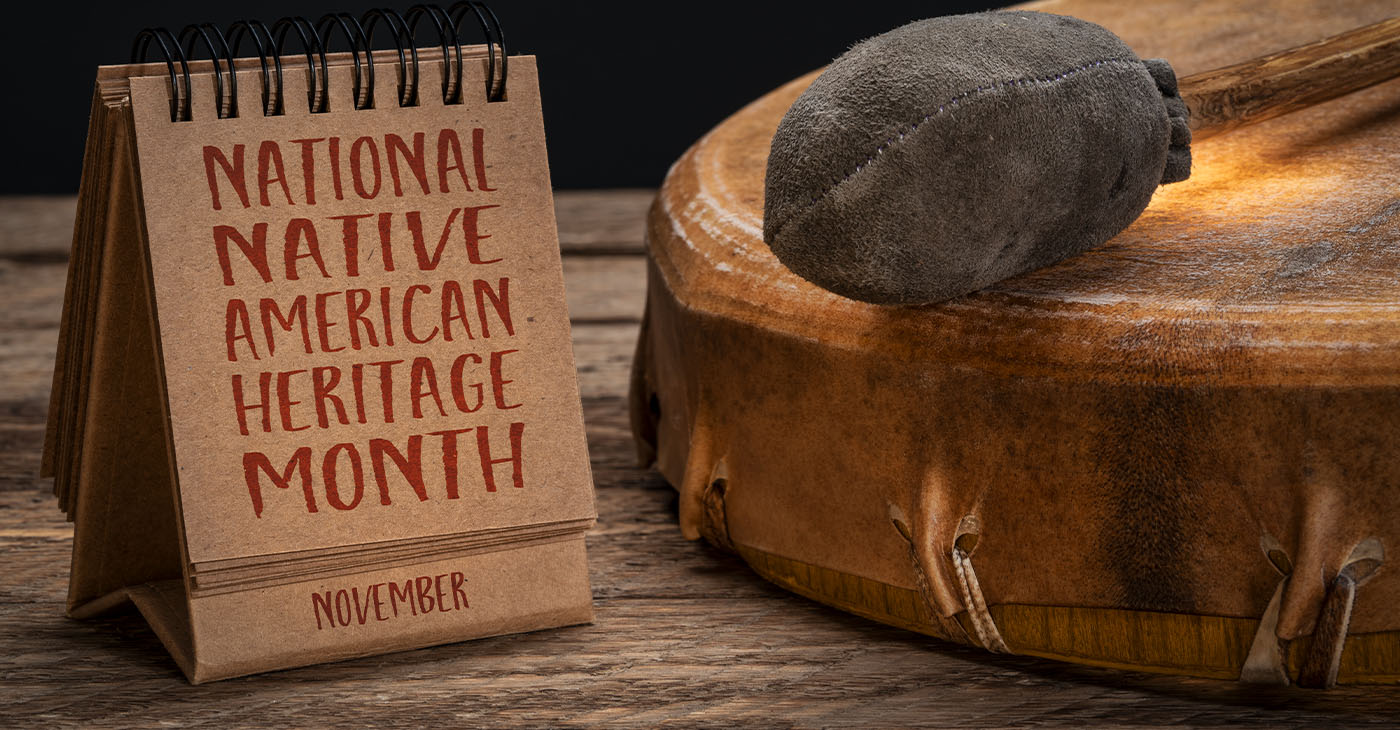
November is National Native American Heritage Month. Please join us in celebrating the contributions, traditions, foods, languages, and futures of people across campus who identify as Native American, Alaska Native, Native Hawaiian, First Nation, or who otherwise identify as indigenous.
We want to recognize the deep and meaningful history of Native Americans and indigenous people in this country, and while celebrating contributions and successes, we also acknowledge that history is fraught, challenges remain, and there is much still to be done. You can read President Biden’s proclamation for this year’s Native American Heritage Month here.
Of course, we would be remiss in not acknowledging that Berkeley sits in the territory known as xucyun (Huichin), and as we write this message, we have a responsibility to create relationships and partnerships with East Bay Ohlone people, lifting up issues that affect those communities, and learning to be better allies with the indigenous people and original stewards of this land.
Native American Heritage Month, every month
We, of course, honor and celebrate Native American people and communities year-round. In September, California Native American Day was observed across California, first created in 1998 to clarify misperceptions about California Indians.
In early October, we saw the 30th anniversary of the Berkeley Indigenous People’s Day Powwow and Indian Market. In fact, Berkeley was the first city in the country to celebrate Indigenous People’s Day– five years before the day would become a federally-recognized holiday. San Francisco’s American Indian Film Institute held its 47th film festival this month, continuing the annual celebration of Native cinema and storytelling.
As we move toward the popular American Thanksgiving holiday, it is important to reflect that there is a spectrum of experiences around this holiday and its meaning. The Alcatraz Indigenous People’s Sunrise Gathering hosted by the Indigenous Treaty Council is one way some indigenous people and allies choose to observe the day. The event seeks to honor traditions of indigenous communities on a day that attention is normally devoted elsewhere. It’s also sometimes referred to as Unthanksgiving Day or Un-Thanksgiving Day.
With the rise in popularity of Land Acknowledgements in recent years, we encourage you to explore this Land Acknowledgement toolkit created to encourage academic communities to recognize the original nations on whose land we live, learn, and work and was created by California Indian Culture and Sovereignty Center, and California State University San Marcos’s American Indian Studies department, in partnership with Palomar College and the Southern California Tribal Chairman’s Association.
Make Time to Visit ottoy
Vincent Medina and Louis Trevino, the chefs behind the 2018 pop-up restaurant Cafe Ohlone, have developed a new collaboration–one that is rooted in healing–with the Hearst Museum of Anthropology and Cal Dining. ottoy is an outdoor dining and educational space located just outside the museum; its name means to repair or mend in Chochenyo. Medina and Trevino’s efforts were recently featured in a Berkeley News story and, on their website, they mention being driven by two goals: “to provide a physical space for our Ohlone people to be represented in the culinary world with a curated space that represents our living culture; and to educate the public, over Ohlone cuisine, in a dignified, honest manner about the original and continuous inhabitants of this land.” Cafe Ohlone remains the only restaurant/food project of its kind in the world today.
Resources, events, and groups
There are many organizations, resources, events, and spaces across campus that are dedicated to people who are Native American, Alaska Native, Native Hawaiian, First Nation, or who otherwise identify as Indigenous. Initiated by students in 1991, the Indigenous Native Coalition Recruitment and Retention Center provides resources, advocacy, welcoming spaces, and opportunities to prospective and current students (follow them on Instagram!).
The Indigenous Graduate Student Association offers graduate students ways to connect academically, culturally, and socially; the Native American Law Students Association promotes the success of Native students, creates awareness around Native issues, and fosters a positive culture of unity, cooperation, and respect (and it has a great Instagram account!) Indigenous faculty, staff, and postdocs can get involved with the Native & Indigenous Council: a staff organization that supports networking and other community-building opportunities.
The American Indian Graduate Program works to enhance the graduate education experience for Native American students across campus; grow the number of American Indian graduate students who apply, enroll and graduate from UC Berkeley; and support contemporary applications for the Indigenous graduate student experience at UC Berkeley.
The Native American Student Development Office exists to support undergraduate and graduate Native and Indigenous students during their time at UC Berkeley and oversees the Native Community Center.
The Library of Congress, National Archives and Records Administration, National Endowment for the Humanities, National Gallery of Art, National Park Service, Smithsonian Institution, and the United States Holocaust Memorial Museum join in paying tribute to the rich ancestry and traditions of Native Americans by sponsoring several events throughout the month and information online. Check out the National Native American Heritage Month website. The National Museum of the American Indian is hosting a Native Cinema Showcase Nov. 18 through 25, with films being available on-demand.
This CalMessage was written in partnership with Phenocia Bauerle, Elisa Diana Huerta, and Diana Lizarraga. The Divisions of Equity & Inclusion and Student Affairs offer deep gratitude to this network of people who contributed their insights and expertise.








Activism
Oakland Post: Week of April 1 – 7, 2026
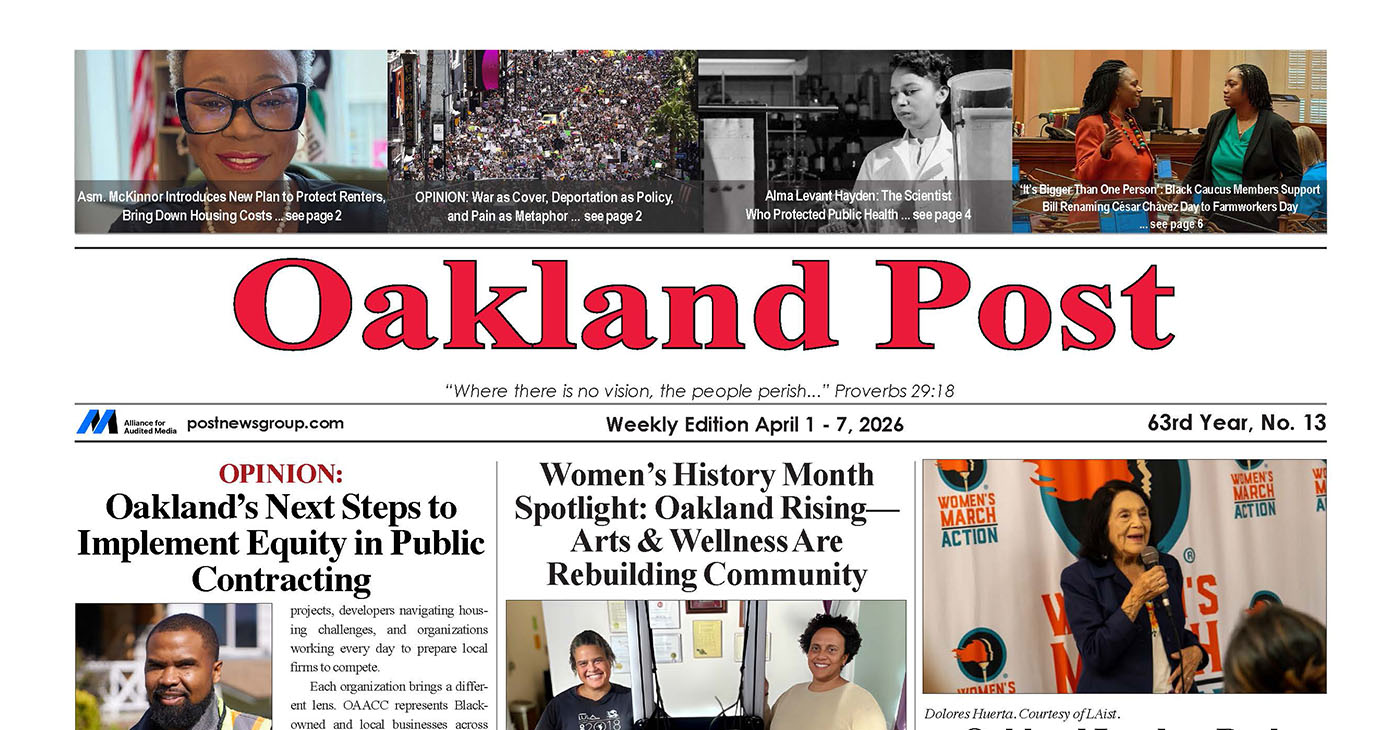
The printed Weekly Edition of the Oakland Post: Week of April 1 – 7, 2026
To enlarge your view of this issue, use the slider, magnifying glass icon or full page icon in the lower right corner of the browser window.
Activism
Oakland Post: Week of March 18 – 24, 2026
The printed Weekly Edition of the Oakland Post: Week of March 18 – 24, 2026
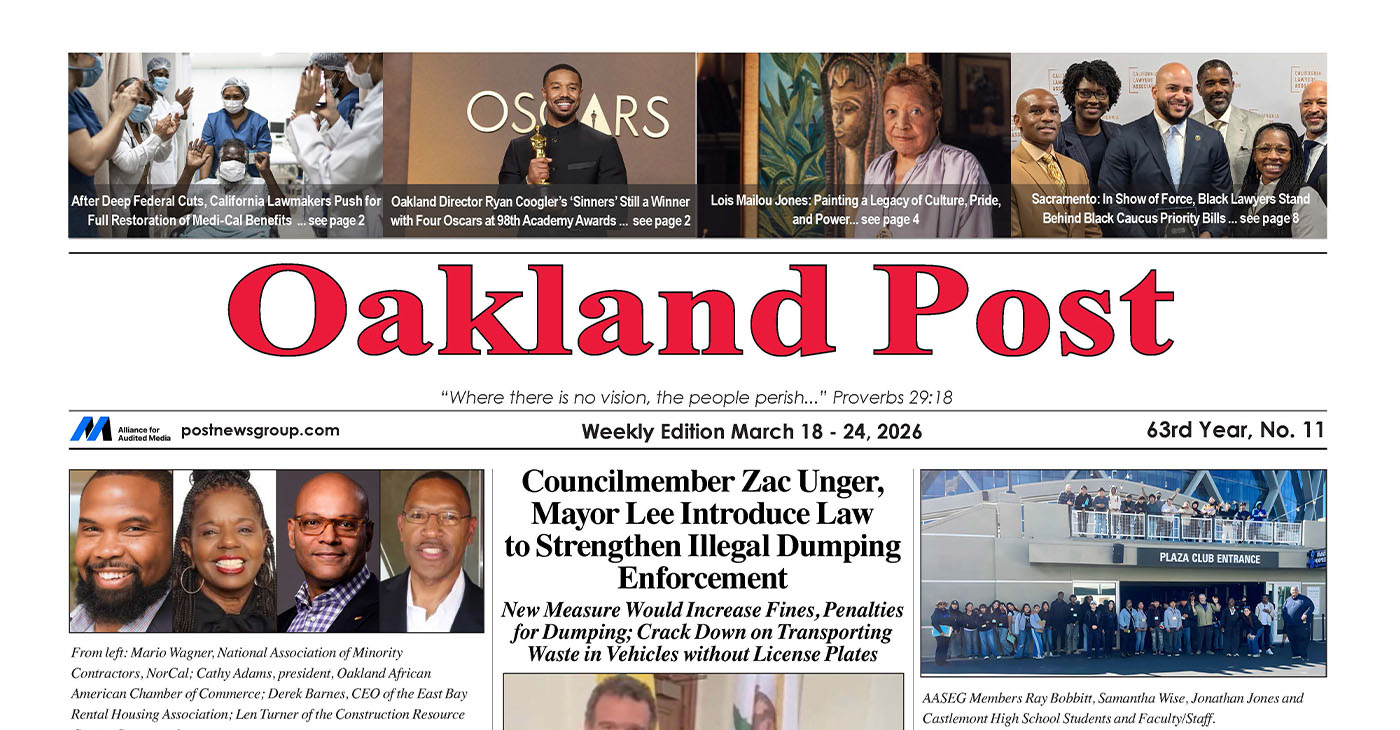
To enlarge your view of this issue, use the slider, magnifying glass icon or full page icon in the lower right corner of the browser window.
Activism
Oakland Post: Week of March 11 -17, 2026
The printed Weekly Edition of the Oakland Post: Week of March 11 – 17, 2026
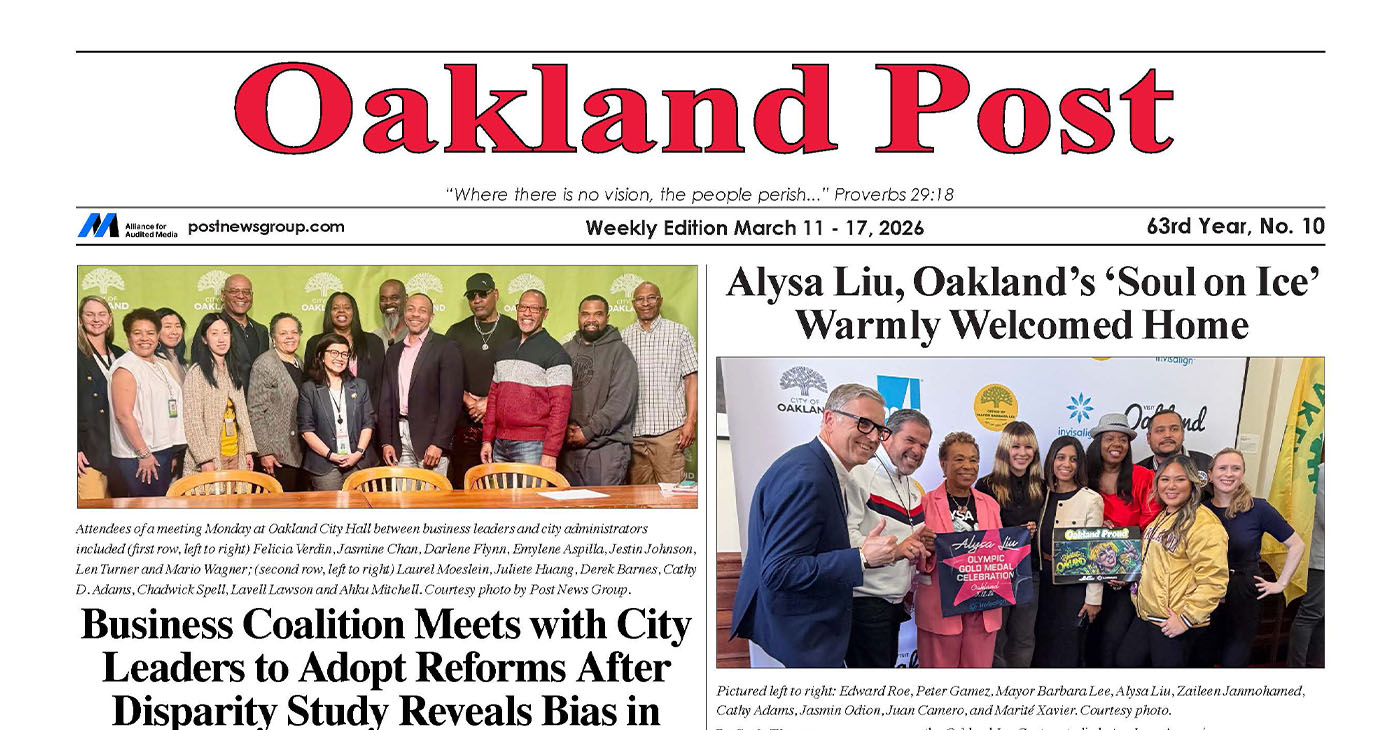
To enlarge your view of this issue, use the slider, magnifying glass icon or full page icon in the lower right corner of the browser window.

WORK FROM HOME
Home-based business with potential monthly income of $10K+ per month. A proven training system and website provided to maximize business effectiveness. Perfect job to earn side and primary income. Contact Lynne for more details: Lynne4npusa@gmail.com 800-334-0540


Oakland Post: Week of April 1 – 7, 2026

Black Artists in America, Installation Three Wraps at the Dixon Gallery and Gardens

Grief, Advocacy, and Education: A Counselor Reflects on Black Maternal Health

Future of Florida’s Black History Museum in Limbo

New Research Shows the Many Benefits of Early Learning

South Hampton K-8 Students Among Top 10 Finalists for Samsung’s ‘Solve for Tomorrow’ Competition

Cuba: No Negotiation with US on the President or Political System

Brooklyn Academy of Music Names Jamaican-Born Tamara McCaw as President

Trinidad & Tobego – U.S. Launches WhatsApp Channel for American Citizens in the Country

Oakland Post: Week of March 18 – 24, 2026

AI Innovation vs. Ethics and Environmental Impact

AI, Web3, and Digital Reparations

What If You Owned Your AI Agent?

Season 7, Episode 3 – January Reporter’s Roundtable 📱

Season 7, Episode 3 – January Reporter’s Roundtable

Reflecting on Black History Milestones in Birmingham AL

Oakland Post: Week of February 25 – March 3, 2026

PRESS ROOM: NBA Hall of Fame Nominee Terry Cummings Joins 100 Black Men of DeKalb County to Launch Victory & Values Initiative

Oakland Post: Week of March 4 – 10, 2026

Trump’s MAGA Allies are Creating Executive Order Plan to Steal the 2026 Midterms

U.S. manufacturing rebounds – how foundry services are adapting to rising demand

Poll Shows Support for Policies That Help Families Afford Child Care

OP-ED: One Hundred Years of Black Workers Telling the Truth

Oakland Post: Week of March 11 -17, 2026

Advancements in solar technology that are changing the way we power the world
Oakland Post: Week of March 18 – 24, 2026

Woman’s Search for Family’s Roots Leads to Ancestor John T. Ward – A Successful Entrepreneur and Conductor on the Underground Railroad

COMMENTARY: Women of Color Shape Our Past and Future

PRESS ROOM: Civil Rights TV Launches in Selma as the World’s First 24/7 Civil Rights Television Network

Financial Wellness and Mental Health: Managing Money Stress in College

Hyundai Ioniq 5 Parking, Safety, and 360 View #shorts

2025 Ioniq 5 New Wiper & Powerful Performance! #shorts

Electric SUV Range: Is 259 Miles Enough? #shorts

EV Charging: How Fast Can You Charge an Electric Vehicle? #shorts

Biometric Cooling… Messaging Seats…Come on! 2025 Infiniti QX80 Autograph 4WD

Charged Up: Witness the Magic of a Fully Electric Car! #shorts

Range Rover Sport PHEV Included…: See What’s Inside This Luxury SUV! #shorts

Invisible Hood View: Perfect Parking with X-Ray Vision! #shorts

AI Is Reshaping Black Healthcare: Promise, Peril, and the Push for Improved Results in California

ESSAY: Technology and Medicine, a Primary Care Point of View

Sanctuary Cities

The RESISTANCE – FREEDOM NOW

STATE OF THE PEOPLE: Freddie

ECONOMIC BOYCOTT DAY!!!!!

I told You So
-
 Activism3 weeks ago
Oakland Post: Week of March 11 -17, 2026
-
 Activism2 weeks ago
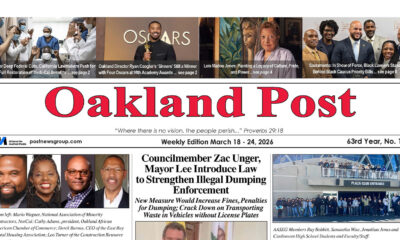
Oakland Post: Week of March 18 – 24, 2026
-
 #NNPA BlackPress4 weeks ago
Woman’s Search for Family’s Roots Leads to Ancestor John T. Ward – A Successful Entrepreneur and Conductor on the Underground Railroad
-
 #NNPA BlackPress4 weeks ago
COMMENTARY: Women of Color Shape Our Past and Future
-
 Advice3 weeks ago
Financial Wellness and Mental Health: Managing Money Stress in College
-

 #NNPA BlackPress4 weeks ago
Advocates Raise Alarm Over ICE Operation, MOU and Detention Risks in Baltimore County
-

 #NNPA BlackPress4 weeks ago
Pete Buttigieg to Join Mayor Randall Woodfin for Community Town Hall in Birmingham
-
 #NNPA BlackPress2 weeks ago
Brooklyn Academy of Music Names Jamaican-Born Tamara McCaw as President
